ZEGEYE ASFAW ABDII (1941–2026): The End of an Era
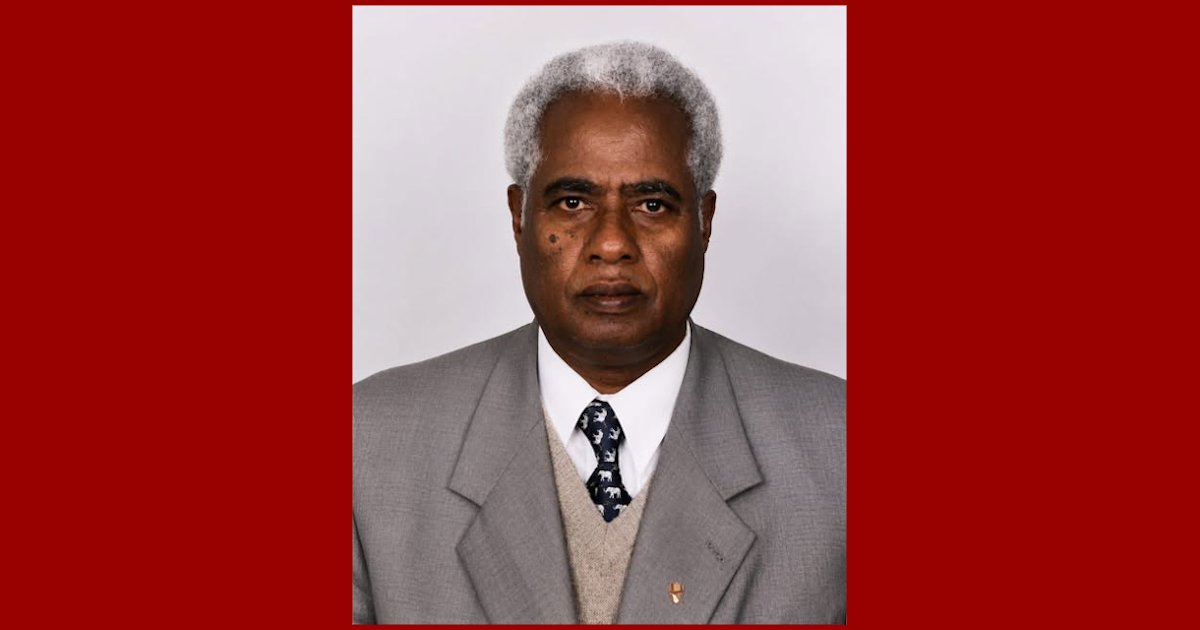
A Life of Principle, Humility, and Service to Humanity
There are individuals whose deaths mark not merely the passing of a person, but the closing of a historical chapter. The departure of Obbo Zegeye Asfaw Abdii belongs to that rare category. His passing on May 11, 2026 at the age of 85 leaves behind not only a grieving family and nation, but also a profound moral silence that will be difficult to fill.
For more than six decades, Obbo Zegeye stood as one of the towering intellectual, legal, and moral figures of modern Ethiopia and the Oromo people in particular. He lived through an emperor, military junta, transitional orders, and federal Ethiopia. Across four political regimes, changing ideologies, and shifting tides of power, he remained remarkably consistent in one thing: his commitment to justice, dignity, and the oppressed.
History will forever remember him as one of the principal architects behind the historic “Land to the Tiller” reform that dismantled the centuries-old feudal order suffocating Ethiopia’s peasants. At a time when millions of farmers lived as tenants on lands they cultivated with their own sweat while serving absentee landlords, Zegeye belonged to the generation of thinkers and reformers who helped articulate and shape a radically different vision of justice.
Long before the military junta formally proclaimed land reform in 1975 under his authorship, the question of land had already become a burning moral and political issue raised by students, intellectuals, and progressive forces. It was in this climate that the young legal scholar Zegeye Asfaw returned from the United States equipped with legal training and intellectual clarity. Emperor Haile Selassie himself reportedly summoned him and tasked him with examining possible land reform frameworks as pressures mounted across the country, mainly through the land-to-the-tiller students demonstrations. History moved faster than the palace. Before his review could fully mature, the imperial order collapsed in 1974.
Yet the ideas survived.
And among those whose fingerprints remained on that transformation was Zegeye Asfaw Abdii.
For generations of Ethiopian peasants, especially Oromo farmers long subjected to exploitative systems, the restoration of land rights represented more than an economic adjustment. It was the restoration of dignity itself. That is why many rightfully describe him as “Abbaa Qonnaan Bultoota” — the father and defender of the peasantry.
But Zegeye’s life cannot be reduced to land reform alone.
He was simultaneously a lawyer, human rights advocate, intellectual, political prisoner, nation-builder, mentor, and quiet moral compass for many who knew him personally.
For his principles, he paid a severe personal price.
Under the Derg military regime, Obbo Zegeye endured years of imprisonment as an Oromo prisoner of conscience, accused of being a member of the Oromo Liberation Front (OLF), between 1980 and 1989. Those who shared prison life with him remember not bitterness or hatred, but humility, warmth, calmness, and humanity even under repression. Former inmates recall how he shared what little he had with fellow prisoners and remained emotionally grounded despite the cruelty of the times.
What distinguished him throughout his life was not loudness, but moral gravity.
Even those who differed politically with him respected him deeply. He possessed that increasingly rare ability to bridge ideological divides without surrendering principle. He remained profoundly Oromo in conviction while simultaneously embracing broader human solidarity. His politics never descended into hatred. His Oromo nationalism carried dignity rather than chauvinism. His humanity remained larger than factionalism.
In his later life, he helped lay important foundations for Oromo civic and self-help consciousness during difficult and dangerous times. As the founder of the grassroots civic non-governmental organization Hundee, he contributed to organizing Oromo self-help at a historical moment when asserting Oromo identity itself carried heavy risks.
Tributes pouring from across political, generational, and ideological spectrums since his passing speak volumes. From former comrades and prison mates to scholars, activists, officials, and ordinary citizens, there is remarkable consensus about the kind of human being he was: principled, humble, intellectually rigorous, compassionate, and incorruptible.
One tribute remembered him as a childhood friend, schoolmate, cellmate, and comrade whose humanity never changed across the decades. Another recalled seeing him a day before his passing at a public book event and being struck by how he remained exactly the same gentle and humble person despite age, status, and history. Others emphasized his lifelong dedication to justice, democracy, and the dignity of the marginalized.
And perhaps this is where something important must be said — something that does not ordinarily feature prominently in tributes.
Obbo Zegeye Asfaw lived a life of extraordinary simplicity. This fact matters deeply because it reveals the true measure of the man.
Across more than six decades of public life, spanning four regimes and immense political transitions, he built relationships, influence, credibility, and respect that most people could only dream of. Having held several ministerial positions, he moved among powerful individuals, intellectual circles, state institutions, activists, diplomats, and political leaders. Had he wished, he could easily have transformed that social and political capital into personal wealth, privilege, business influence, or material comfort.
But he chose otherwise.
Until his passing just a day ago, Obbo Zegeye lived modestly in a simple service-quarter residence in Bole — one of the most affluent areas of Finfinnee (Addis Ababa). He never pursued luxury. He never lived beyond what an ordinary salaried Ethiopian could reasonably afford. He accumulated neither mansions nor visible fortunes. He invested his life not in enriching himself, but in trying to improve the lives of others.
That simplicity was not accidental.
It was ethical discipline.
In a political culture where proximity to power has too often become a pathway to accumulation and self-enrichment, Zegeye represented an older and nobler tradition of public service — one in which integrity mattered more than acquisition, and moral credibility mattered more than status.
A man who knew power never worshiped wealth.
A man who could have accumulated fortunes chose instead to accumulate trust, respect, and service to humanity.
That may ultimately become one of the greatest legacies he leaves behind.
For younger generations, especially in an age increasingly dominated by spectacle, opportunism, and material obsession, the life of Obbo Zegeye Asfaw Abdii stands as a reminder that greatness is not measured by what one possesses, but by what one gives.
He leaves behind not merely memories, but an ethical challenge to society itself.
- To live with principle.
- To serve without greed.
- To struggle without hatred.
- To remain humble despite stature.
- To place humanity above self.
The Oromo people, Ethiopia, and all who cherish justice have lost one of their finest sons. But lives such as his do not truly disappear. They become part of the moral memory of a people.
May Obbo Zegeye Asfaw Abdii rest in eternal peace.
Related Reference
Ann Oosthuizen (Author), Land to the Tiller: an interview with Zegeye Asfaw, 9 Feb. 2020, ISBN: 978-1916364707 (Paperback), Amazon Books.