Skip to content
OROMIA TODAY

OROMIA TODAY

Oromia is a Country

BAKKALCHA OROMIYAA
  • Home
  • Articles
  • Editorial
  • News
  • Opinions
  • About
  • Contact
OROMIA TODAY
OROMIA TODAY
Oromia is a Country
BAKKALCHA OROMIYAA
  • One Song
    Article | Commentary | Opinion | Politics

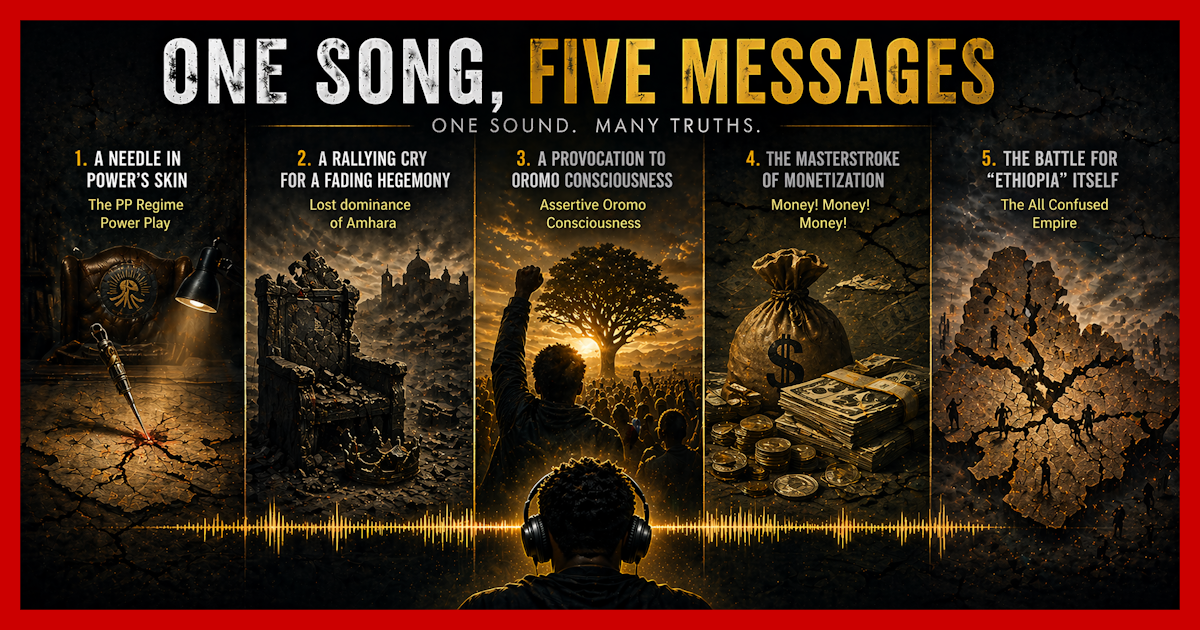
    One Song, Five Messages

    By Elemoo Qilxuu (MA, Political Science) Posted on2026-04-212026-04-21

    In just days, one song by Tewodros "Teddy Afro" Kassahun has ignited a firestorm—revealing not unity, but multiple Ethiopias speaking past each other. What appears as controversy is, in truth, a deeper collision of meanings shaped by power, history, identity, and memory. This article unpacks the layered messages behind the moment, exposing how one song became a prism through which a fractured empire sees itself.

    Read More One Song, Five MessagesContinue

  • Ambo
    Article | Community | Human Rights | Politics | ⏭

    Ambo: Cruelty in Plain Sight — Violence, Impunity, and the Political Crisis in Oromia

    By Yadessa Guma (PhD, Anthropology) Posted on2026-04-162026-04-16

    In Ambo, a shocking act of violence against young adults exposes more than individual cruelty—it reveals a growing pattern of impunity and normalized abuse across Oromia. What appears as a single incident reflects a deeper crisis, where violence is increasingly visible, accountability is absent, and fear is woven into daily life. As informal actors and unchecked forces shape events on the ground, the question is no longer whether this is isolated, but how far the pattern extends.

    Read More Ambo: Cruelty in Plain Sight — Violence, Impunity, and the Political Crisis in OromiaContinue

  • Electoral Process
    Article | Politics

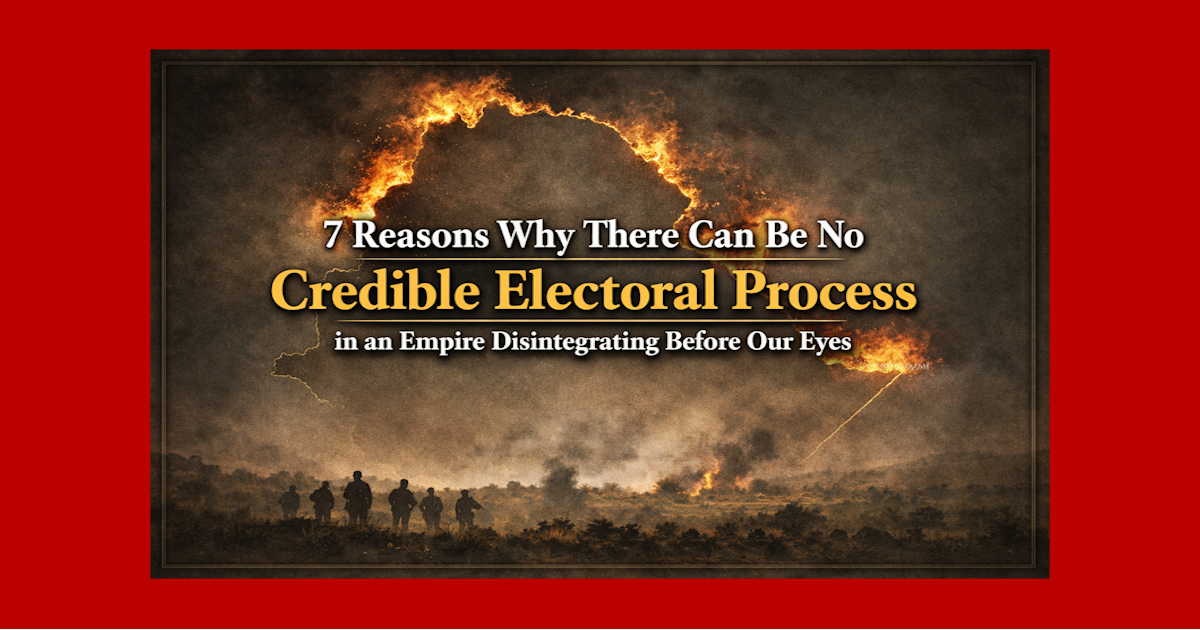
    7 Reasons Why There Can Be No Credible Electoral Process in an Empire Disintegrating Before Our Eyes

    By Elemoo Qilxuu (MA, Political Science) and Kumaa Daadhii (PhD, Political History) Posted on2026-03-302026-03-29

    Even if elections are predetermined, they still require minimum conditions and structures to stage the illusion of democracy. In today’s Ethiopia, those conditions no longer exist. Large parts of Ethiopia are outside regime control, opposition parties participate only to avoid deregistration, insecurity is widespread, and political intimidation is routine. Some regions appear politically detached, actively contemplating a post-Ethiopia political order, and therefore cannot be considered fully participatory in the electoral process. This is no longer an election that can be rigged; it is an election that cannot even be convincingly staged.

    Read More 7 Reasons Why There Can Be No Credible Electoral Process in an Empire Disintegrating Before Our EyesContinue

  • Monetary Policy
    Editorial | Politics | ⏭

    The Day Monetary Policy Joined the Ruling PartyIn Ethiopia, even institutional neutrality has stopped pretending

    By OT Editorial Posted on2026-02-242026-02-24

    When a central bank governor campaigns for a ruling political party, or any political party for that matter, Monetary Policy ceases to be an economic instrument and becomes a political one. In any democracy that still maintains a pretense of institutional order, this would be a red card—immediate, unquestionable, and final. A resignation would follow within hours. Parliamentary inquiries would begin. Constitutional lawyers would sharpen their knives. Markets would twitch. Not in Ethiopia. It barely interrupts the broadcast of a central bank governor campaigning on behalf of the ruling party.

    Read More The Day Monetary Policy Joined the Ruling PartyIn Ethiopia, even institutional neutrality has stopped pretendingContinue

  • Wallaga
    Article | Commentary | ⏭

    Wallaga and the Politics of FaçadeEight Years of Rhetoric, War, and Recalibration

    By Yadessa Guma (PhD, Anthropology) Posted on2026-02-222026-02-21
    1 Comment

    Eight years after branding Wallaga as too dangerous to visit, Ethiopia’s leadership now stages high-profile tours through a region devastated by war, displacement, and militarization. This article examines how early political rhetoric securitized Wallaga, normalized extraordinary violence, and reshaped policy under the guise of reform. By tracing the arc from fabricated fear to choreographed presence, it asks a hard question: does visibility signal stabilization—or merely a recalibrated façade masking unresolved brutality?

    Read More Wallaga and the Politics of FaçadeEight Years of Rhetoric, War, and RecalibrationContinue

  • Lying
    Article | Op-Ed | Opinion | Politics | ⏭

    The Policy of Lying: How Power Is Sustained by Fabrication

    By Elemoo Qilxuu (MA, Political Science) and Roobaa Hawaas (MA, Psychology) Posted on2026-02-062026-02-05

    Ethiopia has crossed a moral and political threshold. Lying is no longer an occasional deviation but a governing method. From the fabricated pretext of the Tigray war to the attempted rewriting of Eritrea’s role—publicly rebutted by Gedu Andargachew—the pattern is unmistakable. When power substitutes for truth, institutions collapse, Parliament applauds falsehood, and citizens are conditioned to accept governance without reality. This is not political spin; it is rule by fabrication.

    Read More The Policy of Lying: How Power Is Sustained by FabricationContinue

  • PP Regime
    Article | Opinion | Politics | ⏭

    The PP Regime Now Has the Accolade: No Other Ethiopian Regime Has Acted Against the Oromo People So Intensely in Such a Short Time

    By Kumaa Daadhii (PhD, Political History) and Olii Boran (PhD, Sociology) Posted on2026-02-022026-02-01
    3 Comments

    The inauguration of the Shebele Resort near Jijigaa under the PP regime of PM Abiy Ahmed is more than a development event; it is a political statement. Held without Oromo representation in an Oromo city, and amid ongoing violence in eastern Oromia, the ceremony signals the normalization of exclusion and the quiet ratification of a long-contested administrative arrangement. What was once presented as a temporary “loan” of Jijigaa has now hardened into permanent political appropriation, with profound consequences for constitutional order and regional stability.

    Read More The PP Regime Now Has the Accolade: No Other Ethiopian Regime Has Acted Against the Oromo People So Intensely in Such a Short TimeContinue

  • Oromia Administration
    Editorial | Politics | ⏭

    The Oromia Administration: Silence, Not Governance

    By OT Editorial Posted on2026-01-282026-01-28

    The Oromia Administration is conspicuously absent as Oromia faces multi-front aggression, mass dispossession, and deepening corruption. From Somali regional incursions in the east—politically encouraged by president Mustafe Mohammed Omer—to Amhara Fano violence in the west and north east, and forced evictions in central Oromia, silence has become policy. This editorial argues the Oromia Administration is not merely failing, but enabling a proxy-war strategy in which Oromia must be weakened for the Ethiopian empire to endure.

    Read More The Oromia Administration: Silence, Not GovernanceContinue

  • 12 billion
    Editorial | Politics | ⏭

    Math Meets PP Myth No. 5: When 12 Billion Birr GERD Contributions Become Insults

    By OT Editorial Posted on2026-01-232026-01-23

    In this fifth installment of Math Meets PP Myth, the dismissal of 12 billion birr as “insignificant” reveals more than numerical abuse. It exposes a psychology of power that cannot tolerate shared ownership. Leaders secure in legitimacy thank contributors; insecure ones belittle them. Reducing citizens to percentages is not economic analysis—it is political conditioning, preparing the public to accept exclusion, silence, and hierarchy under the guise of math.

    Read More Math Meets PP Myth No. 5: When 12 Billion Birr GERD Contributions Become InsultsContinue

  • Medemer
    Op-Ed | Politics | ⏭

    How Will Medemer Be Remembered?

    By Kumaa Daadhii (PhD, Political History) Posted on2026-01-072026-01-07

    Medemer will not be remembered by its promises but by its consequences. Branded as a "doctrine" of unity, Medemer instead presided over spectacle development confined to the capital, permanent war governance, economic unraveling, normalized brutality, and systematic evictions of central Oromia. The glitter of street lights masked structural collapse, while fear became an instrument of rule. History is likely to record Medemer not as "addition", but as "subtraction"—of lives, trust, justice, and peoples' unrealized potential.

    Read More How Will Medemer Be Remembered?Continue

  • Assab
    Editorial | Politics | ⏭

    An Empire That Refuses to Learn — When Power Is Reduced to Drawing Lines with Assab Port

    By OT Editorial Posted on2026-01-062026-01-06

    The delusional redrawing of maps to suggest the annexation of Assab Port is not a harmless provocation but a dangerous rehearsal for an unnecessary war—one that diplomacy can and must avert. History shows who pays when empires test fantasies with force: coerced Oromo youth sent to fight wars they did not choose. The Oromo people have learned from loss, and they reject yet another imperial gamble with their sons and daughters.

    Read More An Empire That Refuses to Learn — When Power Is Reduced to Drawing Lines with Assab PortContinue

  • AI University
    Editorial | ⏭

    Dreaming Out of Sequence: Abiy Ahmed, AI University, and Ethiopia’s Education Crisis

    By OT Editorial Posted on2026-01-052026-01-05

    The announcement of an AI University at Addis Ababa University’s 75th Anniversary was framed as visionary, yet it exposed a deeper contradiction in Ethiopia’s education crisis. While graduates remain unemployed, schools are closed by insecurity, and academic standards decline, grand AI ambitions risk becoming spectacle rather than substance. This article examines how misplaced sequencing, political psychology, and institutional fragility turn the promise of an AI University into a symbol of imbalance rather than progress.

    Read More Dreaming Out of Sequence: Abiy Ahmed, AI University, and Ethiopia’s Education CrisisContinue

  • Modi
    Editorial | ⏭

    When “Democracy” Applauds an Empire: Why Prime Minister Modi’s Speech Is Deeply Disappointing to Ethiopia’s Oppressed Nations

    By OT Editorial Posted on2025-12-172025-12-17

    Prime Minister Narendra Modi’s address to Ethiopia’s Parliament was wrapped in warmth and symbolism, but it also echoed a familiar Ethiopianist storyline: a seamless, timeless national narrative that quietly sidesteps conquest, forced assimilation, and the lived realities of Oromo and other oppressed peoples. When the leader of the world’s largest democracy lends prestige to that framing—amid today’s grave human-rights and displacement crises—disappointment is not only understandable, but inevitable.

    Read More When “Democracy” Applauds an Empire: Why Prime Minister Modi’s Speech Is Deeply Disappointing to Ethiopia’s Oppressed NationsContinue

  • Getachew Reda
    Editorial | Opinion | Politics | ⏭

    Getachew Reda and the Corrosive Politics of Ethiopia

    By OT Editorial Posted on2025-11-262025-11-25

    Getachew Reda’s dramatic shift—from accusing Abiy Ahmed of genocide in Tigray to serving within his administration and now failing to acknowledge his own words—exposes the moral decay embedded in Ethiopian politics. His reversal is not subtle; it is documented and undeniable. It reflects a system where truth is punished, dishonesty is rewarded, and individuals reshape their convictions to survive. Yet agency remains: integrity is never impossible, only costly. History will remember not the titles he held, but the truths he abandoned.

    Read More Getachew Reda and the Corrosive Politics of EthiopiaContinue

  • Politics of Spite
    Article | Opinion | Politics | ⏭

    The Politics of Spite—How Oromia’s Foundations Expose the Empty Ambitions of a Troubled Region

    By Elemoo Qilxuu (MA, Political Science), Kumaa Daadhii (PhD, Political History) and Olii Boran (PhD, Sociology) Posted on2025-11-122025-11-09

    Oromia now faces a widening expansionist push—driven by local opportunists, reinforced by external actors, and carried along by a region long caught up in the politics of spite that has defined the Horn. These forces promote territorial fantasies that collapse under scrutiny. The article argues that only a free, self-determined Oromia can break this cycle, restoring stability to the Horn and creating the conditions for a genuine synergy of prosperity with its neighbors.

    Read More The Politics of Spite—How Oromia’s Foundations Expose the Empty Ambitions of a Troubled RegionContinue

  • Dire Dhawa
    Op-Ed | Politics | ⏭

    When Dirre Dhawa Becomes a Claim — And Truth Becomes a Weapon

    By Elemoo Qilxuu (MA, Political Science) Posted on2025-11-042025-11-04

    A recent viral clip shows a young Somali man boldly claiming Dirre Dhawa as Somali land — a moment that might seem laughable if it didn’t reflect a deeper anxiety and the politics of manufactured bravado. His claim coincides with PM Abiy Ahmed’s sudden “truth-telling” about Dirre Dhawa’s constitutional limbo — a convenient revelation used to frame Ethiopia’s port hunger and revive irredentist narratives disguised as historical correction.

    Read More When Dirre Dhawa Becomes a Claim — And Truth Becomes a WeaponContinue

Page navigation

1 2 3 Next PageNext

Archives

Recent Posts

  • The Ethiopian Perspective Gap: Why Some Voices Sound Like Truth—and Others Like Rebuttal
  • One Song, Five Messages
  • Cui Bono? The Political Economy of Conflict and the Oromo Question
  • Ambo: Cruelty in Plain Sight — Violence, Impunity, and the Political Crisis in Oromia
  • Remembering Guyyaa Gootota Oromoo
  • Oromo Martyrs Day—April 15, 2026: Memory, Sacrifice, and the Unfinished Future of Oromia
  • The Peace Conference Without the Other Side
  • 7 Reasons Why There Can Be No Credible Electoral Process in an Empire Disintegrating Before Our Eyes
  • History Comes to the UN and Asks for a Vote
  • Much Ado About Nothing—The Illusion of Elections in Oromia and Ethiopia

Authors

Categories

Recent Comments

  • webmaster on Remembering Guyyaa Gootota Oromoo
  • ejigu etana on Remembering Guyyaa Gootota Oromoo
  • ejigu etana on Remembering Guyyaa Gootota Oromoo
  • Raba Dori on Between Water at the Margins and SurvivalEnvironmental Precarity and the Political Economy of Inequality in Oromia
  • Dereje Hawas on Between Water at the Margins and SurvivalEnvironmental Precarity and the Political Economy of Inequality in Oromia
Facebook X YouTube TikTok Telegram

© 2026 OROMIA TODAY

Report an Incident

Tags Cloud

3000-Year Myth Aabbuu Seeraa Aabbuu Seeraa Airport Abiy Ahmed Amhara Elite Amhara Fano Caffee Oromia Calii Tuulamaa ENDC Eritrea Ethiopian Empire EZEMA Faarseebulaa Fact-checking FearlessTayeDanda'a Finfinnee Gadaa Supercity GERD History & Memory IMF Indigenous Oromo Indigenous Rights Irreechaa July 2024 Macroeconomic Policy Math Meets PP Myth MMPPM Moyale Multinational Federalism OLA OLF OLF-OLA OPDO/PP Oromia Oromo Questions Oromo Struggle Oromummaa PP Regime PP Regime Brutality Remembrance Safuu Shimelis Abdissa Somali Region Taye Danda'a TPLF Tribute
Scroll to top
  • Home
  • Articles
  • Editorial
  • News
  • Opinions
  • About
  • Contact
Search