Skip to content
OROMIA TODAY

OROMIA TODAY

Oromia is a Country

BAKKALCHA OROMIYAA
  • Home
  • Articles
  • Editorial
  • News
  • Opinions
  • About
  • Contact
OROMIA TODAY
OROMIA TODAY
Oromia is a Country
BAKKALCHA OROMIYAA
  • Regression
    Article | Op-Ed | Politics

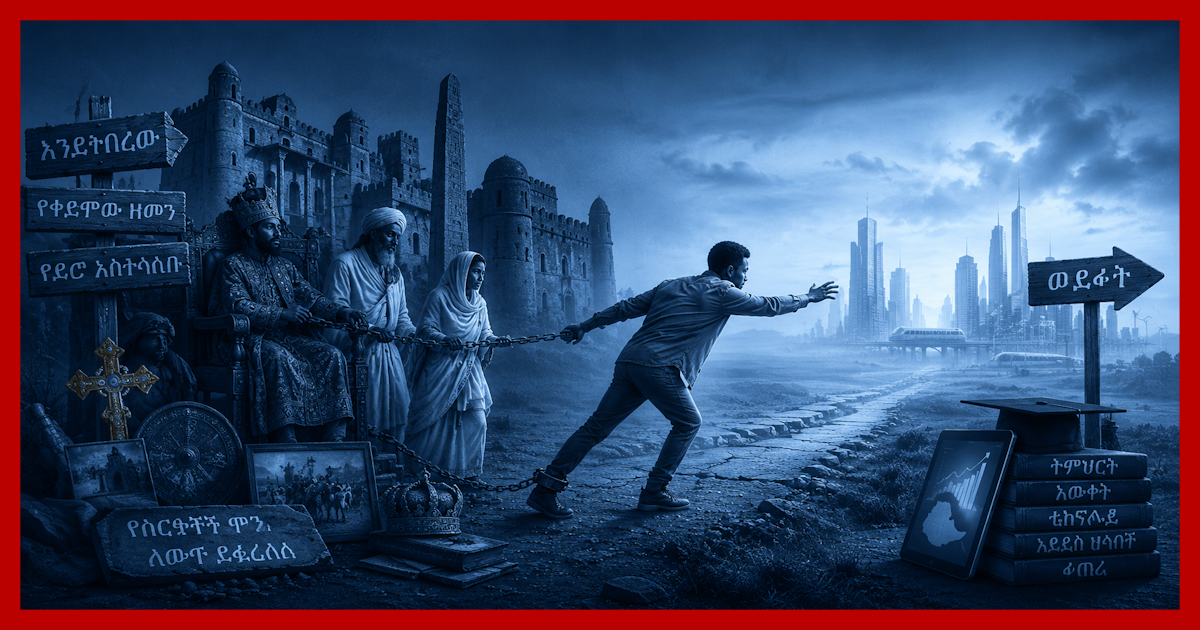
    Regression Preference Syndrome: Debunking the Regressive Tendency in Ethiopian Politics

    By Roobaa Hawaas (MA, Psychology) Posted on2026-05-172026-05-17

    Regression Preference Syndrome is proposed as a political-psychological framework explaining Ethiopia's recurring tendency to favor historical rollback over incremental democratic progress. Using contemporary examples from autocratic rule, internal wars, unresolved national questions, maritime access discourse, and hard-power politics, the article argues that regression often appears psychologically easier than reform. It calls for Ethiopia to reject destructive coercive approaches, embrace soft power and negotiated settlements, and pursue gradual democratic progress instead of disruptive retrogressive steps that risk repeating historical cycles.

    Read More Regression Preference Syndrome: Debunking the Regressive Tendency in Ethiopian PoliticsContinue

  • Menelik Syndrome
    Article | Op-Ed | Politics

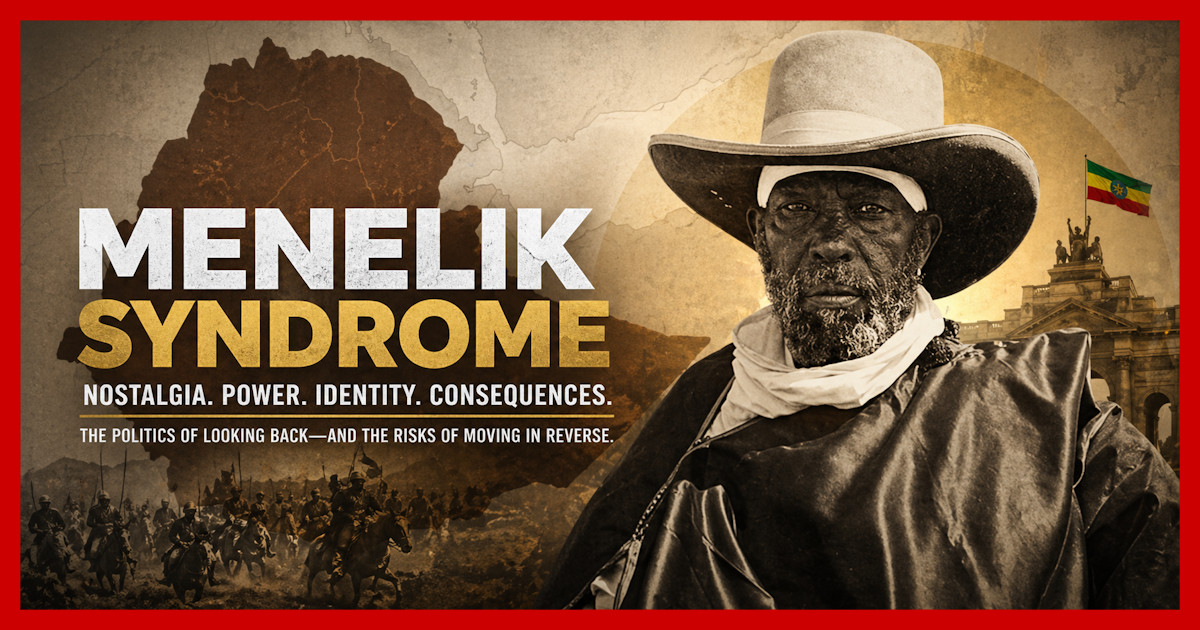
    Ethiopia Forward to the Past: The Politics of Nostalgia and the “Menelik Syndrome”

    By Yadessa Guma (PhD, Anthropology) Posted on2026-04-282026-04-28

    “Menelik Syndrome” captures a recurring pattern in Ethiopia’s political imagination: the selective revival of an idealized imperial past as a solution to present crises. Framed around the legacy of Menelik II, it elevates symbols of unity, strength, and state consolidation while downplaying the coercive foundations on which that unity was built. In contemporary discourse, this manifests in calls to “restore Ethiopia’s past glory”—a narrative that resonates emotionally but risks reopening unresolved historical contradictions. As a political lens, Menelik Syndrome helps explain how nostalgia, when filtered through power, can shape national identity, influence policy direction, and—paradoxically—intensify fragmentation rather than resolve it.

    Read More Ethiopia Forward to the Past: The Politics of Nostalgia and the “Menelik Syndrome”Continue

  • Lidetu Ayalew
    Article | Opinion | Politics | ⏭

    Lidetu Ayalew, Finfinnee, Oromia, Federalism, and the Perils of Principle-free Politics

    By Elemoo Qilxuu (MA, Political Science) Posted on2026-01-162026-01-15

    When politics loses its grammar, words stop meaning what they mean and power begins to masquerade as principle. In critiquing Lidetu Ayalew, this piece is not about personal disappointment but about a deeper political failure: the refusal to accept irreversible facts of federalism, Oromo self-rule, and historical reality. Denial is not argument. Semantic inversion is not moderation. And restoration politics, however eloquent, cannot substitute for credible, principled leadership.

    Read More Lidetu Ayalew, Finfinnee, Oromia, Federalism, and the Perils of Principle-free PoliticsContinue

  • EZEMA
    Op-Ed | Politics | ⏭

    EZEMA’s Four “Core Problems of Ethiopia”: A Diagnosis Without Literacy of Ethiopian History

    By Biqila Bariso (PhD, Physics; MSc, Cognitive Sci.) Posted on2025-12-132025-12-10
    1 Comment

    EZEMA claims Ethiopia faces four fundamental problems, but its diagnosis reveals profound political illiteracy. By blaming the EPRDF for an “ethnic problem” and proposing the absurd abolition of ethnic politics, EZEMA misreads Ethiopia’s history, structure, and lived realities. This article exposes why EZEMA’s worldview collapses under scrutiny — from sovereignty and rights to poverty and national narrative — and why Ethiopia’s future cannot be grounded in such conceptual blindness.

    Read More EZEMA’s Four “Core Problems of Ethiopia”: A Diagnosis Without Literacy of Ethiopian HistoryContinue

  • First Principles
    Op-Ed | Politics | ⏭

    The First Principles Violated: The Simple Truth Behind a Century of Ethiopian Instability

    By Biqila Bariso (PhD, Physics; MSc, Cognitive Sci.) Posted on2025-12-112025-12-11

    Politics remains the only profession where immense power requires no mastery of first principles, and nowhere is this more destructive than in Ethiopia. Identity is reshaped, consent bypassed, and self-determination denied—violations that predictably produce rebellion, collapse, and endless conflict. This article distills the political laws of stability Ethiopia keeps defying, and shows why stability, peace, and development will remain elusive until its leaders embrace these foundational truths. It ends with a postscript message to the Ethiopian National Dialogue Commission (ENDC), warning it against repeating the foundational violations at the root of Ethiopia’s instability.

    Read More The First Principles Violated: The Simple Truth Behind a Century of Ethiopian InstabilityContinue

  • fringe party
    Article | Op-Ed | Politics | ⏭

    Erasing Oromia: How a Fringe Party Exposed the Complacency and Paralysis of Oppressed Nations and Nationalities of the Ethiopian Empire

    By Elemoo Qilxuu (MA, Political Science) and Olii Boran (PhD, Sociology) Posted on2025-12-072025-12-06

    A fringe party’s audacious proposal to erase Oromia and other regions of the oppressed nations and nationalities has exposed a deeper crisis: the entrenched complacency and political paralysis of the majority. This is not merely the aggression of a fringe party attempting to erase Oromia and other regions; it is the predictable outcome of a majority conditioned to tolerate the intolerable. Ethiopia’s tragedy persists because boldness from the few meets silence from the many.

    Read More Erasing Oromia: How a Fringe Party Exposed the Complacency and Paralysis of Oppressed Nations and Nationalities of the Ethiopian EmpireContinue

  • Shimelis Abdissa
    Article | Opinion | Politics | ⏭

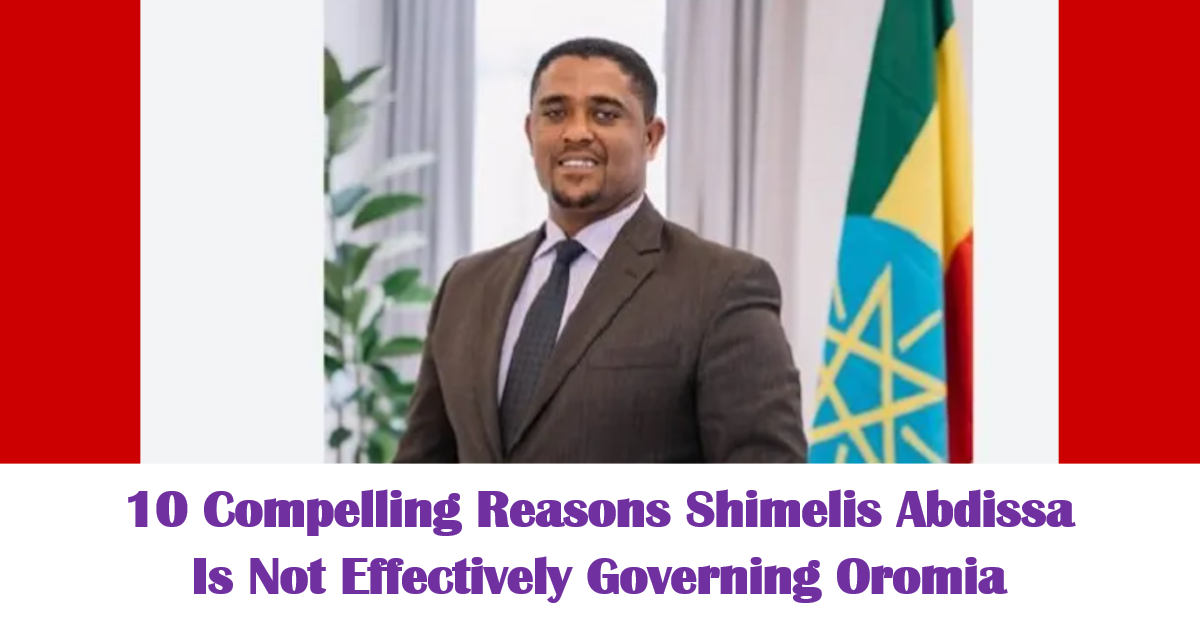
    10 Compelling Reasons Shimelis Abdissa Is Not Effectively Governing Oromia

    By Editorial Team Posted on2025-07-302025-07-29
    1 Comment

    Shimelis Abdissa, nominally President of Oromia, has become emblematic of absentee leadership and quiet complicity in the face of tragedy, dispossession, and systemic betrayal. From his silence during national mourning to his role in dismantling Oromia’s autonomy and impoverishing its people, Shimelis serves not the Oromo nation but the pro unitary Ethiopia Prosperity Party (PP) regime. While we could come up with scores of reasons, for brevity and to get this to print, we chose 10 items that speak volumes.

    Read More 10 Compelling Reasons Shimelis Abdissa Is Not Effectively Governing OromiaContinue

  • Racist
    Commentary | Opinion | Politics

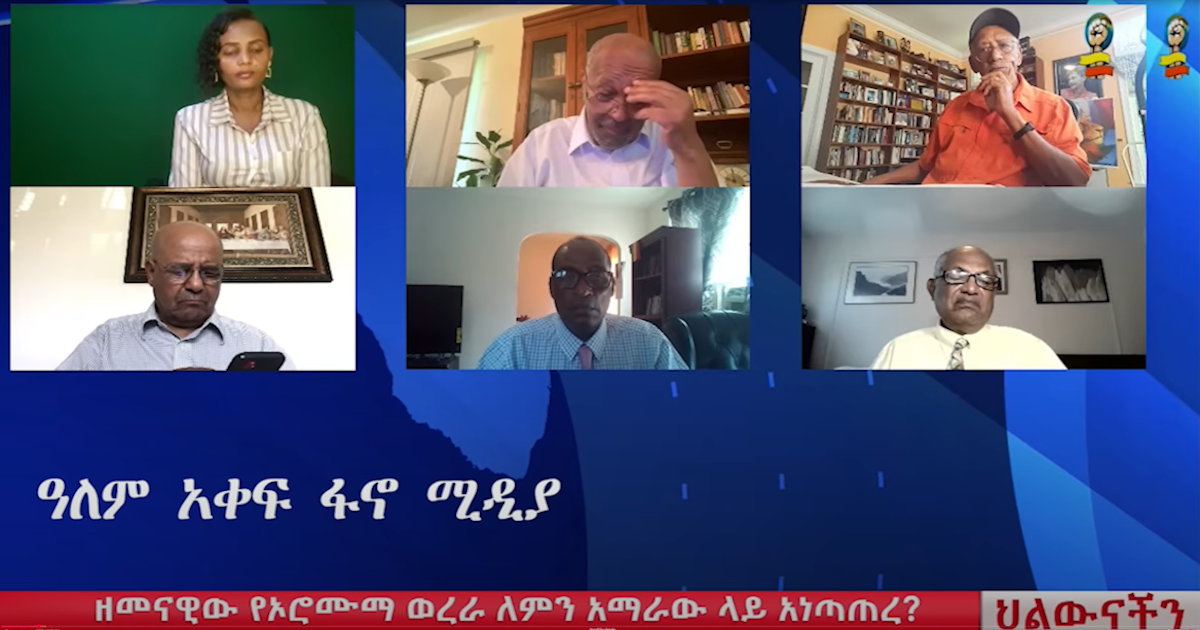
    The Amhara Elite Racist Worldview: Collective Unconscious and Historical Hegemony

    By Turaa Jaarsoo Posted on2025-06-272025-06-27
    1 Comment

    Excerpt This article examines the enduring racist worldview propagated by sections of the Amhara political elite in Ethiopia, with specific reference to a recent video conference led by Professor Getachew Begashaw. It explores how dehumanizing ethnic slurs, territorial revisionism, and historical denialism reflect a psychological phenomenon best understood through Carl Jung’s concept of the Collective...

    Read More The Amhara Elite Racist Worldview: Collective Unconscious and Historical HegemonyContinue

  • Daniel Kibret
    Editorial | ⏭

    Daniel Kibret’s Delusional Word Games for Unitarismሕብረ ብሔራዊ as Orwellian Camouflage of a Unitary Ethiopia

    By OT Editorial Posted on2025-06-162025-06-16

    Daniel Kibret, the Prosperity Party’s unofficial wordsmith and controversial advisor, is once again at the center of a linguistic smokescreen. His latest catchphrase, ሕብረ ብሔራዊ—translated as Multi-National or Co-National—is a rhetorical tool designed to mask the regime’s assault on Multinational Federalism. With a history of inflammatory speech and ideological spin, Daniel Kibret’s language games now signal a dangerous return to unitarism.

    Read More Daniel Kibret’s Delusional Word Games for Unitarismሕብረ ብሔራዊ as Orwellian Camouflage of a Unitary EthiopiaContinue

  • sleepwalk
    Editorial | ⏭

    Sleepwalking into the Tyranny of GeographyHow Political Delusion and Imperial Nostalgia Are Unmaking a Fragile Federation

    By OT Editorial Posted on2025-06-132025-06-12

    Ethiopia is sleepwalking into a terminal fracture. The death of Multinational Federalism isn't just a political misstep—it is the undoing of a hard-won peace among diverse nations. This is not alarmism. It is a wake-up call to citizens and politicians alike: the state is being reshaped by unchecked delusion, and the red line is rapidly disappearing. If we don’t stop now, we may not stop at all.

    Read More Sleepwalking into the Tyranny of GeographyHow Political Delusion and Imperial Nostalgia Are Unmaking a Fragile FederationContinue

  • Lessons
    Civic Lesson | ⏭

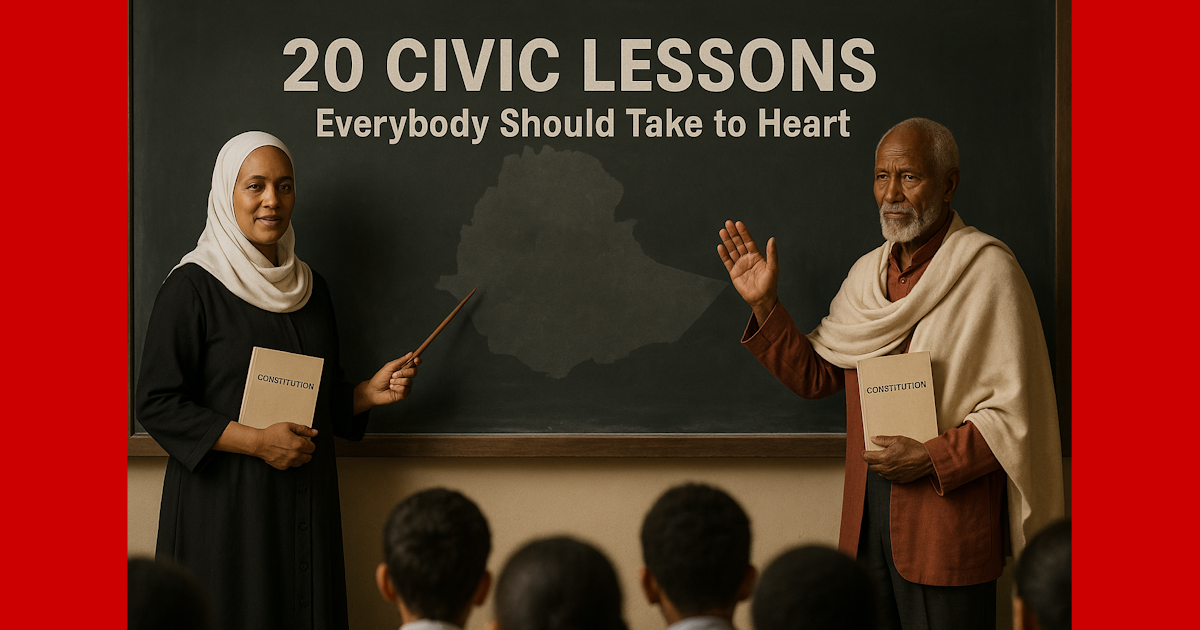
    20 Civic Lessons Everybody Should Take to HeartA Federalist’s Guide to Justice, Truth, and Coexistence in Ethiopia

    By Huseen Dooyyoo (MA, Civic Education) Posted on2025-06-102025-06-09

    Civic lessons on subjects like federalism—so often mired in confusion and deliberate distortion—are essential tools for dismantling disinformation and reclaiming public truth. In a political climate where clarity is rare and propaganda rampant, these lessons serve as both shield and compass for citizens seeking justice, self-determination, and a truly inclusive Ethiopia. This bite-sized compilation is our attempt at a witty yet pointed way to get simple facts across. Do share widely—and in the comments, let us know which lesson(s) speak to you most.

    Read More 20 Civic Lessons Everybody Should Take to HeartA Federalist’s Guide to Justice, Truth, and Coexistence in EthiopiaContinue

  • Jimma University
    Editorial | Public Apology Demand | ⏭

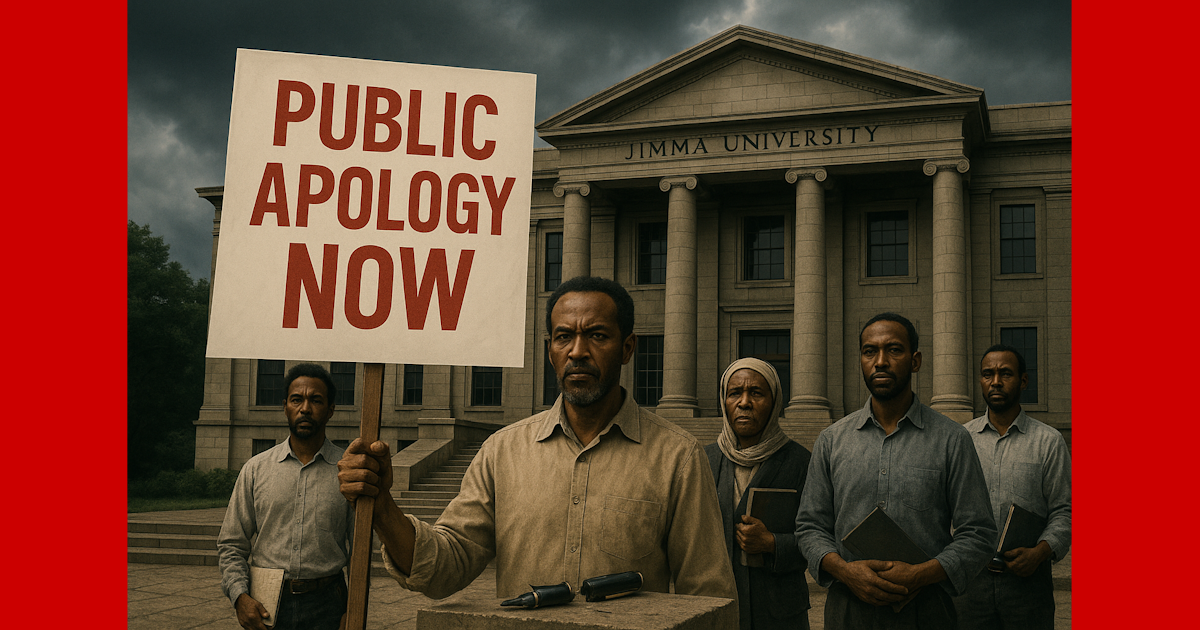
    Jimma University Owes the Public an ApologyA Rebuttal to the Mischaracterization of Multinational Federalism in Ethiopia

    By OT Editorial Posted on2025-06-092025-06-07
    1 Comment

    This rebuttal challenges the grossly biased and inflammatory article authored by Mr. Girma A. Demeke of Jimma University, which is scheduled for publication in the Journal of African and Asian Studies (JAAL), Volume 14, Issue 2. Masquerading as scholarly analysis, the article deploys ideologically loaded language such as "ethnic politics" and "scourge" to delegitimize Ethiopia’s constitutional Multinational Federalism. It presents a dangerous, neo-colonial narrative that pathologizes the legitimate political aspirations of oppressed nations, nationalities, and peoples. This response calls upon Jimma University to issue a public apology for enabling the dissemination of such divisive and academically indefensible content through its faculty.

    Read More Jimma University Owes the Public an ApologyA Rebuttal to the Mischaracterization of Multinational Federalism in EthiopiaContinue

  • Federalism
    Editorial | ⏭

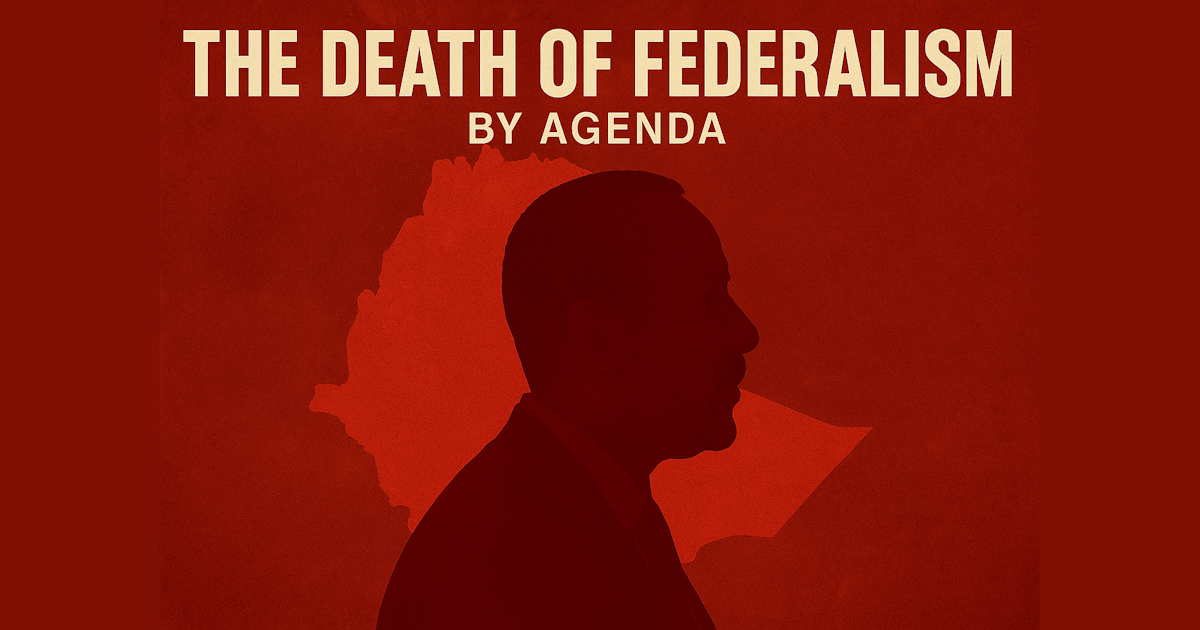
    The Death of Federalism by AgendaEthiopia's Drift Toward Imperial Revivalism

    By OT Editorial Posted on2025-06-062025-06-05

    Federalism in Ethiopia is under existential threat. What was once a constitutional promise of self-rule and cultural dignity is now being dismantled under the guise of reform. The regime’s recent agenda, advanced through a highly questionable commission, signals a retreat to imperial centralism. This is not just a political maneuver—it is a fundamental negation of the federalism millions fought for and continue to defend.

    Read More The Death of Federalism by AgendaEthiopia's Drift Toward Imperial RevivalismContinue

Archives

Recent Posts

  • Regression Preference Syndrome: Debunking the Regressive Tendency in Ethiopian Politics
  • What Does the Demand “Remove Article 39” Really Mean?
  • In Memory of a Dear Friend, Obbo Zegeye Asfaw Abdii
  • ZEGEYE ASFAW ABDII (1941–2026): The End of an Era
  • From Trauma to Transformation: Historical Violence and the Possibility of Healing in Oromia
  • When Guardians Become Predators: A Cry from an Oromo Elder
  • Ethiopia Forward to the Past: The Politics of Nostalgia and the “Menelik Syndrome”
  • The Ethiopian Perspective Gap: Why Some Voices Sound Like Truth—and Others Like Rebuttal
  • One Song, Five Messages
  • Cui Bono? The Political Economy of Conflict and the Oromo Question

Authors

Categories

Recent Comments

  • Jonny Micky on The Amhara Elite Racist Worldview: Collective Unconscious and Historical Hegemony
  • webmaster on Remembering Guyyaa Gootota Oromoo
  • ejigu etana on Remembering Guyyaa Gootota Oromoo
  • ejigu etana on Remembering Guyyaa Gootota Oromoo
  • Raba Dori on Between Water at the Margins and SurvivalEnvironmental Precarity and the Political Economy of Inequality in Oromia
Facebook X YouTube TikTok Telegram

© 2026 OROMIA TODAY

Report an Incident

Tags Cloud

3000-Year Myth Aabbuu Seeraa Aabbuu Seeraa Airport Abiy Ahmed Afan Oromo Amhara Elite Amhara Fano Caffee Oromia Calii Tuulamaa ENDC Eritrea Ethiopian Empire Faarseebulaa Fact-checking FearlessTayeDanda'a Finfinnee Gadaa Supercity Geographic Federalism GERD History & Memory IMF Indigenous Rights Irreechaa July 2024 Macroeconomic Policy Math Meets PP Myth MMPPM Moyale Multinational Federalism OLA OLF OLF-OLA OPDO/PP Oromia Oromo Questions Oromo Struggle Oromummaa PP Regime Remembrance Safuu Shimelis Abdissa Somali Region Taye Danda'a Tigray War TPLF Tribute
OROMIA TODAY
Manage Consent
To provide the best experiences, we use technologies like cookies to store and/or access device information. Consenting to these technologies will allow us to process data such as browsing behavior or unique IDs on this site. Not consenting or withdrawing consent, may adversely affect certain features and functions.
Functional Always active
The technical storage or access is strictly necessary for the legitimate purpose of enabling the use of a specific service explicitly requested by the subscriber or user, or for the sole purpose of carrying out the transmission of a communication over an electronic communications network.
Preferences
The technical storage or access is necessary for the legitimate purpose of storing preferences that are not requested by the subscriber or user.
Statistics
The technical storage or access that is used exclusively for statistical purposes. The technical storage or access that is used exclusively for anonymous statistical purposes. Without a subpoena, voluntary compliance on the part of your Internet Service Provider, or additional records from a third party, information stored or retrieved for this purpose alone cannot usually be used to identify you.
Marketing
The technical storage or access is required to create user profiles to send advertising, or to track the user on a website or across several websites for similar marketing purposes.
  • Manage options
  • Manage services
  • Manage {vendor_count} vendors
  • Read more about these purposes
View preferences
  • {title}
  • {title}
  • {title}
OROMIA TODAY
Manage Consent
To provide the best experiences, we use technologies like cookies to store and/or access device information. Consenting to these technologies will allow us to process data such as browsing behavior or unique IDs on this site. Not consenting or withdrawing consent, may adversely affect certain features and functions.
Functional Always active
The technical storage or access is strictly necessary for the legitimate purpose of enabling the use of a specific service explicitly requested by the subscriber or user, or for the sole purpose of carrying out the transmission of a communication over an electronic communications network.
Preferences
The technical storage or access is necessary for the legitimate purpose of storing preferences that are not requested by the subscriber or user.
Statistics
The technical storage or access that is used exclusively for statistical purposes. The technical storage or access that is used exclusively for anonymous statistical purposes. Without a subpoena, voluntary compliance on the part of your Internet Service Provider, or additional records from a third party, information stored or retrieved for this purpose alone cannot usually be used to identify you.
Marketing
The technical storage or access is required to create user profiles to send advertising, or to track the user on a website or across several websites for similar marketing purposes.
  • Manage options
  • Manage services
  • Manage {vendor_count} vendors
  • Read more about these purposes
View preferences
  • {title}
  • {title}
  • {title}
Scroll to top
  • Home
  • Articles
  • Editorial
  • News
  • Opinions
  • About
  • Contact
Search