W. Hundee Hurrisoo (1944–2026) Teacher, Prisoner of Conscience, Elder of Reconciliation, Keeper of Collective Memory
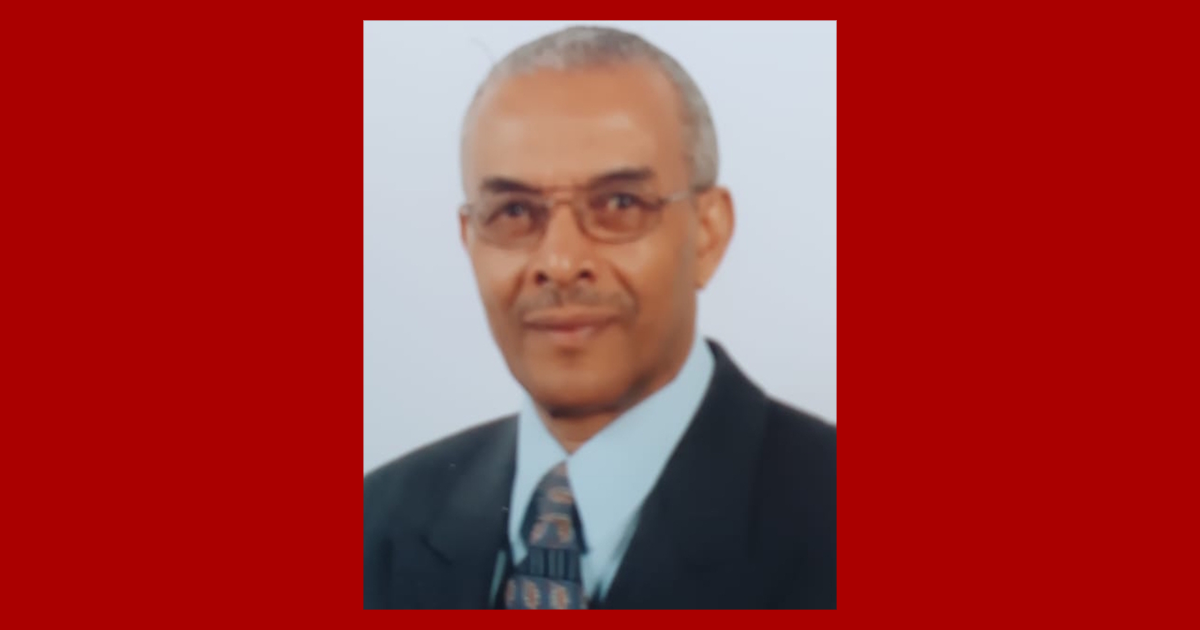
The Oromo people have lost another elder.
With the passing of W. Hundee Hurrisoo on 14 May 2026, we bid farewell to a man whose life journey mirrored many chapters of modern Oromo history itself: shepherd boy, teacher, student activist, journalist, prisoner of conscience, political leader, exile, mediator, author, and elder.
He belonged to that generation that paid not merely with words or ideals, but with years.
Years taken from life itself.
Born in Arsii in 1944, W. Hundee began life as a shepherd. By chance, he entered formal education at Boqojjii elementary school, a turning point that altered the course of his life.
He later trained as a teacher and served in Baalee before joining the then Haile Selassie I University. Like many conscious youth of his generation, he became engaged in the anti-oppression movement and the broader struggle for justice and dignity.
His journey then led him into journalism and public service.
As translator, editor, and later vice editor-in-chief at Bariisaa newspaper and within the Ministry of Information, he dedicated himself to elevating Oromo language, culture, identity, and public consciousness during difficult times when such work carried immense political and personal risk.
History, however, had prepared a heavier burden for him.
In 1980, only two days after receiving a promotion, Derg security forces arrested him without trial.
According to the story later immortalized in his memoir, they reportedly told him they only needed him “for ten minutes.”
Those ten minutes became 4,133 days.
Nearly twelve years.
Years spent moving through ten prison cells and four human cages under the brutal Derg military regime.
Years marked by torture, deprivation, and prolonged imprisonment as a prisoner of conscience.
Yet those years did not break him.
Instead, they later became testimony.
His memoir, The Ten-Minute Mission: The Least Price for Freedom, stands today not merely as personal remembrance but as collective historical witness.
The book documents not only his own suffering but also the experiences of countless Oromo prisoners of conscience who endured years of imprisonment and torture. Through its appendix recording fellow prisoners, the memoir rises beyond autobiography into a collective testament of resilience, sacrifice, and survival.
Perhaps the most powerful words appear on its final page.
After nearly twelve years of imprisonment, W. Hundee concluded his journey with remarkable simplicity:
“Glory to the Creator, Waaqa, and honor to all who fell defending the birthrights and freedom of their people!”
Then came the line that gives the book its soul:
“Finally, I completed the Ten-Minute Mission—not in ten minutes, but in 4,133 days—on Thursday, May 23, 1991.”
The End.
There is something profoundly moving in those words.
No anger.
No bitterness.
Only testimony.
Only memory.
Only dignity.
Following his release in 1991 after the collapse of the Derg regime, W. Hundee returned immediately to service.
He represented the Oromo Liberation Front during Ethiopia’s transitional period before later traveling to Germany for medical treatment. After the OLF withdrew from the transitional coalition government in 1993, he remained in Europe, where Amnesty International support enabled him to receive asylum in Germany.
Even exile did not end his service.
Beginning in 1994, he worked with the OLF foreign office in Europe and assumed various responsibilities, including social affairs and advocacy.
Yet perhaps one of the most beautiful chapters of his later life was his role as elder and reconciler.
Across decades, he dedicated himself to mediation among Oromo political actors and communities, encouraging dialogue, understanding, and unity. This lifelong effort culminated visibly in the reconciliation meetings held in Finfinnee in 2019, where he actively participated in fostering understanding among different sides.
This transformation perhaps captures the fullness of his life:
From resistance to reconciliation.
From prisoner to peacemaker.
From victim of history to keeper of history.
The conception of The Ten-Minute Mission itself reportedly began almost a decade before publication. He openly admitted there was no joy in reopening such painful memories.
Yet he believed future generations needed to know.
Needed to understand.
Needed to remember the brutal realities of the Derg era and the sacrifices carried by prisoners of conscience.
And so he wrote.
Not for himself alone.
But for history.
For memory.
For those who never returned.
W. Hundee Hurrisoo belonged to a remarkable generation now slowly leaving us.
A generation that carried struggle through prisons and exile.
A generation that preserved identity through language and writing.
A generation that lost years so others might inherit freedom.
Some paid with comfort.
Some paid with exile.
Some paid with their lives.
W. Hundee Hurrisoo paid with 4,133 days, and more.
May future generations remember not only that he suffered, but why.
May they remember not only the prisoner, but the teacher.
Not only the activist, but the reconciler.
Not only the elder, but the witness.
May W. Hundee Hurrisoo rest in peace.
"Honor to all who fell defending the birthrights and freedom of their people." ❤️