
Forty Years On: Remembering the Four Oromo Patriots Executed at Ma'kalawi Prison
Excerpt
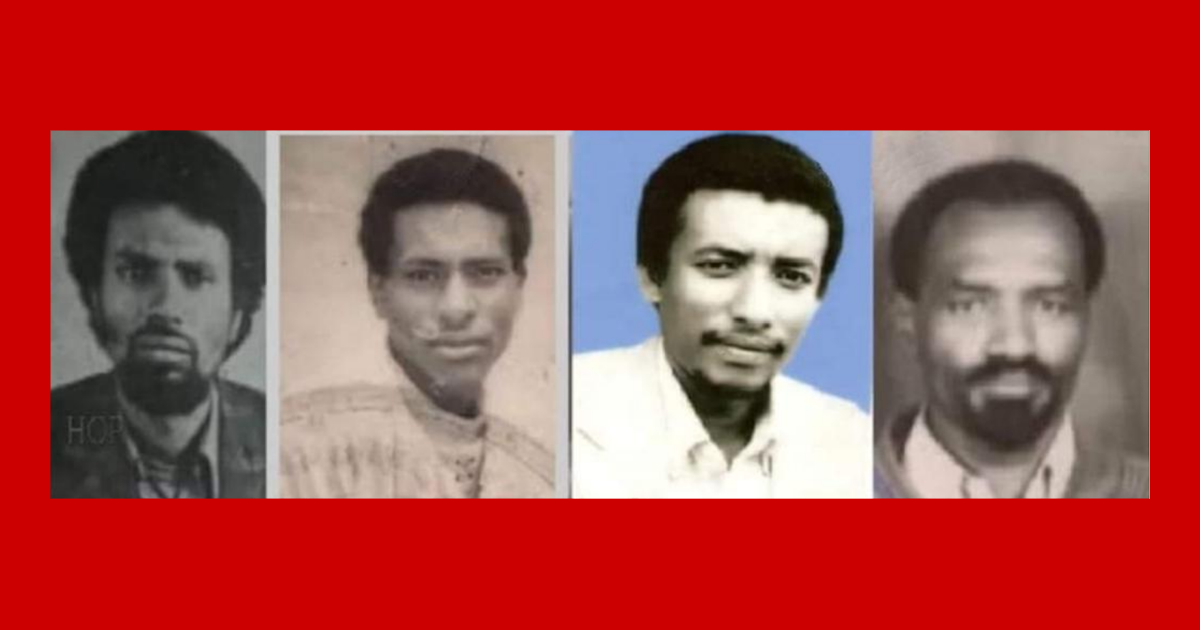
Forty years after the Derg executed four Oromo patriots on 18 October 1986, their final resting places remain unknown. OROMIA TODAY remembers Muhee Abdoo, Lt. Yiggazuu Waaqee, Beekaa (Gazzaayn) K. Jaarraa, and Kabbadaa Damissee, who endured six years of imprisonment and repression before their lives were taken. This anniversary tribute honors their courage, confronts the unanswered questions surrounding their remains, and reflects on the unfinished Oromo freedom project. Four lives taken, four names preserved, and a sacrifice that must never be forgotten.
Four Lives Taken, Four Names That Must Endure
Forty years have passed since four Oromo patriots were executed by the Derg. Their lives were taken, their voices silenced, and their final resting places remain unknown. Yet the aspirations for which they suffered and died remain an unfinished chapter in the Oromo people's quest for freedom.
On 18 October 1986, the military dictatorship known as the Derg executed four prominent members of the Oromo Liberation Front (OLF) while they were in custody at the notorious Ma’kalawi detention and torture center in Addis Ababa.
Their names were Muhee Abdoo, Lt. Yiggazuu Waaqee, Beekaa (Gazzaayn) K. Jaarraa, and Kabbadaa Damissee.
They had been imprisoned since 1980. For six long years, they endured the darkness of incarceration, brutal physical and psychological abuse, and the uncertainty of whether they would ever again walk as free men. Their ordeal ended not in justice, but in execution.
Forty years later, their names summon more than sorrow. They summon a history of resistance, a profound moral debt, and an obligation to remember those who paid the ultimate price for their convictions.
Their execution was not merely the killing of four courageous individuals. It was an attempt to crush the aspirations of a people who had long struggled for freedom, dignity, equality, and the right to determine their own future.
Yet history has repeatedly demonstrated the limits of repression. A regime may imprison its opponents, torture their bodies, and silence their voices. What it cannot so easily extinguish is the conviction that gives their struggle meaning.
The Derg succeeded in taking four lives. It did not succeed in burying the Oromo people's aspirations for freedom.
Six Years Behind the Walls of Ma’kalawi
Ma’kalawi was no ordinary prison. Under successive Ethiopian governments, it became a symbol of political persecution, interrogation, and the systematic abuse of those deemed enemies of the state. During the Derg era, its name became particularly associated with fear, suffering, and the machinery of authoritarian repression.
For the four Oromo patriots, imprisonment beginning in 1980 meant years of separation from their families, comrades, and communities. Accounts of their ordeal describe severe beatings and sustained physical and psychological torture intended to break their resolve and force them to abandon their political convictions.
Six years is a long time in the life of any human being. Six years behind prison walls, subjected to suffering and uncertainty, is a measure of endurance that those who have never experienced political imprisonment can scarcely comprehend.
Beyond the physical suffering lay another cruelty: the deliberate deprivation of ordinary human existence. The freedom to embrace loved ones, to watch children grow, to share a meal in peace, or simply to wake without fear of interrogation or violence was denied to them.
Their captors possessed the instruments of coercion. The prisoners possessed something their captors sought to destroy: the conviction that their people deserved a different future.
On 18 October 1986, the Derg brought their ordeal to its final, violent conclusion.
But their execution was not the end of their story. It marked the beginning of another responsibility: the duty of those who survived to ensure that their lives and sacrifices would not disappear into the silence of history.
Forty Years Without a Grave
There is another cruelty in the story of these four Oromo patriots, one that did not end with their execution on 18 October 1986.
Forty years later, their final resting places remain unknown.
In his book A Ten-Minute Mission: The Least Price for Freedom, the late W. Hundee Hurrisoo—himself a prisoner of conscience who shared the Ma’kalawi prison with these four patriots—pays tribute to the four men and draws attention to the enduring mystery surrounding their remains.
According to his dedication, they were executed while still in custody. Their bodies were never accounted for, and their burial places remain unknown. The author suggests that their remains may lie within the grounds of the notorious Ma’kalawi detention and torture headquarters. He also records suspicions that the regime may have used an incineration chamber to dispose of bodies.
These possibilities remain unverified and must be distinguished from established historical facts. Yet the absence of a known resting place is itself a deeply troubling part of their story.
For their families, there was no known grave at which to mourn, no final resting place to visit, and no certainty about what became of the bodies of their loved ones.
Death is an irreversible loss. But when the fate of a person's remains is concealed or left unexplained, grief is compounded by uncertainty, and mourning is denied one of its most basic human consolations.
The tragedy is therefore not confined to four executions in 1986. It extends across forty years of unanswered questions.
Where were they buried? Were their bodies ever returned to the earth? Were their remains destroyed? Who knew what happened, and what records, if any, survived the regime that killed them?
These are not merely historical curiosities. They are questions of human dignity, accountability, and the right of families to know what happened to their loved ones.
The passing of four decades does not extinguish that right.
Nor should the fall of the Derg absolve subsequent authorities of the responsibility to preserve records, investigate credible evidence, and help families establish the fate of those who disappeared into the machinery of political repression.
A grave is more than a place where the dead are laid to rest. It is a place where the living can acknowledge loss, preserve memory, and offer the dignity of remembrance.
These four patriots have been denied even that certainty.
The Derg took their lives. Forty years later, history has yet to tell their families where their bodies were laid to rest.
Until that question is answered, their story remains unfinished in a painfully literal sense.
They have no known graves. But they must never become men without a place in history.
Four Names, Four Lives, Four Unfinished Stories
Muhee Abdoo. Lt. Yiggazuu Waaqee. Beekaa (Gazzaayn) K. Jaarraa. Kabbadaa Damissee.
Four names that deserve to be spoken with reverence, but never reduced to ceremonial recitation.
Behind each name was a human being with a life beyond politics: relationships, memories, hopes, aspirations, and a future that was violently taken away.
They were sons, relatives, friends, and comrades. They belonged to families whose grief could not be measured by political statements or commemorative anniversaries. Their absence left spaces that no subsequent historical achievement could entirely fill.
It is easy, particularly after forty years, to speak of sacrifice in the abstract. Yet sacrifice is never abstract to those who bear its consequences.
For the families, there was no return home. No reunion after imprisonment. No opportunity to recover the years stolen by incarceration. No chance to grow old together.
The executioners ended four lives, but their actions inflicted suffering far beyond the prison walls.
This is why remembrance must restore the humanity of those whom political repression attempted to reduce to enemies, prisoners, or statistics.
The four patriots were not born to become martyrs. They were human beings who believed that their people deserved freedom and dignity. Their political convictions placed them in confrontation with a state that answered dissent with imprisonment, torture, and ultimately death.
Their memory belongs first to those who knew and loved them. It also belongs to their comrades, to the history of the Oromo liberation movement, and to generations of Oromos who inherited the political questions for which they struggled.
They did not live to see the future they sought. That does not diminish their contribution to the struggle to bring that future into being.
From Imperial Domination to Revolutionary Repression
The execution of these four OLF members cannot be understood in isolation from the broader historical experience of the Oromo people.
The modern Ethiopian state took shape through nineteenth-century imperial expansion, particularly under Emperor Menelik II, whose military campaigns incorporated extensive Oromo territories into the expanding empire.
For many Oromo communities, incorporation brought profound political, economic, and social upheaval, including the loss of political autonomy, land dispossession, and the establishment of unequal structures of power.
The Derg, which overthrew the imperial government in 1974, proclaimed a revolutionary break with the old order. It promised to dismantle feudal relations and transform Ethiopian society.
Yet the overthrow of the monarchy did not resolve the Oromo question.
Although the Derg introduced significant changes, including land reform, it preserved a highly centralized political order and employed extensive coercion against perceived opponents. Oromo nationalists who challenged the state's political foundations continued to face persecution.
For the Oromo liberation movement, the fundamental contradiction remained: a revolution that claimed to liberate the oppressed could itself become an instrument of repression when confronted with demands for national self-determination.
The fate of the four patriots illustrates this painful historical continuity.
A change of rulers is not necessarily a change in the relationship between the state and the peoples it governs. The removal of an emperor does not automatically dismantle authoritarianism. Nor does the language of revolution guarantee the practice of freedom.
Different regimes must be judged according to their particular histories, policies, and actions. Yet the persistence of coercive political structures across successive governments raises a question that remains relevant today:
What meaning does political change have if the people who endured domination remain denied meaningful control over their collective future?
Ma’kalawi stands as a warning against confusing the replacement of rulers with the achievement of liberty.
Forty Years Later: The Burden of Memory
Forty years is long enough for a generation to be born, reach adulthood, and raise children of its own.
Many young Oromos living today were born decades after the execution of these four patriots. To them, 18 October 1986 may seem a distant historical date, belonging to an era they know only through books, family recollections, and political narratives.
But historical distance must never become historical amnesia.
A nation that fails to preserve the stories of those who suffered for its freedom risks losing not merely knowledge of the past, but an understanding of the moral and political responsibilities inherited from it.
Commemoration, therefore, must extend beyond anniversary statements and expressions of grief.
It must involve the preservation of personal histories, photographs, correspondence, prison testimonies, family recollections, and documentary evidence. The memories of surviving relatives and comrades are especially precious, for every passing year diminishes the opportunity to record firsthand accounts.
Oromo historians, researchers, educational institutions, cultural organizations, and media outlets have an important role in safeguarding this historical inheritance.
The stories of these four men deserve a place in the historical record that future generations can examine, question, understand, and preserve.
Their memory should not depend solely on whether an anniversary happens to attract public attention.
Nor should the preservation of their stories be left entirely to their families, who have already carried the heaviest burden.
The passage of time may soften the immediacy of grief. It must never erase the historical significance of injustice.
The Freedom They Sought Remains an Unfinished Project
The execution of the four patriots did not end the Oromo struggle. Nor did the fall of the Derg in 1991 settle the fundamental political questions that had animated generations of Oromo resistance.
Questions of self-determination, political power, equality, democratic representation, and the relationship between Oromia and the Ethiopian state have continued to shape Oromo political life.
Successive generations have confronted these questions under changing political circumstances, with differing strategies, expectations, and visions of the future.
The historical circumstances of 1986 are not identical to those of 2026. Yet the enduring aspiration to live with dignity, exercise meaningful political choice, and enjoy freedom from repression remains recognizable across those four decades.
For those committed to the Oromo freedom project, remembering the four patriots should therefore be more than an exercise in historical loyalty.
It should be an occasion for serious reflection.
What has been achieved? What remains unresolved? What lessons have been learned from the sacrifices of earlier generations? And how can the pursuit of freedom be advanced without reproducing the very injustices against which those generations struggled?
The answers demand political clarity, intellectual honesty, strategic discipline, and a commitment to the welfare and rights of the Oromo people.
They also require recognition that the moral legitimacy of a freedom struggle rests not only on the injustices it opposes, but also on the values it seeks to establish.
The objective must be a future in which political disagreement is not treated as treason, peaceful dissent is not answered with imprisonment, and no individual is tortured or executed for holding political convictions.
A future in which Oromos can protect their language, culture, identity, and collective rights while enjoying the freedoms and protections that belong to every human being.
The ultimate vindication of those who suffered under authoritarianism would be the creation of a political order in which such suffering is neither tolerated nor repeated.
The finest tribute to those who died for freedom is to build a society in which no one must die merely for demanding it.
Their Execution Was an Ending. Their Legacy Is Not.
There is something profoundly tragic about a life cut short for a future its owner will never see.
The four patriots could not have known how the political landscape would change in the forty years following their execution. They would not witness the fall of the regime that killed them. They would not see the subsequent political transformations, the achievements, the disappointments, or the continuing struggles of the Oromo people.
They were denied the ordinary privilege of growing older and seeing what became of the world they had hoped to change.
And yet their story survives.
It survives in the historical memory of the Oromo liberation movement, in the grief and recollections of those who knew them, and in the continuing determination of those who believe that freedom and dignity are not privileges granted at the discretion of rulers.
Their executioners exercised power over their bodies. They could not exercise permanent power over their place in history.
The state that condemned them is itself now part of history. The questions for which they suffered remain alive.
This is not to romanticize death or to suggest that suffering is a prerequisite for political legitimacy. No people should have to purchase their freedom with the lives of successive generations.
Rather, it is to recognize the courage of those who confronted repression at enormous personal cost and to insist that their sacrifice be remembered without allowing martyrdom to become a substitute for political progress.
The living owe the dead more than admiration.
They owe them remembrance, historical truth, and a determination to ensure that the injustices they endured are not repeated.
Forty Years On, We Remember
On this fortieth anniversary, OROMIA TODAY pays solemn tribute to Muhee Abdoo, Lt. Yiggazuu Waaqee, Beekaa (Gazzaayn) K. Jaarraa, and Kabbadaa Damissee, four Oromo patriots executed by the Derg on 18 October 1986.
We remember their six years of imprisonment and suffering.
We remember the cruelty of a political system that answered conviction with torture and dissent with death.
We remember the families who lost their loved ones, the comrades who lost their companions, and the Oromo nation that lost four of its dedicated sons.
We also remember that behind every celebrated name are countless others whose sacrifices remain insufficiently documented, whose stories have not been told, and whose families continue to carry the burden of loss.
Forty years ago, four Oromo patriots disappeared into the final darkness of a brutal dictatorship.
Their executioners denied them life. History has yet to reveal where their bodies were laid to rest.
But no prison wall, no unmarked grave, and no passage of time can justify their disappearance from the memory of the people for whom they struggled.
Today, we speak their names once more.
Muhee Abdoo.
Lt. Yiggazuu Waaqee.
Beekaa (Gazzaayn) K. Jaarraa.
Kabbadaa Damissee.
They have no known graves where flowers can be laid, no identified resting places where their families and descendants can gather in remembrance.
Let the memory of the Oromo nation be their monument. Let historical truth be their epitaph. And let the pursuit of freedom and justice be the living tribute to their sacrifice.
Forty years have passed.
Their execution belongs to history. Their missing graves remain an unanswered injustice. Their aspirations remain a responsibility of the living.
May their names live on. May their families find answers. May their sacrifice never be forgotten.
OROMIA TODAY | 18 October 2026
Historical acknowledgment: The identification of the four patriots and the account of their unknown resting places are drawn from the dedication in W. Hundee Hurrisoo's book, A Ten-Minute Mission: The Least Price for Freedom. The suggestions concerning the possible location or destruction of their remains are reported as suspicions, not established findings.


OROMIA TODAY’s tribute to Muhee Abdoo, Lt. Yiggazuu Waaqee, Beekaa (Gazzaayn) K. Jaarraa and Kabbadaa Damissee, executed by the Derg at Ma’kalawi on 18 October 1986, is a dignified act of remembrance that restores four men to their families and their history while carefully separating what is known from what is only suspected about their unmarked graves. Its central finding is the right one: replacing rulers has never meant achieving liberty. From Menelik’s conquest through the imperial order to a Derg that promised revolution and delivered torture, the relationship between the Ethiopian state and the Oromo people has survived every change of government, which is why the freedom these men died for remains, as the tribute concludes, an unfinished project.
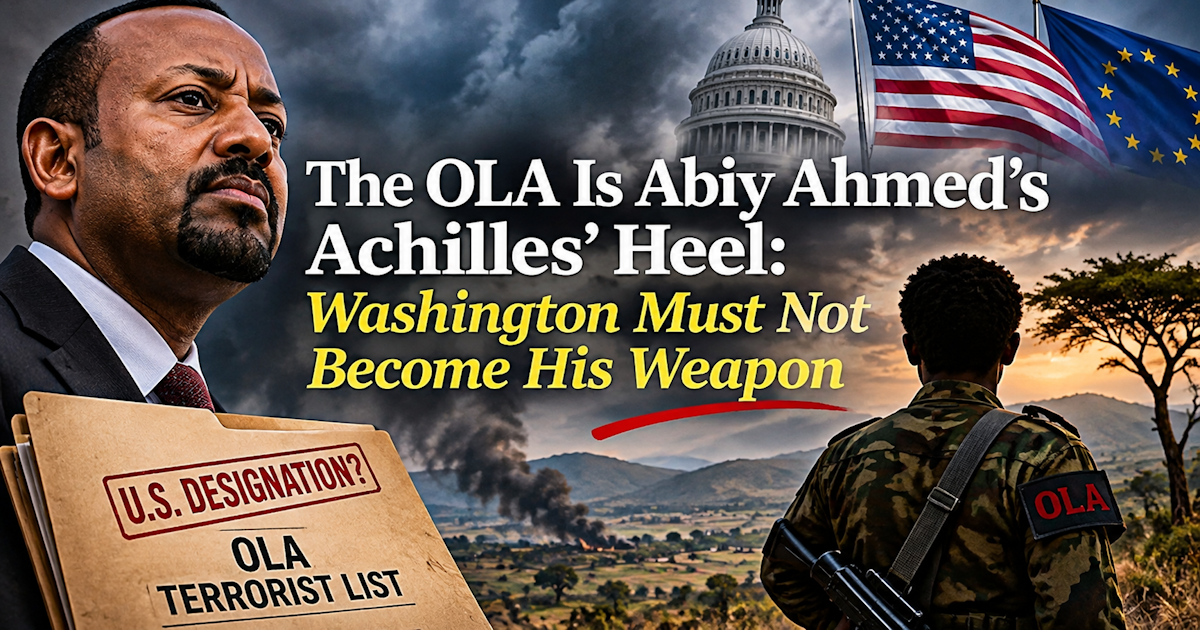
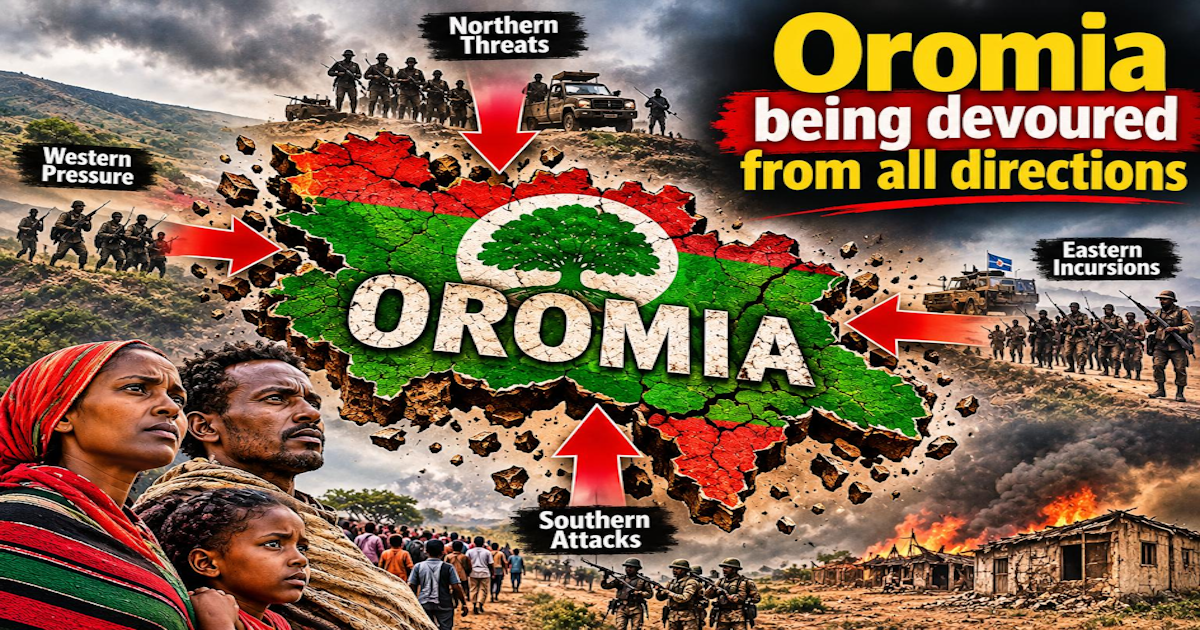
What the tribute leaves unsaid is that this continuity did not end in 1991. Federalism, with its recognition of nations and nationalities and the Article 39 right to self-determination, was a genuine answer to the national question, but the TPLF-led EPRDF hollowed it out. While writing that right into the Constitution, it worked behind the scenes to reduce Oromia: a 2004 boundary referendum that Oromo critics regard as illegitimate placed contested kebeles, including parts of Moyale, under the Somali region, and Liyu Police incursions followed, displacing up to 400,000 people in 2017–18 under the TPLF/EPDRF principle of ” it is possible to make a big nation small. The Prosperity Party has now gone further, moving against the right itself: in August 2026 its National Dialogue Conference, from which the OFC and OLF were absent, agreed to abolish the constitutional right to secession and sent the proposal to Parliament.
That is why Oromia’s right to decide its own future, up to and including independence, is not only long overdue but urgent. A people making up roughly 40% of Ethiopia’s population has watched reform from within fail in 1974, 1991 and 2018, has seen its territory chipped away, and now faces the removal of the one lawful route to choose its own status. The tribute rightly says that a freedom struggle is judged by the values it builds, and that points to a clear demand: a peaceful, internationally observed referendum under Article 39 before that right is erased, alongside an independent inquiry into the fate of the Ma’kalawi dead. Remembering the four patriots well means giving the Oromo people the free choice they were denied in 1986.