
Managing Border Disputes Among Transboundary Pastoralist Communities: The Case of the Garrii–Borana Conflict in Moyale—A Report
You can listen to the audio of this article.
Excerpt
The October–November 2026 Moyale crisis exposed the dangers of imposing rigid territorial boundaries on transboundary pastoralist communities. In this research report, Tsegaye R Ararssa examines the historical, constitutional, humanitarian and geopolitical dimensions of the Garrii–Borana conflict and proposes a phased pathway towards security stabilization, shared municipal governance and transboundary resource management—placing customary institutions, mobility and negotiated coexistence at the center of sustainable conflict resolution.
Prepared For: Diplomatic Missions, Humanitarian Agencies, and Regional Policy Stakeholders.
Disclaimer: Contested Territorial Boundaries
A persistent legacy of the EPRDF regime, dating back to 1991 and continuing to the present, is the deliberate misalignment of territorial boundaries, including alleged forcible territorial acquisitions undertaken with the acquiescence or wilful blindness of regional and federal authorities. Such practices have served as instruments of divide-and-rule politics, fueling inter-ethnic tensions and perpetuating conflict. This unresolved legacy remains a fundamental source of recurring disputes between the regional states of Oromia and Somali.
Accordingly, any territorial attribution or reference to existing regional administrative boundaries in this report must not be construed as an endorsement of the status quo, recognition of disputed territorial claims, or prejudgement of legitimate claims awaiting lawful and equitable resolution.
Executive Summary
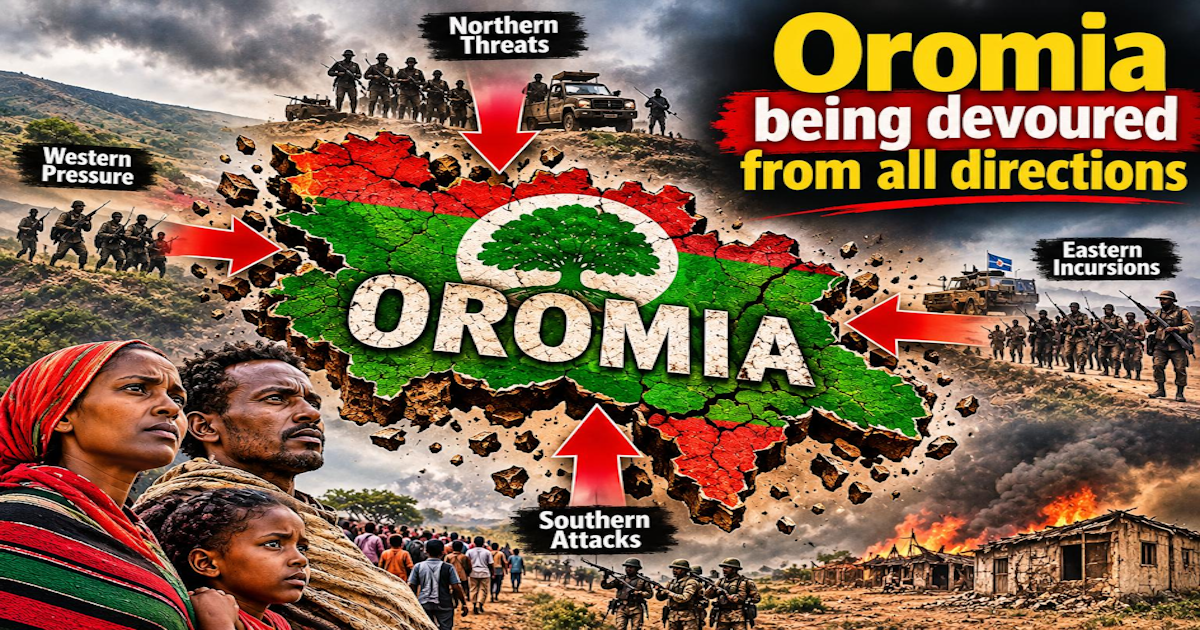
The October–November 2026 escalation in Moyale demonstrates how the imposition of rigid state-territorial borders upon transboundary pastoralist societies can convert localized resource competition into protracted, high-casualty regional crises. Situated astride the Ethiopia–Kenya international boundary, the twin-town urban corridor of Moyale has served for more than two decades as an unresolved institutional fault line between Ethiopia’s Oromia and Somali Regional States. On 18 October 2026, a unilateral administrative inauguration and flag-raising ceremony in a contested sector of Ethiopian Moyale triggered a chain reaction of protests, targeted violence and sustained clashes between local Borana communities on the one hand and heavily armed Somali regional security units, its Special Forces and affiliated clan militias on the other.
By early November 2026, hostilities had expanded from Moyale’s urban neighborhoods into eight surrounding districts—including Hudet in neighboring Arero—displacing an estimated 50,000 individuals across the international frontier into Kenya’s Marsabit County and more than 14,000 individuals within Ethiopia. The crisis has paralyzed commercial transit along the Mombasa–Finfinnee corridor, inflicted civilian casualties on both sides of the international border, and generated an acute public-health and food-security emergency requiring immediate multilateral intervention. This report provides an empirical analysis of the historical, constitutional and geopolitical drivers of the Garrii–Borana conflict, evaluates state and non-state dynamics during the October–November 2026 emergency, and outlines actionable policy pathways towards stabilization.
1. Introduction
Borderlands in the Horn of Africa rarely function as neat lines of sovereign separation; rather, they operate as dynamic zones of ecological, commercial and kinship convergence. Few locations exemplify this structural tension more acutely than Moyale, a strategic transit town divided between southern Ethiopia and northern Kenya. On the Ethiopian side, Moyale sits at the administrative junction of the Borana Zone of Oromia Regional State and the Liban Zone in Somali Regional State.
For decades, the town and its surrounding rangelands have been the epicentre of recurring violent confrontation between the Borana—the senior branch of the Oromo—and the Garrii, an essentially Oromo clan that has more recently self-identified as Somali while maintaining deep historical ties to Oromo social structures.
While popular narratives frequently reduce the Garrii–Borana conflict to primordial ethnic animosity or climate-induced scarcity, empirical scholarship demonstrates that the crisis is fundamentally institutional and political. Since 1991, Ethiopia’s federal restructuring has incentivized regional elites to transform fluid pastoralist grazing commons into exclusive, demarcated administrative territories (Kefale 2013; Markakis 2011). Because political representation, federal fiscal transfers and control over lucrative cross-border customs corridors depend upon territorial jurisdiction (Hagmann 2005), boundary demarcation in Moyale has become a zero-sum contest.
Understanding the October 2026 outbreak requires situating its immediate triggers within three intersecting analytical frames: the structural paradoxes of Ethiopia’s multinational federal architecture, the ecological imperatives of transboundary pastoralism, and the geopolitical volatility of the wider Horn of Africa.
2. The Broader Context: The Multinational Federal Experiment and Its Margins in a Volatile Geopolitical Arena
Ethiopia’s chequered 1991 transition to multinational federalism institutionalized identity-based territoriality. As a result, peripheral pastoralist frontiers increasingly became contested arenas of state-building for the “modern” local political elite. Under the 1995 Constitution of the Federal Democratic Republic of Ethiopia (FDRE), sovereignty was vested in the “Nations, Nationalities, and Peoples” of Ethiopia (Article 8), operationalized through the creation of national regional states on the basis of “settlement pattern, language, identity, and consent of their population” (Article 46) (Regassa 2010). While intended to overcome the legacy of imperial colonial oppression and correct historical centralization and cultural erasure under the monarchical and military regimes, this institutional design required drawing hard cartographic boundaries across regions historically characterized by overlapping residency and seasonal mobility.
In Ethiopia’s southern and eastern lowlands—historically termed the “margins” of the highland state—administrative boundaries were superimposed upon complex, multi-clan social landscapes. Under the new constitutional dispensation, territory ceased, for the local elite, to be merely a shared ecological resource; it became the primary currency of political power. Control of a kebele (the smallest administrative unit) or woreda (district) directly determined which regional state could levy local taxes, appoint administrative cadres, deploy regional security forces and claim parliamentary seats (Hagmann 2005; Abbink 2011; Hagmann and Mulugeta 2008; Unruh 2005). Consequently, local disputes over wells, grazing pastures and urban plots were elevated into existential constitutional struggles between two of Ethiopia’s largest regional states: Oromia and Somali.
This domestic institutional fragility unfolds within an exceptionally volatile geopolitical arena. Moyale is not an isolated rural outpost; it is the primary overland gateway linking landlocked Ethiopia’s population of more than 120 million to Kenya’s Indian Ocean ports. The town anchors both the Mombasa–Nairobi–Finfinnee highway corridor and the flagship Lamu Port–South Sudan–Ethiopia Transport (LAPSSET) infrastructure initiative.
For Finfinnee and Nairobi, uninterrupted transit through Moyale is vital to regional trade integration and customs revenue. Simultaneously, the surrounding frontier lies adjacent to southern Somalia and northern Kenya—areas marked by persistent clan insurgencies, illicit arms proliferation and transnational militant networks. Any prolonged breakdown of order in Moyale therefore threatens not only internal stability, but also bilateral Kenya–Ethiopia security cooperation and broader Horn of Africa supply chains.
3. Borders Among Borderless Peoples: Transboundary Peoples as Positively Transgressive—Using Mobility to Forge Understanding and Collaboration
Pastoralist survival in arid and semi-arid ecosystems depends upon ecological reciprocity and spatial mobility, rendering fixed state boundaries inherently disruptive to customary livelihoods. In the Moyale rangelands, where annual rainfall is erratic and concentrated in bimodal seasons, neither the Borana nor the Garrii can sustain livestock herds within rigid administrative enclosures. Historically, both communities operated as “borderless” transboundary societies whose social organisation, trade networks and seasonal migration routes routinely transgressed colonial and post-colonial state boundaries.
For centuries, access to key dry-season water sources—most notably the ancient deep-well complexes known as tulaa, such as those at Goff, Lei and Waacille—was governed by sophisticated customary institutions rather than exclusive territorial ownership. Among the Borana, the Gadaa sociopolitical system and customary laws (Aadaa-Seera Boorana) regulated water allocation, pasture rotation and conflict mediation, granting negotiated access rights to neighboring groups, including the Garrii, under reciprocal obligations. Similarly, Somali customary law (Xeer) established contractual norms for peaceful coexistence, blood-wealth compensation (diya) and shared resource utilization across clan lineages (Ararssa 2001; Hagmann 2007; Hagmann 2020).
Moreover, empirical research in the Moyale borderland underscores that Garrii and Borana communities have historically exhibited profound social and economic interdependence alongside periodic friction. Many Garrii lineages are bilingual in Afaan Oromoo and Af-Soomaali, share historical alliances with Borana clans, and engage in dense cross-border commerce (Bassi 2005). Livestock raised in southern Ethiopia are trekked across the border to Kenyan markets in Moyale, Isiolo and Nairobi, while manufactured goods, foodstuffs and currency circulate fluidly in the opposite direction. Grassroots networks—including cross-border women traders and councils of elders, such as the Abbaa Gadaas and the Gurtii—have repeatedly utilized kinship ties to issue early warnings and de-escalate localized violence when formal state mechanisms have faltered.
However, successive state interventions—beginning with the Anglo-Ethiopian boundary demarcation of 1907 and accelerating after 1991—steadily eroded these collaborative frameworks. By politicizing clan identity and subordinating customary elders to regional state administrations, modern border governance transformed transboundary mobility from an adaptive ecological strategy into a perceived act of territorial encroachment.
4. The Oromia–Somali Regional Border Disputes and Their Resolution: The 2004 Referendum in Focus
The October 2004 border referendum failed to produce a durable settlement because it applied a majoritarian, binary territorial formula to communities defined by overlapping demographic histories. Throughout the 1990s and early 2000s, violent clashes between Oromo and Somali communities escalated along their shared 1,400-kilometre boundary, prompting the federal House of Federation to mandate a constitutional plebiscite to determine administrative jurisdiction over contested kebeles (Ararssa 2026).
Conducted by the National Electoral Board of Ethiopia (NEBE) on 24 October 2004, the referendum targeted 463 contested kebeles across multiple zones. According to official NEBE records, 240,526 voters were registered and 199,760 cast valid ballots, representing an 83.1% turnout. Across the 420 kebeles where voting was successfully completed and validated, 64.8% of voters (129,424) opted for administration under Oromia Regional State, while 35.2% (70,336) voted to join Somali Regional State. Overall, roughly 77% to 80% of the decided kebeles were awarded to Oromia. In 41 kebeles, the referendum was postponed because of bitter disagreements concerning electoral agents and observers, as well as ambiguity over the identity of voters categorized as “foreigners” or “displaced”.
Rather than resolving the dispute, the 2004 referendum generated long-running grievances for four critical reasons.
4.1. Incomplete Implementation in Moyale:
Voting was suspended or invalidated in 41 kebeles because of security disruptions, registration disputes and disagreement over the identity of “displaced” persons returning to participate in the referendum. Crucially, no referendum was conducted in core urban neighborhoods of Moyale town and several surrounding strategic kebeles. Their jurisdictional status was consequently left undetermined, producing an ambiguous administrative status quo.
In two kebeles around Jijjigaa, voting was not conducted because the Oromia National Regional state government revoked its claims.
4.2. Demographic Contestation and Returnee Flows:
Somali political elites and Garrii leaders contested the voter rolls, arguing that tens of thousands of ethnic Somalis displaced by earlier droughts and the 1991–1992 civil war were residing in refugee camps in Kenya and Somalia during registration, thereby artificially skewing demographic outcomes in Oromia’s favor.
4.3. Asymmetric Post-Referendum Displacement:
Following the announcement of the results, tens of thousands of ethnic Somalis fled newly designated Oromia kebeles, fearing administrative marginalization, while Oromo minorities faced retaliatory pressures in Somali-administered zones.
4.4. Absence of Joint Administrative Mechanisms:
Subsequent federal mediation agreements—including a high-profile April 2017 accord between the Oromia and Somali regional presidents to enforce the 2004 results and resolve remaining disputed localities—collapsed within months, leading to severe violence in September 2017 that displaced more than 1.8 million people nationwide.
In the years following Ethiopia’s 2018 political transition, tensions persisted beneath the surface. Unilateral administrative restructuring—including Somali Regional State’s creation of new administrative zones and woredas in contested borderlands—was viewed by Oromo residents as an effort to alter facts on the ground, setting the stage for the October 2026 confrontation.
5. The Current Moyale Crisis
5.1. Genesis
The October 2026 crisis is the direct institutional consequence of dual, overlapping municipal governance within a single urban space. For more than two decades, Ethiopian Moyale has functioned under a bifurcated administrative arrangement in which both Oromia Regional State, through its Borana Zone administration, and Somali Regional State, through its Liban Zone administration, claim municipal jurisdiction. Both regional governments maintain parallel administrative offices, rival tax-collection checkpoints, separate police presences and competing municipal-service structures within overlapping urban neighborhoods (kebeles). In the absence of a federally enforced municipal charter or clear boundary demarcation, any routine administrative act—such as issuing land titles, collecting market levies or opening a government office—is interpreted by the rival administration as a sovereign violation.
5.2. Immediate Causes
Hostilities were ignited on 18 October 2026 by a unilateral symbolic assertion of regional authority in a neighborhood of Moyale located on the Oromia side of the main road dividing the town. According to conflict-monitoring data compiled by the Armed Conflict Location & Event Data Project (ACLED), officials from Somali Regional State inaugurated a new administrative office and hoisted the Somali regional flag in a section of Ethiopian Moyale claimed by the Oromia regional administration.
Within hours of the flag-raising ceremony, confrontation broke out between local Oromo youths, militia elements and Somali regional police units. During the initial unrest, a 13-year-old ethnic Oromo girl, Diiqo Jaatani Aaga, was fatally shot. Her death catalyzed widespread outrage across Borana communities, transforming an administrative dispute into acute communal mobilization. On 19 and 20 October, protests erupted across the town, barricades were erected along the main Finfinnee–Moyale highway, and retaliatory incidents—including a grenade attack targeting local administrative officials—shattered a fragile, short-lived truce.
5.3. Underlying Factors
Beneath the immediate trigger of flag displays and office inaugurations lie deep structural grievances over land alienation, fiscal control and political representation.
Territorial and Pastoralist Insecurity: Borana elders and regional officials view incremental Somali administrative expansion in Moyale and neighboring districts as systematic encroachment upon ancestral Borana rangelands and vital dry-season tulaa water points (Tache and Oba 2009). Conversely, Garrii leaders maintain that Moyale’s urban core is historically predominantly Somali and argue that Oromia’s administrative claims seek to disenfranchise Garrii residents and sever their political link to Somali Regional State.
Rent-Seeking and Corridor Revenues: Control over Moyale’s urban economy provides substantial fiscal and informal rents. Customs-clearance operations, livestock export taxation and cross-border commercial transit generate millions of dollars in monthly revenue. Control over specific kebeles determines which regional administration—and which aligned commercial networks—captures these economic flows.
Proliferation of Regional Security Forces: Over the past decade, Somali Regional State has built up heavily armed regional special paramilitary units, commonly referred to as Liyu forces, alongside local community militias. Its Oromia equivalent, meanwhile, was disbanded in 2022, while local people have been subjected to heavy military surveillance because the Borana are suspected of supporting the Oromo Liberation Army (OLA). The presence of an armed regional formation inside the town, together with an increasing number of trenches reportedly dug on the Somali side of the road during the preceding three or four months, dramatically lowered the threshold for lethal escalation.
5.4. The Flare-Up of Violence on 22 October
Following four days of mounting tension, a full-scale armed attack was launched by the SNRS Special Forces on the night of 21 October and continued throughout 22 October 2026. Heavy exchanges of small-arms fire, rocket-propelled grenades and mortar fire engulfed multiple urban neighborhoods in Ethiopian Moyale, including Malab, Cammuq, Boolee and Kebeles 01 and 02.
Unlike localized street brawls, the 22 October escalation involved direct armed confrontation between local Borana Zone militia on the one hand and Somali Regional Special Forces, Somali Regional Police units and mobilized Somali clan militias on the other. By 26 October, fighting had spilled well beyond Moyale’s municipal limits, spreading across seven to eight surrounding rural districts in southern Oromia and Somali regions, including heavy clashes in the Hudet area of neighboring Arero district. Gunfire and heavy-artillery bombardments continued intermittently through late October and into early November, frequently intensifying during night-time hours.
5.5. The Consequences: Deaths, Injuries, Destruction and Displacement
Within three weeks of the initial outbreak, the conflict produced nine verified civilian human casualties. The number of casualties is estimated to rise up to 12-15 when the combatant casualties are considered. The conflict also caused widespread infrastructural destruction and produced the largest cross-border displacement on the Kenya–Ethiopia frontier in recent years (since 1991).
Impact Snapshot: 18 October–12 November 2026
1. Confirmed Fatalities and Injuries: At least 12–15+ confirmed civilian and combatant deaths, including nine hospital-verified deaths in Ethiopian Moyale between 22 and 23 October and three fatalities on the Kenyan side; more than 50–100 individuals were treated for gunshot and shrapnel wounds across Moyale hospitals. Primary reporting sources: Hospital officials, Reuters and the Kenya Ministry of Interior.
2. Cross-Border Displacement: Approximately 50,000 individuals crossed from Ethiopia into Marsabit County, Kenya (rising from 15,240 on 24 October and 36,000 on 25 October before it rose to 50, 000 between 25 October and 3 November). UNHCR; IOM; Kenya Department of Refugee Services (DRS).
50,000 individuals crossed from Ethiopia into Marsabit County, Kenya, rising from 15,240 on 25 October and approximately 36,000 by 24 October/3 November. Primary reporting sources: UNHCR, IOM and Kenya Department of Refugee Services (DRS).
3. Internal Displacement in Ethiopia: Large-scale internal displacement was reported across eight districts in Oromia and Somali Regional States, with more than 14,000 people initially displaced inside southern Ethiopia. Primary reporting sources: Regional authorities, Europe External Programme with Africa (EEPA) and Ethiopian Red Cross.
4. Property and Infrastructure: Extensive burning and looting of residential homes, commercial shops, hotels and local administrative offices were reported in contested Moyale neighborhoods. Primary reporting sources: Displaced-resident testimonies, Al Jazeera and inter-agency situation reports.
5. Trade and Economic Disruption: Cross-border customs operations were completely suspended; dozens of commercial cargo trucks were stranded along the Mombasa–Finfinnee highway; and the closure of banks and markets caused acute shortages of staple foods and associated price increases. Primary reporting sources: Kenya Red Cross, local Chamber of Commerce and media reports.
5.6. Aftermath
The immediate aftermath of the October–November fighting has been marked by deepened communal segregation, bilateral diplomatic friction and heightened border militarization. Inside Ethiopian Moyale—which, at the time this report was compiled, remained under the control of Somali National Regional State Special Forces—neighborhoods have become starkly polarized along ethno-regional lines, eroding decades of everyday commercial coexistence.
Across the international border, the conflict directly compromised Kenyan territorial security. Stray bullets and explosive projectiles repeatedly landed in Kenyan Moyale, killing at least one Kenyan national and wounding roughly 20 residents, while forcing Kenyan border households to flee further inland. Simultaneously, intercommunal tensions spilled into neighboring Kenyan counties. In Mandera town, retaliatory threats forced 176 members of the local Oromo community to seek protective shelter at Mandera Police Station.
In response, Kenya’s Inspector General of Police, Douglas Kanja, visited Moyale on 5 November 2026, ordering reinforced deployments of specialized police units along the frontier and initiating urgent diplomatic engagements with Ethiopia to contain the spillover. Similarly, more than 150 homes belonging to Oromo refugee-residents in Borama town, Somaliland, have reportedly been razed to the ground, while hundreds of residents have been targeted in attacks.
6. Where Is the Government in All This?
The response of the Ethiopian federal government has been characterized initially by conspicuous absence, followed by a delayed military presence for stabilization and acute deficits in perceived neutrality, with its indifference quietly favoring Somali forces. Under Ethiopia’s constitutional order, the federal government bears primary responsibility for resolving inter-regional boundary disputes and deploying federal security forces when regional administrations fail to contain violence. However, field observations and diplomatic assessments reveal critical structural shortcomings in Ethiopia’s crisis management.
6.1. Delayed Buffer Enforcement:
While elements of the Ethiopian National Defence Force (ENDF) intervened briefly during the initial unrest on 18 October, federal commanders failed to establish a sustained demilitarized buffer zone across contested kebeles. This security vacuum enabled Somali regional special forces and their militias to regroup and launch the far deadlier offensive of 22 October.
6.2. Crisis of Perceived Impartiality:
Both conflicting parties have accused federal security agencies and political leaders of partisan bias. Somali civic organizations and regional commentators have alleged that federal silence and security postures favored Oromia regional authorities, citing the involvement of Oromia regional forces alongside allegations of federal tolerance. Conversely, Borana community representatives have accused federal authorities of failing to restrain unilateral Somali administrative encroachments in violation of the 2004 referendum mandate. When federal institutions are viewed as partisan actors rather than neutral arbiters, federal mediation loses normative authority.
6.3. Competing National-Security Demands:
Security analysts note that the ENDF’s delayed arrival on the Moyale front reflects severe strategic overstretch. Concurrently managing active insurgencies in the Amhara and Oromia regions, conflict in Tigray and heightened regional tensions along the Eritrean frontier has constrained the Federal Government’s capacity to maintain robust, rapid-reaction peacekeeping deployments in the far south.
7. External Elements Fanning the Flames: Who Are They, and Why Are They Doing This?
While rooted in local territorial politics, the Moyale conflict is routinely amplified by transboundary political networks, diaspora digital ecosystems and regional geopolitical rivalries. Identifying these external multipliers is essential for diplomatic actors seeking to design effective conflict-mitigation strategies.
7.1. Northern Kenyan Political Elites:
Because both the Borana and Garrii maintain large, politically influential constituencies in Kenya’s Marsabit and Mandera counties, local Kenyan politicians—such as Farah Maalim and Dr Isaack Hassan, especially the former—frequently mobilize ethnic solidarities across the international border. During Kenyan electoral cycles or county-level resource disputes, political actors in northern Kenya have historically provided financial backing, sanctuary or rhetorical support to kin groups in Ethiopia, effectively entangling Kenyan sub-national politics with Ethiopian regional boundary disputes.
7.2. Diaspora Financiers and Polarized Media:
Somali diaspora networks in North America, Europe, and the Middle East play a significant role in framing the Moyale conflict through absolutist narratives. Activist media outlets and social media campaigns routinely portray localized administrative disputes as existential wars against "Oromo expansionism". The endless inflammatory commentaries of Dahab TV , (an allegedly Dahabshiil-funded anti-Oromo Somali expansionist media outlet run by a Somalian-born resident of Edmonton, Canada) is the major source of stochastic terrorism targeting the Oromo people in general going beyond the Moyale conflict. Beyond hardening communal attitudes on the ground, diaspora fundraising networks have periodically channelled financial resources to local militias, prolonging their operational endurance.
7.3. Opportunistic Armed Spoilers:
Intelligence and conflict reports indicate that non-state armed actors and cross-border illicit-trafficking syndicates exploit administrative vacuums around Moyale. Protracted instability disrupts state customs enforcement, facilitating lucrative smuggling networks involving contraband goods, narcotics and small arms.
7.4. Regional Geopolitical Alignments:
At the macro-regional level, diplomatic tensions across the Horn of Africa—including strained relations between Ethiopia and Somalia over Abiy Ahmed’s misadventure in seeking sovereign maritime access, alongside shifting security alignments involving regional powers—create strategic incentives for external actors to exploit Ethiopia’s peripheral fault lines. While direct foreign-state sponsorship of the October 2026 Moyale clashes remains unverified, regional rivalries heighten mutual suspicion between Ethiopia and Mogadishu, complicating bilateral border cooperation.
8. More Violence on the Borders and Elsewhere in Somalia and Somaliland
The October–November 2026 Moyale emergency is not an isolated anomaly; it reflects systemic boundary fragility across the entire Oromia–Somali frontier and interconnected instability within neighboring Somali territories.
Along Ethiopia’s internal Oromia–Somali borderland, nearly identical structural disputes continue to generate episodic violence.
8.1. Northern and Eastern Border Flashpoints:
Recurrent clashes between the Jarso—Oromo-speaking communities with Somali genealogical links—and Garrii or Issa Somali clans around Cinaaksan, Tulu Guled, Babile and Mieso demonstrate how unresolved outcomes from the 2004 referendum continue to destabilize agricultural and pastoralist communities.
8.2. Southern Rangeland Deadlocks:
Neighboring districts such as Qarsaa Duulaa, Madda Walaabu and Hudet remain locked in protracted jurisdictional stalemates between Borana, Guji and Somali clans, allowing violence in Moyale to rapidly ignite adjacent districts.
Simultaneously, dynamics across the borders of Somalia and Somaliland directly influence security conditions in southern Ethiopia.
8.3. Clan Warfare and Territorial Fragmentation:
Ongoing clan conflicts in central and southern Somalia, including Galmudug and Jubaland, alongside protracted territorial hostilities between Somaliland and SSC-Khatumo forces in the Sool and Sanaag regions, reinforce a regional political culture in which territorial claims are settled through armed mobilization rather than negotiated federalism.
8.4. Small-Arms Proliferation:
Persistent insecurity in southern Somalia’s Gedo region—located immediately east of the Ethiopia–Kenya–Somalia tri-border area—sustains porous illicit arms markets. Weapons circulating from Somali conflict zones flow readily into the Mandera–Moyale corridor, equipping local clan militias with military-grade assault rifles and explosives.
8.5. Compounded Displacement Pressures:
Chronic conflict and Al-Shabaab insurgency operations in southern Somalia continuously push refugees into northern Kenya and southern Ethiopia, straining the same host communities and humanitarian supply chains now overwhelmed by the Moyale influx.
9. The Humanitarian Crisis
The displacement of approximately 50,000 people into Marsabit County, Kenya, has precipitated a severe, multi-sectoral humanitarian emergency that has rapidly outstripped local response capacities.
According to joint assessments conducted by the Kenyan Department of Refugee Services (DRS), the International Organization for Migration (IOM), UNHCR and the Kenya Red Cross Society, the demographic profile of the displaced population is overwhelmingly vulnerable, consisting predominantly of women, children, elderly individuals and persons with disabilities. Roughly 70% of arrivals have been absorbed by impoverished local host families in Kenyan Moyale, while approximately 10,000 to 15,000 individuals are sheltering in six to seven overcrowded collective sites—including public schools, mosques and churches such as Manyatta Burji Madrasa, Arosa Mixed Secondary School, Sessi, Taqwa, Somare and St Mary’s Catholic Church.
Key humanitarian indicators highlight critical and potentially life-threatening deficits.
9.1. Acute Food Insecurity:
Multi-agency rapid-needs assessments indicate that more than 70% of surveyed displaced households lack sufficient food, having arrived with virtually no assets after fleeing burning homes. Prolonged border closures and stalled commercial trucking have severely depleted local market stocks in Kenyan Moyale, driving up staple-food prices and threatening host communities with secondary food insecurity.
9.2. Water, Sanitation and Hygiene (WASH) and Public-Health Risks:
Collective displacement sites—designed as schools and religious centers rather than residential camps—lack adequate latrines, clean-water storage and waste-management facilities. Humanitarian agencies have already confirmed measles cases among displaced children and warned of imminent cholera and acute watery diarrhoea outbreaks amid seasonal rains and severe overcrowding.
9.3. Protection and Psychosocial Trauma:
Family separation during chaotic night-time escapes, exposure to heavy artillery fire and risks of gender-based violence in unlit, congested shelters have created urgent child-protection and psychosocial-support needs. Furthermore, ongoing stray gunfire along the frontier has constrained humanitarian access to border settlements such as Somare.
9.4. Funding Shortfalls:
In early November 2026, UN agencies—including UNHCR, UNICEF and the World Food Programme (WFP)—launched a joint emergency appeal for $8.9 million to provide lifesaving shelter, food, WASH and healthcare assistance for 50,000 displaced persons. Meanwhile, inside Ethiopia, the Ethiopian Red Cross Society has initiated parallel distributions of non-food items to 1,000 displaced households, although persistent insecurity continues to impede comprehensive needs assessments on the Ethiopian side.
10. Where Do We Go from Here? The Way Forward
Breaking the cycle of recurring violence in Moyale requires abandoning zero-sum territorial obsession in favor of hybrid urban governance and cross-border pastoralist resource-sharing. Decades of empirical evidence demonstrate that attempting to draw a single, exclusive boundary through Moyale will ignore the underlying transboundary way of life of its people, inevitably disenfranchise one community or the other, and trigger renewed conflict. Stabilization must therefore proceed across three sequential phases.
10.1. Phase I: Immediate Security Stabilization and Humanitarian Access (0–3 Months)
Neutral Federal Buffer Deployment: The Ethiopian federal government must ensure that Somali regional special forces retreat from the Moyale kebeles. It must also deploy its own unified, multi-ethnic federal peacekeeping contingent operating under clear rules of engagement and civilian-protection mandates.
Moratorium on Unilateral Administrative Acts: Somali Regional State must observe an immediate freeze on opening new administrative offices, hoisting regional flags in disputed zones or unilaterally altering local administrative structures pending formal constitutional and legal processes.
Humanitarian Corridors: Finfinnee and Nairobi should establish dedicated, demilitarized humanitarian and commercial transit corridors to allow the safe delivery of relief and the resumption of stalled customs trade along the Mombasa–Finfinnee highway. This would help normalize life and encourage displaced residents to return to their homes.
10.2. Phase II: Hybrid Municipal Governance and Institutional Reform (3–12 Months)
Special Joint Municipal Charter: Recognizing the position that Moyale is the undisputed homeland of the Borana on both sides of the Ethiopia–Kenya border, the two regional governments, aided by the House of Federation, should establish a Joint Moyale Municipal Administration modeled on shared urban-governance arrangements. Executive leadership, municipal council seats and local-police oversight should be apportioned equitably between Borana, Garrii and other minority urban residents. This would help avoid partitioning Moyale between two regional states—an arrangement that, ever since it was contemplated, has been a source of intermittent violent conflict.
Equitable Fiscal Revenue-Sharing: Customs revenues, municipal taxes and market levies collected in Moyale should be pooled into a transparent joint municipal account, with fixed percentages allocated to local urban infrastructure and shared between the Oromia and Somali regional treasuries.
10.3. Phase III: Transboundary Pastoralist Resource Governance (12–36 Months)
Institutionalising Customary Co-Management: Regional administrations must formally recognize and empower a Joint Borana–Garrii Council of Elders, integrating Abba Gadaa leaders, Somali Ugaas/Suldaan elders or Gurtis, and cross-border women peacebuilders, to govern dry-season grazing corridors and tulaa well complexes across administrative boundaries.
Cross-Border Rangeland Diplomacy: Utilizing the Intergovernmental Authority on Development (IGAD) Protocol on Transhumance, Ethiopia and Kenya should harmonize cross-border livestock-mobility regulations, veterinary services and climate-resilient water infrastructure so that pastoralists are not forced into violent competition during drought cycles.
11. Conclusions and Recommendations
The October–November 2026 Moyale crisis underscores a fundamental governance lesson for the Horn of Africa: rigid state-territorial boundaries are incompatible with the ecological and social realities of transboundary pastoralist societies. When state institutions tether political power and economic survival to exclusive territorial control, routine administrative actions become existential threats, inflicting devastating human costs upon civilian populations. Restoring peace in Moyale—and preventing contagion across the wider Oromia–Somali frontier—demands decisive political will from Finfinnee, sustained diplomatic engagement from Nairobi and regional bodies, and urgent humanitarian solidarity.
11.1. Actionable Policy Recommendations
The recommendations that follow identify four principal groups of stakeholders whose coordinated actions are essential to resolving the Garrii–Borana conflict and preventing its recurrence. These include the Federal Government of Ethiopia; the Oromia and Somali regional state administrations; the Government of Kenya; and international humanitarian donors, United Nations agencies and IGAD.
While their mandates and responsibilities differ, their interventions must be complementary, addressing immediate security and humanitarian concerns alongside the deeper political, constitutional and socioeconomic conditions that perpetuate the conflict. The following subsections outline actionable policy measures tailored to each stakeholder's responsibilities, with the overarching objective of restoring peace, rebuilding mutual trust and establishing sustainable mechanisms for coexistence among transboundary communities.
11.2 To the Federal Government of Ethiopia
1. Enforce Immediate Demilitarization: Provide effective security through proper monitoring of inter-group relations around the inter-state and international boundaries straddled by the Borana and Garrii peoples. Withdraw Somali regional Special Forces and affiliated militias from Moyale neighborhoods and surrounding flashpoint districts, replacing them with neutral federal security units accountable to a joint civilian oversight committee.
2. Establish an Independent Commission of Inquiry: Investigate the fatal shooting of Diiqo Jaatani Aaga on 18 October, subsequent civilian casualties and allegations of security-force misconduct in order to restore public confidence and trust in the Federal Government’s commitment and capacity to arrest violence, protect civilians and facilitate the restoration of peace effectively and impartially.
3. Convene a Constitutional Mediation Forum: Task the Oromia Government with designing a power-sharing municipal charter for Moyale that supersedes the incomplete 2004 referendum framework in urban areas.
11.3 To the Oromia and Somali Regional State Administrations
1. Halt Unilateral Territorial Moves: Issue binding joint directives prohibiting unilateral office inaugurations, flag-raising ceremonies and administrative redrawing in contested border kebeles. The report notes that it was SNRS engagement in such provocative unilateral measures that precipitated the crisis that flared up on 18 October.
2. De-Escalate Public Rhetoric: Cease inflammatory regional-media broadcasts and discipline regional officials who mobilize ethnic militias or obstruct cross-border trade.
3. Support Safe Voluntary Return: Guarantee security and property restitution for the 50,000 displaced residents in Kenya and the thousands—so far estimated at more than 14,000—internally displaced within Ethiopia before initiating any return programmes.
11.4 To the Government of Kenya
1. Sustain Asylum and Border Protection: Maintain open borders and non-refoulement protections for displaced Ethiopians in Marsabit County while deploying disciplined border patrols to prevent cross-border militia incursions and stray fire.
2. Curb Domestic Political Spillover: Engage elected leaders in Marsabit and Mandera counties to prevent local Kenyan political actors, such as Farah Maalim, from financing or mobilizing cross-border clan factions, while ensuring protective security for vulnerable minority communities in Mandera.
11.5 To International Humanitarian Donors, UN Agencies and IGAD
1. Fully Fund the $8.9 Million Emergency Appeal: Rapidly disburse flexible funding to UNHCR, IOM, WFP, UNICEF and the Kenya Red Cross to decongest school shelters, contain measles outbreaks and support overwhelmed Kenyan host families.
2. Integrate Conflict Sensitivity into Corridor Investments: Require donors and multilateral development banks financing LAPSSET and Mombasa–Finfinnee transport infrastructure to conduct rigorous conflict-impact assessments and invest in shared cross-border water and market facilities that benefit both Borana and Garrii communities.
3. Activate IGAD CEWARN Mechanisms: Leverage IGAD’s Conflict Early Warning and Response Mechanism (CEWARN) to establish a permanent cross-border civil-society and elder early-warning hub in Moyale, ensuring that grassroots women peacebuilders are formally integrated into peace negotiations.
About the Author:
Tsegaye R. Ararssa is an independent legal scholar, political and legal commentator, and public intellectual specializing in constitutional law/theory, human rights, and comparative federalism. His work focuses extensively on indigenous resistance, self-determination, and the political geography of the Horn of Africa.
12. References
- Abbink, J. (2011). “Ethnic-based federalism and ethnicity in Ethiopia: Reassessing the experiment after 20 years.” Journal of Eastern African Studies, 5(4), 596–618.
- Regassa, T. (2001). “Conflict, Peace, and Development in Dollo-Ado and Dollo-Bay Woredas of the Somali Region.” Consultancy Report, Save the Children/US.
- Ararssa, T. (2026). “The Moyale Fiasco: Countering the Myth of Oromo Expansionism.” Oromia Today, op-ed, 20 October 2026.
- Armed Conflict Location & Event Data Project (ACLED). (2026, October 30). “Sporadic gunfire sends Ethiopians fleeing into Kenya as trucks remain stuck at border.” Conflict Analysis.
- Bassi, M. (2005). Decisions in the Shade: Political and Juridical Processes among the Oromo-Borana. Trenton, NJ: Red Sea Press.
- Europe External Programme with Africa (EEPA). (2026, October 26). “Situation Report: Horn of Africa – Deadly Moyale border clashes displace over 14,000 in Southern Ethiopia.”
- Hagmann, Tobias. (2005). “Beyond Clannishness and Colonialism: Understanding Political Disorder in Ethiopia’s Somali Region, 1991–2004.” Journal of Modern African Studies, 23(4), 509–536.
- Hagmann, Tobias. (2007). “Bringing the Sultan Back In: Elders as Peace-makers in Ethiopia’s Somali Region,” in Burr, L. and Kyed, H. M. (eds), State Recognition and the Democratisation of Sub-Saharan Africa: A New Dawn for Traditional Authorities? Basingstoke.
- Hagmann, Tobias, and Alemmaya Mulugeta. (2008). “Pastoral Conflicts and State-building in the Ethiopian Lowlands.” Afrika Spectrum, 43(1), 19–38.
- Hagmann, Tobias (2020), “Fast Politics, Slow Justice: Ethiopia’s Somali Region Two Years after Abdi Iley,” (LSE, Conflict Research Program, 11 September/2020).
- International Organization for Migration (IOM). (2026, October 29). “50,000 People Cross into Kenya Fleeing Violence in Ethiopia, IOM Says.”
- Kefale, A. (2013). Federalism and Ethnic Conflict in Ethiopia: A Comparative Regional Study. London: Routledge.
- Kenya Red Cross Society & IFRC. (2026, November 10). Kenya Population Influx – Moyale/Mandera: DREF Operation (MDRKE075).
- Markakis, J. (2011). Ethiopia: The Last Two Frontiers. Woodbridge: James Currey.
- National Electoral Board of Ethiopia (NEBE). (2004). Official Results of the October 24, 2004 Referendum on Contested Kebeles between Oromia and Somali Regional States.
- Regassa, Tsegaye. (2010). “Learning to Live with Conflicts: Federalism as a Tool of Conflict Management in Ethiopia—An Overview.” Mizan Law Review, 4(1), 52–101.
- Tache, B., & Oba, G. (2009). “Policy-driven inter-ethnic conflicts in Southern Ethiopia.” Review of African Political Economy, 36(121), 409–426.
- United Nations High Commissioner for Refugees (UNHCR), IOM, UNICEF, & WFP. (2026, November 12). Moyale Emergency: Inter-Agency Situation Report #5.
- Unruh, Jon D. (2005). “Changing Conflict Resolution Institutions in the Ethiopian Pastoral Commons: The Role of Armed Confrontation in Rule-Making.” GeoJournal, 64(3), 225–237.
- XCEPT Research. (2025, September 3). “Field notes from Moyale: Experiences of research in conflict-affected areas.”
The Truth That Matters: An Impassioned Plea for Brotherhood, Coexistence and Peace—Editorial Amendment
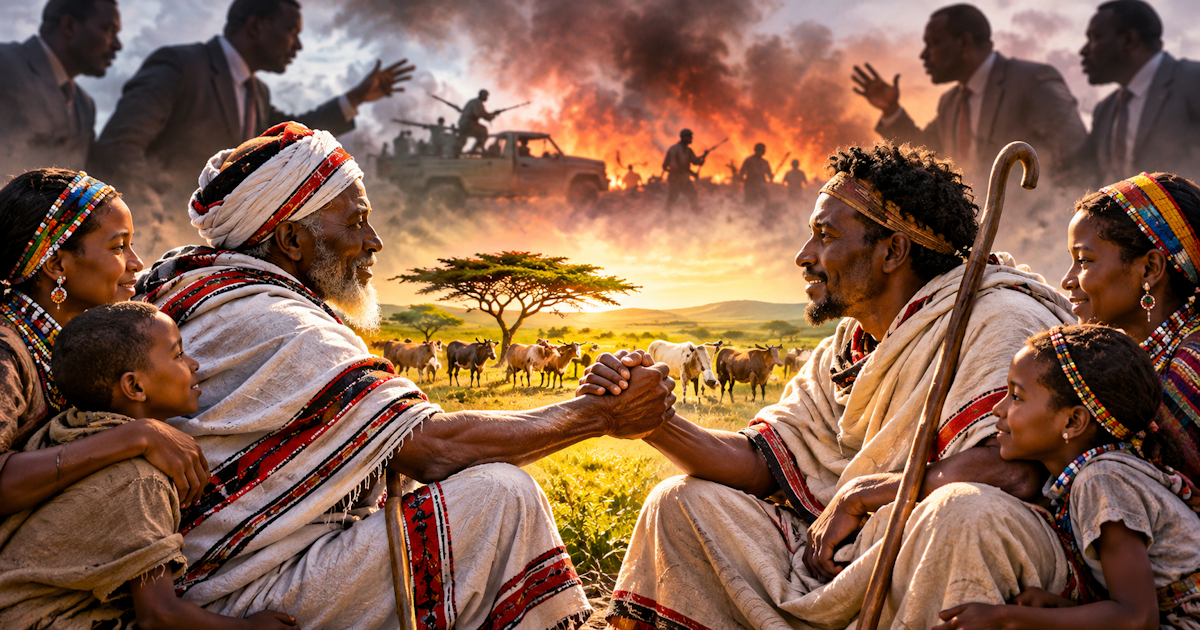
Beyond the constitutional arguments, territorial disputes, administrative boundaries and policy recommendations examined in this report lies a fundamental truth that must never be lost: the Garrii and Borana are brotherly peoples whose shared future matters infinitely more than the disputes that periodically divide them.
Their histories, livelihoods, cultural traditions, social relationships and economical interdependence are woven into the fabric of the same geographical and human landscape. They share not merely borders, but the realities of pastoral life: the search for water and grazing land, the uncertainties of drought, the movement of livestock, the exchange of goods and the enduring necessity of cooperation. There is far more that unites these communities than divides them.
Disagreements over resources are neither new nor peculiar to these peoples. For generations, pastoralist communities have negotiated access to shared resources, managed competing interests and resolved disputes through customary institutions, respected elders and established traditions of reconciliation. Their coexistence has never depended on the complete absence of disagreement. Rather, it has depended on the wisdom to prevent disagreement from becoming permanent enmity.
What makes the present crisis particularly troubling is the extent to which local disputes risk becoming instruments of political ambition, territorial expansion and elite competition. Conflicts that might otherwise be addressed through dialogue and customary negotiation can be magnified by political actors who have little personal stake in the suffering that follows. The consequences, however, are borne by ordinary families: the pastoralist deprived of grazing land, the trader whose market disappears, the child whose education is interrupted and the mother forced to seek refuge across an international border.
The recent crisis has also exposed the dangerous potential of an increasingly unregulated digital information environment. While some journalists and media organization have made commendable efforts to establish facts, provide balanced coverage and encourage restraint, other outlets and commentators have circulated inflammatory narratives, unsubstantiated allegations and politically charged interpretations that risk deepening communal mistrust. In an atmosphere already burdened by fear and uncertainty, misinformation can become an accelerant of violence.
Those who command microphones, cameras and digital platforms must recognize that freedom of expression carries a corresponding responsibility to truth. A rumor may travel faster than a reconciliation effort, but its consequences can endure long after the original falsehood has been forgotten. Journalism should illuminate the path towards understanding, not turn the suffering of communities into an opportunity for political mobilization, sensationalism or personal advantage.
It is therefore essential to distinguish the legitimate grievances of communities from the ambitions of those who seek to exploit them. The Garrii and Borana should not be reduced to opposing camps in a political contest designed elsewhere. Neither community should be collectively condemned for the actions of particular individuals, armed groups or political actors. Nor should either be expected to surrender its dignity, security or legitimate interests as the price of peace. Genuine reconciliation requires mutual recognition, accountability for wrongdoing and a shared commitment to justice.
The politics of the Horn of Africa must ultimately be judged by a simple but profound measure: does it bring people together to improve their quality of life, or does it drive them apart in pursuit of the territorial and political ambitions of competing elites?
There is an old saying: “Better to light a candle than curse the darkness.” It offers a profound lesson for the Garrii and Borana, and indeed for the wider Horn of Africa. Rather than allowing political rivalries and territorial disputes to consume our collective imagination, why not direct that same energy towards overcoming the material conditions that make such conflicts possible? Modern technology, scientific innovation and the intelligent harnessing of nature offer opportunities to transform scarcity into shared prosperity. Rainwater can be harvested and conserved; river water can be managed sustainably; grazing lands can be restored and improved; and investment in education, infrastructure, agriculture and enterprise can create diverse pathways towards economic advancement and upward social mobility. Instead of competing endlessly over the limitations of existing resources, let us expand the possibilities of what those resources can provide. The challenge before us is not merely how to divide what is scarce, but how to create abundance through cooperation, ingenuity and responsible stewardship of the environment. Let development, not division, occupy our political imagination. Let the competition be over who can build more schools, improve more livelihoods and create greater opportunities for the next generation—not who can claim another stretch of land. The future of the Horn should be defined by the prosperity its peoples build together, not by the conflicts they inherit or the boundaries they contest.
Political leadership should be measured not by the territory it claims, the boundaries it redraws or the rivalries it perpetuates, but by the security, prosperity and dignity it delivers to the people it governs. No territorial ambition can justify the destruction of communities whose survival has always depended upon cooperation across the very boundaries now being contested.
The Garrii and Borana have lived alongside one another through generations of hardship and change. Their children deserve to inherit more than the unresolved grievances of their elders and the political ambitions of contemporary elites. They deserve functioning schools, accessible healthcare, secure livelihoods, open markets, freedom of movement and the confidence that their neighbors are partners in a shared future rather than enemies across an administrative line.
This is not an appeal to overlook injustice, suppress legitimate grievances or romanticize a past that was never entirely free of conflict. It is an appeal to recover the wisdom that made coexistence possible despite those conflicts, and to place that wisdom at the center of contemporary political and institutional arrangements.
The Garrii and Borana do not need to become identical to live together in peace. They need only recognize that neither community can build a secure and prosperous future upon the insecurity and suffering of the other.
Let the political leaders, traditional elders, religious figures, journalists, civil society organizations and international partners who engage with this crisis remember that their ultimate responsibility is not to vindicate competing territorial narratives, but to protect human lives and restore the conditions under which neighboring communities can flourish together.
For the Garrii and Borana, peace is not merely a diplomatic objective or an administrative settlement. It is an existential necessity rooted in their shared geography, intertwined livelihoods and common humanity.
Their differences must never be allowed to become more powerful than their need for one another. And their shared future must never be sacrificed to the ambitions of those who profit politically from their division.



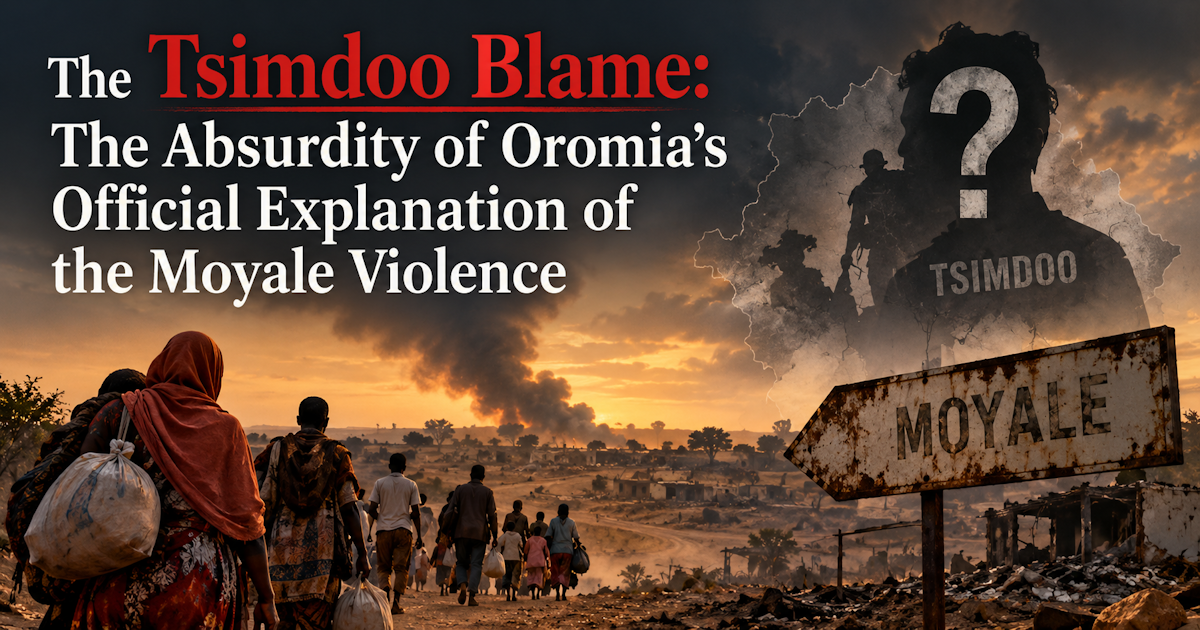
Naming the Hand Behind the Fire: A Review of Tsegaye R. Ararssa’s Report on the Garrii–Borana Conflict in Moyale
Diiqo Jaatani Aaga was thirteen years old when she was shot in Moyale on 18 October 2026, within hours of a flag being raised over an Oromo neighbourhood. Tsegaye R. Ararssa’s report begins with that flag and refuses to stop there. It follows the line from a single provocative ceremony back through two decades of dual administration, a failed referendum and a federal design that turned grazing commons into currencies of power, and forward to 50,000 people sheltering in schools, mosques and churches across the Kenyan border. It is the most complete account of the Moyale crisis yet published, and it deserves to be read well beyond the readership of Oromia Today.
1. AN ACCOUNT THAT HOLDS EVENT AND HISTORY TOGETHER
The report’s first achievement is discipline. Events are dated, places are named and casualty and displacement figures are attributed to UNHCR, IOM, the Kenya Department of Refugee Services, ACLED, hospital officials and the Red Cross. The sequence from the 18 October inauguration, through the barricades of 19–20 October, to the full-scale assault launched by Somali regional Special Forces on the night of 21 October is laid out with a clarity that leaves little room for the familiar fog of “clashes between communities”.
Its second achievement is that the chronology never floats free of history. The reader is taken through the Anglo-Ethiopian demarcation of 1907, the constitutional architecture of 1995, the 2004 referendum and its 41 suspended kebeles, the collapsed April 2017 accord and the September 2017 violence that displaced more than 1.8 million people. By the time the report reaches October 2026, the flag-raising no longer looks like a spark. It looks like the predictable outcome of a structure built to produce exactly this.
Ararssa also restores what conventional reporting erases: the tulaa wells of Goff, Lei and Waacille, the Gadaa system and Aadaa-Seera Boorana that governed shared access, the Xeer tradition on the Somali side, and the Abbaa Gadaas, Gurtii and cross-border women traders who have repeatedly kept the peace when the state did not. These are the institutions that worked. Placing them at the centre of the solution is the report’s quiet argument against every administration that set out to replace them.
If the customary order once managed scarcity without massacre, the question becomes what changed, and who gained from changing it.
2. NATURAL FRICTION AND ENGINEERED CONFLICT
The report’s most important analytical move is its separation of two things that are routinely collapsed into one. Pastoralist communities sharing arid rangelands will compete over water and pasture. That competition is real, seasonal and, as the report shows, historically manageable through reciprocal access and elder mediation. It is not what produced mortar fire in Malab and Cammuq, or trenches dug along the Somali side of the road in the months before the attack.
What produced those things is the conversion of territory into political and fiscal currency. Ararssa traces this to the EPRDF settlement of 1991, under which control of a kebele decided who could tax, appoint, deploy forces and claim parliamentary seats. His disclaimer on contested boundaries names the pattern directly: territorial misalignment and forcible acquisition tolerated by regional and federal authorities as an instrument of divide-and-rule.
The report is equally clear that this did not end in 2018. Somali Regional State continued to create new zones and woredas in contested borderlands; its Liyu forces were built up while Oromia’s regional special force was disbanded in 2022, and Borana communities were placed under military surveillance on suspicion of supporting the OLA. The TPLF-led EPRDF engineered the fault line. The leadership that inherited the state after 2018 has kept it open. The machinery is the same; only the operators have changed. That is the hand behind the fire, disguised for three decades as an ancient feud between neighbours.
An engineered conflict needs more than a state that looks away. It needs money, narratives and patrons, and the report follows them across the border.
3. THE EXTERNAL MULTIPLIERS
Section 7 of the report is where many readers will pause. Ararssa names northern Kenyan politicians, Farah Maalim and Dr Isaack Hassan among them, who mobilise ethnic solidarities across the international border, and records that political actors in northern Kenya have historically provided financial backing, sanctuary and rhetorical support to kin groups in Ethiopia. He then turns to Somali diaspora networks in North America, Europe and the Middle East, to activist media framing local administrative disputes as an existential war against “Oromo expansionism”, and to diaspora fundraising that has periodically channelled resources to local militias and prolonged their operational endurance.
The value of this section lies in its synthesis. Taken one by one, these actors can each be presented as individually motivated nationalists voicing solidarity with kin. Read together, as the report presents them, they form a coordinated ecosystem of political patronage, media amplification and finance, operating across at least three continents and sustaining violence that local actors alone could not. Recognising that ecosystem is the first step to confronting it, and the report’s recommendation that Kenya restrain domestic political spillover from Marsabit and Mandera follows directly from it.
Patrons and financiers explain why the fire keeps burning. They do not explain why those charged with putting it out have stood back.
4. THE INCENTIVE BEHIND THE INDIFFERENCE
Ararssa’s account of the federal response is unsparing: a conspicuous absence, a delayed military presence, a failure to establish a demilitarised buffer after the first ENDF intervention on 18 October, and an indifference that quietly favoured Somali forces. Inside Ethiopian Moyale, at the time of writing, Somali regional Special Forces remained in control.
The report supplies the materials for explaining that indifference. Moyale is the overland gateway for a landlocked state of more than 120 million people, the anchor of the Mombasa–Nairobi–Finfinnee corridor and of LAPSSET, and a source of customs, livestock-export and transit revenue running to millions of dollars a month. Whoever controls its kebeles controls those flows.
I would carry the author’s logic one step further. As Moyale matures into a supply line for refined petroleum moving north from Lamu, its value to the centre grows. A town made permanently ungovernable by two rival regional administrations becomes the ideal candidate for removal from both and placement under direct federal management. On that reading, the federal government’s passivity, and the muted response of the Oromia regional government, are not failures of capacity alone. They are consistent with an expectation of immediate financial and strategic return once the Borana are dislodged and the town is federalised. The report stops short of this conclusion. Its evidence points towards it, and it is a question that Oromo commentators, and the author himself, should press in future work.
A diagnosis this exact demands a remedy addressed to those with the authority to act, and to those with the will to make them listen.
5. RECOMMENDATIONS, AND WHO MUST CARRY THEM
The report closes with a phased pathway: security stabilisation and humanitarian corridors in the first three months; a Joint Moyale Municipal Charter and pooled revenue-sharing within a year; and, over three years, a Joint Borana–Garrii Council of Elders governing grazing corridors and tulaa wells, backed by the IGAD Protocol on Transhumance. Its recommendations are addressed to the federal government, both regional administrations, the Government of Kenya, and international donors, UN agencies and IGAD. The demand to fully fund the $8.9 million emergency appeal, contain measles in the shelters and activate IGAD’s CEWARN mechanism with women peacebuilders at its centre is concrete, costed and achievable.
I commend the author in particular for directing recommendations to international bodies. A report that addressed only Finfinnee would be a report addressed to a party to the problem.
My one addition concerns delivery. Recommendations do not travel on their own. Oromo communities in the diaspora and in Oromia, through their civic associations, professional networks and community organisations, should take this report forward and place it formally before each body it names: UNHCR, UNICEF, WFP, IOM, IGAD and CEWARN, the African Union, the Government of Kenya, donor governments and the diplomatic missions it was prepared for. Some of these bodies may not act. That is not a reason to stay silent. Formal submission creates a dated record that the facts were known, the risks were set out and the remedies were proposed. When the next flag is raised in Moyale, no one should be able to claim they were not told.
For a revised edition, two small corrections would strengthen an already strong report. The displacement figures in the impact snapshot (Section 5.5) appear twice with conflicting dates (15,240 on 24 or 25 October; 36,000 on 25 October or 24 October/3 November) and should be reconciled. And Recommendation 11.2.3, which asks the federal government to convene a mediation forum but tasks the Oromia government with designing the charter, would read more clearly if the roles of the House of Federation and both regions were specified, consistent with Phase II.
CONCLUSION
Tsegaye R. Ararssa has done what the moment required: he has documented the crisis accurately, explained it historically and refused to let it be filed away as another pastoralist quarrel. His report shows that the violence in Moyale is not the failure of neighbours to share a well. It is the success of a political system that profits from their division. The task now falls to those who read it. Diiqo Jaatani Aaga’s death must enter the record of every institution that could have prevented the next one.