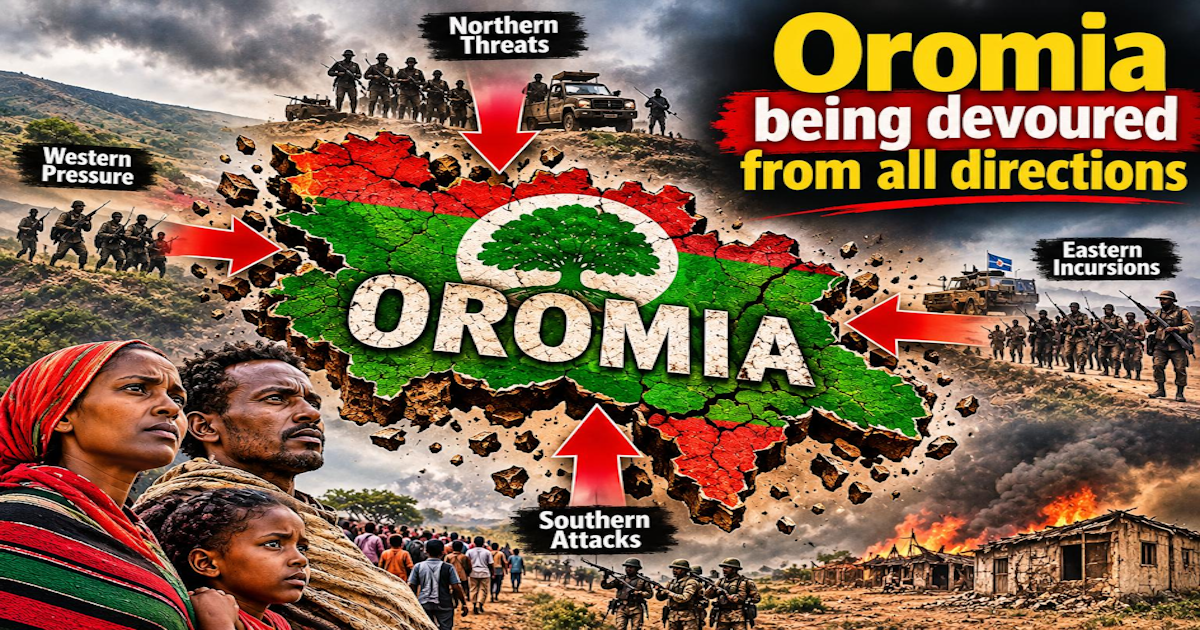
Here Is Why We Say the Oromia Government Is Not an Oromo Government And Why the Federal Government's Claims to Oromo Leadership Ring Just as Hollow
Excerpt
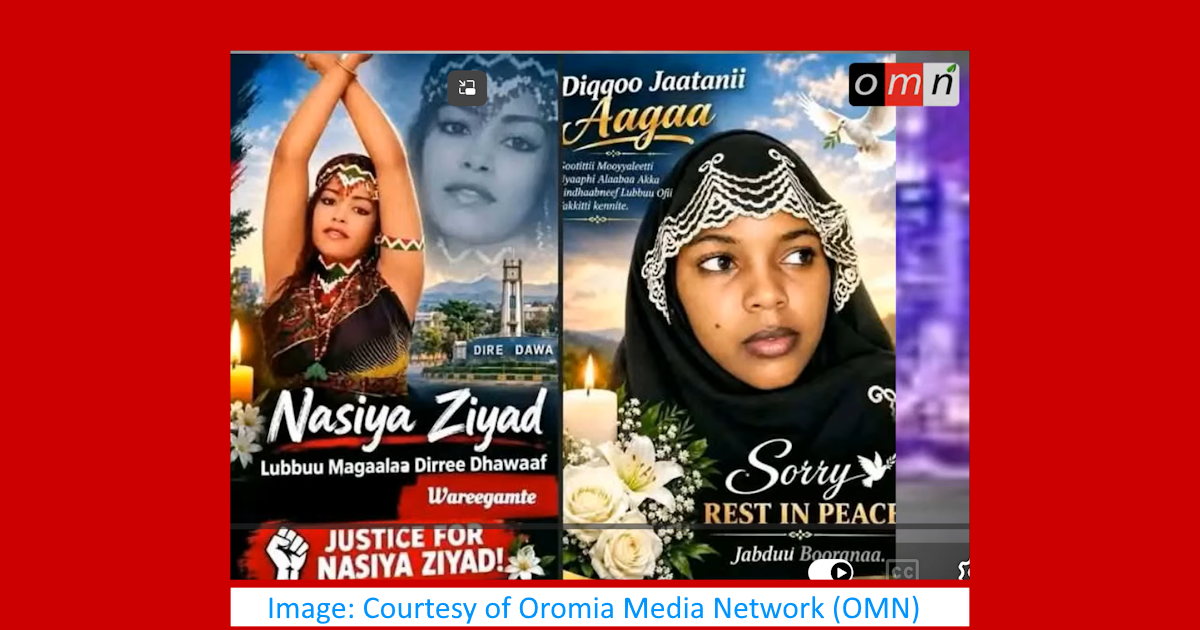
The killing of 13-year-old Diqqoo Jaataan Aagaa amid renewed violence in Moyale exposes years of unresolved territorial disputes, displacement, and political failure. As civilians flee into Kenya, OROMIA TODAY asks why the Oromia administration continues to fall short of its fundamental responsibilities: protecting its people, defending lawful jurisdiction, and demanding justice.
The Moyale tragedy, the killing of 13-year-old Diqqoo Jaataan Aagaa, and the recurring failure of political leadership to protect the people it claims to govern.
Moyale: A Tragedy That Did Not Come Without Warning
There are moments when the failure of government becomes so painfully visible that the familiar language of political criticism no longer seems adequate. The unfolding tragedy in Moyale, southern Oromia, is one such moment.
A 13-year-old Oromo girl is dead. The town's mayor narrowly escaped an assassination attempt, his vehicle left riddled with damage reminiscent of a battlefield assault.
Armed confrontations have terrified communities, disrupted commerce, and sent hundreds of frightened civilians fleeing across the international border into Kenya. A dispute over the establishment of a Somali Regional State administrative office and the raising of its flag has escalated into violence, exposing once again the unresolved territorial tensions between Oromia and the Somali Regional State.
And where is the government of Oromia?
Where is President Shimelis Abdissa? Where is Caffee Oromiyaa, the regional legislature supposedly entrusted with representing the interests of the people? What concrete measures have they taken to protect civilians, defend lawful jurisdiction, and prevent a confrontation that was foreseeable long before the first shots were fired?
And where is the federal government of Ethiopia?
These questions are not new. We have raised them repeatedly in OROMIA TODAY, warning about the dangerous political games being played around Moyale, the unresolved territorial grievances, and the apparent unwillingness of those in authority to confront the underlying problems.
The latest tragedy is not an isolated eruption of communal hostility. It is another manifestation of a longstanding political and administrative failure.
This is why we have repeatedly argued that possessing the title of the Oromia government does not necessarily make an administration a government acting in the interests of the Oromo people.
That judgment is not about the ethnicity of those occupying government offices. It is about their conduct, priorities, accountability, and willingness to discharge the responsibilities for which those offices exist.
A Flag, an Administrative Office, and a Child Who Never Returned Home
On October 18, 2026, the opening of a Somali Regional State administrative office and the raising of its flag in Moyale triggered a confrontation between Somali Region security forces and Oromia local militias.
According to Addis Standard, residents on the Oromia side regarded the action as a challenge to Oromia's jurisdiction. Gunfire followed, and 13-year-old Diqqoo Jaataan Aagaa lost her life.
Accounts differ over precisely how she was killed. Residents and a security official interviewed by Addis Standard attributed her death to Somali Region security forces. A resident from the Somali side disputed that account, maintaining that the child was killed in crossfire and was not deliberately targeted.
Those conflicting accounts demand an independent investigation. They do not diminish the fundamental fact that a child lost her life amid an armed confrontation over administrative authority.
But the tragedy did not end with her death.
Her uncle, Shuraa Waariyoo, told Addis Standard that her body remained unburied as of October 20. He alleged that Somali Region forces had taken her body and that the family was negotiating with the authorities to recover it.
If substantiated, this would represent an additional and profoundly disturbing violation of the family's dignity. The circumstances of her death and the subsequent handling of her remains require urgent clarification.
What kind of political order allows a dispute over a flag to end in the death of a child? And what kind of government leaves a grieving family struggling to recover her body for burial?
Diqqoo was not a combatant. She was a child whose life should have been protected by every institution claiming authority over Moyale.
No territorial claim, no regional flag, and no political ambition is worth the life of a 13-year-old girl.
Her name must not disappear beneath competing political narratives, disputed casualty figures, or the familiar language of administrative disagreement.
She deserves justice. Her family deserves answers. And the people of Moyale deserve protection from a recurrence of this tragedy.
Oromo and Somali: Peoples Bound by Kinship, Not Destined for Conflict
Before proceeding further, one distinction must be made absolutely clear.
This is not a conflict between the Oromo people and the Somali people as peoples.
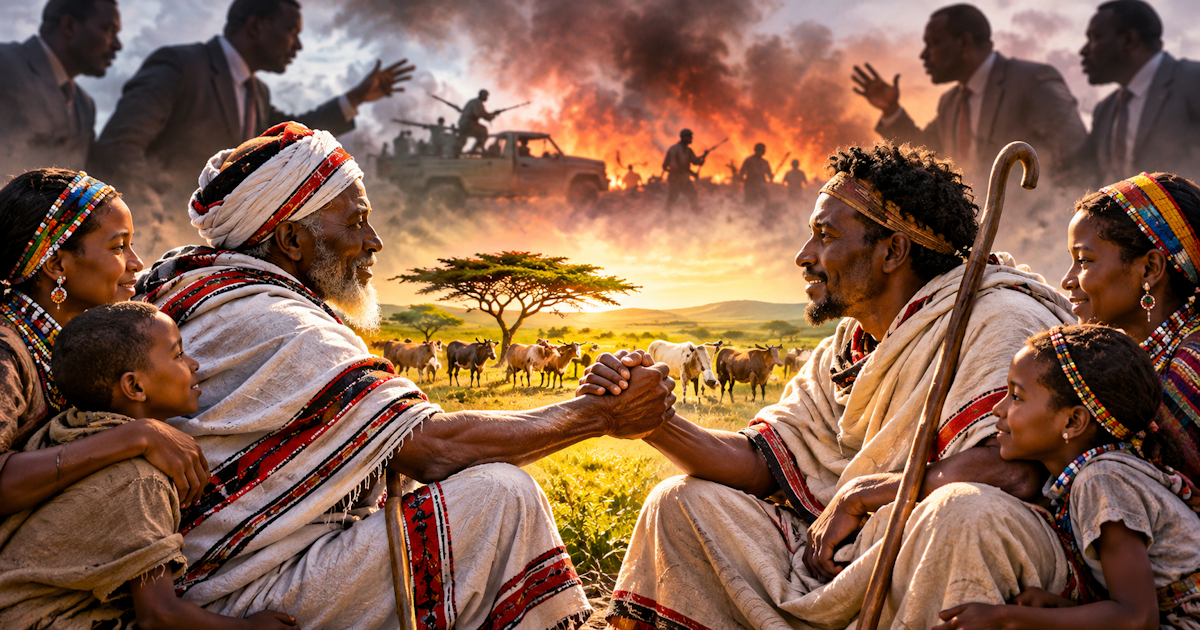
The Oromo and Somali communities share far more than a geographical boundary. They are neighbors, relatives, trading partners, and pastoral communities whose lives have been intertwined for generations.
Their languages belong to the Cushitic family. Their cultural traditions, pastoral livelihoods, social relationships, and histories of interaction reveal deep connections. In many borderland communities, family relationships and everyday economic life extend across the administrative lines that politicians now invoke as instruments of confrontation.
For generations, these communities have shared grazing lands, water resources, markets, and the challenges of life in an often unforgiving environment.
Their relationship has not always been free of disputes. Competition over pasture, water, and political authority has sometimes produced serious conflict. But these realities should never be mistaken for an inherent hostility between the two peoples.
The central problem is political: competing territorial claims, armed institutions, administrative decisions made without sufficient consultation, and failures of governance that allow local disagreements to escalate into deadly confrontation.
Ordinary Somali residents should not be held collectively responsible for the conduct of Somali Regional State officials or security forces. Nor should ordinary Oromos be blamed collectively for the actions of armed groups operating in their name.
The legitimate interests and security of both communities must be respected.
The question is not whether Somali residents have a right to live peacefully in Moyale. Of course they do.
The question is whether a regional administration can establish or expand its authority over disputed territory through unilateral administrative measures backed by armed force, rather than through lawful and transparent procedures.
When two peoples have lived as relatives for generations, who benefits from turning their shared homeland into a battlefield?
That is a question political leaders on both sides should be compelled to answer.
The Wounds of 2017–18 Were Never Properly Healed
The latest confrontation cannot be understood without revisiting the catastrophic displacement associated with the Oromia–Somali conflict of 2017–18.
More than one million people were displaced during that period across the affected regions. Oromo communities suffered killings, forced flight, loss of property, and destruction of livelihoods. Somali communities also experienced displacement and violence.
The scale of Oromo suffering was particularly devastating in areas where residents alleged attacks and expulsions involving Somali Regional State security forces, including the notorious Liyu Police operating under the administration of Abdi Mohamed Omar, widely known as Abdi Illey.
Many displaced Oromo families sought refuge in Oromia, where they faced the immense difficulty of rebuilding their lives.
Promises of rehabilitation, resettlement, and eventual return offered hope that the injustices would be addressed.
Yet subsequent reporting, including an extensive Addis Standard investigation published in 2021, documented the continued hardships of displaced Oromo communities. Families described inadequate housing, insufficient basic services, deteriorating living conditions, and unfulfilled expectations of meaningful rehabilitation.
The distinction between resettlement and restitution is essential.
Moving displaced families into makeshift settlements or alternative accommodation does not necessarily restore their homes, property, livelihoods, or right to return safely to their places of origin.
Where land and property have been occupied following displacement, the relevant authorities have a responsibility to investigate competing claims, establish lawful ownership and occupancy, and provide appropriate remedies.
This is not a call to displace another community in retaliation. It is a demand that past injustices be addressed through lawful restitution, compensation where appropriate, and durable solutions for those whose lives were destroyed.
The unresolved history of displacement continues to cast a long shadow over present-day relations.
In July and August 2025, further tensions followed administrative restructuring in the Somali Regional State, including the creation of new districts and zonal administrations affecting contested areas. Addis Standard reported that subsequent border clashes displaced more than 288,000 people.
The October 2026 confrontation therefore belongs to a much longer sequence of unresolved disputes.
Moyale did not become a flashpoint overnight. The warning signs were visible, the grievances were longstanding, and the consequences of continued inaction were foreseeable.
The question is no longer simply how violence erupted. It is why successive authorities failed to establish a durable political and legal settlement.
Abdi Illey, the Politics of Impunity, and the Cost of Forgotten Justice
The historical record also raises uncomfortable questions about accountability at the federal level.
Abdi Illey, the former president of the Somali Regional State, was arrested in 2018 and subsequently faced criminal charges connected to violence during his final days in office.
Human Rights Watch documented grave abuses associated with the Liyu Police during his years in power, including allegations of extrajudicial killings, torture, rape, and abuses at the notorious Jail Ogaden.
Yet in March 2024, federal authorities dropped the charges against him and released him after more than five years in detention, citing the public interest.
Human Rights Watch criticized the decision as a serious setback for accountability, observing that many alleged abuses committed during his administration had never been prosecuted.
The release did not establish his innocence of every allegation, just as the accusations themselves cannot substitute for judicial findings. But the decision raised legitimate questions about whether the victims of grave abuses would ever obtain justice.
What message does such an outcome send to communities still struggling with the consequences of displacement and violence?
What confidence can victims place in the institutions of justice when serious allegations remain unresolved and accountability appears subordinate to political expediency?
Impunity does more than deny justice for past wrongdoing. It can weaken confidence in the rule of law and create conditions in which future abuses become more likely.
The Moyale confrontation must therefore be examined not only as a security crisis but also as a test of whether Ethiopia's political institutions are capable of breaking the recurring cycle of violence without accountability.
The Oromia Government: What Exactly Is It Governing?
This brings us to the central argument of this editorial.
The Oromia administration's responsibility extends far beyond merely reacting to outbreaks of violence. It has a constitutional and moral duty to defend its lawful jurisdiction, protect the lives and dignity of its residents, pursue peaceful resolutions to territorial disputes, and uphold the constitutional order.
These are not optional responsibilities or political favors bestowed upon the people.
They are the very reasons a regional government exists in the first place.
A government is not defined solely by its flag, its official language, the ethnic identity of its leaders, or the ceremonial institutions through which it claims legitimacy.
It is judged by whether it governs effectively, protects the population, upholds the law, and acts in the public interest.
When a territorial dispute threatens civilians, the responsible administration must explain the legal basis of its jurisdiction and pursue a peaceful resolution through the appropriate constitutional institutions.
When armed forces engage in confrontation, it must demand protection for civilians and accountability for unlawful conduct.
When a child is killed, it must insist upon an impartial investigation.
When families are displaced, it must work toward their safety, rehabilitation, and lawful restitution.
And when these failures recur over years, it must explain why previous warnings were not translated into effective preventive measures.
Where are these explanations from President Shimelis Abdissa and his administration?
Where is the meaningful scrutiny by Caffee Oromiyaa?
Has the regional legislature demanded a comprehensive account of the Moyale crisis, the status of the territorial dispute, and the measures necessary to protect the population?
If it has, the public deserves to know. If it has not, its failure to exercise effective oversight deserves the strongest criticism.
A legislature that cannot hold the executive accountable during a crisis of this magnitude risks becoming an institution of representation in name rather than substance.
The people of Oromia are entitled to more than ceremonial assurances of concern.
They are entitled to competent government.
An administration that claims to govern Oromia must be judged by what it does for Oromia—not by what it calls itself.
Federal Intervention Is Not Federal Accountability
Reports indicate that the Ethiopian National Defense Force intervened to halt the initial exchange of gunfire on October 18.
That intervention should be acknowledged. It would be inaccurate to claim that federal authorities took no action whatsoever.
However, the subsequent escalation demonstrates why an immediate security intervention cannot be mistaken for a comprehensive political resolution.
Stopping gunfire is not the same as resolving a conflict.
Deploying security forces is not the same as ensuring accountability.
Removing a disputed flag is not the same as settling a territorial dispute.
Reports indicate that local elders and security officials subsequently discussed removing the Somali Regional State flag, and that its removal was followed by further protests and renewed confrontation.
By October 22, international reporting described hundreds of civilians fleeing across the border into Kenya, with injuries, property destruction, and severe disruption to daily life.
The crisis had acquired a humanitarian dimension extending beyond Ethiopia's borders.
The federal government has a responsibility to help maintain constitutional order and address disputes between regional states through lawful processes.
It must also ensure that regional security institutions do not substitute armed confrontation for constitutional dispute resolution.
Yet publicly verified information about a comprehensive federal response to the renewed clashes remains limited.
Has an independent investigation been initiated into the killing of Diqqoo Jaataan Aagaa?
Have the circumstances surrounding the handling of her body been established?
What measures are being taken to prevent further armed confrontation?
What mechanism will determine the legality of the disputed administrative office and the competing jurisdictional claims?
And what safeguards will protect civilians from reprisals, regardless of their ethnic identity?
These are questions that demand public answers.
The federal government's other security challenges cannot absolve it of responsibility for preventing violence between institutions operating within the same constitutional framework.
Nor can federal intervention relieve the Oromia administration of its own responsibilities.
A regional government cannot simply stand aside and wait for the federal authorities to do its governing for it.
The Borana Elders and the Wisdom Missing from Political Leadership
There is an important contrast between the conduct of political authorities and the efforts of community elders.
In our earlier OROMIA TODAY coverage, including our discussion of Borana elders interviewed by Shabo Media, we drew attention to the importance of local wisdom in addressing the Moyale dispute.
Traditional community leadership, dialogue, and the preservation of intercommunal relationships are not substitutes for constitutional government. But they represent valuable resources that responsible governments should engage rather than ignore.
Borana and neighboring Somali communities possess generations of experience in negotiating access to water, grazing land, movement, and shared resources.
Their coexistence has depended on practical arrangements and relationships that cannot be reduced to lines drawn on administrative maps.
The elders understand something that political actors too often forget: territorial disputes cannot be resolved sustainably by humiliating neighboring communities or turning administrative disagreements into ethnic confrontations.
A durable settlement requires lawful boundaries, consultation, protection of legitimate rights, and recognition of the dignity of all affected communities.
The task of political leadership should be to create the conditions in which such peaceful arrangements can flourish.
Instead, Moyale has repeatedly become a theater of confrontation.
The wisdom of elders should not be left to repair the damage caused by irresponsible political decisions.
It should help inform decisions before violence occurs.
The Government Must Answer, and Moyale Must Not Be Forgotten
We have written before about the dangers surrounding Moyale.
We have questioned the political games being played over territorial administration.
We have criticized the apparent inability of the Oromia leadership to defend the interests of the population it is entrusted to govern.
And we have warned that unresolved grievances, competing administrative claims, and the deployment of armed forces create the conditions for further tragedy.
The events of October 2026 make those questions more urgent than ever.
But the purpose of this editorial is not to demand confrontation between Oromo and Somali communities.
Quite the opposite.
We demand that political authorities stop allowing these communities to become casualties of unresolved territorial disputes and institutional failures.
We demand a transparent determination of the lawful administrative arrangements in Moyale and other contested areas.
We demand an independent investigation into the killing of Diqqoo Jaataan Aagaa and accountability wherever wrongdoing is established.
We demand that her family's rights and dignity be respected, including a clear accounting of the circumstances surrounding her remains.
We demand effective protection for civilians, including those displaced or threatened by the renewed fighting.
We demand that longstanding grievances arising from earlier displacement be addressed through lawful, fair, and durable solutions.
And above all, we demand that the Oromia administration fulfill the responsibilities that justify its existence.
President Shimelis Abdissa and Caffee Oromiyaa cannot reasonably expect the public to measure their performance by official declarations alone.
They must answer for their decisions, their omissions, and their record of protecting the people.
There is no contradiction between defending Oromia's lawful jurisdiction and respecting the rights of Somali communities. A government worthy of the name must be capable of doing both.
Nor is there any contradiction between demanding accountability from the Somali Regional State authorities and acknowledging the legitimate security concerns of ordinary Somali residents.
The rule of law must apply equally.
For too long, the people of Moyale have lived with the consequences of political failures they did not create.
Now a child is dead, families are grieving, communities are frightened, and civilians are seeking safety across an international border.
The time for vague assurances has passed.
A government that cannot protect its people, uphold lawful jurisdiction, or secure accountability for grave injustice cannot claim legitimacy merely by occupying the offices of government.
And that is precisely why we continue to ask:
Is the Oromia government truly governing for the people of Oromia, or is it merely administering Oromia in the name of others?
For Diqqoo Jaataan Aagaa, for her grieving family, and for every community living under the shadow of recurring violence, that question deserves an answer.
Not another promise.
Not another ceremonial declaration.
An answer measured in justice, protection, and action.
How Many More Must Die Before Government Begins to Govern?
- When more than a million people were displaced during the 2017–18 Oromia–Somali conflict, including vast numbers of Oromos uprooted from their ancestral homes, where were the Oromia regional and Ethiopian federal governments? Where are they today, when so many displaced families still await justice, restitution, and the opportunity to return home?
- When Oromo communities suffered killings on a devastating scale during that same period, where were the Oromia and federal governments? Who answered for the lives lost, the homes destroyed, and the families torn apart? Who was held accountable for the atrocities, and what assurances were given that such horrors would never be repeated?
- When renewed violence along the Oromia–Somali regional boundary displaced more than 288,000 people in 2025, where were the Oromia and federal governments? Had they learned nothing from the catastrophe of 2017–18? What became of their promises to prevent another cycle of violence and displacement?
- When reports of further killings emerged from the 2025 confrontations, where were the Oromia and federal governments? How many more lives had to be lost before the authorities recognized that unresolved territorial disputes were becoming recurring humanitarian disasters?
- And now, in October 2026, with a 13-year-old girl killed, armed confrontations engulfing Moyale, businesses shuttered, and terrified civilians fleeing across the international border into Kenya, are the Oromia and federal governments once again waiting for the final death toll and displacement statistics to arrive before acknowledging the magnitude of the disaster unfolding before their eyes?
- Must another year be added to the chronology of death, displacement, and broken promises?
- 2017–18. 2025. 2026. How many more years must be written in blood before those entrusted with governing finally begin to govern?
- What, after all, is the meaning of government if it cannot protect the lives and dignity of its citizens? What is the purpose of regional autonomy if lawful jurisdiction cannot be defended through constitutional means? What is the value of a federal constitution if disputes between constituent states are allowed to escalate into armed confrontation, leaving innocent civilians to bear the consequences?
The Oromia administration's responsibility extends far beyond reacting to violence after it erupts. It includes defending lawful jurisdiction, protecting residents, pursuing peaceful resolutions to boundary disputes, and ensuring that constitutional procedures are respected. These are not optional political favors. They are among the fundamental reasons a government exists.
And here lies the most damning irony of all.
Oromia is not confronting a foreign invading army. It is confronting a territorial dispute involving another regional state within the same federal republic, under the authority of the same federal constitution and the same federal government.
This is precisely the kind of dispute that a functioning federal system is supposed to resolve through constitutional mechanisms, impartial arbitration, lawful administration, and effective protection of civilians—not through competing armed deployments, unilateral assertions of territorial authority, and recurring bloodshed.
The Ethiopian federal government is not an external observer helplessly watching two sovereign countries descend into war. It is the constitutional authority under which both regional states operate. It possesses institutions and legal mechanisms intended to address disputes between them. Its responsibility is to ensure that those mechanisms function, that unlawful violence is prevented, and that no regional authority imposes its territorial claims through force.
Nor can the Oromia administration escape responsibility by pointing toward the federal government. Regional self-government carries obligations as well as powers. An administration that claims to represent Oromia must demonstrate that representation through its willingness and ability to protect residents, assert lawful jurisdiction, and demand accountability when those responsibilities are violated.
The people of Moyale do not need another round of official condolences, hurried negotiations, or assurances that normalcy will soon return. They need a durable settlement grounded in law, an end to armed intimidation, protection for every community, and accountability for those responsible for unlawful violence.
Above all, they need governments that understand a simple but fundamental truth:
The purpose of government is not to preside over an endless succession of tragedies. It is to prevent them.
If the Oromia and federal governments cannot fulfill that most elementary responsibility, they owe the people an explanation of what, exactly, they believe they are governing.
And this brings us to a sobering question that can no longer be evaded:
Why must the Oromo people repeatedly bear such a colossal burden of death, displacement, dispossession, and insecurity while governments claiming to represent and protect them remain unable—or unwilling—to prevent these tragedies?
It is this recurring failure, not the ethnic identity of those occupying the highest offices of government, that compels us to ask the question at the very heart of this editorial:
Why do we say the Oromia government is not an Oromo government—and why does the same indictment extend to the federal government that so readily portrays itself as Oromo-led?
The answer lies not in who governs in name, but in whose lives are protected, whose rights are defended, and whose suffering is allowed to continue.
For eight long years, Oromos have endured recurring killings, forced displacement, and the anguish of being denied a return to their ancestral homes. And what have the so-called “Oromo governments” at the regional and federal levels done to end this suffering? They have presided over its recurrence, year after year, without delivering the protection, justice, or lasting solutions their people deserve.
It is worth noting that the killings, displacement, and suffering inflicted on Oromo communities by expansionist forces in Wallaga have been even more devastating over the past eight years. Similar incursions, killings, and forced displacement have afflicted communities across northern and eastern Tulaama, Baalee, Hararghe, and Dirre Dhawaa—all while the so-called “Oromo government” has remained at the helm, presiding over a seemingly endless cycle of violence and insecurity.
History will record that this is a proud legacy of the Prosperity Party regimes both at the regional and federal levels. It will be the legacy of Prime Minister Abiy Ahmed and President Shimelis Abdissa in grossly letting down the Oromo people and Oromia.