
What the PP Regime Achieved for the Oromo People and Oromia: Part I — The Positive Achievements
Introduction
The Prosperity Party (PP) regime came to power in 2018 on the back of the historic Oromo struggle and the massive public protests of 2014–2018. It came with promises of political reform, peace, justice, and an improved future for the Oromo people.
Nearly a decade later, we should pause and ask a simple but fundamental question:
What, specifically, has the PP regime achieved for the Oromo people and Oromia?
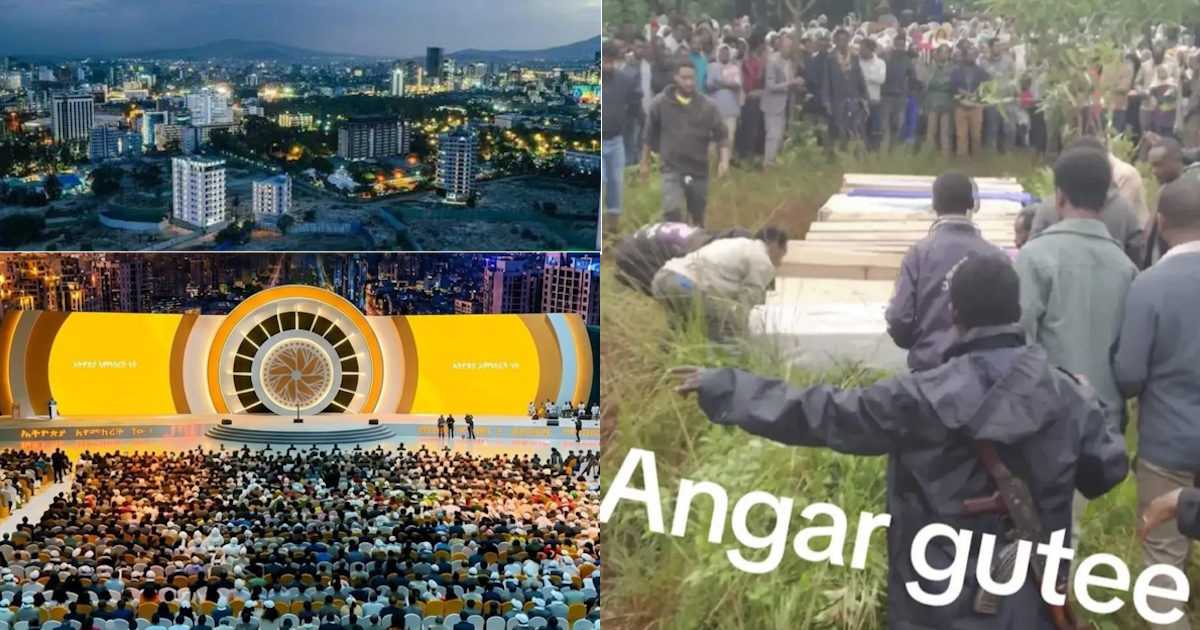
By “achievement,” we do not mean ribbon-cutting ceremonies, private investment, street lighting, or luxury resorts—the regime’s favored developmental showcases, designed in no small part to impress foreign visitors. Such projects may constitute economic activity, but they do not address the fundamental political and national questions that brought the regime to power in the first place.
We mean policies, political decisions, peace initiatives, protection of the people, and concrete measures addressing the long-standing Oromo questions.
The Positive Achievements
So, what can we point to by way of positive achievements?
Let's consider some of the basic indicators, rather than a comprehensive list.
Peace?
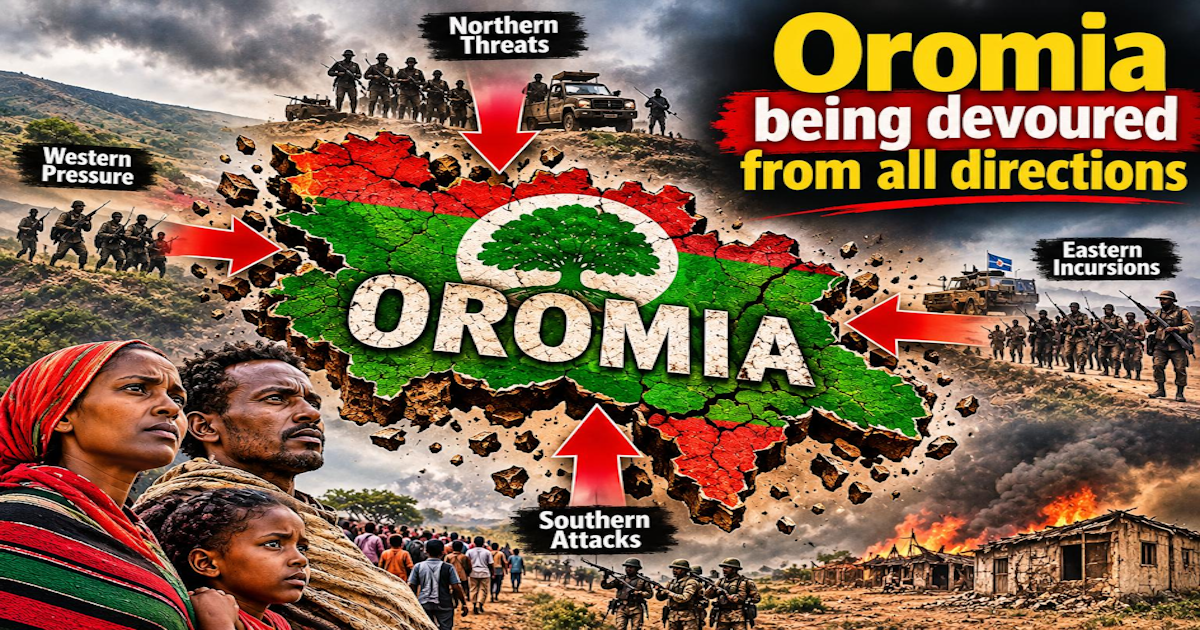
Oromia remains engulfed in conflict. In western and eastern Oromia, people continue to be killed, displaced, and uprooted from their homes while the authorities appear unwilling or unable to provide adequate protection. Human lives are being lost while political theater continues elsewhere.
Protection of territory?
Rather than resolving long-standing territorial disputes, questions concerning the integrity and administration of Oromo territories remain unresolved, with continuing concerns about further losses.
Restoration of city and administrative status?
Instead of correcting longstanding grievances, many Oromo communities continue to see decisions that they believe undermine their political and administrative rights.
The status of Afaan Oromoo at the federal level?
Despite being the language of Ethiopia's largest national community, the fundamental question of its place and recognition at the federal level remains unresolved.
Protection of indigenous communities from dispossession?
Instead of seeing decisive action to protect Oromo communities from displacement and dispossession, we continue to witness of people losing homes, indigenous lands, and livelihoods, the recent indigenous dispossession being due to the Aabbuu Seeraa international airport now under construction.
Improvement in the everyday lives of ordinary people?
For millions of households, the reality is rising prices, unemployment, insecurity, displacement, and an increasingly unbearable cost of living.
And perhaps most importantly:
Where is the protection of human life?
This is the question that should dominate our attention.
The killings and suffering in western Oromia as we write this piece is not a footnote to regional or federal politics. It is not something that should be pushed aside while political actors debate a national dialogue whose relevance becomes questionable when people are being killed and displaced.
A regime must first protect its citizens.
And lately, auctioning Oromo rights for external majorities?
At best, this reflects a profound failure of political judgment; at worst, it raises the disturbing question of deliberate political malice by the PP regime. This concerns the inclusion Finfinnee, Dirree Dhawaa in the so-called National Dialogue agenda of 4000 discussants currently in progress.
The PP regime appears willing to place fundamental constitutional and inherent Oromo rights on the bargaining table of broader national dialogues—subjecting them to the preferences, negotiations, and even votes of constituencies whose interests are not those of the Oromo people.
Finfinnee, Dirree Dhawaa, Moyale, and perhaps a dozen other territorial, administrative, and city/township questions are not new issues created by the present generation. Many are questions of historical justice and the correction of administrative arrangements inherited from the EPRDF era.
Yet instead of addressing these questions through justice, constitutional principle, and historical correction, the regime appears to be pushing them into ever-deeper layers of political bargaining and injustice.
Since when do the fundamental rights of a people become negotiable commodities to be auctioned off to an external majority?
Our Challenge to You
So here is our challenge:
Name one concrete, positive political achievement of the PP regime that has fundamentally advanced the interests, security, rights, and dignity of the Oromo people and Oromia.
- We couldn't find any item to list herein under Part I.
- If we have overlooked something, tell us by writing in the Comments.
- If you have nothing to add, please write in Nothing.
And let us have an honest discussion—not one based on party loyalty, political slogans, or the comforting assumption that because a government has Oromo faces, it must therefore be an Oromo government.
Do not confuse representation with results.
This is not a call to hatred. It is a call to accountability. It is time to step outside political illusions and examine the record honestly.
Because while we debate political narratives, real people are losing their lives, their homes, and their futures.
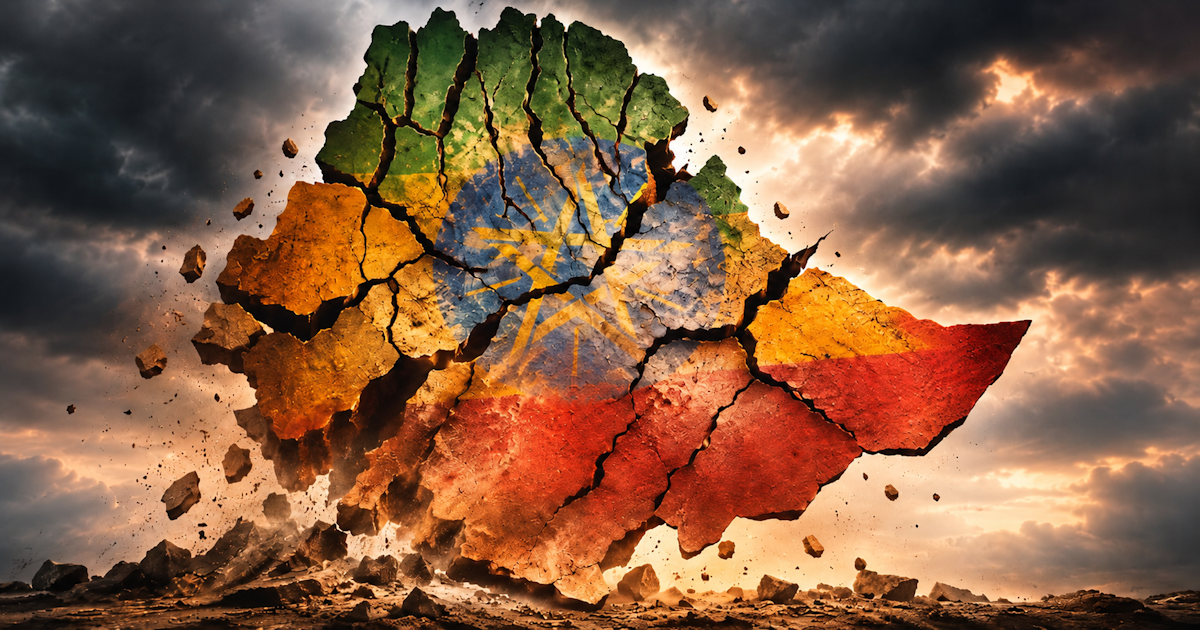
Oromia is bleeding and shrinking and no administration has its interest at heart: not the regional administration, and not the federal administration.
The question is not who governs in our name.
The question is: what has the so-called “Oromo government” actually delivered for our people?
Is the Oromo People Really Liberated?
And in light of the Prime Minister’s emphatic recent declaration that “the Oromo people is liberated, period!”, perhaps the question becomes even more fundamental:
Is this what liberation looks like?
The irony is mind bending. A declaration as sweeping as “the Oromo people is liberated, period!” should not be allowed to pass into history as an unquestioned autocratic political slogan.
It deserves to be challenged—rigorously, publicly, and relentlessly—by historians, social scientists, political scholars, and, above all, by the lived reality of the Oromo people themselves.
Liberation is not established by proclamation. It is demonstrated by reality.
And when reality tells a very different story, can such a sweeping declaration simply be left hanging in the historical record as though it were an established fact?
History must interrogate the slogan. The people must judge the claim.
Conclusion
We have asked a deliberately simple question:
What positive, substantive achievement has the PP regime delivered for the Oromo people and Oromia?
If you cannot name even one of the kind of achievements specified above—one that addresses the fundamental political, national, security, and socioeconomic concerns of the Oromo people—then perhaps there is a more fundamental question we should all ask ourselves:
How do you reconcile this record with the description of the PP regime as an “Oromo government”?
This is not an accusation. It is an invitation to think.
If the label “Oromo government” is justified, what is the evidence?
And if we cannot identify a single substantive achievement that supports the claim, should we not reconsider the label itself—and judge a government not by who claims to represent us, but by what it actually does for our people?
That is the question we leave with you.
In Part II, we will turn the question around and examine the record from the other side: what has the PP regime actually done to the detriment of the Oromo people and Oromia?
That list, unfortunately, may be much longer.
To be continued.

Enough Is Enough: Let Us Stand With Our People in Arsi and Angar Gutee
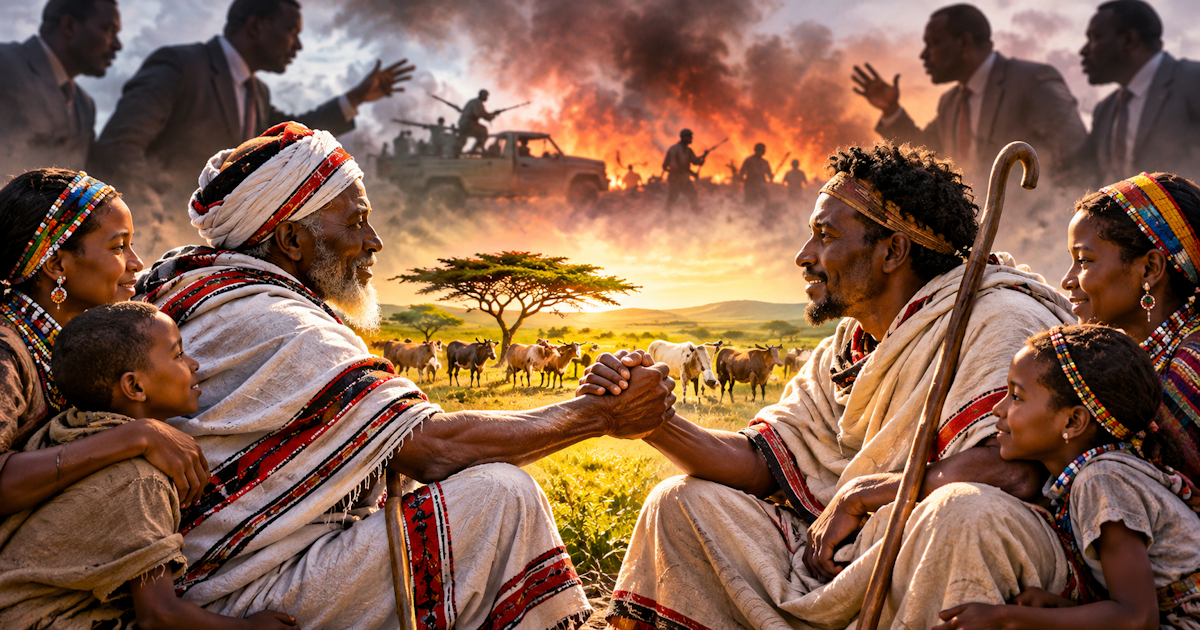
Enough is enough. The suffering of our people in Arsi and Anger Gutee cannot continue without our collective attention, concern, and action. At a time when many Oromo families are experiencing fear, displacement, loss, and insecurity, we cannot remain silent or stand on the sidelines. Our people deserve to live in peace, safety, dignity, and freedom.
The pain being experienced by families in these areas is not simply a distant issue. Every life lost is a member of a family, a parent, a child, a brother, a sister, or a friend. Every family forced from its home carries a story of hardship and uncertainty. Behind every statistic are human beings whose lives have been deeply affected. We must recognize their suffering and ensure that their voices are not forgotten.
This is a moment for the Oromo community, inside Oromia and throughout the diaspora, to come together with compassion and unity. We must reject division, hatred, and indifference. Instead, we should strengthen our solidarity and support those who are suffering. Our response should be guided by humanity, justice, truth, and respect for the dignity of every person.
Standing with our people does not mean promoting violence or hatred against others. It means speaking against injustice, protecting civilians, supporting families in need, and demanding accountability when people are harmed. It means calling for peaceful solutions, humanitarian assistance, and an end to attacks against innocent communities.
We also have a responsibility to document what is happening carefully and truthfully. The international community, human rights organizations, community leaders, religious institutions, and governments should hear credible information about the suffering of civilians. Silence can allow suffering to continue, while responsible advocacy can help bring attention to those who need protection.
Let us therefore turn our grief into constructive action. Let us support displaced and vulnerable families, raise awareness, assist humanitarian efforts, and encourage peaceful dialogue. Let our leaders and community organizations work together rather than against one another.
Enough is enough. Our people’s suffering must not be ignored. Let us stand together with the people of Arsi and Angear Gutee—with compassion, courage, unity, and a commitment to peace and justice.