
The Great Flag Tug-of-War — Without Anyone Daring to Pull the Rope
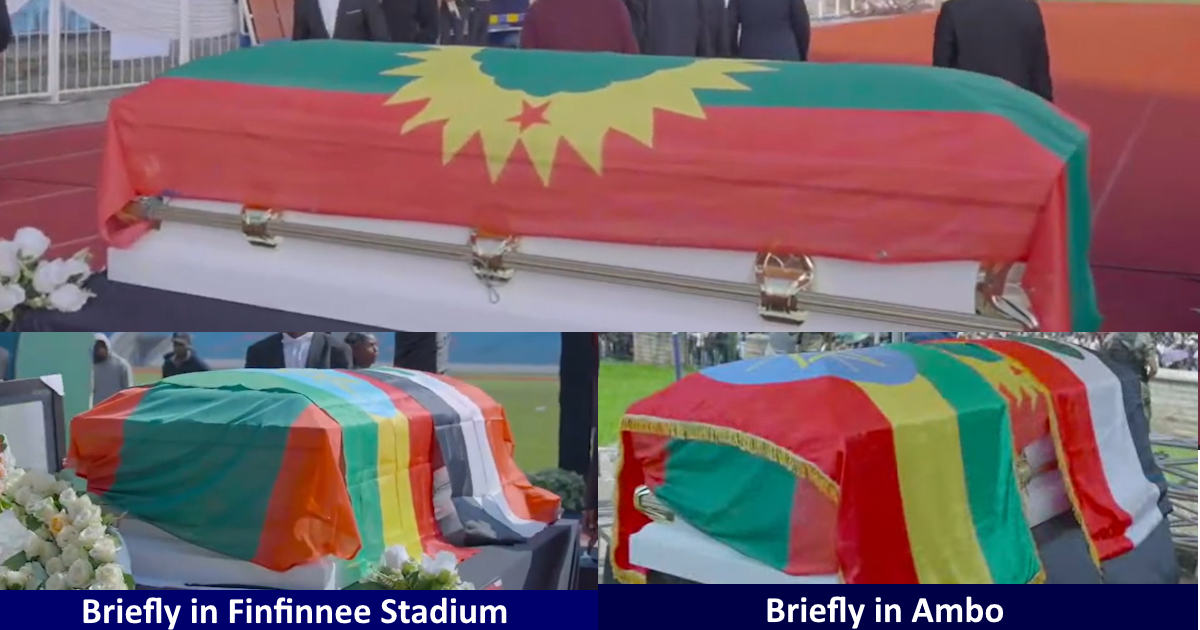
The Battle of the Flags
Apparently, even the dead must negotiate Ethiopia's political symbolism.
Aaddee Ilfinash “Ilfee” Qannoo's coffin appeared draped in the flag of the Oromo Liberation Front (OLF)—the movement with which her political identity had long been associated. Removing it in front of an enormous grieving public would, one imagines, have been rather more consequential than rearranging the decorations.
And so began what might generously be called the Battle of the Flags.
As the hearse prepared to leave Finfinnee for Ambo, another curious layer appeared: Ethiopian and Oromia regional flags were placed over the existing colors.
The result was almost a visual summary of Ethiopian politics—one political identity apparently being negotiated with another, not through dialogue, legislation or constitutional argument, but across the few square meters available on top of a coffin.
Then came Ambo.
The coffin emerged once again, unmistakably draped in OLF colors, and was placed on a stand for members of the public to file past and pay their respects. Soon afterward, a figure wearing conspicuously dark glasses approached carrying the two official flags in a manner that, at first glance, could easily have been mistaken for the presentation of a floral tribute (see picture below). The flags were handed to the funeral attendants with instructions to place them over the coffin, which they duly did.
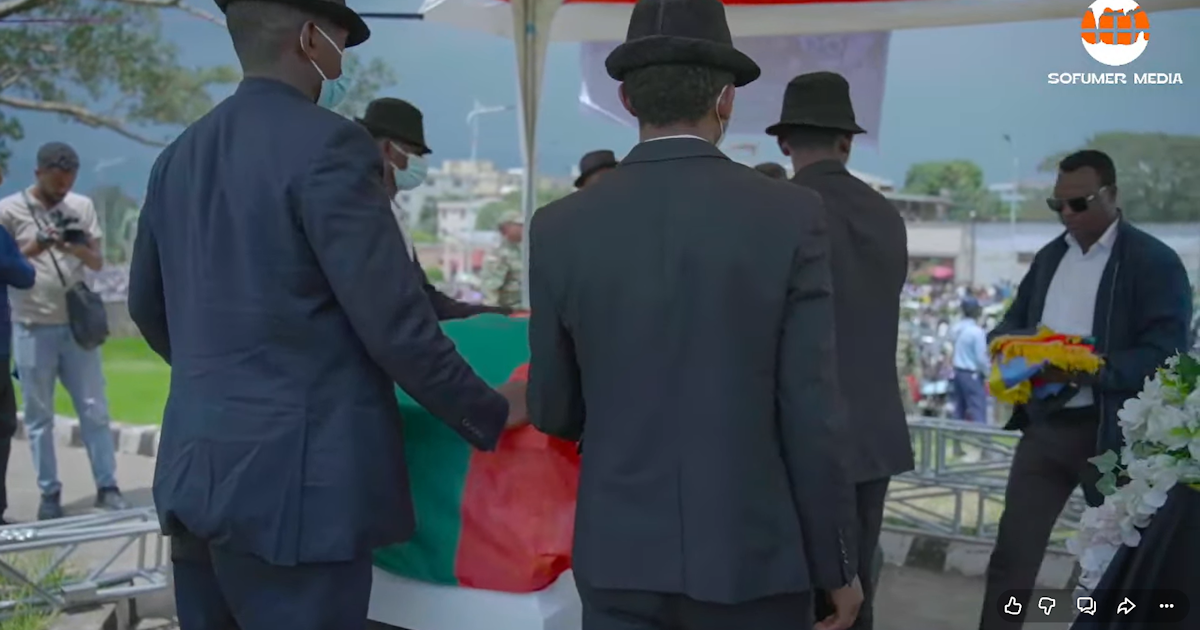
Watching nearby Oromo artists seemingly take in the spectacle only added to the surreal quality of the moment.
Then came another twist in this curious battle of symbols. After a brief appearance—and apparently beyond the camera's gaze—the two flags quietly vanished.
The OLF flag remained.
There is something both petty and profoundly revealing about such contests. Regimes possess flags, offices, security forces and elaborate protocols. What they cannot manufacture by administrative order is affection.
And on this day there appeared to be remarkably little ambiguity about where that affection lay.
Ilfinash Qannoo did not need anyone to decide which colors could adequately represent her. She had spent a lifetime deciding who she was.
Nor did she need the state to confer importance upon her. The crowds did that.
Perhaps that is the little tragedy behind the comedy of competing flags: you can place another flag over a coffin. You cannot place one over collective memory.
Today belonged to Ilfee.
The politicians could rearrange the colors as often as they pleased. They could not rearrange the hearts beneath them.
A flag can be placed on a coffin in seconds. A political identity forged over half a century is considerably harder to rearrange.
The greater story, above all else, is that Ilfee — Haadha Biyyaa — now rests in Ambo, just as she had wished.
The story of how Ambo became her chosen resting place deserves far more than a few paragraphs; perhaps it deserves a book. For now, however, we shall leave it in three lines that even a book might struggle to say better:
Ambo received her in love.
And she chose Ambo for eternity.





We lost Heroine