Amhara Fano, Don't Dare Invading Wallaga: Risking Strong Enmity Between the Amhara and Oromo Nations
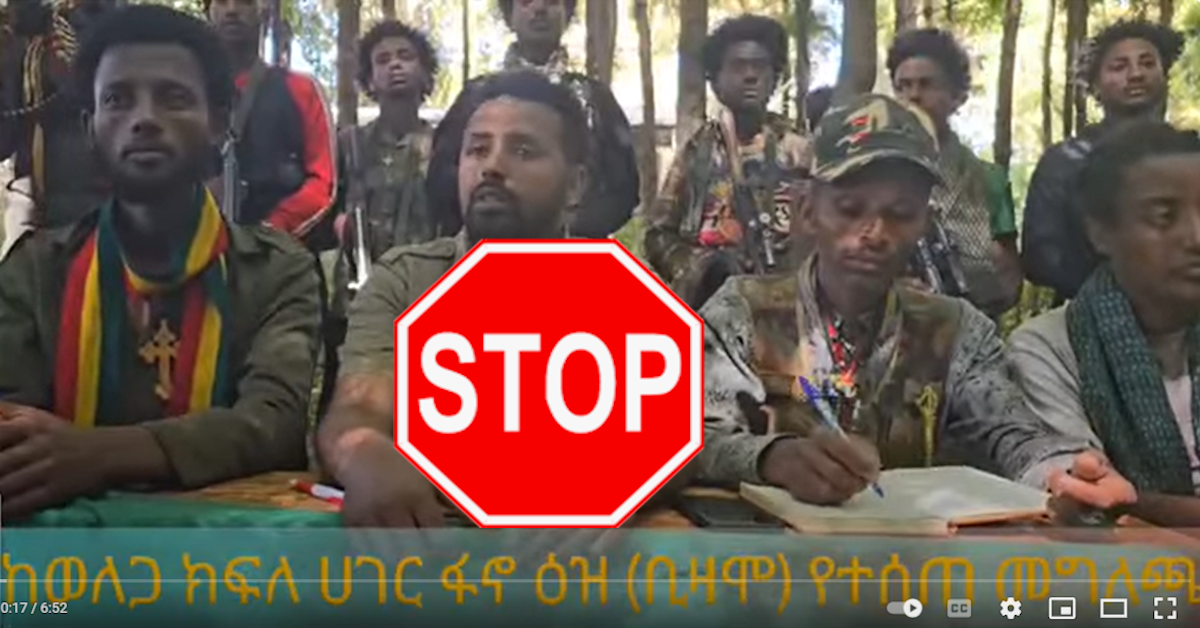
Ethiopia, a nation of rich history and diverse ethnic identities, is grappling with deep-seated tensions that threaten its very fabric. One of the most recent and alarming developments is the announcement by Amhara Fano militias that they have established a base in Wallaga, an area in Oromia, with the explicit aim of taking over the region. This move, accompanied by the declaration of open war on Wallaga, risks plunging Ethiopia into an irreversible cycle of violence, potentially leading to its disintegration along the lines of the former Yugoslavia. The consequences for Fano and Ethiopia could not be more dire.
Historical Context of Fano and Wallaga
Fano, a paramilitary group originating in the Amhara region, was initially formed to defend the interests of the Amhara community. Over the years, Fano has grown into a militant force, conducting operations that have drawn widespread condemnation. While their stated goal is to protect Amhara identity and territorial claims, their methods have increasingly mirrored those of extremist groups.
Wallaga, part of Oromia, is home to the Oromo people, Ethiopia's largest ethnic group. The Oromo have endured decades of political and cultural marginalization, and Wallaga symbolizes their determination to protect their identity and autonomy. Any attack on Wallaga is viewed as a direct assault on the Oromo people as a whole, further deepening the divide between the Amhara and Oromo communities.
Key Drivers of the Current Escalation
1. Fano’s Declared War on Wallaga
Fano's recent announcement that it has established a base in Wallaga marks a dangerous escalation. This is not a covert operation but an overt declaration of intent to seize control of the region. This brazen move is a clear provocation, signaling Fano's willingness to use force to achieve its aims. The declaration of war on Wallaga is a direct challenge to the Oromo people, who are certain to respond with unwavering resistance.
2. Federal Government’s Role in Empowering Fano
Prime Minister Abiy Ahmed's administration bears significant responsibility for the rise of Amhara Fano. The federal government has trained, armed, and encouraged Amhara Fano under the guise of maintaining law and order. This support has emboldened the group, enabling it to act with impunity in its operations beyond the Amhara region. The government's complicity undermines its credibility as a neutral arbiter in Ethiopia's ethnic conflicts, further alienating Oromo and other ethnic groups.
3. A History of Atrocities
Fano's incursions into Oromia are not unprecedented. In recent months, photos and reports have surfaced online showing gruesome acts of violence committed by Amhara Fano, including the beheading of Oromo individuals in Salale, Oromia. Previous incursions into Wallaga have also resulted in senseless killings of unarmed Oromo civilians, deepening mistrust and resentment. These atrocities, reminiscent of tactics used by extremist groups like ISIS, highlight the group's capacity for unchecked violence.
Consequences of Amhara Fano’s Incursion
1. Total Annihilation of Amhara Fano
Wallaga is not just any territory—it is a bastion of Oromo resistance. The Oromo Liberation Army (OLA), a highly organized and experienced insurgent group, operates in the region. Combined with the local population's fierce determination to defend their land, any Amhara Fano attempt to establish control in Wallaga will be met with overwhelming resistance. Amhara Fano risks annihilation, as the terrain, local support, and guerrilla tactics heavily favor the Oromo fighters.
2. Escalation of Ethnic Violence
Amhara Fano's actions are likely to ignite retaliatory violence across Ethiopia. Ethnic conflicts have already destabilized the country, and an open war in Wallaga could set off a chain reaction, drawing in other groups and regions. This escalation risks turning Ethiopia into a failed state, with catastrophic consequences for its people.
3. Disintegration of Ethiopia
The continuation of ethnic violence, particularly between the Amhara and Oromo, threatens the unity of Ethiopia. The declaration of war on Wallaga could mark the beginning of Ethiopia's fragmentation, mirroring the disintegration of Yugoslavia in the 1990s. Such an outcome would not only destabilize the Horn of Africa but also create a humanitarian crisis of unprecedented proportions.
A Call for Immediate Action
To avoid a descent into chaos, urgent steps must be taken:
- Cease Hostilities Immediately: Amhara Fano must withdraw from Wallaga and abandon its plans to seize control of the region. Violence will only lead to further suffering and destruction.
- Hold the Federal Government Accountable: Prime Minister Abiy Ahmed's administration must take responsibility for its role in enabling Amhara Fano and immediately disarm and disband the group. Failure to do so will further erode trust in the federal government.
- Engage in Dialogue: All parties, including representatives of the Oromo and Amhara communities, must come to the table to address underlying grievances and seek a peaceful resolution to territorial disputes.
- International Intervention: The global community must closely monitor the situation and pressure the Ethiopian government to prevent further atrocities. Mediation by neutral international actors could help de-escalate tensions and foster dialogue.
Conclusion
Amhara Fano's declared war on Wallaga is a reckless and dangerous move that risks total annihilation for the group and catastrophic consequences for Ethiopia. The Oromo people, deeply rooted in their land and identity, will not yield to aggression. This conflict threatens to plunge Ethiopia into a cycle of violence that could lead to its eventual disintegration. Now is the time for Ethiopians to rise above ethnic divisions and prioritize unity, dialogue, and peace over conflict and destruction.