When Dirre Dhawa Becomes a Claim — And Truth Becomes a Weapon

Excerpt
A recent viral clip shows a young Somali man boldly claiming Dirre Dhawa as Somali land — a moment that might seem laughable if it didn’t reflect a deeper anxiety and the politics of manufactured bravado. His claim coincides with PM Abiy Ahmed’s sudden “truth-telling” about Dirre Dhawa’s constitutional limbo — a convenient revelation used to frame Ethiopia’s port hunger and revive irredentist narratives disguised as historical correction.
A Moment in Dirre Dhawa: When Memory, Refuge, and Ambition Collide
I scroll past a video clip, one of those fleeting digital moments you expect to evaporate after a second glance. Instead, I pause. A young Somali man rises and declares, with unwavering certainty, that Dirre Dhawa — a historic city at the heart of Oromia — belongs to Somalia [1].
At first, you want to laugh it off. Social media has birthed entire species of confidence unburdened by reality. But something in his tone — and the uneasy silence of those around him — tells me this isn’t just reckless bravado. It’s something deeper, stranger, more revealing about human nature and fractured identity.
Dirre Dhawa is no orphan city. It is a chapter in the Oromo story — a living imprint of history, culture, sacrifice, and endurance. Yet here stands a young man, perhaps a beneficiary of Oromia’s refuge during Somalia’s collapse, claiming inheritance over the house that sheltered him. It’s like renting a villa and later insisting you own it because the landlord let you stay longer than expected.
But this moment didn’t arise in a vacuum.
It was sparked by Prime Minister Abiy Ahmed’s recent “truth-telling” — a revelation wrapped in political theater. He casually pronounced that Dirre Dhawa’s status is constitutionally unsettled, a problem inherited from the EPRDF era, when the city was designated as an autonomous zone as part of a divide-and-rule cartography experiment. The same regime even loaned Jijigaa— yes, loaned an Oromo city — until Godee was built. A geopolitical mortgage, if you will, as though nations are sofas one can borrow until one’s own furniture arrives.
Abiy's remark wasn’t innocent honesty. It was strategic truth-telling — the kind leaders deploy not to clarify history but to justify ambition. Because the moment he spoke about Dirre Dhawa , he also spoke about Assab — another “EPRDF mistake,” he implied, that made Ethiopia landlocked.
Suddenly, truth becomes a tool, selectively polished and held like a blade, cutting where convenience demands.
His narrative was less about correcting history and more about manufacturing legitimacy for his own irredentist appetite. If Dirre Dhawa can be discussed, why not Assab? If one territorial question can be reopened, why not another? That’s the subtle game — grievance as justification, history as currency, truth not as light but leverage.
And so a young man, perhaps lifted by that rhetoric, stands emboldened. He raises a flag not over land he built, but over land that sheltered him when his own homeland faltered. The room of audience shifts in discomfort, you can tell. Gratitude dissolves into entitlement.
A borrowed safe harbor becomes a birthright in the imagination of the insecure.
And then, the mask slips further. He even attempts to redefine the Oromo in relation to Dirre Dhawa, bragging: “ድሬ ደዋ ላይ ወተት እንቁላል ነው ይዘው ሚመጡት” — implying Oromos are merely those who bring “milk and eggs” to the city, not as a gesture of hospitality, but as proof of supposed subservience.
It is shockingly revealing — not of Oromo status, but of the psychology that turns refuge into imagined dominance and hospitality into opportunity for belittlement.
Sanctuary, Gratitude, and the Psychology of Claim
Human beings under identity stress reach for imagined empires. A psyche denied stable home ground tries to annex dignity wherever it can find it. And in this case, a failed state’s lost self-esteem reaches not toward rebuilding home, but toward claiming someone else’s.
It’s tragic, really — not frightening.
What I saw wasn’t power.
It was a soul trying to feel tall in a world that made it small.
But let us not miss the parallel.
When leaders wield “truth” as a geopolitical crowbar, the echoes ripple into society.
When power rehearses territorial longing, fragile egos take notes.
A reckless comment in Finfinnee can embolden fantasy in a tea shop in Dirre Dhawa — or Mogadishu — or Facebook Reels — or TikTok.
This young man is not the threat. He is the symptom.
The real danger comes from the top — from power brokers who revive old EPRDF playbooks to distract, divide, and dominate. It is not his voice that should unsettle us, but the calculated signals sent from the palace: green-lights disguised as “truth-telling,” EPRDF tactics recycled under a new banner, and the levers quietly pulled by Abiy Ahmed, Adem Farah & Co, and their circle to manufacture new fault lines while the country bleeds.
The deeper danger is a politics that resurrects territorial nostalgia — whether from crumbling states or crumbling central regimes trying to distract from internal decay.
Sometimes the deepest insecurity speaks in the language of superiority; sometimes ingratitude dresses up as history.
So here we are:
- A young man claims a house that sheltered him.
- A Prime Minister claims a port that belongs to another sovereign country.
- And the society watches, torn between laughter, fatigue, and the intuition that these things, once said aloud, never fully return to silence.
Dirre Dhawa Is a Symptom — Not a Toy
The Oromo people — and Ethiopian empire at large — have lived through a century of boundary games, cartographic experiments, and imperial anxieties. Every regime that came promised stability but delivered another layer of contradiction. Land reform, one good thing I can think of in over a century, came from the people — "land to the tiller" students' movement — not rulers; but democracy came in slogans, not reality; federalism came in maps, not justice.
Every regime of the Ethiopian empire didn’t just inherit unresolved problems — it manufactured new ones and stacked them even higher. The current PP regime is no exception; if anything, it is perfecting the art.
Today’s noise around Dirre Dhawa is not an isolated dispute; it is the echo of prior manipulations. Leaders who weaponize selective truths to revive old appetites should not be applauded for candor. They should be held to constitutional clarity, legal restraint, and a politics that does not feed fantasies at the street level — or ignite them across borders.
What This Moment Demands
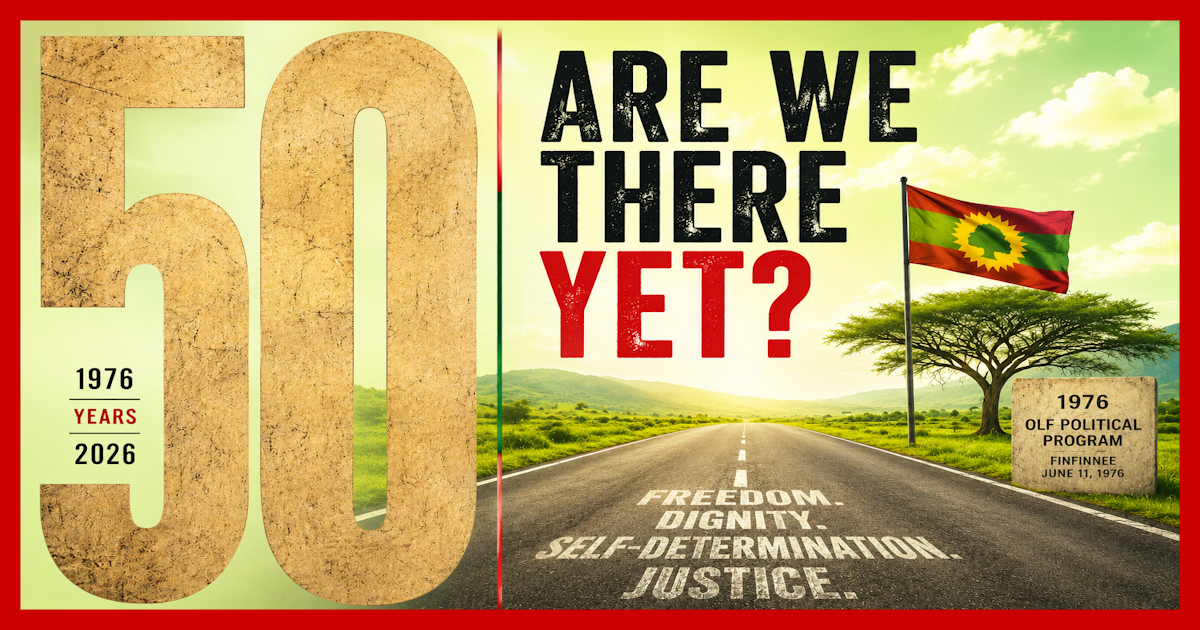
- Constitutional clarity over cartographic theater: Resolve Dirre Dhawa’s status within law, not through press-conference riddles. For details, see the "Essential Pillars for Authentic Trust" for a list of righting the wrongs [2].
- Rejection of irredentism: Assab belongs to a sovereign state; grievance is not a license for annexation by rhetoric.
- Respect for sanctuary: Hospitality is a civic virtue, not a forfeiture of title. Gratitude must not be rewritten as surrender.
- Build where you stand: Dignity grows from reconstructing one’s own house, not from claiming the house that sheltered you.
Borders — and even far-off sea ports — can be discussed, renegotiated, and dreamed toward. But dignity never grows from borrowed land or inherited illusions. Nothing is impossible through peace and consent. Yet when sanctuary becomes claim, and truth becomes a weapon, strength fades. What remains is fear wearing the costume of destiny.
And in both the young man’s voice and the Prime Minister’s tone, I heard the same thing:
Not power.
But longing.
Not clarity.
But escape.
A nation still searching for itself cannot afford fantasies, whether whispered by the powerless or broadcast by the powerful. But dignity—true dignity—never grows from borrowed land or borrowed history.
Healing begins not with claiming what isn’t yours, but rebuilding what is.
Selected References
- Facebook Reel by Muaz Mohamed, Facebook.
- IT Editorial, A Time Bomb Buried in Oromia and Somali Region, 27 August 2025, OROMIA TODAY.
- OT Editorial, Decoding Prosperity Party Regime's Farcical Four-Day Meeting on Oromia, 23 February 2025, OROMIA TODAY.