A Note of Caution to Amhara Expansionist Ultranationalists: Keep Your Hands Off Wallaga
You can listen to the audio of this article.
Excerpt
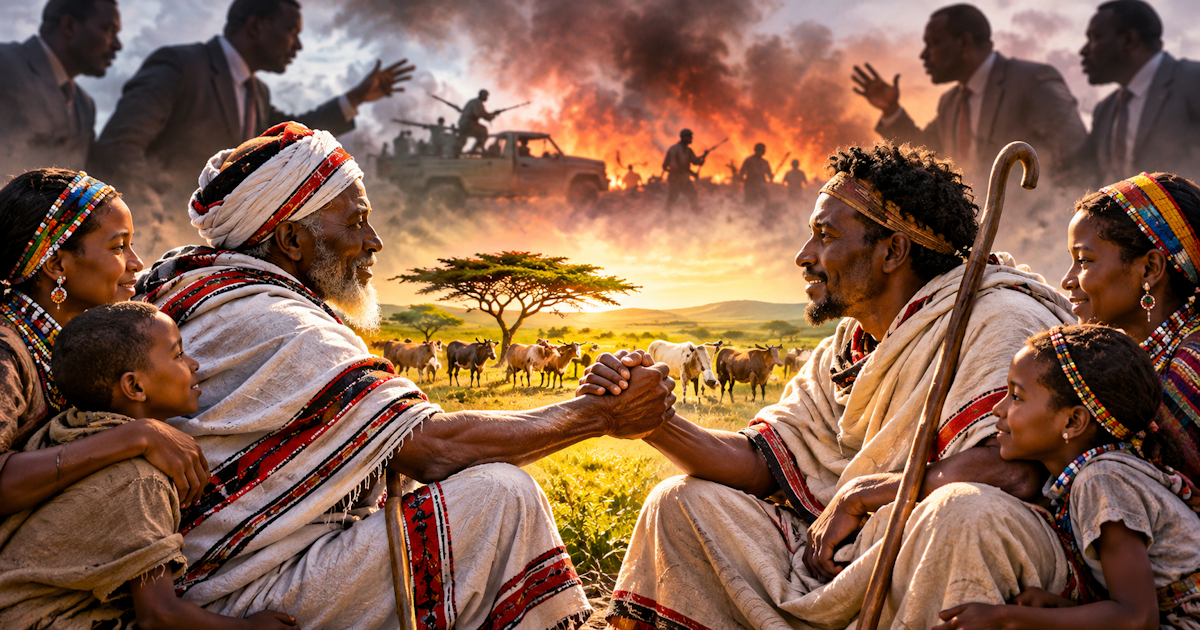
Amhara expansionist ultranationalists advancing territorial claims over Wallaga risk turning centuries of migration, trade, shared economic life and human interaction into instruments of conflict. Historical presence does not confer territorial ownership, nor does ethnic kinship grant armed groups jurisdiction over citizens elsewhere. Wallaga's Amhara communities deserve full protection and equal rights—but their presence must never become a pretext for territorial expansion, armed intervention or another devastating cycle of ethnic conflict.
1. Territorial Fantasies, Contested Historical Claims and Armed Excursions into Wallaga Endanger Everyone—Including Amhara Communities
There should be no ambiguity about this message.
Those Amhara expansionist ultranationalist politicians, activists and armed actors who are increasingly advancing territorial claims over Wallaga must cease and desist. Wallaga is not an empty piece of land waiting to be “reclaimed.” It is a living homeland, with its own history, peoples, communities, institutions and political identity.
Attempts to portray it as historically or naturally belonging to an Amhara nationalist project are not merely deeply contested; they are extraordinarily dangerous in today's Ethiopia.
At the same time, opposition to such territorial claims must never become opposition to Amhara people living in Wallaga. Their right to life, security, property, dignity and equal citizenship is not conditional upon this political dispute.
Protecting Amhara citizens and rejecting an armed territorial project conducted in their name are entirely compatible propositions.
The emergence of what is being presented as a “Wallaga Fano,” including the reported “Bizamo Command,” makes the situation even more alarming. ACLED recently reported [3] that the "Bizamo Command" , linked to the Amhara Fano National Movement, was involved in an armed ambush in East Wallaga in August 2026, followed by demonstrations by residents and Oromo students demanding an end to Fano attacks.
This is not a matter that should be dismissed as ordinary political rhetoric. It represents a potentially dangerous convergence of territorial revisionism, ethnic nationalism and armed mobilization.
2. “Bizamo” Is Not an Innocent Name
One particularly troubling feature of this emerging discourse is the promotion of the name “Bizamo” in connection with contemporary territorial claims over Wallaga. The historical existence of such a name or its use as place name is one key question. Its contemporary political deployment as an alternative identity for a living region is another one.
When a political movement reaches into history for an alternative name and deploys it in support of a present-day territorial project, nomenclature can cease to be merely historical. The name itself can become a political weapon.
3. Wallaga is Wallaga
The Oromo name Wallagaa reflects the region's deep connection with the Oromo people and their historical, linguistic and cultural presence. The region is not rendered historically available for appropriation simply because competing narratives can be constructed around its past.
If the objective is peaceful coexistence, why manufacture a competing territorial vocabulary?
If the objective is reconciliation, why promote terminology perceived by the local population as an attempt to overwrite its identity?
And if the objective is territorial expansion, then that proposition should be argued openly rather than concealed behind selective historical terminology.
4. Shared History Is Not a Territorial Deed
The historical relationship between communities north and south of the Blue Nile deserves more careful treatment than contemporary territorial politics often permits. Movement between Gojjam and Oromo lands did not begin with today's disputes, and historical presence should not automatically be interpreted as evidence of territorial ownership.
The historical record contains numerous documented examples of such interaction, but Abdussamad H. Ahmad's study, Peasant Conditions in Gojjam During the Great Famine 1888–1892, published in the Journal of Ethiopian Studies in 1987 [4], provides a particularly illuminating one.
As famine devastated Gojjam, Ahmad records that some inhabitants crossed the Blue Nile seeking refuge in Oromo lands, including Limmu, Horo Gudru and Ammuru. Some already had relatives and other connections there. More significantly, Ahmad records Christian and Muslim migrants from Gojjam in Horo Gudru as early as the eighteenth century, with their numbers increasing during the 1830s and 1840s as Assandabo became an important center in the growing trade of southwestern Ethiopia.
During the great famine, migrants who lacked relatives or other means of support became laborers on the farms of Oromo chiefs. They were paid in kind, and those payments helped sustain them through the crisis. When conditions in Gojjam subsequently improved, many of the peasants, merchants and artisans who had sought livelihoods in Oromo lands returned north and resumed their former occupations.
Nearly a century later, another famine produced another major movement of people into Wallaga. During the catastrophic 1983–1985 famine [5,6], the Derg dramatically expanded its resettlement program, relocating large numbers of people from the drought-stricken northern provinces—particularly Wallo—into the more fertile west and southwest, including Wallaga. The circumstances were different, and much of the Derg's resettlement program was coercive and politically controversial, but the historical parallel is striking: once again, severe hardship elsewhere brought substantial population movement toward the fertile lands west of the Blue Nile.
This more recent and extensively documented episode further illustrates why the presence of communities originating elsewhere must be understood through the actual history of migration, resettlement and state policy—not retrospectively converted into evidence of ancestral territorial ownership.
There is something profoundly human in this history that contemporary nationalism risks obscuring.
People crossed rivers because they were hungry. They sought relatives because relatives could offer refuge. They followed commerce because livelihoods depended upon it. They worked because work meant survival. In return, migrants contributed their labor, commerce and experience to the communities that received them.
Such interaction creates genuine historical relationships and legitimate human attachments. Over generations it can produce permanent settlement, intermarriage and communities whose descendants have every right to regard the places where they live as home.
But belonging as citizens and claiming territorial ownership are fundamentally different propositions.
Historical migration, labor, trade or settlement cannot retrospectively transform the homeland of a receiving population into the territorial property of the migrants' place of origin. Were that principle accepted, centuries of migration would furnish competing ethnic title deeds to territories throughout Ethiopia—and indeed much of the world.
Ahmad's account is revealing in another respect. Even while documenting migration from Gojjam, kinship connections, labor and commerce, he repeatedly describes the destinations south of the Blue Nile as “Oromo lands.” The historical record therefore demonstrates interaction between peoples and places; it does not erase the distinction between them.
Nor was every historical encounter peaceful. Ahmad also records armed expeditions and cattle raids into Oromo lands during the famine period. That distinction matters. A starving peasant seeking refuge, a laborer earning his livelihood, a merchant following a trade route and an armed force conducting a raid represent very different historical relationships. They should not be collapsed generations later into a single narrative of ancestral territorial entitlement.
This history should therefore be approached neither as evidence against Amhara belonging nor as evidence for Amhara territorial ownership. It tells us something much more valuable: Oromo and Amhara communities have encountered one another through migration, commerce, refuge, labor and, tragically, conflict over a long period.
Shared history should give peoples more reasons to live together—not new reasons to dispossess one another.
5. Demography Does Not Support the Territorial Claim
Contemporary demographic evidence presents another difficulty for portraying Wallaga as an Amhara homeland.
The 2007 census figures [7] reported Oromo as approximately 87.7% of East Wallaga's population, compared with approximately 10.9% Amhara. In West Wallaga, Oromo were reported at approximately 96.7%, while Amhara constituted approximately 1.2%. In Qellam Wallaga, Oromo constituted approximately 94.1%, compared with approximately 5.1% Amhara.
These figures should not themselves be mistaken for ethnic property deeds. Demography alone does not create historical ownership of territory. But the figures do demonstrate the implausibility of portraying contemporary Wallaga as an Amhara-majority homeland.
More importantly, these figures do not mean that Amhara residents have fewer rights.
Quite the opposite.
Every Amhara resident of Wallaga has the same right to life, security, property, dignity and political participation as every Oromo resident. Longstanding settlement and citizenship create rights that cannot legitimately be withdrawn because somebody belongs to a demographic minority.
The presence of Amhara communities must therefore be protected—not transformed into justification for an external territorial project.
The crucial distinction is between protecting Amhara citizens and using Amhara identity as a pretext for territorial expansion.
Those are fundamentally different propositions.
6. Wallaga Is Not a Frontier for Expansion
For decades, Ethiopia's political crises have been intensified by competing attempts to transform historical presence or demographic settlement into territorial entitlement.
The lesson should now be obvious.
Once political actors begin arguing that an ethnic group has the right to “reclaim” territory simply because of some historical connection, virtually every region of Ethiopia can become contested.
If historical presence alone establishes territorial ownership, where does the argument end?
Who decides which century constitutes the legitimate starting point?
Which migration counts and which does not?
Does refuge create ownership? Does commerce? Does conquest? Does settlement? Does administrative control under one particular government override what existed before it?
Ethiopia has experienced centuries of migration, intermarriage, conquest, displacement, administrative restructuring and demographic change. Turning selectively chosen episodes from that history into contemporary ethnic property deeds is a recipe for permanent conflict.
Wallaga must not become another theater for this destructive politics.
7. The Greatest Danger May Be to Amhara Civilians
There is an extraordinary contradiction at the heart of an armed Amhara territorial project in Wallaga.
If its stated objective is to protect Amhara people, why pursue a strategy that could make Amhara civilians in Wallaga less secure?
Every armed incursion, every declaration that Wallaga is supposedly “Amhara land,” every attempt to construct a competing territorial identity and every threat of territorial conquest increases fear among the overwhelmingly Oromo population.
Fear produces mobilization.
Mobilization produces counter-mobilization.
Counter-mobilization can produce violence.
And once violence becomes ethnically framed, ordinary civilians become extraordinarily vulnerable.
This is how neighbors become suspicious of neighbors and communities that have lived alongside one another can be transformed into enemies.
The people who ultimately pay the price are rarely the political elites who make the declarations. They are farmers, traders, students, women, children, religious communities and ordinary families.
This is why the current trajectory should concern Amhara citizens as much as Oromo citizens.
8. Resistance Must Never Become Collective Retaliation
There is an old political lesson that should be understood before it is too late:
- Threaten an entire population and eventually that population will feel compelled to defend itself.
- But this must never be interpreted as justification for collective retaliation.
- An Oromo civilian is not responsible for the actions of an Oromo armed organization.
- An Amhara civilian is not responsible for the actions of Fano.
- No ethnic community should be punished collectively for the actions of armed actors claiming to speak in its name.
The proper response to territorial threats is therefore not ethnic revenge. It is political resistance to ethnic expansionism, protection of civilians, accountability for armed actors and insistence upon peaceful and constitutional mechanisms for resolving disputes.
The warning is nevertheless real: those who publicly threaten the territorial and political existence of an entire population should not be surprised when such rhetoric produces fear, resistance and instability.
9. What Exactly Is the Intended Endgame?
Those advocating an Amhara territorial project in Wallaga should answer some basic questions.
- Are they seeking permanent Amhara political control over parts of Wallaga?
- Are they proposing changes to existing regional boundaries?
- If so, through what lawful or constitutional mechanism?
- Are they seeking to displace Oromo communities?
- Are they advocating the creation of an Amhara-administered territory inside Oromia?
- Are they prepared to accept the democratic wishes of the overwhelming majority of Wallaga's population?
- And, most importantly, what happens to the Oromo population if their territorial project succeeds?
These questions cannot be avoided indefinitely.
A political project that requires the displacement, subordination or ethnic cleansing of an existing population cannot be legitimized by historical mythology.
Nor can territorial conquest be transformed into “self-defense” simply by giving an armed movement a different name.
10. Disband the “Wallaga Fano” Project
Any armed formations operating as a “Wallaga Fano” territorial project should be disbanded.
Armed groups should not be permitted to establish themselves in Wallaga under the banner of ethnic territorial claims. The Ethiopian federal government and relevant regional authorities have a responsibility to prevent armed groups—whatever their ethnic affiliation—from turning Wallaga into a battlefield for territorial projects.
This standard must apply equally to all armed organizations.
If Fano claims to represent Amhara interests, it should demonstrate that commitment by protecting Amhara civilians rather than exposing them to greater danger.
If Oromo armed groups claim to defend Oromo interests, they too must be held to the same standard.
The principle should be simple:
No armed organization has the right to turn an ethnic population into a military constituency and a homeland into a battlefield.
11. Prevention Must Come Before Another War
The international community should also take these developments seriously.
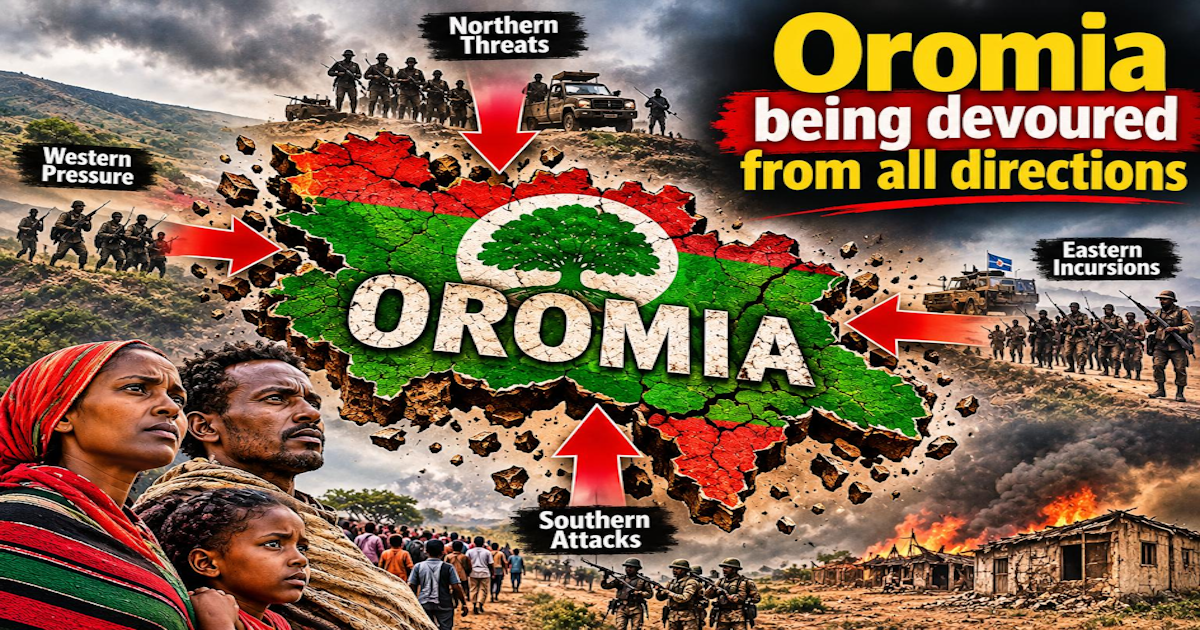
The conflict environment in Oromia remains deeply dangerous. Recent reporting by the Associated Press [8] has documented continuing violence in Oromia, including allegations of executions, torture, rape and abductions involving different actors. The broader Fano conflict in Amhara has likewise generated serious human-rights concerns and continuing confrontation between Fano forces and the Ethiopian government.
Opening—or permitting the emergence of—a new territorial front in Wallaga risks connecting already existing conflicts and producing an even wider cycle of ethnic violence.
This is precisely the moment for prevention rather than complacency: civilian protection, independent investigation of atrocities, monitoring of armed mobilization and diplomatic pressure against attempts by any organization to alter territorial arrangements through force.
12. A Message to Amhara Citizens of Wallaga
Amhara civilians living in Wallaga should not be treated as outsiders.
They are entitled to live safely, own property, conduct businesses, worship freely, educate their children and participate fully in public life without discrimination.
Their security must be guaranteed.
Their history in the region should not be erased merely because that history includes migration. Human beings have migrated throughout history. Generations establish homes, communities and attachments, and citizenship cannot be made conditional upon proving that one's ancestors were the first people to inhabit a particular piece of land.
But that security cannot be achieved by claiming Wallaga for an ethnic nationalist movement.
Indeed, the opposite is likely to be true.
The safest future for Amhara communities in Wallaga is one in which they are recognized as equal citizens and neighbors—not cast, willingly or unwillingly, as the advance guard of a territorial project.
Any Amhara political movement genuinely concerned about the wellbeing of Amhara communities should understand this distinction.
13. A Message to Oromo Political Actors
The same principle applies on the Oromo side.
Oromo political leaders and activists must resist the temptation to respond to Amhara ultranationalism with anti-Amhara rhetoric.
The answer to ethnic supremacism cannot be another form of ethnic supremacism.
Historical accounts of migration from Gojjam into Oromo lands must therefore never be weaponized against Amhara citizens living in Wallaga today. The history of how someone's ancestors arrived does not determine that person's contemporary right to belong.
The objective should be to defend Wallaga's territorial integrity and the rights of its inhabitants while simultaneously protecting Amhara civilians from discrimination, retaliation and collective punishment.
That is both morally right and strategically wiser.
14. Ethiopia Cannot Survive Endless Territorial Wars
Ethiopia has already paid an intolerable price for political movements that transform identity into territorial entitlement.
The country does not need another war over another piece of land.
It needs political dialogue, constitutional mechanisms for resolving territorial disputes, independent investigation of atrocities, protection of minorities, disarmament of irregular forces and genuine guarantees of local self-government.
Wallaga should not become the next battlefield in Ethiopia's unresolved struggle over historical narratives and territorial power.
The choice is ultimately between two futures.
One is a future in which political entrepreneurs continue constructing selective historical claims, competing over territorial names, mobilizing armed groups and frightening communities into believing that their neighbors intend to eliminate them.
The other is a future in which Wallaga remains home to all its inhabitants—Oromo, Amhara and other communities—without any group being required to surrender its identity, security or political rights to another.
The second future is difficult.
The first is catastrophic.
15. The Warning
To those promoting Amhara expansionist ultranationalist territorial claims over Wallaga, the message should therefore be unequivocal:
- Stop the territorial rhetoric.
- Stop turning selective history into territorial entitlement.
- Stop attempts to impose a competing political identity upon Wallaga.
- Stop the mobilization of armed groups under the banner of territorial expansion.
- Disband armed formations organized around such a project.
- Do not gamble with the lives and security of Amhara civilians living in Wallaga.
And above all:
Do not mistake the restraint of a population for consent to its own dispossession.
Wallaga is not a prize to be captured.
It is a homeland inhabited by millions of people—including citizens of different ethnic backgrounds whose rights and security must be protected.
Its future cannot be decided by armed groups, expansionist ultranationalist fantasies or selectively constructed historical claims.
The people of Wallaga deserve peace, security, dignity and the right to determine their political future without threats of ethnic conquest.
History should help Ethiopia understand how its peoples came to live together. It should not be mined selectively for excuses to drive them apart.
Cease and desist before rhetoric becomes another cycle of bloodshed.
16. Finally, On Fano’s Dangerous Doctrine of Ethnic Guardianship: Ethnic Kinship Does Not Give You Jurisdiction
There is another argument advanced in justification of armed involvement in Wallaga that deserves particular scrutiny: “We are there to protect Amharas.”
Protect them from what, by whom, and under whose authority?
Amhara residents of Oromia are not subjects of the Amhara regional state temporarily stranded on somebody else's territory. They are residents and citizens entitled to the protection of the law where they live. Their ethnicity does not transfer political jurisdiction over them to armed organizations—or to another regional state—simply because those organizations claim ethnic kinship.
This should be elementary in a modern political order.
Scots live in England. English people live in Scotland. Welsh and Northern Irish people live throughout the United Kingdom. Their identities do not disappear when they cross an internal boundary, nor should their cultural attachments be diminished. But Scotland does not acquire jurisdiction in England merely because Scots live there, and an armed Scottish movement could hardly justify entering England on the ground that it had come to “protect the Scots.”
The comparison is obviously imperfect: the United Kingdom and Ethiopia have very different constitutional histories and federal arrangements. But the underlying principle is useful. Ethnic kinship is not a roaming license for territorial jurisdiction.
The alternative principle is extraordinarily dangerous. If every political or armed movement acquired a right to intervene wherever members of its ethnic group happened to live, Ethiopia would become a country of permanently overlapping jurisdictions. Amhara organizations could claim authority over Amharas in Oromia. Oromo organizations could claim authority over Oromos in Amhara. Tigrayan organizations could make equivalent claims elsewhere. Every minority population would become a potential justification for somebody else's intervention.
That is not minority protection.
It is the conversion of minorities into territorial beachheads.
And nothing could be more dangerous to the minorities supposedly being protected. Once an armed organization announces that a particular civilian community is the constituency it has crossed a boundary to defend, it risks transforming ordinary citizens into perceived proxies of that organization. People who may have lived peacefully among their neighbors for generations suddenly become burdened with a political and military role they never requested.
Amhara residents of Wallaga should emphatically reject such a role being imposed upon them.
They do not need Fano to establish their right to belong there. Their rights do not derive from Fano.
Their right to live safely, own property, work, worship, organize, participate politically and raise their families does not depend upon an armed movement arriving from elsewhere and declaring itself their ethnic guardian.
Those rights belong to them as citizens.
And if Oromia's authorities fail to protect those rights—or, worse, participate in violating them—that failure should be exposed without hesitation. Amhara victims have every right to demand justice. Ethiopian institutions should be held accountable. Independent investigators, courts, human-rights organizations, civil society and citizens of every nationality should demand protection and accountability. Oromo political actors themselves should be among the first to oppose abuses against Amhara residents.
The sky should indeed fall politically upon any government that persecutes people because of their identity.
But none of that establishes an ethnic armed group's right to enter another regional state, assume jurisdiction over its supposed ethnic kin and then convert their presence into an argument for territorial control.
There is an enormous difference between saying:
“Amhara citizens in Oromia are being denied their rights, and those violations must stop.”
and saying:
“Because Amharas live there, an Amhara armed movement has a right to go there and protect them.”
The first is a legitimate human-rights claim.
The second replaces citizenship with ethnic guardianship.
That conception belongs to a political world in which peoples are imagined as possessions of ethnic rulers wherever they happen to live. Modern citizenship is supposed to have moved beyond precisely that idea.
There is another uncomfortable implication for those advancing this argument. If the presence of Amhara civilians supplies Fano with a justification for entering Wallaga, then those civilians cease to be treated merely as people whose rights deserve protection. Their existence becomes part of the territorial argument itself.
That should trouble Amhara citizens most of all.
A minority community is not a flag planted in somebody else's soil.
It is not an advance post.
It is not evidence of somebody else's jurisdiction.
And it must never be turned into the human justification for an armed territorial project.
The proper principle is much simpler and far more civilized:
Wherever citizens live, protect their rights. Wherever those rights are violated, challenge the violator.
But do not convert ethnic kinship into a license for armed intervention or territorial entitlement.
Amhara citizens of Wallaga deserve protection because they are human beings and citizens—not because an armed organization has appointed itself their ethnic custodian.
And Wallaga does not become less Wallaga because Amharas live there.
References
- Yadessa Guma, Amhara Fano, Don't Dare Invading Wallaga: Risking Strong Enmity Between the Amhara and Oromo Nations, 23 December 2024, OROMIA TODAY.
- Yadessa Guma, የአማራ ፋኖ ወለጋን ለመውረር አትድፈር፡ አጠቃላይ መጥፋት አደጋ ላይ ይጥላል።, 23 December 2024, OROMIA TODAY.
- Dr. Jalale Getachew Birru, Is Fano militias’ activity increasing in the western part of Ethiopia’s Oromia region?, 28 August 2026, ACLED.
- Abdussamad H. Ahmad, "Peasant Conditions in Gojjam During the Great Famine 1888–1892" , Journal of Ethiopian Studies, 1987.
- 1983–1985 famine in Ethiopia, Wikipedia.
- B. G. Kumar, Ethiopian Famines 1973–1985: A Case‐Study, The Political Economy of Hunger: Volume 2: Famine Prevention, 21 February 1991.
- Central Statistical Agency (CSA), Federal Democratic Republic of Ethiopia. The 2007 Population and Housing Census of Ethiopia: Statistical Report for Oromiya Region, Part I: Population Size and Characteristics. Addis Ababa: CSA, 2010.
- Associated Press, “Executions, torture, abductions, rape’: Ethiopia’s hidden conflict,” 2 February 2026.