What Irreechaa Means to the Oromo People
Excerpt
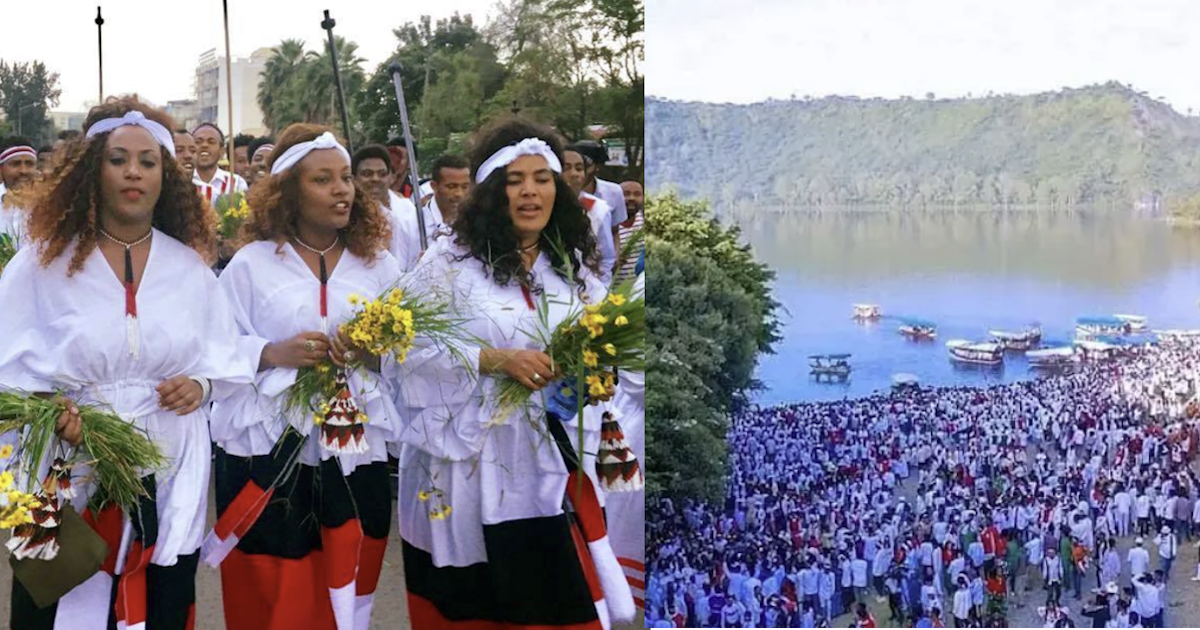
As Irreechaa is upon us—with Irreechaa Hora Finfinnee celebrated this Saturday in the capital, followed by Irreechaa Hora Arsadii on Sunday in Bishoftu—this essay reminds us what Irreechaa means to the Oromo people. Beyond the color, songs, and vast gatherings lies a living cultural institution rooted in thanksgiving, peace, reconciliation, renewal, and the enduring relationship between people, community, and nature. It is a tradition carried across generations, connecting Oromo history and identity with the present while looking confidently toward the future.
Irreechaa as a Living Cultural Institution
Irreechaa can also be understood as a living cultural institution because its meaning is carried through practice from one generation to another [1]. It is not limited to the day on which people gather. The preparations, prayers, songs, clothing, use of green grass and flowers, respect for elders, and gathering of families and communities all contribute to its meaning. In this sense, Irreechaa connects the past with the present while creating an opportunity to think about the future of the community.
The communal nature of Irreechaa is especially important. Individuals participate as members of families, clans, communities, and the broader Oromo society. This collective participation reinforces the idea that well-being is shared. Gratitude is therefore expressed not only for an individual's personal blessings but also for peace, fertility, health, social relationships, and the continuation of community life.
The Meaning of Waaqa, Galata, and Nagaa
Several Oromo concepts help explain why Irreechaa has such a broad meaning. Waaqa refers to the Creator within the Oromo worldview, while galata expresses thanksgiving. Nagaa refers to peace and social harmony. Together, these ideas show that Irreechaa is concerned with the relationships among the Creator, human beings, nature, and the community. Thanksgiving is therefore connected with responsibility, reconciliation, and the hope for continued blessings.
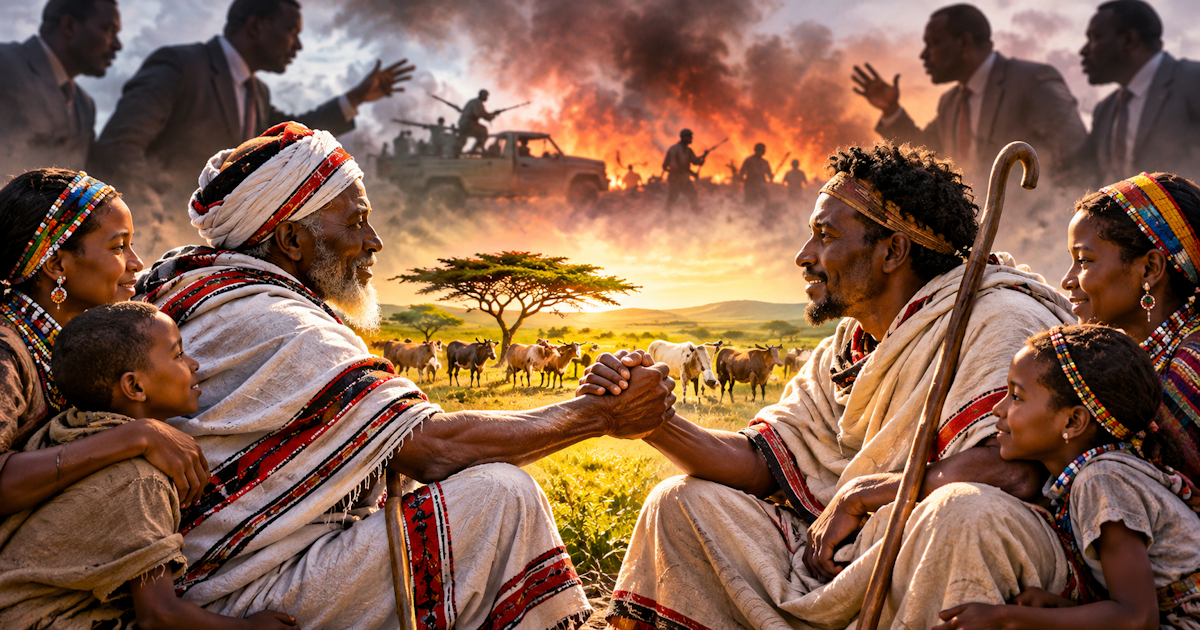
The emphasis on araara, or reconciliation, gives Irreechaa an important social function. The occasion can provide a cultural space for people to set aside disagreements, restore relationships, and strengthen mutual respect. It is very seldom that individuals who have fallen out with each other take part in the Irreechaa celebration unless they have reconciled. This reinforces the understanding of Irreechaa as more than a celebration: it is also a time for renewing relationships within the community.
Water, Green Grass, and Flowers as Symbols
Water is central to Irreechaa Birraa because the ceremony is traditionally connected with rivers, lakes, springs, and other natural sites. The use of water can be understood together with the seasonal transition from the rainy period toward the next stage of agricultural and community life. Following river overflows that may have separated communities, the water now represents calm and peace as the winter season comes to an end. Green grass and fresh flowers similarly represent renewal, fertility, life, and continuity with the spring season that follows. These elements make the natural environment part of the ritual rather than simply a background for the celebration.
The symbolic use of living natural materials also helps explain why sacred natural sites are important. A riverbank, spring, lake, or hill is not simply a convenient meeting place. Within the Oromo worldview described in the source material, the setting itself contributes to the spiritual and cultural meaning.
Irreechaa and the Gadaa Worldview
The connection between Irreechaa and the Gadaa system is important for understanding its historical depth. The Gadaa system organized political, social, generational, and ritual life, and Irreechaa was connected to seasonal and social cycles within that broader system. This connection demonstrates that ritual practice was integrated with community organization rather than separated from everyday social responsibilities.
The role of elders and ritual specialists further reflects this connection. Their participation helps transmit knowledge, prayers, customs, and cultural values. At the same time, public participation allows younger generations to learn through observation and practice, helping to preserve cultural memory.
Irreechaa and Intergenerational Cultural Transmission
One of the important functions of Irreechaa is the transmission of cultural knowledge between generations. Children and young people encounter the Oromo language, songs, traditional clothing, ceremonial practices, and community relationships in a public setting. This makes the festival an informal educational space where cultural identity is experienced rather than learned only through written materials.
This intergenerational dimension is particularly significant during periods when language, institutions, or cultural practices have faced pressure. Public participation gives families and communities an opportunity to maintain a connection with cultural traditions and to communicate their importance to younger generations.
Women, Families, and Community Participation
Irreechaa is also a community-wide occasion in which families and different social groups participate together. The visible presence of families, elders, youth, and other community members demonstrates that the ritual is not restricted to any one social group. Participation helps create a shared sense of belonging and provides space for cultural expression through clothing, language, songs, and collective celebration.
Because the ritual brings people together across family and community relationships, it can reinforce social solidarity. The emphasis on peace, reconciliation, and shared thanksgiving gives participation a social meaning in addition to its spiritual meaning.
Irreechaa in the Oromo Diaspora
Irreechaa has become important not only in Oromia but also among Oromo diaspora communities. Diaspora participation extends the cultural significance of Irreechaa beyond its traditional geographic settings. Gatherings outside Oromia can provide opportunities to use Afaan Oromo, wear traditional clothing, perform songs, maintain relationships, and teach younger generations about Oromo history and culture.
For diaspora communities, Irreechaa can therefore function as a bridge between place and identity. Even when participants live far from the natural sites traditionally associated with the ritual, these cultural practices can continue to connect them with Oromo community life and collective memory.
Environmental and Seasonal Meaning
The environmental dimension of Irreechaa deserves particular attention because the ritual is closely connected to seasonal change. The end of the rainy season, the presence of green vegetation and water, and the beginning of another production period all connect human life with ecological cycles. This relationship emphasizes that community well-being is linked to the condition and renewal of the natural environment.
The use of natural sites also gives the celebration an ecological dimension. Rivers, springs, lakes, hills, and mountains are incorporated into the ritual's symbolism.
For completeness, it is important to note that the spring observance of Irreechaa Birraa is mirrored by the autumn observance of Irreechaa Afraasaa.
Irreechaa Birraa is celebrated at rivers, springs, and lakes, while Irreechaa Afraasaa is traditionally celebrated on hills and mountains. The former gives thanks for the transition from the dark and difficult rainy season into the brightness and renewal of spring. The latter looks toward the return of the rains, with prayers for the water needed to restore lush green pastures for livestock and sustain planting and agricultural production in the season to follow. In this sense, the spring thanksgiving and the autumn prayers offered on hills and mountains form complementary parts of a complete ecological cycle.
Irreechaa Afraasaa, historically celebrated Oromia-wide on Mount Cuqqaalaa or Tulluu Cuqqaalaa, has yet to be restored to its former prominence in the way that the spring Irreechaa Hora Finfinnee was restored in 2019 after an interruption of more than a century. Although it is not presently celebrated with the same visibility, scale, or uniformity as Irreechaa Birraa, Irreechaa Afraasaa continues to be observed by some communities around hills and mountains, preserving an important part of the wider Irreechaa tradition.
Seen together, Irreechaa Birraa and Irreechaa Afraasaa reveal a deeper ecological rhythm within Irreechaa. One gives thanks for the arrival of renewal after the rains; the other looks ahead and asks for the rains upon which people, livestock, vegetation, and agriculture depend.
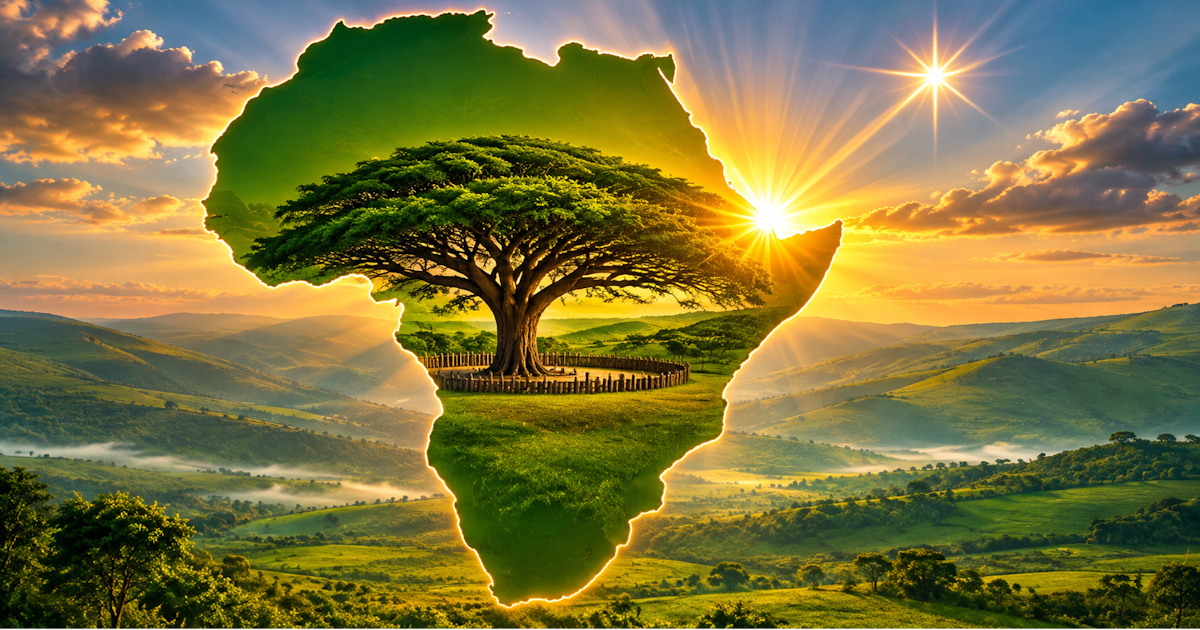
Nature is therefore neither incidental to Irreechaa nor merely a scenic setting for its ceremonies. The changing seasons, water, green vegetation, hills, mountains, animals, agriculture, and human communities are understood as interconnected parts of life. In this way, the cultural meaning of Irreechaa recognizes the importance of nature to spiritual, social, and economic well-being and, in turn, makes the human responsibility to respect, protect, and nurture the natural environment almost self-evident.
Irreechaa, Cultural Revival, and Public Identity
The revival of public Irreechaa celebrations represents more than the return of a festival. The revival is connected with the restoration of cultural memory and public Oromo identity after periods in which indigenous institutions and practices were suppressed or marginalized.
This revival also explains why Irreechaa can have different meanings for different participants. For some, its primary meaning is thanksgiving and spiritual renewal. For others, it is an opportunity to express Oromo language and culture publicly, strengthen community relationships, or remember historical experiences. These meanings can exist together rather than replacing one another.
Irreechaa and Political Expression
The political dimension of Irreechaa should be understood in relation to its public and communal character. Prayers and speeches at some contemporary celebrations have addressed questions involving land, urban development, rights, and Oromo grievances. Because large numbers of people gather in one place, the ceremony can become a visible setting for expressing concerns that extend beyond the religious or cultural dimensions of the ritual.
The 2014 Irreechaa prayers discussed by Debele, S [6] are an example of how ritual language can communicate social and political concerns. This does not mean that every participant attends Irreechaa for political reasons. Rather, the festival provides a shared public space in which spiritual, cultural, social, and political meanings can overlap.
The 2016 Bishoftu Tragedy and Its Significance
The 2016 Irreechaa gathering in Bishoftu is an important part of the modern history of the festival. Human Rights Watch's 2017 report is a major documentary source concerning the tragedy, including eyewitness accounts and other evidence. The event illustrates the tension that can arise when a large cultural gathering also becomes a setting for public expression and political concern.
The tragedy has consequently become part of the collective memory surrounding contemporary Irreechaa. It is important to distinguish the historical documentation of the event from broader interpretations of its political meaning. The available source material supports discussing the event as a significant moment in the modern history of Irreechaa and in discussions about state responses to large public gatherings.
Why Irreechaa Continues to Matter
Taken together, the spiritual, social, ecological, cultural, historical, and political dimensions explain why Irreechaa continues to matter to the Oromo people. Its significance does not come from a single symbol or a single purpose. Instead, its strength comes from the way several aspects of Oromo life are brought together in one communal practice.
Irreechaa therefore provides a way to remember history while participating in the present. It allows people to express gratitude, seek peace, renew relationships, celebrate cultural identity, and maintain connections across generations and geographic locations. Its continuing practice demonstrates how a traditional ritual can remain meaningful while taking on new social meanings in changing historical circumstances.
Expanded Conclusion
Ultimately, Irreechaa can be understood as a multidimensional expression of Oromo life. Its foundation in thanksgiving to Waaqa, its connection with nature and seasonal renewal, its emphasis on peace and reconciliation, and its role in strengthening community relationships make it an important spiritual and social institution. Its relationship with the Gadaa system and its connection to Oromo cultural memory give it historical depth.
At the same time, the modern revival of Irreechaa has given the celebration additional public significance. The use of Afaan Oromo, traditional clothing, songs, natural symbols, and collective gathering creates a visible expression of Oromo identity. The participation of diaspora communities further demonstrates how the festival can maintain cultural connections across geographic boundaries.
For these reasons, understanding Irreechaa requires looking beyond the idea of a holiday or festival. It is a ritual of thanksgiving, a practice of reconciliation, a celebration of nature and renewal, a means of transmitting culture, a marker of collective identity, and, in contemporary settings, sometimes a space for public expression. These overlapping meanings help explain its enduring importance to the Oromo people.
Finally, it is necessary to dispel a lingering misconception about Irreechaa. Irreechaa is a festival—a celebration of gratitude—and not a religion. The important phrase, “its foundation in thanksgiving to Waaqa,” should be understood within its historical and cultural context. People of all faiths can join in the celebration of thanksgiving in accordance with their own faith traditions.
References
- Yadessa Guma, Irreechaa as Ritual Repair: How Oromo Thanksgiving Supports National Healing—And Why It Draws Contestation, 12 October 2025, OROMIA TODAY.
- Addis Standard. (n.d.). Irreecha: What it is and what it isn’t. https://addisstandard.com/irreecha-what-it-is-and-what-it-isnt/
- Advocacy for Oromia. (n.d.). What is Irreechaa? https://advocacy4oromia.org/what-is-irreechaa/
- Bekele Debele, S. (2017). Contested Heritage: The “Cul-Touristic” Turn in the Celebration of Irreecha Ritual in Ethiopia. In Religious Pluralism, Heritage and Social Development in Africa (pp. 21–32). African Sun Media. https://www.researchgate.net/publication/317114009_Contested_Heritage_The_Cul-Touristic_Turn_in_the_Celebration_of_Irreecha_Ritual_in_Ethiopia
- Bulcha, M. (2015). Oromia’s Irreecha Festival: A Revival of an Ancient African Culture (Gadaa.net / Advocacy for Oromia). https://gadaa.net/wp-content/uploads/2015/10/Irreecha-website-2015-Mekuria.pdf
- Debele, S. (2018). Reading Prayers as Political Texts: Reflections on Irreecha Ritual in Ethiopia. Politics, Religion & Ideology. https://pure.mpg.de/pubman/item/item_3214196_2/component/file_3214197/Debele_2018_Reading.pdf
- Ivanova, L. V. (2025). Irreechaa: Oromo National Identity and the Revival of Traditions in Contemporary Ethiopia. (Russian). https://ruspoj.com/0130-3864/article/view/685327
- Leykun, S. (2014). “Irreecha” Ceremony among Shoa Oromo. Journal of Science and Sustainable Development, 2(1), 96–110. https://doi.org/10.20372/au.jssd.2.1.2014.028
- Tolera, M. (2023). Irreechaa: Unveiling the Multidimensional Significance of a Cultural Phenomenon. Anthropol Ethnol Open Access J.
- Wikipedia contributors. (n.d.). Irreechaa. In Wikipedia. https://en.wikipedia.org/wiki/Irreechaa
- Wikipedia contributors. (n.d.). Oromo people. In Wikipedia. https://en.wikipedia.org/wiki/Oromo_people
- Human Rights Watch. (2017). Fuel on the Fire: Security Force Response to the 2016 Irreecha Cultural Festival. https://www.hrw.org/sites/default/files/report_pdf/ethiopia0917_web.pdf