
Injustice Always Produces Independence
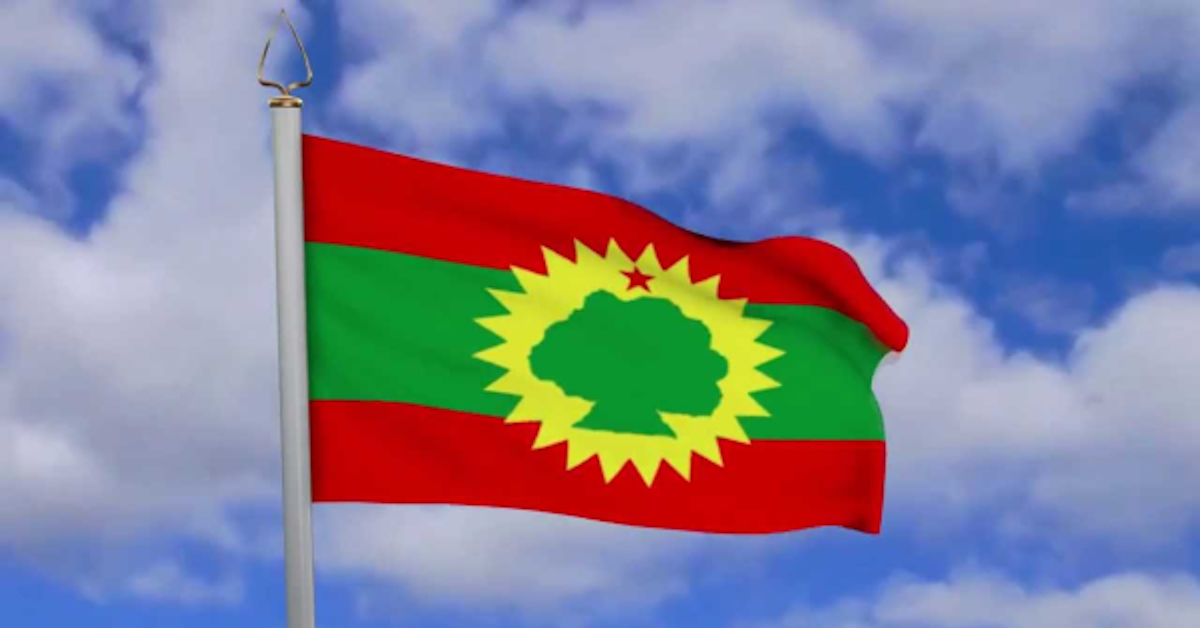
Excerpt
Injustice is not a permanent condition; it is an unstable one. Where dignity, consent, and autonomy are denied, resistance does not fade—it evolves. Between those who fight injustice with clarity and those who preserve it through denial or opportunism lies a spectrum of hesitation that slows justice but cannot stop it. History is clear: stability is not imposed by force, but reached through courage, accountability, and self-determination.
Injustice and the Illusion of Permanence
“Injustice in the end produces independence.”
— Voltaire
History has one stubborn habit: it refuses to reward injustice forever.
To those fighting injustice, let the words of Voltaire steady your troubled mind [1].
Your struggle is not futile. It may be delayed, distorted, or violently resisted, but it will not be erased. Independence, autonomy, or genuine self-rule is not a fantasy born of impatience; it is the natural outcome of sustained injustice.
And to those fighting to preserve injustice, a difficult truth must be faced. Your upstream swim will end. Not in glory, not in triumph, but in exhaustion. History does not celebrate those who defend injustice; it records their failure.
Injustice Is an Unstable Condition
Nothing in nature settles until it reaches equilibrium.
If a massive object is pushed off a mountain, it does not stop because someone commands it to stop. It keeps moving—crashing, accelerating, destroying—until it reaches a point of stability. That point is not a matter of preference or negotiation. It is a physical certainty.
Societies behave no differently.
When injustice is embedded in a political system—when a people are denied autonomy, consent, dignity, or the right to shape their own future—that system becomes unstable by definition. No amount of force, propaganda, or cosmetic reform can manufacture lasting stability under such conditions.
The only open questions are how long the fall will take, and how much human suffering will occur before equilibrium is reached.
The Illusion of Containment
History is crowded with regimes that believed they could outmaneuver inevitability.
They patched cracks instead of repairing foundations. They rebranded coercion as unity and repression as order. They delayed justice in the hope that fatigue would extinguish resistance.
It never does.
Struggles that are suppressed do not disappear. They adapt. They learn. They mature. Time does not neutralize injustice; it sharpens its consequences. What is postponed today returns tomorrow with greater clarity and less patience.
You may delay the outcome by months, years, even decades—but you will not escape it.
The Rational Path Is Not Denial
There is, however, a rational choice.
If wisdom still exists among those in power, it lies not in denial but in damage control. It lies in cutting losses early, minimizing suffering, and redirecting squandered resources toward real prosperity. The transition to stability—whether through independence, confederation, or a genuinely voluntary political arrangement—does not have to consume generations.
It can begin now.
It can begin today.
Justice delayed multiplies cost. Justice acknowledged reduces it.
Shades of Gray: From Preserving to Fighting Injustice
"When injustice becomes a law, resistance becomes a duty."
— Thomas Jefferson
In the struggle to dismantle injustice, polarization is not an accident—it is inevitable. At one extreme stand those who seek to preserve unjust systems at all costs; at the other stand those determined to dismantle them entirely. Between these two poles lies a wide and complex spectrum of actors, each defined by differing degrees of clarity, courage, hesitation, and compromise.
These shades of gray are not neutral. Each position along the spectrum either accelerates the journey toward justice or applies drag to it. Some delay through caution, others obstruct through calculation, and still others defend injustice outright while cloaking themselves in the language of order, unity, or stability.
At one end of this spectrum stands the white light: those who confront injustice with clarity and conviction—freedom fighters and principled allies who refuse to trade dignity for comfort or justice for delay. Their alignment is unambiguous. What follows are not alternatives to justice, but varying degrees of distance from it.
Between the white light and outright obstruction lies a spectrum of gray. These shades differ in motivation and intensity, but each exerts a drag force on the journey toward equilibrium.
For analytical clarity within this discussion of the Oromo Struggle, these positions can be grouped into three broad categories.
Light Gray: The Non-Committal Sympathizers
Closest to the white light, yet never stepping fully into it, stands the first group.
They recognize injustice, sympathize with Oromo grievances, and often concede—privately—that the system is broken. Yet when alignment carries cost, they hesitate.
What Characterizes Them
- Moral Agreement Without Commitment – They agree with justice in principle but stop short of action when it requires risk, visibility, or sacrifice.
- Fear of Disruption – They prioritize stability—even unjust stability—over transformative change.
- Endless Gradualism – Justice is always deferred to an undefined future.
- False Equivalence – They insist on “hearing all sides” even where power asymmetry is obvious.
- Selective Courage – They speak boldly in private but retreat when public alignment carries consequence.
- Outsourcing Agency – They wait for others to deliver justice.
- Unintentional Preservation of Injustice – Their hesitation slows momentum and extends injustice.
They are not enemies of justice. But in moments of structural oppression, non-commitment functions as resistance to change.
Darker Gray: The Oromo PP’s Myopic Vision of Oromo Freedom
Further down the spectrum lies a far more consequential group—those aligned with the Prosperity Party regime. This group speaks the language of reform while reproducing injustice in practice.
Some within this group mistakenly assume that Oromo demands for self-determination are marginal, on the grounds that Oromos ostensibly have their own government. From this follows the dismissive question, “independence from whom?”—as though Oromo self-determination were a settled matter.
Such reasoning confuses representation with power and symbolism with sovereignty. Those advancing this view would do well to return to the first principles of politics [2], where legitimacy flows from consent, accountability, and lived reality—not from imposed narratives or propaganda warfare orchestrated by the darker gray actors. It is only through such principled reasoning that lasting stability can be achieved.
The representative faces of this group include Abiy Ahmed, Shimelis Abdissa, Awel Abdo, Feqadu Tesema, Ararsa Mardasa, and so on.
What Characterizes Them
- Power as the Ultimate Objective – Power is an end in itself.
- Instrumental Use of Oromummaa – Identity is deployed selectively.
- Criminalization of Oromo Resistance – Dissent is reframed as extremism.
- Normalization of Violence as Governance – Fear replaces consent.
- Patronage and Transactional Loyalty – Loyalty is bought, not earned.
- Moral Elasticity – There are no red lines.
- Strategic Confusion – Contradiction is used deliberately.
- Extraction Without Accountability – Resources are exploited for survival and enrichment.
- Fear of Accountability – Transparency is treated as a threat.
- The Ultimate Enablers of Injustice Against the Oromo – Motivated solely by power retention and devoid of any guiding ideology, they actively flirt with and appease the Dark End (see below). In doing so, they do not merely tolerate injustice against the Oromo—they extend its lifespan. By bridging opportunism with denial, this group becomes the most dangerous force in sustaining and prolonging anti-Oromo injustice.
This is not ideology. It is power monetized, enforced, and defended through fear.
Dark End: Ethiopianist Elites and Imperial Nostalgia
At the far end of the spectrum stand Ethiopianist elites anchored in imperial nostalgia.
They seek to impose a manufactured “Ethiopian identity” by erasing the identities of others—an identity that functions, in practice, as a sugar-coated extension of Amhara cultural dominance. This project is sustained not only by political elites, but by institutional and cultural protagonists as well.
- Ethiopianist political parties—including fringe formations such as Ethiopian Citizens for Social Justice (EZEMA) [3,4], despite their lack of electoral relevance—will go to great lengths to preserve existing injustices under the pretext of “saving Ethiopia.” In doing so, they exhibit little to no regard for the systemic injustices endured by oppressed peoples, prioritizing abstract unity over lived realities and accountability.
- Although presented as an impartial and inclusive body, the Ethiopian National Dialogue Commission (ENDC) [5] functions as yet another instrument aligned with the Ethiopianist project. Under the reassuring mantra of “unity for the people,” it seeks to reshape the empire without confronting—let alone dismantling—the structural injustices that define it. In doing so, dialogue is substituted for justice, and form is privileged over substance.
- The Ethiopian Orthodox Church, for instance, has openly resisted the right of Oromos to worship in their own language, as though God listens only in Amharic and not in Afan Oromo.
- Digital elites and media personalities amplify the same logic daily, speaking as if Oromo identity (Oromummaa) were an aberration rather than a parallel and equally legitimate national identity. What truly unsettles them is not difference, but assertiveness—the visible, unapologetic challenge Oromummaa now poses to the long-entrenched dominance of Amharanet.
- Amhara-aligned media outlets and individual commentators repeatedly foreground this anxiety, framing Oromo self-assertion not as emancipation, but as threat. Anchor Media, Buffet of Ideas, and the like come as forerunners in this regard. Individuals camouflaging as academic intellectuals like Yonas Biru, Habtamu Tegegne make to this list.
What Characterizes Them
- Imposed Identity Through Erasure: A homogenizing nationalism that demands assimilation while presenting itself as neutral unity.
- Denial of Ongoing Symbolic Violence: By declaring the imperial era concluded in 1974, they sidestep the ongoing symbolic violence embedded in cultural narratives that continue to privilege certain histories while obscuring others.
- Dismissal of Legitimate Grievance: Assertions of rights are framed as separatism, extremism, or anti-unity, while multinational federalism is blamed for problems rooted in domination.
- Disingenuous Appeals to Coexistence: Intermarriage and proximity are invoked to delegitimize political demands, conflating personal relationships with collective rights.
- Imperial Entitlement Mentality: A lingering belief that power and resources are asymmetrical: what is mine is mine; what is yours is negotiable.
- Ungrateful Entitlement to Oromia’s Resources: Longstanding economic dominance in Oromia is treated as an inherent right rather than a shared responsibility.
- Monopolization of Merit and Excellence: Achievement, beauty, and talent are claimed as exclusive domains, while denied to others—particularly Oromos.
- Resistance to Oromo Institutional Recognition: Persistent hostility toward Oromia’s regional status and the Qubee alphabet reflects an inability to relinquish cultural dominance.
These observations are offered not to inflame, but to invite genuine introspection of denialism. Unity built on denial is not unity—it is sustained injustice.
Laws of Lived Experience
While the words of Voltaire and Jefferson sharpen our moral understanding of injustice and resistance, lived experience sharpens something else: strategic truth. Over time, repeated struggle reveals patterns that are no longer debatable opinions, but immutable facts.
In the context of the Ethiopian empire and the Oromo Struggle, certain realities have asserted themselves with relentless consistency. These are not theories. They are laws distilled from experience—paid for with suffering, resistance, and sacrifice.
The Immutable Law of Power and Survival (ILPS)
Empires endure by dividing the oppressed.
Peoples survive by acting as one.
The First Law of the Ethiopian Empire (FLEE)
There has been—and there is—no democracy in Ethiopia.
The Second Law of the Ethiopian Empire (SLEE)
No genuine opposition party can defeat the incumbent through elections.
The Law of Oromo Survival and Self-Determination (LOSS)
Within a hostile Ethiopian empire, Oromo self-determination is achievable only through unity—not fragmentation; through synergy—not rivalry; through participation—not indifference.
More detailed explanations and historical grounding of these guiding laws are presented in the Appendix. Here, they are stated plainly because they define the strategic terrain on which all choices must be made.
From Lived Laws to Strategic Choice
Taken together, these laws impose limits—but they also illuminate possibilities. They tell us what does not work, what has never worked, and what cannot work—no matter how often it is repackaged. More importantly, they clarify what must work if the Oromo struggle is to succeed. Any strategy that ignores these laws courts failure. Any path forward that fragments Oromo unity, outsources agency, or mistakes participation for passivity violates the very conditions of survival itself.
The question, then, is no longer whether these laws are fair or desirable. The question is whether they are acknowledged—or ignored. And that acknowledgment brings us to the most consequential decision of all.
The Oromo People Have a Choice to Make — Now
The Oromo people stand at a crossroads.
One path is familiar: endurance without resolution, patience without justice, hope deferred in exchange for promises that never mature. It is the path of managed suffering—where injustice is acknowledged, normalized, and endlessly postponed.
The other path demands clarity and agency. It requires choosing alignment over hesitation, justice over comfort, and dignity over delay. This is not a call for recklessness. It is a call for decision.
To those in the light gray, this is your moment. History does not advance on sympathy alone; it moves when sympathy hardens into commitment. Remaining perched on the hedge may feel prudent, but it quietly feeds the very injustices you claim to oppose. The struggle demands critical mass—voices that speak publicly, choices that carry cost, and solidarity that shows up when it matters. If you believe injustice must end, then stand where endings are forged. Do not let caution become complicity.
To those in the darker shade, particularly those aligned with power, think deeply about legacy. Ask what history will record of your choices. The Oromo people are living under terror, repression, and manufactured poverty. Do not delude yourselves into believing this is an “Oromo government.” It is not. No people govern themselves through fear, mass incarceration, and silence enforced by force. Cease being active enablers of injustice against Oromos—or against any people, anywhere. Power exercised without conscience does not mature into honor; it decays into indictment.
History does not wait for perfect conditions. It moves when people do.
To the dark end: we will not give up on calling upon you to cease being agents of injustice. Respect the Oromo people, acknowledge their dignity, and commit yourselves to genuine equality. It is time to redirect destructive energy away from domination and toward collective development. The same effort once spent sustaining dark corners can be transformed into work that creates bright light—for Oromos and for all.
The End Point of Injustice
Stability built on injustice is borrowed time. The question is not whether change will come, but how it will arrive.
This is not a call for revenge. It is a call for realism. Where injustice persists, resistance will endure. Where dignity is restored, stability follows.
That is not ideology.
It is the quiet, relentless logic of history.
Conclusion
This article has sought to lay bare not slogans or aspirations, but strategic truth—truth distilled into immutable laws forged through lived experience. These laws do not ask for belief; they demand recognition.
In light of this, hesitation must be confronted honestly:
What, exactly, sustains doubt in the face of injustice?
On what rational ground does one still expect justice from Ethiopian elections, knowing full well the realities captured by the First and Second Laws of the Ethiopian Empire?
And what uncertainty remains about the Law of Oromo Survival and Self-Determination, which makes plain that unity, synergy, and participation are not optional virtues, but conditions for survival?
These are not abstract questions. They are practical ones. They separate sentiment from strategy, hope from illusion, and endurance from agency.
History does not reward those who understand injustice yet refuse to act upon that understanding. The laws are clear. The terrain is known. The choice, therefore, is no longer about awareness—but about resolve.
That, ultimately, is the food for thought before us all.
Appendix: The Immutable Laws of Power, Survival, and Self-Determination
Empires endure by dividing the oppressed. Peoples survive by acting as one. This is not poetry for its own sake—it is the old mechanics of domination and the equally old arithmetic of survival.
The “laws” below are written as political pullouts: short, memorable, and brutally practical. They are not celebrations of inevitability; they are warnings about patterns that repeat whenever power is built on injustice.
The Immutable Law of Power and Survival (ILPS)
Empires endure by dividing the oppressed. Peoples survive by acting as one.
Short commentary:
ILPS is the root logic from which the other laws unfold.
An empire that rules by force cannot afford an organized, unified oppressed population—because unity turns pain into strategy, and strategy turns fear into leverage. So division is not accidental; it is policy. It appears as manufactured mistrust, competing identities, rival “representatives,” and endless debates that never translate into coordinated action.
Conversely, survival for an oppressed people is not a slogan; it is a discipline: shared purpose, shared priorities, and shared defense against political fragmentation.
The First Law of the Ethiopian Empire (FLEE)
There has been—and there is—no democracy in Ethiopia.
Short commentary:
FLEE is not an insult; it is a summary of lived political experience over generations. The empire may change its costume—imperial, military, “revolutionary,” federal, reformist, developmental, or populist—but the deep structure persists: centralized domination defended by coercion and symbolic violence.
Democratic language may be permitted; democratic power is not. When a state is historically built on conquest and enforced hierarchy, democracy becomes a performance—useful as a façade, dangerous as a reality. That is why the system repeatedly produces controlled participation, managed institutions, and punishments for those who treat rights as real.
The Second Law of the Ethiopian Empire (SLEE)
No genuine opposition party can defeat the incumbent through elections.
Short commentary:
SLEE is the operational corollary of FLEE. In a system where democracy is not allowed to become real, elections cannot be allowed to become decisive. When opposition threatens power rather than decorating it, the rules shift: legal obstruction, administrative sabotage, selective enforcement, narrative warfare, intimidation, co-optation, fragmentation, or outright violence.
The point is not merely to “win”—the point is to ensure that the incumbent cannot lose. That is why the public is repeatedly invited to hope, and then punished for hoping too effectively.
The Law of Oromo Survival and Self-Determination (LOSS)
In a hostile Ethiopian empire, Oromo self-determination is only possible through unity—not fragmentation; through synergy—not rivalry; through participation—not indifference.
Short commentary:
LOSS is the survival response to ILPS, and the political antidote to FLEE and SLEE. In a hostile system, fragmentation is not merely a weakness—it becomes a service rendered to the architecture of domination. The empire does not need to invent new chains when the oppressed provide the divisions for free.
Oromo self-determination is not secured by wishing, waiting, or spectatorship. It is secured by organized participation: social, civic, cultural, political, and—when history forces it—defensive participation. Passivity that dreams of freedom while avoiding the costs of unity is not neutral.
In practice, it props up FLEE and SLEE by leaving their machinery unchallenged. That is why LOSS is not a romantic call for togetherness; it is a rule of political survival.
Shade Categories: How the Laws Are Enabled, Enforced, and Propped Up
The three laws above are not abstract. They are lived—through actors and behaviors. The “shades” below clarify how different groupings function within this architecture, whether knowingly or through convenient denial.
Dark End Category
Enablers and enforcers of FLEE (and therefore SLEE):
This category contains Ethiopianist elites and imperial nostalgists who are comfortable with historical revisionism and symbolic domination.Their primary political function is to normalize the absence of democracy, excuse coercion as “order,” and treat the oppressed as perpetual suspects.
In effect, they defend FLEE as if it were civic virtue—and they react to any genuine demand for justice as a threat to the “nation.”
Darker Shade of the PP Regime
State-capture pragmatists enforcing both oppression and fragmentation:
This bloc is often not anchored in coherent ideology. Its core motive is self-interest: power retention, resource capture, and longevity in office.
In practice, it enforces FLEE and SLEE through state machinery while also working against LOSS—because Oromo unity and organized participation are existential threats to state capture. Where the Dark End supplies the narrative justifications, this bloc supplies the operational enforcement.
Light Shade Category
Passive sympathizers whose inaction props up FLEE and SLEE, and whose blindness weakens LOSS:
This group may dislike repression in principle, and may even sympathize with Oromo suffering in private. Their failure is not always malice, but misreading: they underestimate the necessity of LOSS, and they overestimate what “good intentions” can achieve inside an architecture designed to prevent genuine change.
By staying inactive, neutral, or perpetually “waiting for a better moment,” they unintentionally strengthen the status quo:
they reduce the cost of repression for the incumbent and allow managed politics to keep masquerading as democracy.
In effect, their silence becomes structural support for FLEE and SLEE.
Contrary to the realities described by FLEE and SLEE, some within this light shade go further and attempt to engage in party politics itself, believing that participation alone constitutes progress. In doing so, they inadvertently legitimize the brutal incumbent in the eyes of external observers,
projecting an image of political normalcy where none exists.
This misreading does not weaken repression; it sanitizes it.
By validating the electoral theater rather than challenging the structure behind it, such engagement lowers the reputational cost of authoritarian rule and reinforces the very laws it seeks to escape.
References
- Cory Galbraith, Let the Words of Voltaire Free Your Troubled Mind, 13 September 2016.
- Biqila Bariso, The First Principles Violated: The Simple Truth Behind a Century of Ethiopian Instability, 11 December 2025, OROMIA TODAY.
- Biqila Bariso, EZEMA’s Four “Core Problems of Ethiopia”: A Diagnosis Without Literacy of Ethiopian History, 13 December 2025, OROMIA TODAY.
- Elemoo Qilxuu and Olii Boran, Erasing Oromia: How a Fringe Party Exposed the Complacency and Paralysis of Oppressed Nations and Nationalities of the Ethiopian Empire, 7 December 2025, OROMIA TODAY.
- OT Editorial, To the Ethiopian National Dialogue Commission: You Are Wasting Your Time and Everyone Else’s, 31 January 2025, OROMIA TODAY.
- Elemoo Qilxuu, ETHIOPIA WILL NEVER BE AT PEACE WITHOUT RESOLVING THE OROMO QUESTIONS, 2 December 2024, OROMIA TODAY.


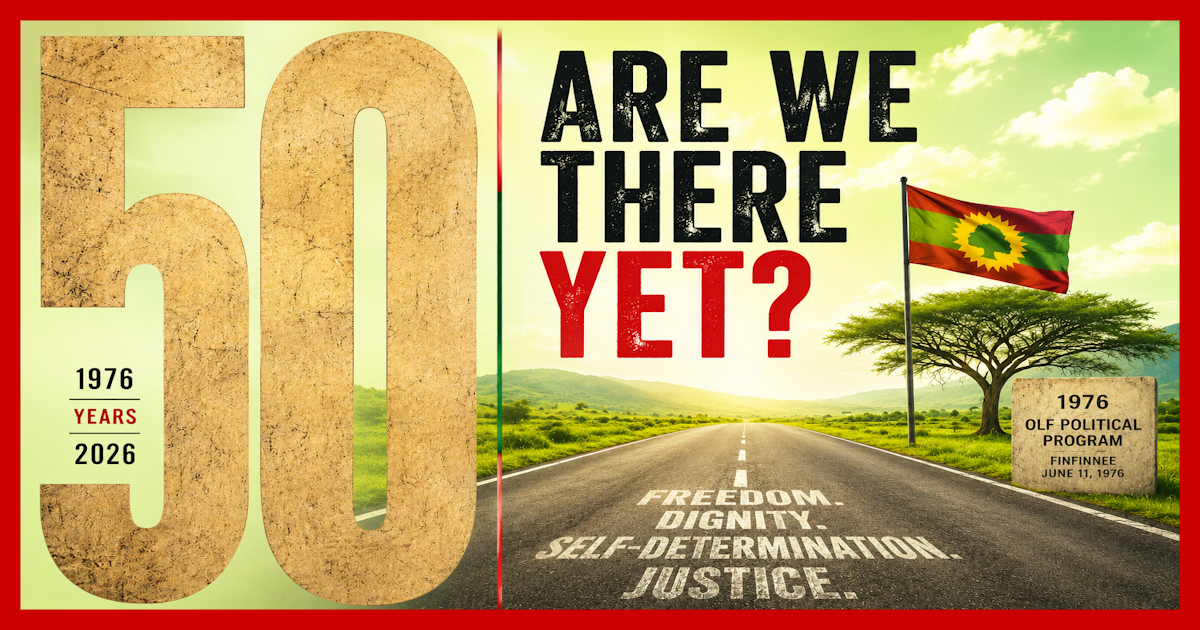
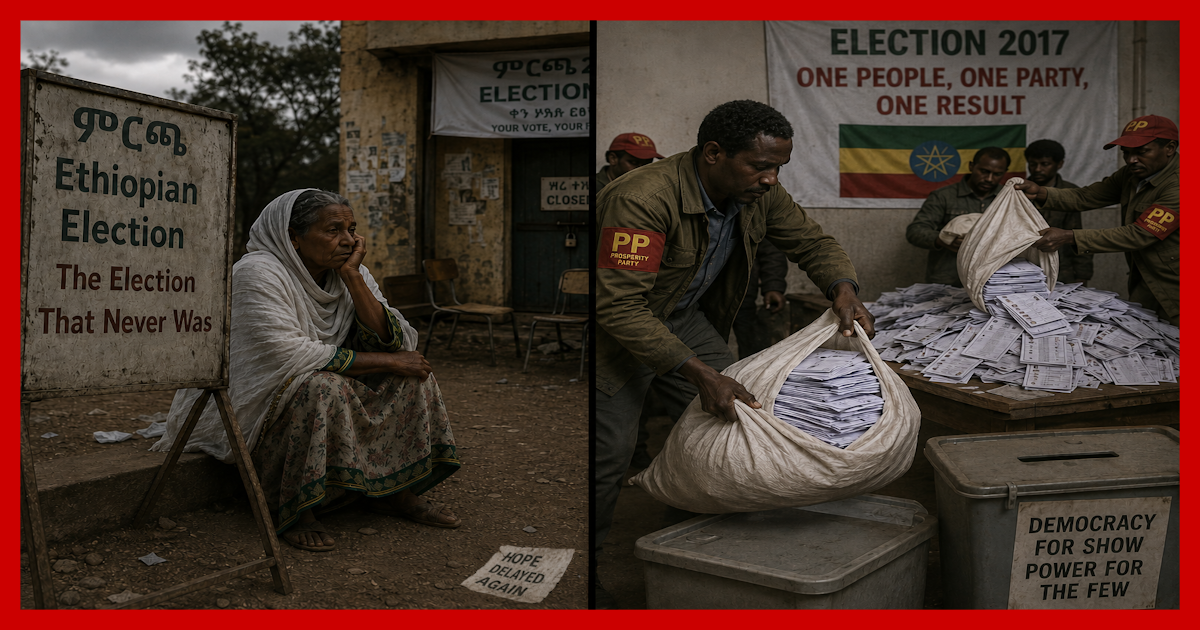
Your article, “Injustice Always Produces Independence,” is a powerful and insightful reflection on the enduring human spirit in the face of oppression. You skillfully highlight how injustice acts as a catalyst for the pursuit of freedom and self-determination, making a compelling case for why independence is often born from struggle. The clarity and depth with which you present historical and contemporary challenges offer readers a meaningful perspective that fosters empathy and understanding. Your writing not only informs but also inspires action and hope, encouraging a deeper appreciation for justice and human rights. Thank you for sharing such a thoughtful and impactful piece that contributes significantly to raising awareness and motivating change. Your voice is a valuable addition to the ongoing dialogue about freedom and resilience.