When “Democracy” Applauds an Empire: Why Prime Minister Modi’s Speech Is Deeply Disappointing to Ethiopia’s Oppressed Nations

Excerpt
Prime Minister Narendra Modi’s address to Ethiopia’s Parliament was wrapped in warmth and symbolism, but it also echoed a familiar Ethiopianist storyline: a seamless, timeless national narrative that quietly sidesteps conquest, forced assimilation, and the lived realities of Oromo and other oppressed peoples. When the leader of the world’s largest democracy lends prestige to that framing—amid today’s grave human-rights and displacement crises—disappointment is not only understandable, but inevitable.
Democracy in Ceremony, Repression in Reality
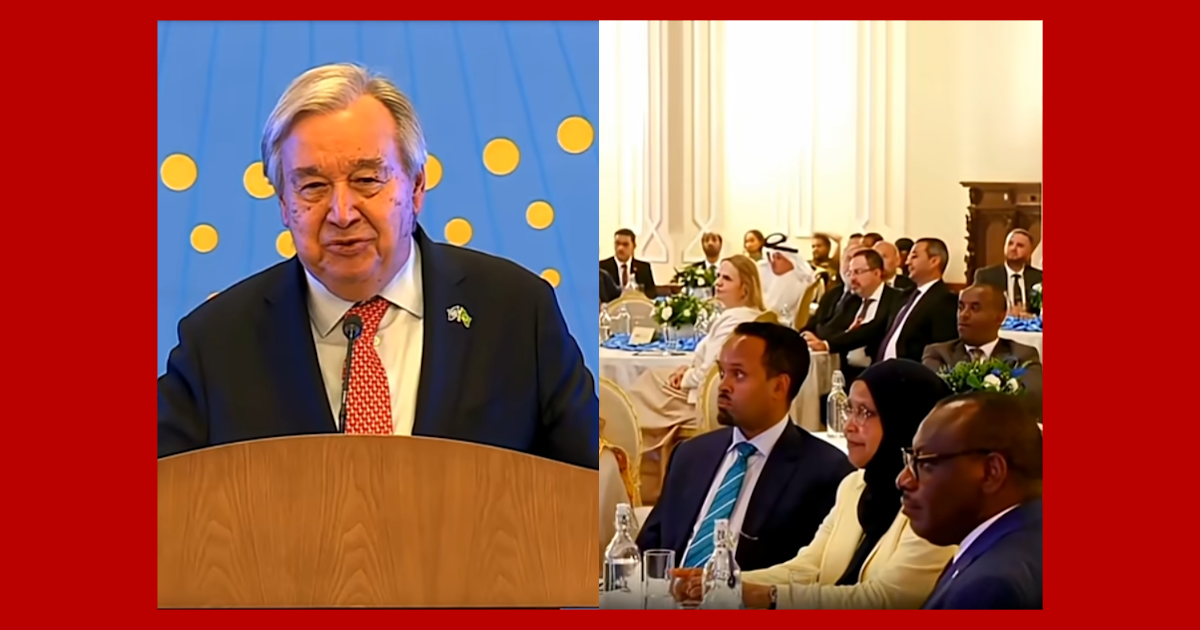
Prime Minister of India Narendra Modi’s address to the joint session of Ethiopia’s Parliament on December 17, 2025 was, on its surface, a friendly diplomatic moment—full of praise, cultural parallels, and the language of solidarity between two civilizations. The official text celebrates Ethiopia as “the land of lions,” calls Parliament a “temple of democracy,” and repeatedly invokes continuity, unity, and shared destiny [1].
But for many communities whose historical experience inside the Ethiopian empire has been one of conquest, forced assimilation, and structural exclusion, that same rhetoric lands very differently. It can sound less like harmless ceremony—and more like international validation for a domestic ideology that still resists reckoning with imperial history.
This is not a complaint about manners. It is a concern about meaning. When a global leader repeats an imperial narrative especially while invoking “democracy” as moral praise, he lends legitimacy to the very mythology that has long been used to silence the empire’s subjugated nations.
The Issue Is Not Courtesy—It Is the Frame
The speech relies heavily on a sweeping civilizational frame: Ethiopia as one of the oldest civilizations, Ethiopia as a single historical actor, Ethiopia as a nation on a steady democratic journey. This framing mirrors the preferred worldview of Ethiopianist elites, who emphasize antiquity and unity while marginalizing the empire’s violent expansion in the late nineteenth century [2,3,4].
Such framing matters because it converts contested history into diplomatic common sense. When echoed by an external leader of global stature, it gains legitimacy far beyond Ethiopia’s borders.
Furthermore, invoking “Lucy” in civilizational discourse conflates humanity’s deep origins in East Africa with the legitimacy of the modern Ethiopian state, quietly converting paleoanthropological history into political continuity—a maneuver long embedded in Ethiopianist historiography.
Abyssinia, Ethiopia, and the Real Point Being Missed
Some have attempted to reduce the debate to terminology, arguing over whether the country was known internationally as Abyssinia or Ethiopia before 1945 [5,6]. Historically, while “Abyssinia” was widely used externally, “Ethiopia” was already entrenched in constitutional and diplomatic usage well before mid-century, including in the 1931 Constitution [7].
But this debate misses the core issue. The problem is not the name of the state; it is the political meaning attached to it. Presenting Ethiopia as a timeless, unified nation-state obscures the reality that its modern form emerged through imperial conquest and coercive assimilation of multiple nations and nationalities, most notably the Oromo [4].
So when modern speeches casually talk about “Ethiopia” doing this or that “nearly 2,000 years ago,” they often slide past the key question: which Ethiopia? A civilization in the region? A particular highland polity? Or the later empire that expanded by conquest over many nations? Conflating these is not academic nitpicking—it is the foundation of political myth-making.
Adwa, Anti-Colonialism, and What Was Not Said
The invocation of the Adwa Victory Monument as a symbol of national liberation fits squarely within Ethiopianist mythology. Adwa was indeed a decisive defeat of European colonialism and inspired anti-colonial movements worldwide. But it did not dismantle empire internally. Instead, it preserved Abyssinian sovereignty while accelerating internal colonization and centralization [4,6].
To present Adwa solely as a unified national triumph, without acknowledging its aftermath for conquered peoples, erases a critical dimension of Ethiopian history.
Similarly, references to Ethiopia’s “liberation” in 1941—when the end of fascist occupation restored an empire still widely known internationally as Abyssinia—obscure the fact that what returned was imperial rule, not political freedom for the many nations governed without their consent, illustrating how the language of liberation can quietly mask continuity of domination.
“Temple of Democracy” and the Problem of Unearned Praise
The speech repeatedly frames Ethiopia’s parliament as a “temple of democracy” and commends a “democratic journey.” But this framing becomes ethically fraught when the lived political reality is one of widespread repression, conflict, and mass rights violations documented by major human-rights observers [8,9,10,11,12].
Diplomacy does not require moral blindness. A visiting leader can honor a host regime without canonizing its ruling narrative or granting democratic legitimacy that citizens themselves are denied.
What Makes This Endorsement Especially Painful Today
The disappointment is not only that a powerful foreign leader echoed a revisionist script that Ethiopianist elites have long used to legitimize an oppressive imperial order. It is also the timing: these words are spoken amid an ongoing human-rights catastrophe under Prime Minister Abiy Ahmed’s Prosperity Party (PP) rule—an era marked by civil conflict, mass abuses, and coercive state violence repeatedly raised by international monitors.
Multiple international human-rights organizations and UN-linked bodies have documented widespread abuses, including mass killings, arbitrary detention, forced displacement, and the shrinking of civic and political space across several regions [8,9,10,11,12].
For at least six years, the Oromo people have lived under sustained siege, facing direct military operations as well as regime-sponsored proxy conflicts across western, northern, eastern, and south-eastern Oromia [13]. In Hararghee and Wallaga, Oromo communities are particularly exposed to sustained and often violent expansionist attacks, occurring in the absence of effective protection or intervention by either regional or federal authorities. The resulting insecurity is not episodic but structural, leaving civilians vulnerable to displacement, loss of life, and the erosion of basic safeguards that a functioning state is expected to provide.
As this article is written, Tuulama Oromo communities in central Oromia are being uprooted at various locations from their lands. These displacements are increasingly executed through administrative coercion rather than open decree: sudden and punitive tax demands that households cannot meet, or planning requirements that mandate housing standards far beyond the means of rural residents. In practice, inability to pay or to build becomes the legal pretext for eviction. The result is displacement by design—achieved not through explicit expulsion orders, but through policies that systematically render continued residence impossible. Demographic engineering is underway: Oromo youth as young as twelve are pushed toward war fronts, while labor needs are increasingly met through large-scale settlement replacements of southern and northern populations.
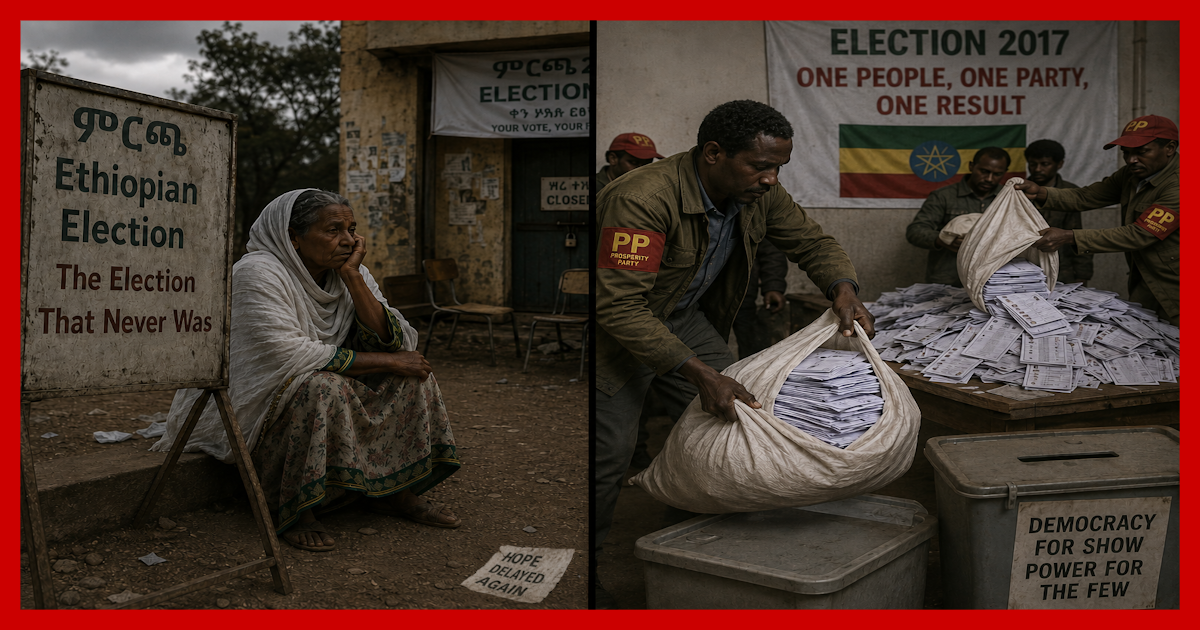
Political coercion, intimidation, and fear now accompany preparations for upcoming elections on June 1, 2026 [14]. In many rural areas, political participation is increasingly shaped not by free choice but by systematic pressure, with communities subjected to sustained indoctrination currently underway to support the ruling Prosperity Party, alongside implicit or explicit warnings of consequences for noncompliance.
In this context, the casual pairing of “democracy” and the current Ethiopian leadership is not merely inaccurate—it empties the term of meaning. No recent Ethiopian regime has overseen repression on this scale, including allegations of regime-linked death squads and systematic silencing of dissent [15,16].
Why Foreign Praise Carries Consequences
This is not an argument against diplomacy or against India–Ethiopia relations. Nor is it a claim that Prime Minister Modi intended to legitimize repression. But endorsement does not require intent. When democratic leaders echo state narratives while overlooking ongoing violence, displacement, and political terror, they risk laundering authoritarian practices through ceremonial language.
Silence, in such contexts, functions as acceptance.
A Friendly Request to India, and to All Partners
India has every right to pursue its interests and partnerships. But a partnership championed by Prime Minister Modi, as the leader of the world’s largest democracy, carries a special responsibility to be careful with history and with legitimacy. When Modi, as a visiting leader, echoes or blesses imperial myths—especially narratives still used to marginalize Oromo and other nations and nationalities—he does more than flatter a host regime. He inadvertently strengthens an ideological weapon that has long been used to justify domination.
Friends do not help entrench injustice. Friends do not confuse an empire’s story with the lived history of all peoples inside the state. And when Modi speaks in the language of democracy, that language should not lend democratic prestige to regimes credibly accused of grave abuses.
Conclusion: Solidarity Must Begin with Truth
Ethiopia’s peoples do not need more flattering speeches. They need accountability, historical honesty, and a political future grounded in equality rather than imperial nostalgia. If the “Global South” is truly to write its own destiny, it cannot do so on the backs of those whose histories are erased and whose present suffering is ignored—even when such erasure is echoed, however unintentionally, in speeches by leaders of global stature such as Prime Minister Modi.
Democracy cannot be honored in abstraction while it is dismantled in practice. Leaders who invoke its language, including Modi, must be careful not to endorse systems accused of grave violations and impunity. Diplomatic praise is cheap; the cost is paid by those living under its consequences.
International partners can honor the heritage of nations and nationalities, invest in development, and deepen cooperation without endorsing revisionism. The dignified path forward is simple: recognize complexity, refuse imperial conflations, and ensure that when leaders like Modi speak of “democracy,” they do so with the sobriety that today’s victims deserve.
References
- PM’s address at Joint session of Parliament of Ethiopia, 17 December 2025, PMINDIA.
- Abyssinia of Eastern Africa, Britannica.
- Bahru Zewde, A History of Modern Ethiopia, 1855–1991, James Currey.
- Asafa Jalata, Oromo Nationalism and the Ethiopian Discourse.
- Britannica (background on Ethiopian state formation and coercive imperial consolidation; context for why “restoration” not a liberation for all peoples).
- Gebru Tareke, “The Ethiopian Revolution and the Question of Nationalities.”
- WorldStatesmen: “THE CONSTITUTION OF ETHIOPIA… July 16, 1931” (primary text showing formal “Ethiopia” usage in the constitution).
- UNOCHA and IOM displacement and humanitarian situation reports on Ethiopia.
- OHCHR update on the human rights situation in Ethiopia (documenting serious violations and conflict-related abuses).
- U.S. State Department 2024 Human Rights Report: Ethiopia (documenting abuses and conflict dynamics).
- Amnesty International Urgent Action (7 May 2025): “End mass forced evictions in Ethiopia” (Corridor Development Project; Addis Ababa and multiple urban centers).
- Amnesty International Public Statement (14 Apr 2025): Call to pause Corridor Development Project and end forced evictions pending human-rights impact assessment.
- Elemoo Qilxuu, Kumaa Daadhii and Olii Boran, The Politics of Spite—How Oromia’s Foundations Expose the Empty Ambitions of a Troubled Region, 17 December 2025, OROMIA TODAY.
- Ethiopia Sets Date For Next General Election, 9 December 2025, EBC (ebc.et).
- GIULIA PARAVICINI, A REUTERS INVESTIGATION: In Ethiopia, a secret committee orders killings and arrests to crush rebels, 23 February 2024, Reuters.
- Olii Boran, Leading by Chaos, Not Competence, 4 December 2024, OROMIA TODAY.