Math Meets PP Myth: The 0.2% “Appreciation” as Statistical Noise and Political Messaging

Excerpt
A 0.2% “appreciation” is not news from the NBE Governor; it is noise. In FX markets, such a shift is statistically meaningless—well within volatility and margin of error. Presenting it as progress is not optimism but contempt: a technocratic sleight of hand that assumes the public cannot tell arithmetic theater from economic reality. This is fifth installment in the Math Meets PP Regime Myth series.
Background: Regular Failure, Irregular Optics
Since the floatation of the Birr, the National Bank of Ethiopia (NBE) has regularly conducted hard-currency supply auctions, inviting commercial banks to bid for foreign exchange.
Despite these regular interventions, the Birr continued to depreciate at an alarming pace—losing more than 150% of its value over the period. This sustained collapse constitutes a clear policy failure and appears to have deeply frustrated the authorities.
As 2025 drew to a close, the NBE departed from its own pattern and conducted an irregular foreign-exchange (FX) auction—seemingly a desperate attempt to manufacture positive optics and usher in the new year with a veneer of optimism.
And Now, to End 2025 on a “Good Note”…
Following this irregular auction, the Bank reported a 0.2% “appreciation” of the Birr.
That the NBE would present such a vanishingly small figure as an improvement, after a year of catastrophic depreciation, is—by any serious economic standard—astonishing.
By any serious mathematical or economic measure, 0.2%—a ratio of 0.002—is not an achievement. It is noise. In FX markets, where daily volatility, bid–ask spreads, and reporting margins routinely exceed such a figure, a movement of this size carries no analytical weight and no policy meaning.
Yet this exact number was publicly presented as “good news.”
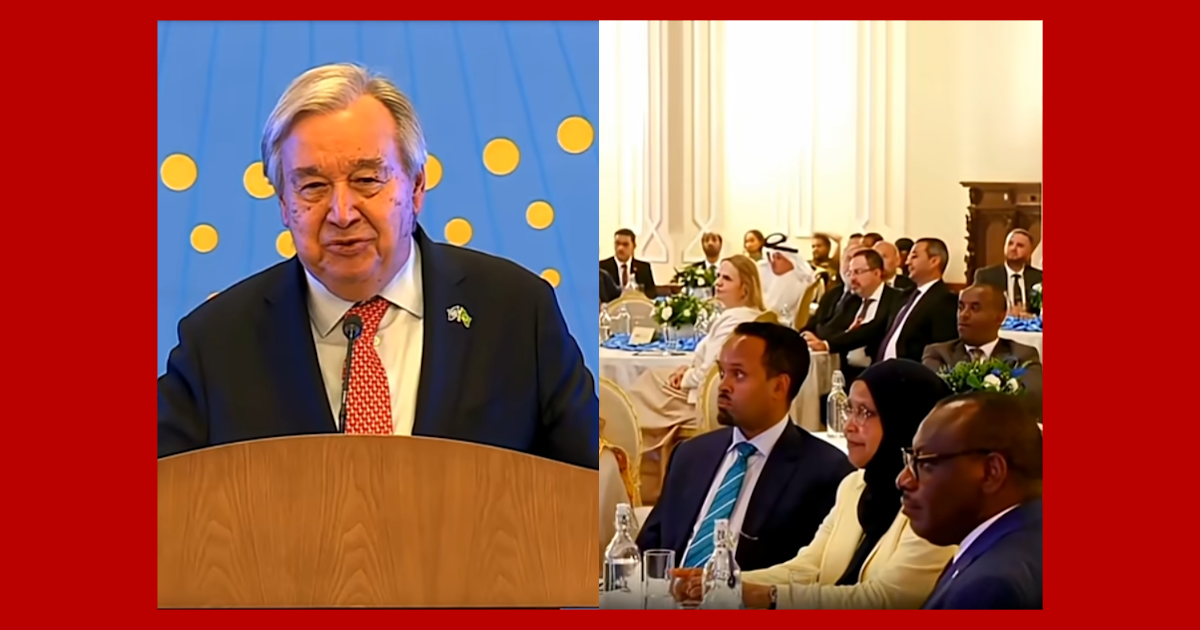
Following the post–July 2024 floatation of the Ethiopian Birr—implemented under loan conditionalities imposed by the International Monetary Fund (IMF)—the new governor of the NBE issued a statement that led with the sentence:
“The Birr appreciated by 0.2 percent in the latest special End-of-Year foreign exchange auction" [1].
This is not merely poor communication. It is political messaging disguised as mathematics.
When Numbers Are Used to Perform, Not Inform
In quantitative disciplines, scale matters. Context matters. Error bars matter. A movement smaller than the margin of error is not celebrated; it is dismissed. In FX markets especially, such fluctuations occur within hours, often reversed before the day ends.
To elevate a 0.2% change to headline status is equivalent to declaring victory because a collapsing building leaned one millimeter less before continuing to fall.
No central bank operating in good faith would treat this as meaningful. Which leads to the unavoidable question: why say it at all?
Contempt as a Communication Strategy
The answer lies not in economics but in psychology.
This kind of statement assumes—quietly but firmly—that the general public:
- cannot contextualize numerical scale,
- equates “positive sign” language with genuine improvement,
- and will not ask whether the number is statistically meaningful.
Worse still, the Governor—and the PP regime he serves—show no credible grasp of how to manage the unfolding financial catastrophe. The recourse to headline decimals in the midst of structural collapse is not merely tone-deaf; it signals an absence of serious diagnosis, let alone remedy.
This is an elite habit: precision without relevance, deployed to manufacture reassurance where none exists. The number is not meant to explain reality; it is meant to perform optimism.
In doing so, the speaker is not addressing an informed public but speaking over it—signaling competence upward (to donors, lenders, and technocrats) while offering the domestic audience a decimal-point placebo.
That is not optimism. It is contempt or sheer ignorance.
Floatation Under Duress, Not Reform
Context sharpens the insult.
The Birr did not float as part of a carefully sequenced, domestically owned reform agenda. It floated under duress—amid inflationary stress, import dependency, fiscal fragility, and collapsing household purchasing power. The population was already absorbing the shock of depreciation through higher food prices, transport costs, and rent.
Against that backdrop, celebrating a 0.2% auction result is not reassurance. It is gaslighting with arithmetic.
The Real Signal in the Noise
Ironically, the number does communicate something—but not what it claims.
It signals:
- a governing elite more concerned with optics than substance,
- a technocracy that mistakes numerical precision for credibility,
- and a widening gap between lived economic reality and official narrative.
When elites start celebrating statistical noise in the middle of a macroeconomic catastrophe, they are no longer communicating policy. They are managing perception, hoping the math itself will obscure the meaning.
But numbers don’t lie—misused numbers do.
And the public, contrary to elite assumptions, understands far more than it is given credit for.
What a Serious Central Bank Would Have Said
A credible, non-contemptuous statement would sound like this:
“While the latest FX auction shows a marginal 0.2% appreciation, this movement is statistically insignificant and does not alter underlying pressures on the Birr. Structural imbalances, import dependency, and inflationary pass-through remain the dominant concerns.”
But that would require:
- Respect for the public’s intelligence
- Willingness to admit uncertainty
- A break from propaganda economics
None of which are unfortunately currently fashionable.
References
- "Birr Strengthens Slightly in Special End-of-Year Forex Auction", 27 December 2025, addisfortune.news
- OT Editorial, Math Meets PP Regime Myth: Prosperity at 18-20% or More Interest Rate, 12 October 2025, OROMIA TODAY.
- OT Editorial, Math Meets PP Regime Myth: Inflation That Eats Wages Alive in Ethiopia, 1 September 2025, OROMIA TODAY.
- OT Editorial, Math Meets PP Myth: 30 Million Tree Planters, 14 August 2025, OROMIA TODAY.