The 50+1 Fraud: You Cannot Vote Away a People’s Homeland

Overview
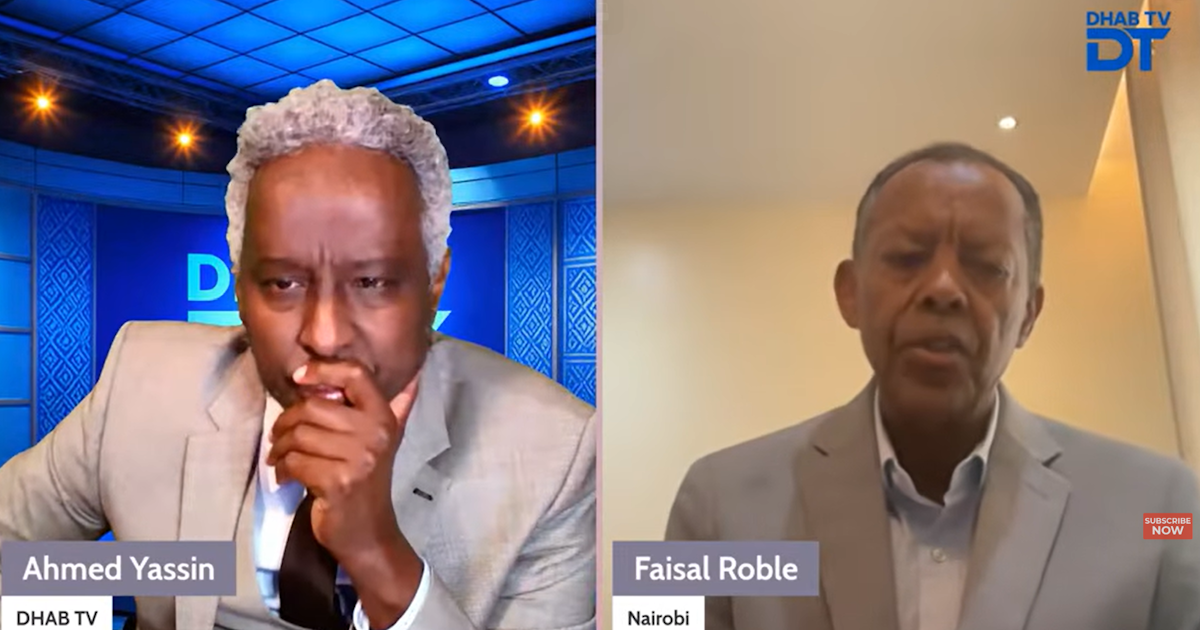
One of the most troubling absurdities exposed by an interview on KALLATTII (YouTube Channel) is what happens when demography masquerades as political thought—when a complex question of indigenous rights, historical injustice, territorial belonging, and constitutional principle is casually reduced to the arithmetic of a 50+1 majority.
Anyone choosing to immerse themselves publicly in an issue this historically charged and politically sensitive has a responsibility to proceed with exceptional care. The interviewee repeatedly emphasizes that he is speaking merely as an individual, which is of course his right. But the substance of his argument reveals little appreciation of the constitutional principles, historical injustices, indigenous claims, and competing categories of rights that make the question of Finfinnee so complex.
The problem is not that he lacks expertise; it is that he ventures confidently into territory where expertise matters, while presenting simplistic propositions capable of profoundly misleading his audience.
Finfinnee cannot be reduced to a demographic headcount. Indigenous territorial claims do not appear and disappear as populations move, cities expand, or demographic proportions change. Nor can historical dispossession be retrospectively legitimized by counting the descendants of those who happen to inhabit a territory today.
A 50+1 vote may decide an election; it cannot manufacture history, extinguish indigenous rights, or vote away a people’s homeland.
That is precisely why discussions surrounding Finfinnee demand intellectual discipline rather than provocative arithmetic.
The rights of every person living in the city must be protected regardless of ethnicity, origin, language, or political affiliation. But protecting the individual rights of residents is an entirely different constitutional question from determining the historical and territorial status of the city itself.
Conflating the two does not resolve the Finfinnee question; it merely obscures it.
You Cannot Vote Away a Homeland of Indigenous People with a Simple Majority of Occupants.
Alas, the interviewee swims confidently in these deep waters as though the shallows and the depths were indistinguishable. The result is not merely an unconvincing argument, but a framing that risks planting a dangerously simplistic idea in an already sensitive political discourse.
That interview has therefore prompted the following brief reply—not because every misguided argument deserves an answer, but because some arguments become dangerous when their simplicity makes them easy to repeat.
A Brief Reply from OROMIA TODAY
What the interviewee says on KALLATTII is absurd. The status of Finfinnee is not something that can simply be voted away by a 50+1 majority.
The Oromo claim to Finfinnee is rooted in indigenous ownership, history, and territorial continuity.
More than that, generations of Oromo have paid an enormous human and material price through conquest, dispossession, displacement, and loss of livelihood—a process whose consequences continue to be felt particularly among the surrounding Tuulama Oromo communities until this very day.
The percentage of Oromo currently living in Finfinnee is therefore beside the point.
Indeed, invoking that percentage raises a far more uncomfortable question:
What made the indigenous Oromo a demographic minority in their own city in the first place?
Has that question been seriously confronted before present-day population figures are offered as evidence against Oromo territorial claims?
Finfinnee’s contemporary demography did not emerge in a historical vacuum. It followed conquest, dispossession of surrounding Tuulama Oromo communities, expansion of the imperial capital, successive waves of settlement, displacement, and the transformation of Oromo land into an expanding metropolitan center.
To use the demographic outcome of that historical process as an argument against the people who experienced it is to turn consequence into justification.
Reducing such a complex historical and territorial question to the arithmetic of 50+1 is therefore not merely simplistic; it risks allowing demographic change itself to become the instrument by which an indigenous claim is retrospectively extinguished.
Therefore, reducing a complex historical and territorial question to the present ethnic composition of the city, and then treating it as though it were an ordinary majority vote, is profoundly misguided.
Demography does not retrospectively determine indigenous ownership or territorial history.
Nor does recognizing Finfinnee as legally part of Oromia mean diminishing the rights of anyone who lives there. That is the distinction continually being blurred. The civil, political, cultural, property, and residency rights of every resident must be protected irrespective of ethnicity.
The real question, then, is straightforward:
What right of a non-Oromo resident would be lost merely because Finfinnee is legally and constitutionally recognized as part of Oromia?
Why, then, is ethnic composition repeatedly invoked as though the city were a pie to be divided among ethnic groups according to their population percentages?
Before asking what percentage of Finfinnee is Oromo today, ask what made the indigenous Oromo a minority there in the first place.
A city can belong territorially to a constituent political unit without its residents belonging ethnically to that unit.
London offers an imperfect but useful analogy. London is territorially part of England and is England’s capital, while simultaneously serving as the capital of the United Kingdom. It is one of the most diverse metropolitan cities in the world, populated by people from across Britain and virtually every corner of the globe. Yet that diversity does not produce an argument that England’s territorial relationship with London should fluctuate according to the ethnic or national composition of London’s residents.
Finfinnee is not London, and their histories are obviously different. But those historical differences do not weaken the underlying principle nor the Oromo claim.
If anything, Finfinnee’s history of conquest, dispossession, demographic transformation, and continuing Oromo displacement makes the distinction between territorial status and residents’ individual rights even more important.
Finfinnee need not cease to be a diverse metropolitan city in order to be part of Oromia.
Recognizing where a city belongs and protecting everyone who lives in it are not competing principles. A democratic political order should be capable of doing both.