
When the Center Is Chosen Before the Dialogue Ends
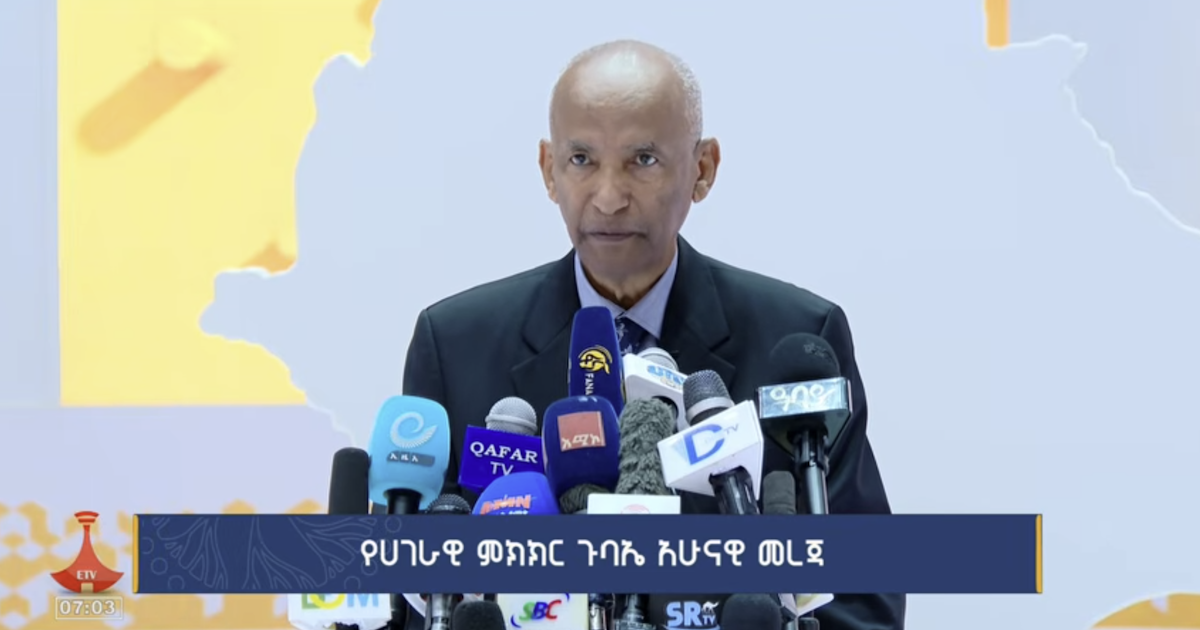
Excerpt
The Ethiopian National Dialogue Commission presents dialogue as a journey toward common ground. But what happens when the facilitator defines that common ground in advance? Remarks by Chief Commissioner Professor Mesfin Araya urging participants to “center Ethiopia” and move “toward the middle” raise a fundamental question of neutrality: can a dialogue genuinely remain open when its preferred direction of convergence has already been signposted?
When Neutrality Begins to Choose a Side
There is a sentence in a recent update by Professor Mesfin Araya, Chief Commissioner of the Ethiopian National Dialogue Commission (ENDC), that deserves considerably more attention than its apparently innocuous wording might suggest.
Speaking to the media about the principles that should guide the ongoing dialogue, Professor Mesfin said:
“We came here with our country, Ethiopia, at the center. This should be emphatically underlined.”
እዚህ የመጣነው ሀገራችንን ኢትዮጵያን ማዕከል አድርገን መሆን አለበት ይሄ በትክክል ሊሰመርበት ይገባል።
For the full transcript (auto-generated by Google) please refer to the Appendix.
On first hearing, there is nothing obviously objectionable about the statement. In an Ethiopian national dialogue, why should Ethiopia not be at the center?
The difficulty emerges only when the statement is read in context — and, more importantly, when we ask what “centering Ethiopia” means when the very nature of the Ethiopian state is itself part of the disagreement the dialogue is supposed to address.
This is not an exercise in finding fault with Professor Mesfin, nor in questioning his intentions. The concern is institutional rather than personal. Indeed, precisely because the Commission carries an enormous responsibility for facilitating some of the country's deepest political disagreements, seemingly benign language deserves careful examination.
Nor is this an exercise in retrospectively second-guessing the ENDC's independence. OROMIA TODAY stated its position plainly in its publication of 31 January 2025: the Commission lacked the institutional independence required of a genuinely neutral national-dialogue process.
The present concern is narrower, but potentially more revealing: what happens when that lack of neutrality begins to surface in the language used to guide the dialogue itself?
Sometimes the most consequential bias is not expressed through hostility toward one position. It appears instead in the assumptions defining what counts as the reasonable middle.
Listen to the Sequence, Not Merely the Sentence
At approximately 7:47 timeline (see transcript in Appendix) in the address, Professor Mesfin tells participants that they have not come simply to return home carrying the questions they brought from their respective localities.
He then emphasizes:
“We came here with our country, Ethiopia, at the center.”
Later, while explaining the convergence phase of the dialogue, he returns to essentially the same idea. Participants, he says, will gradually put aside their individual positions, develop common positions, center Ethiopia, and move “toward the middle.”
Taken together, these remarks reveal an implicit architecture:
local questions → individual positions → convergence → the middle → Ethiopia.
That progression may sound like ordinary consensus-building. But in a multinational state burdened by unresolved historical and constitutional disputes, it contains an assumption that deserves interrogation.
It assumes that “Ethiopia” represents the neutral common ground, while the claims brought by constituent peoples represent particular interests from which participants must progressively retreat.
But what if that assumption is itself one of the matters in dispute?
When One Political Position Becomes the Neutral Center
Consider the perspective of an Oromo participant who arrives with questions concerning territorial dispossession, the constitutional status of Finfinnee, linguistic equality, genuine self-government, federal arrangements or the historical incorporation of Oromia into the Ethiopian state.
These are not merely somebody's parochial preferences.
Nor are they necessarily demands that must be moderated until they become acceptable to everybody else.
Some may concern historical facts. Some concern constitutional rights. Others concern competing conceptions of sovereignty, justice and the very architecture of the state.
The same principle applies to legitimate historical and constitutional grievances brought by other peoples.
If participants carrying such questions are told that successful dialogue requires them to move from their respective positions toward an “Ethiopia-centered” middle, an asymmetry is quietly introduced.
Their claims become the positions that must move.
“Ethiopia” becomes the position that does not.
That is the problem.
The center has been selected before the dialogue has established where the center ought to be.
Ethiopia Is Not Outside the Argument
There is an important conceptual distinction here.
Nobody needs to deny the existence of Ethiopia, the citizenship of its people or the desirability of peace among them in order to recognize that the constitutional character of Ethiopia is itself contested.
Should Ethiopia be more centralized or more decentralized?
Should multinational federalism remain?
What should self-determination mean in practice?
What should be the constitutional relationship between nations, nationalities and the federal state?
How should historical territorial disputes be resolved?
What political relationship should exist between Oromia and Finfinnee?
What does equality among the constituent peoples actually require?
These are not questions sitting outside Ethiopia. They are questions about what Ethiopia is, how it came to be, how political authority within it should be distributed, and what it ought to become.
It therefore creates a circular argument to say:
Let us discuss what Ethiopia should be — but Ethiopia must first be the principle against which acceptable answers are measured.
The conclusion has quietly entered the premises.
The Danger of Turning “Common” Into “Correct”
Professor Mesfin repeatedly speaks of participants moving toward ወደ መሃል — “the middle.”
Dialogue certainly requires listening. It requires intellectual humility, mutual respect and a willingness to reconsider one's position. Without those qualities, there is little dialogue at all.
But dialogue does not require us to assume that truth or justice always lies halfway between competing claims.
Imagine that a community demonstrates that territory was historically taken from it through coercion. Another constituency wishes the resulting arrangement to remain unchanged.
Where exactly is the “middle”?
Half-restoration?
Partial recognition of the history?
An acknowledgement without remedy?
The answer cannot be determined geometrically.
Similarly, there is no necessary midpoint between a constitutional right and opposition to that right. There is no mathematical average between historical injustice and its remedy.
Compromise can be an instrument of peace. It is not, by itself, a theory of justice.
Sometimes the middle represents admirable accommodation. Sometimes it merely preserves half an injustice.
The purpose of dialogue must therefore be to discover a just settlement, not merely a midpoint.
The Chairman Himself Identifies the Real Reason People Came
There is, interestingly, another passage in Professor Mesfin's remarks that points toward a very different conception of the dialogue.
At approximately 4:44–5:03, he acknowledges that participants have come from different nationalities and institutions carrying questions their communities have raised for generations, and that they regard the dialogue as the appropriate opportunity to bring those questions forward.
That observation is profoundly important.
Indeed, it may contain the key to what the national dialogue should be.
People have not assembled because Ethiopia suffers from an insufficient supply of agreeable slogans. They have assembled because serious questions have remained unresolved for generations.
Those questions should therefore not be treated as raw political material that progressively disappears as groups are aggregated from 10 to 50, from 50 to 250, and eventually into groups of 500.
They must survive the process intact enough to be understood.
A grievance cannot be resolved after it has been filtered into something else.
Aggregation Makes Neutrality Even More Important
This becomes particularly consequential because of the structure Professor Mesfin describes.
Thousands of participants begin in smaller groups. Their proposals are subsequently consolidated through increasingly larger groupings. Ideas are summarized, reformulated and eventually converted into recommendations.
Some form of aggregation is obviously unavoidable with approximately 4,000 participants.
But every stage of aggregation introduces an important question:
What is being lost?
Suppose ten people articulate a difficult minority position. Their argument moves to a group of fifty, then 250, then 500. At each stage language must be condensed, reconciled and reformulated.
Now introduce the instruction that participants should progressively “come toward the middle,” discard individual positions and “center Ethiopia.”
The danger should be obvious.
A process designed to aggregate arguments can inadvertently become a process for normalizing them.
The sharp edges of historically difficult questions may disappear precisely because those sharp edges are what made the questions politically important in the first place.
By the time a recommendation reaches the top, everyone may agree with it — because everything that produced disagreement has been progressively removed.
That would produce consensus.
It would not necessarily produce resolution.
A National Dialogue Must Be Able to Hear an Uncomfortable Answer
A genuinely open dialogue has to tolerate the possibility that some participants will articulate propositions deeply uncomfortable to others.
That is especially true in Ethiopia.
Some will question prevailing historical narratives. Some will challenge territorial arrangements. Some will defend multinational federalism; others will seek its replacement. Some may demand greater autonomy. Others will argue for centralization. Some may even invoke constitutional rights whose exercise would fundamentally alter their relationship with the Ethiopian state.
The Commission need not endorse any of these positions.
But neither should it establish an ideological test requiring them to become sufficiently “Ethiopia-centered” before they qualify as constructive contributions.
The Commission's responsibility is much harder than that.
It must create conditions in which even propositions the commissioners themselves may find uncomfortable can be heard, interrogated, supported with evidence, challenged by competing evidence and evaluated against principles of rights and justice.
A referee protects the field of play. The referee does not decide toward which goal the ball should travel.
The Difference Between Peace and Preservation
There is another distinction worth making because it goes to the heart of national dialogue.
Peace and preservation of an existing political arrangement are not synonymous.
Sometimes preserving institutions contributes to peace. Sometimes changing them does.
History provides numerous examples of political communities peacefully renegotiating constitutional relationships precisely because insisting upon preservation would have produced greater conflict.
The appropriate question is therefore not:
What outcome best preserves Ethiopia as we presently understand it?
It is:
What political settlement allows the peoples living within the present Ethiopian state to coexist freely, justly and sustainably?
Those questions may eventually produce the same answer.
But intellectually and politically, they are profoundly different questions.
The first begins with a preferred object and asks how to preserve it.
The second begins with people, rights and justice and asks what political arrangement can legitimately emerge from them.
A national dialogue should begin with the second.
Perhaps the Better Center Is Justice
There is nothing inherently wrong with loving Ethiopia. Nor is there anything wrong with participants approaching the dialogue hoping to preserve and strengthen it. That is a perfectly legitimate political position, and millions of Ethiopians sincerely hold it.
But it remains a political position.
Likewise, an Oromo who enters the room placing Oromia and the rights of the Oromo people foremost is expressing a political position. So is a Tigrayan (assuming they are present), Somali, Amhara, Sidama, Afar or any other participant who arrives carrying the historical experiences and aspirations of their community.
The facilitator's task is not to rank those attachments.
It is to create a process in which they can encounter one another under principles that do not already privilege the desired conclusion of one political tradition.
There is, however, something that can legitimately occupy the center.
Justice.
Put truth at the center.
Put evidence at the center.
Put equal human dignity at the center.
Put constitutional rights at the center.
Put historical facts at the center, however uncomfortable they may be.
Put the freely expressed wishes of affected peoples at the center.
Then let the political settlement follow.
If those principles ultimately produce a stronger Ethiopia, its strength will possess something no amount of rhetorical centering can manufacture: legitimacy.
And if they require Ethiopia to change substantially in order to become just, then perhaps accepting that change is precisely what genuine dialogue demands.
This Is Why Words Matter
Professor Mesfin's remarks should therefore not be dismissed as an unfortunate choice of words, nor exaggerated into evidence of personal hostility toward any particular people.
The more important concern lies between those extremes. They reveal how easily a facilitator's conception of the desirable destination can enter the methodology of dialogue itself.
And that can happen with the very best intentions. Indeed, this is precisely why institutional neutrality matters. Bias need not arrive shouting. It can arrive dressed as common sense:
Of course we should come to the middle.
Of course we should put aside our particular demands.
Of course Ethiopia should be at the center.
Each proposition sounds conciliatory.
Together, however, they may quietly determine which direction constitutes “progress.”
For peoples whose grievances arise partly from the historical structure of the state itself, that is not a minor methodological problem. It risks asking them to surrender part of their argument before their argument has even been adjudicated.
A national dialogue capable of contributing to lasting peace must resist that temptation. Its task is not to manufacture an Ethiopian consensus.
Its task is to make possible an honest encounter among peoples and political positions from which a legitimate consensus — if one exists — can emerge.
Do not put Ethiopia at the center and ask justice to accommodate it.
Put justice at the center and discover what kind of Ethiopia can survive it.
Appendix: Full Transcript of ENDC’s Charmian Statement on Update of Ongoing Dialogue on August 10, 2026
1:261 minute, 26 secondsልክ በቀጠሮ ጠሮዬ መሰረት መጥቻለሁ የኢትዮጵያ ሀገራዊ ምክክር ሂደቱ እንግዲህ እየተጠናከረ የመጣ ነው።
1:401 minute, 40 secondsያው ሁላችሁም እንደምታውቁት የ250 ቡድኖች ሁለት ጊዜ 250ዎቹ
1:461 minute, 46 secondsየ ሂደቱን ከ1050 የደረሱበትን በጋራ እያጠናቀሩ
1:531 minute, 53 secondsአሁን ሁለቱ 250 ላይ በመሆን ለምስቶቹ ቹ እያዘጋጁ ነው ያሉት አንዳንዶቹ
2:012 minutes, 1 secondአዘጋጅተው ጨርሰው አምስት መቶቹ ስራቸውን ጀምረዋል ይሄ ምን
2:072 minutes, 7 secondsማለት ነው እ በአንድ አጀንዳ ላይ 250ዎቹ
2:132 minutes, 13 secondsሁለት ጊዜ ሁለቱ ቡድኖች ማለት ነው የተነጋገሩበትን 30 ሆነው
2:192 minutes, 19 secondsከእያንዳንዱ 15 15 ሆነው የሰሯቸውን ስራዎች የአምስት መቶዎቹን ሃሳቦች ማለት
2:282 minutes, 28 secondsወይም የ250 ጊዜ ሁለት ሀሳቦችን በሚገባ አጠናቅረው ሰንደው
2:342 minutes, 34 secondsለአምስት መቶቹ እያቀረቡ ይገኛሉ። 500ዎቹ አዳምጠው የቀረቡትን በእያንዳንዱ ላይ መካተት ያለበትን ሃሳብ
2:452 minutes, 45 secondsየቀረውን ሃሳብ ሊገባችውን የሚገባውን ሃሳብ በደንብ እያዳበሩ ይገኛሉ። ይሄንን
2:522 minutes, 52 secondsስራ ሁሉም አልጨረሱም አንዳንዶች ገና ገና ናቸው። ዛሬ ከሰአት በኋላ የሚጨርሱ አሉ። ዛሬ ጠዋት
3:023 minutes, 2 secondsአጠናክረው የጨረሱ አሉ ስለዚህ ዛሬ ጠዋት እና ከሰዓት በኋላ አጠናክረው የሚጨርሱት ነገ ለሀምሳ ለምስቶቹ ያቀርባሉ ማለት
3:113 minutes, 11 secondsነው። እ ዛሬ ከሰአት በኋላ የማይጨርሱትና ነገ ጠዋት የሚጨርሱቱ ደግሞ ነገ ከሰዓት በኋላ ለ 500 ቡድናቸው ያቀርባሉ ማለት
3:213 minutes, 21 secondsነው። እንግዲህ ይሄ ሂደት እንደምትገምቱት ቀላል አይደለም።
3:273 minutes, 27 secondsለምን ከታች ጀምሮ ከ10 ጀምሮ ሲብላላ የመጣ ሃሳብ ብዙ ጥያቄዎችን ያስነሳል አንደኛ 10 ላይ በነበርንበት ጊዜ
3:373 minutes, 37 secondsጥያቄዎቻችን አልተካተቱልንም የሚሉ ምክረ ሀሳቦቻችን አልገቡልንም የሚሉ 50 ላይ 250 ላይ
3:463 minutes, 46 secondsሊስተዋሉ ይችላሉ በደንብ እንደሚገባችሁ በዚህ በአንድ ወር ሂደታችን ውስጥ እ
3:543 minutes, 54 secondsበምክክር ሂደት ውስጥ የመጀመሪያዎቹ ምዕራፎች ብዙ አለመግባባቶች የሚታዩባቸው
4:044 minutes, 4 secondsመጨቃጨቆች የሚኖሩባቸው ብዙ ስሜት ተጭነን የመጣንባቸው እና እነኚያን ስሜቶች
4:124 minutes, 12 secondsወደ ብዙሃኑ በምናመጣበት ጊዜ የኔ ስሜት የኔ ጥያቄ የኔ መብት
4:194 minutes, 19 secondsእዚህ ውስጥ መግባት አለበት ብለን የምንጨቃጨቅባቸው ሂደቶች ናቸው ይሄ በተለያየ ምክንያት ይመጣል አንድም ም በየቡድናችን
4:284 minutes, 28 secondsበየፓርቲያችን በየተቋማኖቻችን መክረን የመጣንባቸውን ምክረ ሀሳቦቻችንን
4:354 minutes, 35 secondsወደፊት ለማስቀደም ካለን ፍላጎት የተነሳ አለበለዚያ ደግሞ ከተለያዩ ብሄረሰቦች ከተለያዩ ተቋማት የመጣ
4:444 minutes, 44 secondsእንደመሆናችን መጠን ለዘመናት አካባቢዎቻችን ስንጠይቃቸው የኖርናቸውን ጥያቄዎች
4:544 minutes, 54 secondsበተገቢው ቦታ የምናን አንፀባርቅበት ነው ብለን ስለምናምን እነኛን ጥያቄዎቻችን ወደፊት የምናመጣበት ትክክለኛው አጋጣሚ ነው
5:035 minutes, 3 secondsብለን ከማመናችን የተነሳ እንግዲህ የተለያዩ እ ምክረ ሀሳቦች የሚመስሉ ጥያቄዎች ይመጣሉ።
5:115 minutes, 11 secondsበዚህ ጊዜ ውስጥ አለመግባባት የሚመስሉ ነገሮች ይታያሉ።
5:155 minutes, 15 secondsአንዳንድ ጊዜ ስሜቶችም ይመጣሉ እኔ ያልኩት ነገር እኔ ከታች ይዤ የመጣሁት ነገር ወይም እኔ ከቡድኔ ጋር ተወያይቼ ያመጣሁት
5:245 minutes, 24 secondsነገር ወደፊት በፊት ካልመጣልኝማ ልክ አይደለም የሚል ጥያቄ ይነሳል። አንዳንድ ጊዜ ልክ አይደለሙም እ አልፎ ተርፎ የምክክር
5:355 minutes, 35 secondsስነ ምግባራችንንም እስከመጣስም ያደርሳል። አልፎ አልፎ የስነ ምግባር ጥሰቶች ሊታዩ ይችላሉ። አንዱን ተሳታፊ ወይም ሌላዋን ማንጓጥ ሊኖር ይችላል።
5:485 minutes, 48 secondsይሄ በጭራሽ በስና ምግባራት ደንባችን ላይ ተቀባይነት የለውም። ሃሳብ ላይ እንወያያለን።
5:555 minutes, 55 secondsሃሳብ ላይ እንመካከራለን ሃሳብ ላይ በተወሰነ ደረጃ ክርክር የሚመስሉ ነገሮች እናቀርባለን
6:026 minutes, 2 secondsእንጂ ሃሳብን ያቀረበውን ሰው ግን መደፍጠጥ
6:086 minutes, 8 secondsወይም ማሳፈር ወይም ማሸማቀቅ የኢትዮጵያ ሀገራዊ ምክክር የስብሰባ ስነ ስርዓት ደም በጭራሽ የማይፈቅደው ነገር ነው።
6:186 minutes, 18 secondsእስካሁን ድረስ የኢትዮጵያ ሀገራዊ ምክር ኮሚሽን እነኚህን ነገሮች ሁሉ እ ችሎ ነው እዚህ የደረስነው። ለምን? 4 ሺም
6:266 minutes, 26 secondsተሳታፊዎቻችን ትልልቅ ሰዎች ትልልቅ ሴቶች ናቸው። 4 ሺውም
6:326 minutes, 32 secondsየመቶ ሃያ እና መቶ ሰላሳ ሚሊዮንን እ ስሜት ከጀርባቸው ይዘው ነው ወደዚህ አዳራሽ የመጡት እና እነኚህ በትልቁ የምናከብራቸው
6:416 minutes, 41 secondsናቸው። እነኚህ ሰዎች ባለፈው እንዳልኩት ከልይቅ እስከ ደቂቅ ናቸው። እነኚህ ሰዎች ባለፈው እንዳልኩት እ ከሚኒስተር ጀምሮ
6:516 minutes, 51 secondsእስከ አርብቶ አደር እስከ አርሶ አደር ድረስ ናቸው። የሚከበር ሃሳብ ይዘው ነው የመጡት። ስለዚህ በዚህ ስነ ምግባር ሂደት
7:017 minutes, 1 secondእንሂድ ካል ትምህርት ቤት አንተ ይሄን አጥፍተሀል የመጨረሻ ማስጠንቀቂያ
7:087 minutes, 8 secondsአንተ አንቺ ይሄን አጥፍተሻል ከዚህ በዚህ ስነምግባር መሰረት ከዛሬ ጀምሮ እዚህ ስብሰባኝም የምንልበትን አግባብ አልተከተልንም
7:177 minutes, 17 secondsስለዚህ አሁንም የምናሳስበው ለተመካካሪዎቻችን ለአመካካሪዎቻችን ቻችን ለፓናል ኦፍ ኤክስፐርቶቻችን ለሁላችንም
7:287 minutes, 28 secondsእኔንም ጨምሮ የማስተላልፈው መልክት ቢኖር በዚህ ምክክር ሂደት ውስጥ አንደኛው መርህ
7:367 minutes, 36 secondsመከባበር ነው። ሁለተኛው መነጋገር መደማመጥ እና ወደ መሃል
7:427 minutes, 42 secondsመምጣት ነው። ሶስተኛው ትልቁ ነገር ልናሰምርበት የሚገባው ነገር
7:477 minutes, 47 secondsቢኖር በየመንደራችን በየአካባቢያችን ይዘን የመጣነውን ጥያቄ እዚህ መልሰን ልንሄድ አደለም እዚህ የመጣነው። እዚህ የመጣነው
7:577 minutes, 57 secondsሀገራችንን ኢትዮጵያን ማዕከል አድርገን መሆን አለበት ይሄ በትክክል ሊሰመርበት ይገባል። ሌላው ልናገር የምፈልገው ነገር ቢኖር እዚህ በአሁኑ ሰዓት ውሳኔዎች እየወሰድን አይደለም።
8:108 minutes, 10 secondsእስካሁን ድረስ አንድም ውሳኔ በአንድም አጀንዳ ላይ አልተሰጠም።
8:148 minutes, 14 secondsምናልባትም ወደፊትም አይሰጥም ውሳኔ። የሚሰጠው ምንድነው? ምክረ ሀሳብ ነው። ምክረ ሀሳብ በእያንዳንዱ አንዱ አጀንዳ ላይ
8:248 minutes, 24 secondsእንደዚህ ቢሆን አቅጣጫው በዚህ ቢሄድ እና ተግባራዊ አካላት ይሄንን ቢያደርጉ ተብሎ ባለፈውም እንዳልኩት ለህግ አስፈጻሚውም
8:338 minutes, 33 secondsለህግ አስከባሪውም ወይም ደግሞ ለህግ አውጪውም ለህግ ተርጓሚውም የሚተላለፉ
8:408 minutes, 40 secondsምክረ ሃሳቦች ይሆናሉ ለፖለቲካ ፓርቲዎች የሚሰጡ ምክረ ሃሳቦች ይኖረናል። ለሃይማኖት ተቋማት የሚሰጡ ምክረ ሃሳቦች ኖሮናል እና
8:508 minutes, 50 secondsበተለያዩ ተግባራዊ አካላት የምን የሚሰጣቸው ምክረ ሃሳቦች ነው እንጂ ልክ አሁን እየተንሸራሸረ ያለው ሀሳብ በዚህ ሃሳብ ላይ
8:598 minutes, 59 secondsድምጽ ብልጫ ይሰጥበታል ሰሞኑን። ስለዚህ በጋራ ተመካክረው ከደጅም ከውስጥም ያሉ ሎቢ ተደርገው በዚህ ውሳኔ ላይ እንዲህ
9:099 minutes, 9 secondsሊያደርጉ ነው የሚባለው ነገር ከአሉ ባልተ ያለፈ አይደለም።
9:149 minutes, 14 secondsስለዚህ ይሄ ለሁላችንም ግልጽ ሊሆን ይገባል። ሂደቱ እንግዲህ 500 ተጀምረዋል። እነኚህ አምስት መቶ መቶ በየደረጃው
9:239 minutes, 23 secondsበሚቀጥሉት ሁለት ቀናት ሁሉም ባለስቶች ወደ ምክክር ይገባሉ ተብሎ ይጠበቃል። ስለዚህ በዛሬው እለት
9:319 minutes, 31 secondsሶስት አራትም የሆኑ የአጀንዳ ቡድኖች ምክረ ሃሳቦቻቸውን ጥያቄዎቻቸውን የሚያዳብሯቸውን ሃሳቦች ጀምረዋል። ሌሎቹ ደግሞ
9:419 minutes, 41 secondsቀሪዎቹ ሶስት እና አራት ደግሞ በነገው ዕለት ይከተሏቸዋል ማለት ነው። እንግዲህ ይሄን ተከትሎ አንዳንድ ጥያቄዎች ይጠይቃቸዋል።
9:519 minutes, 51 secondsእነሱን ንግዲህ ለመመለስ እሞክራለው።
9:569 minutes, 56 secondsየተወሰኑ እሺ የተወሰኑ የስራ ቡድኖች በሰላሳ ቃለ ጉባኤ አጠናቃሪዎች በቀረባላቸው አጀንዳ ምክረ ሃሳብ ላይ የተዋዩ ነው
10:0410 minutes, 4 secondsትክክል ነው። [ማጓራት] የተወሰኑ ቡድኖች ደግሞ በ30 ቃለ ጉባኤ አጠናቃሪዎች የቀረበላቸው ቃለ ጉባኤ እንዲሻሻል ሃሳብ
10:1210 minutes, 12 secondsሰጥተው እያሻሻሉ ነው ይሄን ተናግሬያለው እንግዲህ ከእናንተ ውስጥ የተነሱ ጥያቄዎች በርካታ ጭቅጭቆዎች አለመግባባቶች እንዳሉ
10:1910 minutes, 19 secondsእየሰማን ነው። አንዳንዶች ሁኔታው የምክክር ሂደቱን ሊያደናቅፉ ይችላል የሚሉ ስጋት አላቸው ኮሚሽኑ እንዴት ያየዋል እንዳልኩት
10:3010 minutes, 30 secondsነው በዚህ በዳይቨርጀንስ ፌዝ ላይ ወይም በተበሳተንበት ሰዓት ላይ እነኚህ ጭቅጭቆች አግባብ ነው ያላቸው የትኛውም ስለ ዳያሎግ
10:4010 minutes, 40 secondsብታነቡ የመጀመሪያዎቹ ሂደቶች የመጀመሪያው ቀን ተናግሪያለሁ መጀመሪያ ስር ላይ ሆነን ተነጋገርን ጥሩ ነበረ በጣም
10:4810 minutes, 48 secondsእየተስማማን ይሄንን መሰለህ 50 ላይ ስንደርስ አምስት ጊዜ አስር ሃሳቦች መጡ አንዳንዶቹ የሚያጨቃጭቁን መሰሉ
10:5510 minutes, 55 secondsእንደገና በአምስት እና አባዛው ያንን የበለጠ የሚያጨቃጭቁን የሚመስለው ሃሳቦች መጡ ይሄ ተገቢ ነው። መጨቃጨቅ አለብን
11:0211 minutes, 2 secondsተጨቃጭቀን ተነታርከን ነው ወደ መሃል ምንመጣው እና ወደ መሃል ማለት ወደዚህ ወደ ፌዝ ኮንቨርጀንስ የምንለው ወይም ወደ እ
11:1211 minutes, 12 secondsመሰባሰብ ምዕራፍ ስንደርስ ያን ጊዜ የራሳችን የግል ሃሳቦቻችንን እየጣል የጋራ ሃሳቦቻችንን ኢትዮጵያን እያማከልን ወደ መሃል እየመጣ እንሄዳለን ማለት ነው።
11:2511 minutes, 25 secondsእንደውም እስታሁን ድረስ አንዳንድ የሚገርሙ ሀሳቦች ቀደም ብለው ወደ መሃል እየመጡ ነው በሚገርም ሁኔታ ቀደም ብለው እንደው
11:3411 minutes, 34 secondsበጣም ያጨቃጭቁናል ብለን ምንፈራቸው የነበሩ ሃሳቦች ሁላቸውም ህዝቦቻችን ይሄማ የኛ ነው ይሄማ አንድ የሚያደርገን ነው ይሄማ
11:4311 minutes, 43 secondsየጋራ የሚያደርገን ነው እያሉ የመጡባቸው ወደፊት በሂደት የምታውቋቸው ቀደም ብለው ገና በጠዋቱ ወደ መሃል የመጡ
11:5211 minutes, 52 secondsአጀንዳዎች እና የአጀንዳ ጥያቄዎች አሉ። የተለያዩ የምክክር ባለድርሻ አካላት በሂደቱ ላይ ቅሬታዎች እየቀረቡ እንደሆነ
11:5911 minutes, 59 secondsይሰማል። ምን አይነት ቅሬታዎች በነማን ቀረቡ? ኮሚሽኑ ምን ምላሾች እየሰጠ ነው? እንግዲህ እዚህ ያሉት ከ60 በላይ ፖለቲካ
12:0912 minutes, 9 secondsፓርቲዎች አሉ። በርካታ ሃይማኖት ተቋማት ተወካዮች አሉ። እጅግ
12:1512 minutes, 15 secondsበርካታ የሆነ የማህበረሰብ ተወካዮች አሉ። ሁላችንም እየራሳቸው ጥያቄዎች ይኖራሉ። ቀደም ብዬ እንዳልኩት ሁላቸውም የየራሳቸው
12:2312 minutes, 23 secondsአጀንዳዎች ቀድመው ከፊት እንዲቀርቡላቸው ይፈልጋሉ። እና በዚህ ሂደት ውስጥ አዎ አቤቱታዎች ይኖራሉ። ይህን ሃሳብ በዚህ ቃለ
12:3312 minutes, 33 secondsጉባኤል አልተካተተልኝም በ50 ላይ አልገባልኝም በ250
12:3812 minutes, 38 secondsላይ አልገባልኝም አሁን ለ 500 በሚቀርበው ላይ አልገባልኝም ብዙ ጊዜ የሚያጨቃጭቁ የሚመስሉት ወደ እኛ ሲመጡ
12:4712 minutes, 47 secondsየሪፍሬም ወይም ሪፍሬዚንግ ወይም ሀረጎችን በትክክል ማስቀመጡ ላይ ነው
12:5312 minutes, 53 secondsአይ ይሄ እኮ ብሄር ብሄረሰቦችን የሚነካ አገባብ ነው አያያዝ ነው ለምን ወደዚህ አይቀየርም ወይም ደግሞ
13:0313 minutes, 3 secondsበእንደዚህ አይነት ስብሰባ ላይ እኮ አንድ ሰው ብድግ ብሎ እኔን አንጓጠኝ እኔን ሰበኝ ጭራሽ ይሄ በትክክል ምንቀበለው ነገር አይደለም
13:1213 minutes, 12 secondsወይም የኔን አካሄድ ተቃወመን ከዚህ ቡድን ጋር ለጠፈኝ
13:1913 minutes, 19 secondsይሄም መፈረጅ በጭራሽ የሚመከር አይደለም በዳሉ ሂደት ውስጥ ግን እንዳልኩት በየጊዜው እንደምንለው የአፍለምታዎች ያጋጥማሉ። እዚህ
13:2913 minutes, 29 secondsላይ ነው እንግዲህ እየተቻቻልን እዚህ የደረስነው። አንዳንዶች ስለመቻቻል ብለው የሃገር ሃላፊነትን ወደፊት በማስቀደም እነኚህ እንደዚህ አይነቶች የሚቀርቡትን ነገሮች ችለው የሚያልፉ አሉ።
13:4013 minutes, 40 secondsሌሎች ግን በቅሬታ መልክ ያመጧቸዋል። ስለዚህ የኢትዮጵያ ሀገራዊ ምክክር ኮሚሽን የቅሬታ መቀበያ ዘዴ ገዴ አለው ቅሬታዎችን
13:4913 minutes, 49 secondsየሚቀበሉ ከፍተኛ ኤክስፐርት አሉ እሳቸው ደግሞ ያንን ከጓ ከጓደኞቻቸው ጋር ሆነው በሚቀናብረው
13:5813 minutes, 58 secondsለ እ ከፍተኛ ለሊ ኮሚሽነሮች ያቀርባሉ እነኛ ኮሚሽነሮች ካዩ
14:0514 minutes, 5 secondsበኋላ ውሳኔ እንዲሰጡ ያደርጋሉ አስፈላጊ ከሆነ ወደ ኮሚሽኑ ምክር ቤት ያቀርባሉ አለበለዚያ ግን በእንደዚያ እንዲወሰን
14:1314 minutes, 13 secondsይደረጋል ስለዚህ ኮሚሽኑ እስካሁን ድረስ የተለያዩ የተለያዩ ፖለቲካ ፓርቲዎችን በተናጠል አግኝቷል።
14:2114 minutes, 21 secondsኮሚሽኑ የተለያዩ የእምነት ተቋማትን መሪዎችንም ጭምር አግኝቷል።
14:2714 minutes, 27 secondsምክንያቱም ያሉ ስሜቶችን እንዲረጋጉ እና ወደፊት እንዲሄዱ ማድረግ እንዲቻል እነሱንም አግኝቶ አነጋግሯል። ብዙዎቹ ደግሞ
14:3714 minutes, 37 secondsፖለቲካ ፓርቲዎችም ሆነ የሃይማኖት ተቋማት መሪዎች ትልቅ ድጋፍ እየሰጡን ነው ያሉት እስካሁን ድረስ አንዳንድ ጊዜ እንግዲህ
14:4514 minutes, 45 secondsስሜት ይነሳና አይ እኔ እንዲህ ካልሆነልኝማ እንዲህ አደርጋለው ሚሉ እ እንግዲህ ካለፈው ከዳሎግ ባህል ሳይሆን ዳሎግ አዲስ
14:5414 minutes, 54 secondsነው። ከሌሎች እስካሁን ከመጣንባቸው የክርክር የፖለቲካም ሆነ
15:0015 minutesየሌሎች ክርክር ባህል በመነሳት ብዙ ጊዜ እኛ አቋማችን ወደፊት ለማምጣት ምንፈልገው ያው እንደምታውቁት በጉልበትም ጭምር ነው።
15:1015 minutes, 10 secondsይሄ ካልተደረገልኝ ይህን አደርጋለሁ። ካልሰማሁኝ ጥዬ እሄዳለው።
15:1415 minutes, 14 secondsአይደለም እዚህ ስንመጣ ጥሎ ለመሄድ አይደለም የመጣነው እዚህ ስንመጣ አቋማችንን አስተሳሰቦቻችንን
15:2215 minutes, 22 secondsከሌሎች ጓደኞቻችን የሃገራችን ወንድሞች እህቶቻችን ወላጆቻችን
15:2815 minutes, 28 secondsጋር ወደ መሃል በማምጣት ሁለታችንም አሸናፊ ሆነን እንድንመጣ ነው የመጣነው አሸንፎ ለመምጣት ቢሆን እውነት ነው ካልሰማኝ ጥዬ
15:3615 minutes, 36 secondsእወጣለሁ የኔን ቃል ካልሰማ ልክ አይደለም እኔ ተማርኩ ስለሆነ እኔ እውቀት ያለኝ ሰው ስለሆንክ የኔንም አካል ተከተልክ ምኑን
15:4515 minutes, 45 secondsነው ማለት ይቻላል። ትልቅ እውቀት የመጡት ይዘው የመጡት ከወረዳ ይዘው የመጡት ደግሞ እህት ወንድሞቻችን ደግሞ እነሱ እውቀት
15:5315 minutes, 53 secondsይዘው መተዋል። እነሱም መደመጥ አለባቸው። ስለዚህ እነሱም እንዴ እኛ ገ አርሶ አደር ስለሆን ነው አርብቶ አደር ስለሆነ ነው ማን
16:0216 minutes, 2 secondsእንደመጠው እንዲህ ከሆነማ ሊሉ ይችላሉ እስካሁን ግን እንደዚህ አይነቱ ነገር አላጋጠመንም ስለዚህ በዚህ ሂደት ውስጥ አልፎ አልፎ የሚያጋጥሙ ነገሮች አሉ
16:1116 minutes, 11 secondsግን እስካሁን በውጪ ይሰማል እንደሚባለው የሚባለው ምንም ያጋጠመን እ ይሄ ነገር አያስፈልገኝም የሚል ነገር አላጋጠመንም
16:2016 minutes, 20 secondsሁላቸውም እንደምጠይቋቸው ከዚህ ሲወጡ በጣም ደስ ብሏቸው የውጪ ከውጭ የመጡትም ወገኖቻችን የሆነ እዚህ ሀገር ውስጥ
16:2816 minutes, 28 secondsተሳታፊዎቻችን በጥሩ ሁኔታ እየተከታተሉ ነው የሚገኙት የሁሉም አጀንዳዎች የምክክር ሂደት በኩል ደረጃ እየተከናወነ ነው ወይ
16:3816 minutes, 38 secondsየሚል አለ አይደለም እንትኖች ይለያያል አጀንዳዎች ይለያያሉ አገር ግንባታ እንደምታውቁት በጣም ሰፊ ነው። የተቋማት ግንባታ
16:4816 minutes, 48 secondsየመንግስት አወቃቀር የመሳሰሉት በጣም ሰፋፊ ናቸው። እነኛ ማለት
16:5416 minutes, 54 secondsግን የሰላም ግንባታ ወይም የሙስና ጉዳይ የሃይማኖቶች ጉዳይ ትንንሾች ናቸው ማለት አይደለም። ግን እንደ አቀራረቡ እና
17:0417 minutes, 4 secondsእንደሰዎቹ ዝግጅት እና እንደሰዎቹ ወደ መሃል የመምጣት ፍላጎት አካሄዱ ሊለያዩ ይችላል ስለዚህ ሁሉም አጀንዳዎች እኩል ባለመሆናቸው ነው አንድ ሶስቱ ዛሬ አምስት መቶ ላይ ደርሰዋል።
17:1717 minutes, 17 secondsየሚቀሩት ሶስቱ ወይም አራቱ ደግሞ ነገ ጠዋት አምስት መቶ ላይ ይጀምራሉ። ምናልባት አንድ ወይም ሁለት ከሰዓት በኋላ ነገ
17:2517 minutes, 25 secondsስራቸውን ይጀምራሉ የምንለው በዚያ ምክንያት ነው። ተመካካሪዎች የምክክሩ ሂደት በጫና ምክንያት ላይሳካ ይችላል የሚሉ ድምጾችን
17:3517 minutes, 35 secondsእያሰሙ ነው። ወክለው የመጡት አካልም ይሄን ስጋት በማህበራዊ ሚዲያ ያስተጋባ ነው። ኮሚሽኑ ምን የመተማመኝ እኛ መልዕክት ያስተላለፋል።
17:4717 minutes, 47 secondsእኔ ተመካካሪዎች እስካሁን ድረስ ውጤት እያሳዩ ነው። 4000 ተመልከቱ ስምንት ቦታ 500 ሆነው በስነ ስርዓት እየተመካከሩ
17:5717 minutes, 57 secondsነው። 4ሺ ከተለያዩ ቦታ የመጡ ህዝቦች ወገኖቻችንን ይዞ እዚህም
18:0318 minutes, 3 secondsእዚያም አልፎ አልፎ ድምጾች ጎላ ብለው ተሰሙ ማለት ምንም አይነት አይደለም ትምህርት ክፍል ውስጥ እኮ 30 ተማሪዎች
18:1218 minutes, 12 secondsያሉበት ክፍል ውስጥ እኮ እኮ እ አንዳንድ ጊዜ እኮ ጩኸት ሊሰማ ይችላል። አንድ ከመካከላቸው የተነሳ ያለ ወጣት ወይም ያለች
18:2118 minutes, 21 secondsወጣት ጎላ ያለ ድምጽ ልታሰማ ትችላለች። ለዚህ ነው ሞኒተር የሚባል የሚያስፈልገው እዚህ ግን ሞኒተር አላስፈልግም
18:3018 minutes, 30 secondsነገር ግን በሂደቶች ውስጥ ቅድም ደጋግሜ እንደሚለው ከሁላችንም እዛ ተዋንያ ብዙ ነን። አማካሪዎች አመካካሪዎች ኤክስፐርቶች
18:4018 minutes, 40 secondsታዛቢዎች ቃለጉባኤ አያዞች ች በጣም ብዙ ነን እዛ ውስጥ ያለን ኤክስፐርቶቻችን እናንተም ጭምር በደጅ እና ያለው ማህበረሰብ
18:5018 minutes, 50 secondsበእያንዳንዱ አምስት መቶ ውስጥ የተለያየን ባለድርሻ አካላት ነው። እዚህ ውስጥ እንግዲህ ዋናዎቹ ደግሞ ተመካካሪዎቹ ናቸው።
18:5918 minutes, 59 secondsበዚህ ሁሉ ሂደት ውስጥ የሚነሱ የተወሰኑ ሰጥ አገባዎች እ ሂደቱ እንደተዳከመ
19:0819 minutes, 8 secondsወይም ደግሞ ሂደቱ መጨረሻው ውጤቱ እንደማያመር አድርጎ መገመት በጭራሽ ተገቢ አይደለም።
19:1619 minutes, 16 secondsስለዚህ ሁልጊዜም እንደምንለው ስምንት አጀንዳዎች ላይ ነን።
19:1919 minutes, 19 secondsበተወሰኑት ላይ በእርግጠኝነት ጥሩ ምክረ ሃሳብ ይዘን እንቀርባለ የሚል ተስፋ አለኝ። ቢቻል በአብዛኞቹ ላይ ወይም ቢቻል በሁሉም
19:2919 minutes, 29 secondsአለበዛ የተወሰኑት ሊያድሩ ይችላሉ። የተወሰኑት ደግሞ በሌላ አፈታት ሊፈቱ ይችላሉ።
19:3619 minutes, 36 secondsሁሉንም ግን ስምንቱንም የግድ ጨርሰን እንወጣለን የሚል አይደለም። አንዳንድ አንዳንዶቹ ጊዜ ይፈጃሉ። አንዳንዶቹ
19:4319 minutes, 43 secondsየእናንተ እኔ ወደፊት እ ተዋ ይፈልጋሉ። ምናልባት ወደ ትውልድም ሊሻገሩ የሚችሉ ጥያቄዎች
19:5219 minutes, 52 secondsሊኖሩ ይችላሉ። ይሄ በዳያግ ውስጥ ያለ ነገር ነው። ስለዚህ ሁል ጊዜ እንደሚለው ዳያሎግ ይጀምራል እንጂ እንደዚሁ ለማግለ
19:5919 minutes, 59 secondsየሚያልቅ ነገር አይደለም። ባለፈው ምሳሌ ስለሰጠኋችሁ ወደዚያ አልሄድም። ስለዚህ ኮሚሽኑ መተማመኛ መልዕክቱ ጥሩ
20:0920 minutes, 9 secondsጀምረናል። እግዚአብሔር ፈቃድ ጥሩ እየሄድን ነው አንድ ወር ፈጅተናል እና እንደ እግዚአብሔር ፈቃድ እንግዲህ በቀጣዮቹ አንድ
20:1820 minutes, 18 seconds[ጉሮሮን ማጥራት] ሁለት ሳምንት ውስጥ ስራዎቻችንን እናገድዳለን የሚል ተስፋ አለኝ ምናገድደው ከ400 ጋር ነው ከዛ በኋላ ደግሞ
20:2620 minutes, 26 secondsትልቅ ስራ አለኝ የመጡትን 4ሺ ሃሳቦች በሚገባ ጠናቅሮ
20:3220 minutes, 32 secondsለተግባሪው አካል መላክና ከዚያ በኋላ ደግሞ ምንድነው መተግበር አለመተግበራቸውን በየደረጃ ደረጃው እየተከታተሉ ለህዝቦቻችን
20:4220 minutes, 42 secondsይሄን ያህል ለደከሙት ህዝቦቻችን ማሳወቅ ይሆናል። ምናልባት ከሁለት ሶስት ቀን በኋላ ደግሞ ስንገናኝ ብዙ ገፍተን ብዙ ደስ
20:5220 minutes, 52 secondsየሚሉ ምክረ ሀሳቦች ላይ ደርሰን ለናንተም ለማብሰር እንችል ይሆናል ብዬ ተስፋ አደርጋለው ስላዳመጣችሁኝ
21:0021 minutesውጪም ሆናችሁ በሀገርም ውስጥ ያላችሁ በሙሉ እንደው በትህትና ስላዳመጣችሁኝ አመሰግናለሁ መልካም ግዜ




Berlin, 1884, did not ask whether Africa’s peoples had the right to govern themselves. That question was foreclosed before the delegates sat down; what remained was the technical work of apportionment — which power would take which territory, along which rivers and parallels. The people whose land was being divided were not present, and their absence was not an oversight. It was the precondition. No conference that had to negotiate with the peoples of a continent, rather than merely about them, could have partitioned it in fourteen weeks.
The Ethiopian National Dialogue reproduces this structure with uncomfortable precision. It is not a body asking whether Article 39 and Article 49 should exist, whether multinational federalism reflects a just settlement, or whether Oromia’s claim to Finfinnee carries constitutional weight. Those questions have already been decided by the act of exclusion. The Oromo political organizations that have carried the argument for self-determination for a generation are not seated at the table where Oromia’s own capital is being discussed. That is not incidental — it is the mechanism. Berlin required the absence of African polities to do its work of division; the ENDC requires the absence of the OLF, the OFC, and other Oromo political forces to do its work of dismantlement. A conference cannot partition what its rightful claimants are present to defend.
What made Africa available for division was its prior designation as terra nullius — land without sovereign owners, however densely inhabited, however old its kingdoms. The Ethiopian dialogue performs the same act on constitutional rather than geographic ground. Article 39 and Article 49 are treated as provisional arrangements awaiting a more permanent settlement, rather than what they are: the negotiated terms under which nations and nationalities agreed to remain within a common state. To place those articles on the table in a dialogue Oromo political forces are barred from attending is to declare, in constitutional language, that the ground beneath Oromo self-determination is unowned — available for reapportionment by others.
Berlin was never called conquest. It was called order — the responsible management of a chaotic space by parties capable of administering it properly. Chairman Mesfin’s insistence on an “Ethiopia-centered” middle borrows this same vocabulary. It asks Oromo participants, and others carrying comparable histories, to treat their claims as the disorder requiring management, and “Ethiopia” — undefined, unexamined, assumed rather than argued for — as the administering principle that resolves it. But Oromia is not a frontier awaiting administration. It is the constitutional home of a people who fought for and secured the right to determine their own affairs. A dialogue that treats that right as negotiable, while declining to seat the organizations that would defend it, is not administering order. It is redrawing a map.
Nor is it accidental which territory sits at the center of this redrawing. Oromia is the empire’s breadbasket, its labor, its land, and — in Finfinnee — its former seat, and it remains the nostalgic home of those who profited from the centralized state the federal constitution was built to supersede. A dialogue capable of loosening Oromia’s federal protections and unsettling Finfinnee’s constitutional status is not a technical exercise in reconciliation. It is the restoration of precisely what the 1991 settlement was designed to end. That the dialogue’s institutional energy gathers so persistently around the federal arrangement and the status of the capital is not incidental — it is the structure’s purpose, expressed in the language of convergence rather than conquest, as Berlin expressed partition in the language of civilization.
Berlin’s delegates did not need to hate the peoples whose land they divided; many believed sincerely they were bringing order to chaos. The harm never depended on malice. It depended on a process that filtered out the one perspective that could have corrected it, and replaced it with the shared assumptions of those doing the dividing. The ENDC’s funnel — from four thousand participants down through successive rounds of consolidation — performs the same filtering on constitutional argument that Berlin performed on territorial claims. A sharply stated case for Article 39 as non-negotiable does not need to be shouted down to disappear. It only needs to pass through enough rounds of a process instructed to seek the Ethiopia-centered middle, among a body from which its most committed defenders were excluded from the start, for its edges to be sanded away by delegates who never held them in the first place.
The remedy Berlin never offered its victims — a seat at the table where their future was being decided — is precisely what the ENDC withholds from Oromo political forces today. Until that seat exists, the dialogue is not adjudicating Oromia’s constitutional status. It is settling it in Oromia’s absence, and calling the settlement consensus.