Oromo Martyrs Day—April 15, 2026: Memory, Sacrifice, and the Unfinished Future of Oromia
Excerpt
Oromo Martyrs Day, observed on April 15, is not just a moment of remembrance—it is a living testament to sacrifice, resilience, and an unfinished struggle. From the fallen leaders of 1980 to civilians, youth movements, and fighters of today, the cost of dignity remains ongoing. This day binds generations through memory, while raising an urgent question: what becomes of a people’s sacrifice when history is still being written?
Guyyaa Gootota Oromoo
Each year on April 15, the Oromo nation pauses to remember. Known as Guyyaa Gootota Oromoo—Oromo Martyrs Day—this is not simply a date on the calendar. It is a living archive of sacrifice, grief, resilience, and enduring hope. It is a day that binds generations: those who fell, those who fight, and those yet to come.
The Meaning of April 15
Oromo Martyrs Day commemorates the killing of key leaders of the Oromo Liberation Front on April 15, 1980, during a diplomatic mission in the Somali desert. Their refusal to renounce their identity—even when faced with death—transformed a tragic event into a foundational moment of national memory.
Since then, April 15 has evolved into a broader remembrance of all Oromo who have lost their lives in the struggle for freedom, dignity, and self-determination. It is both memorial and mandate: to honor the dead, and to continue the unfinished struggle.
A Longer History of Loss and Resistance
To understand the weight of this day, one must look beyond 1980. The Oromo struggle is rooted in a deeper historical rupture—the loss of sovereignty in the late 19th century, when the Oromo were incorporated into the expanding Abyssinian empire under Menelik II.
This incorporation was not merely territorial; it reshaped identity, language, and power. Oromo language and cultural expressions were suppressed, particularly under imperial rule, as part of a broader project of centralization and assimilation.
From that point onward, resistance became a defining feature of Oromo history. Across generations, Oromo leaders, intellectuals, and ordinary citizens challenged marginalization—often at great personal cost. Figures like Tadesse Birru, executed in 1975, symbolize the early modern phase of Oromo political awakening and resistance.
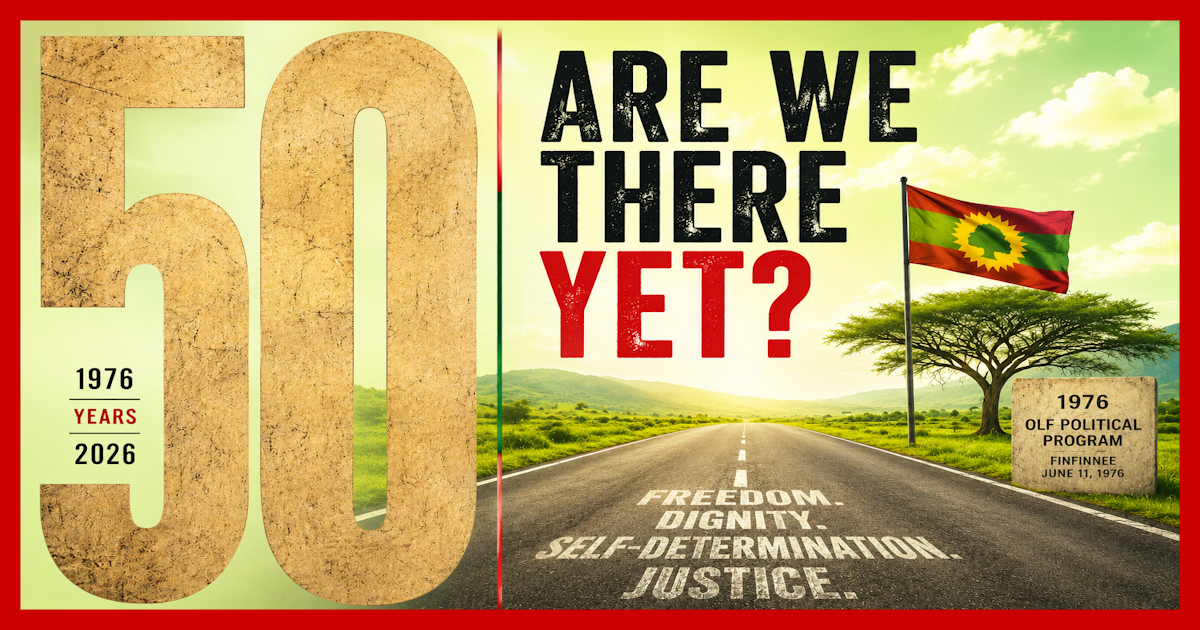
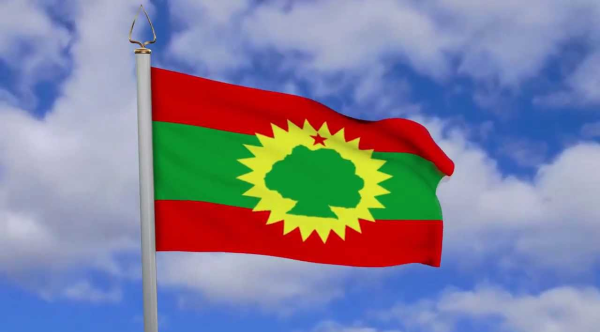
The formation of the Oromo Liberation Front in 1973 and the emergence of the Oromo Liberation Army marked a turning point—transforming scattered resistance into an organized national liberation movement. Since then, the struggle has continued across changing regimes, ideologies, and generations.
The Scale of Sacrifice
Oromo Martyrs Day is not confined to a single event or decade. It represents a continuum of sacrifice stretching over more than a century. Oromo narratives emphasize repeated cycles of violence, displacement, imprisonment, and cultural suppression under successive regimes.
- Armed fighters who died in battle
- Political leaders assassinated or executed
- Students and activists silenced for demanding rights
- Ordinary civilians caught in cycles of repression
This multigenerational sacrifice has shaped a collective identity grounded in endurance.
Memory as Resistance
Commemoration itself is an act of resistance. By remembering, the Oromo nation asserts historical continuity against erasure.
- Preservation of history
- Moral continuity
- Collective identity
- Political renewal
In this sense, memory is not passive—it is political, educational, and mobilizing.
Hope and the Future of Oromia
Despite the long history of suffering, Oromo Martyrs Day is not only about grief—it is also about hope.
- The survival of Oromo identity
- The persistence of political consciousness
- The role of the diaspora
- The continued demand for justice and dignity
The martyrs did not sacrifice for remembrance alone—they sacrificed for a future.
That future remains contested, but not unimaginable.
2026: Reflection in a Time of Uncertainty
As Oromo communities mark April 15, 2026, the commemoration unfolds in a context still marked by conflict, political tension, and unresolved questions about Oromia’s future.
The central question remains: what becomes of the sacrifices made?
- A future of genuine self-determination and independence
- Or continued cycles of repression and resistance
Martyrs Day does not answer these questions—but it sharpens them.
Remembrance Beyond a Single Day
A remembrance day is never just a single date on the calendar. Yes, April 15 carries profound weight in Oromo history. But remembrance itself cannot be confined to one day.
It is a moment to gather all memories into one frame—all events, all sacrifices, all heroes and heroines.
It is a day of reckoning with the price still being paid.
Only days ago, civilians—many of them schoolchildren—lost their lives in drone attacks near Tulluu Cuqaalaa and Tulluu Boosat. Their names now join a long, unfinished roll of sacrifice like many thousands of martyrs before them.
It is a day to remember the enduring struggle of the Waraana Bilisummaa Oromoo (WBO), who continue to fight at great cost.
It is a day to honor the Qarree and Qeerroo—the youth who, in their thousands, reshaped the Oromo struggle and reawakened the Oromo nation and beyond.
It is a day for families—those who have buried loved ones, those who carry wounds seen and unseen, those who continue to pay, quietly and relentlessly.
And it is a day for individuals—too many to name, too important to forget—each one deserving a place in the living memory of a people.
Remembrance, then, is not an act of looking back. It is an act of recognition.
Of cost. Of courage. Of continuity.
And of a history still being written.
Conclusion
Oromo Martyrs Day, April 15, 2026, stands as a powerful reminder: a nation is not only defined by its suffering, but by what it does with that memory.
The past century tells a story of loss.
But it also tells a story of endurance.
And endurance, when carried forward with purpose, becomes the foundation of freedom.
References
- Asafa Jalata (1993). The Oromo Movement and Imperial Politics. Indiana University Press.
- Asafa Jalata (2005). Oromia and Ethiopia: State Formation and Ethnonational Conflict, 1868–2004. Lynne Rienner Publishers.
- Mohammed Hassen (1990). The Oromo of Ethiopia: A History 1570–1860. Cambridge University Press.
- Being and Becoming Oromo: Historical and Anthropological Enquiries (1996). Nordic Africa Institute.
- Human Rights Watch (2016). “Such a Brutal Crackdown”: Killings and Arrests in Response to Ethiopia’s Oromo Protests.
- Amnesty International. Various reports on Ethiopia and Oromia (multiple years).
- Oromia Today, Oromo Martyrs Day 2025 and the Legacy of Oromo Exceptionalism, 2025.
- Oromia Today, Remembering our Heroines and Heroes.
- Advocacy for Oromia. Memorial Day of the Oromo Martyrs.
- Oromo Liberation Front. Historical documents and political statements.
- Oromo Liberation Army. Movement history and communiqués.
- Ethiopian Expansion under Menelik II. Referenced across multiple historical sources.