The Peace Conference Without the Other Side
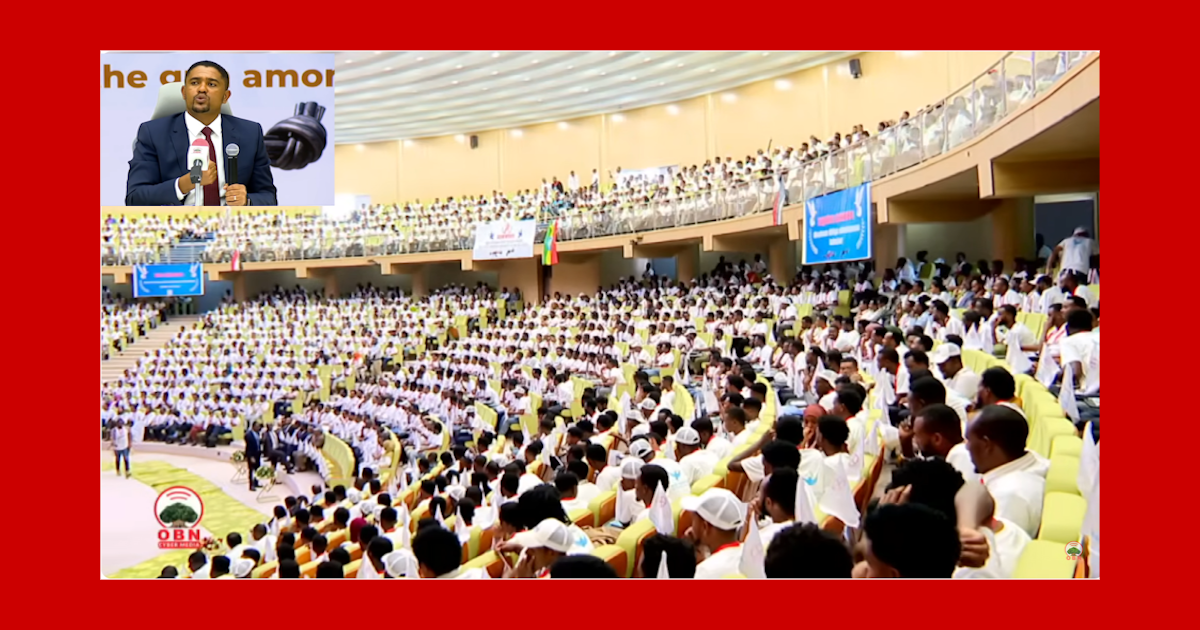
Excerpt
A peace conference without the other party present is not a peace conference. It is a political performance. The recent speech by Oromia president Shimelis Abdissa and so-called peace gathering reveal a deeper political reality: peace is being used as rhetoric while politics, historical grievances, and negotiations are carefully avoided. The tragedy of the current conflict is not simply war, but the collapse of trust — and without trust, peace cannot exist.
Peace Without a Partner
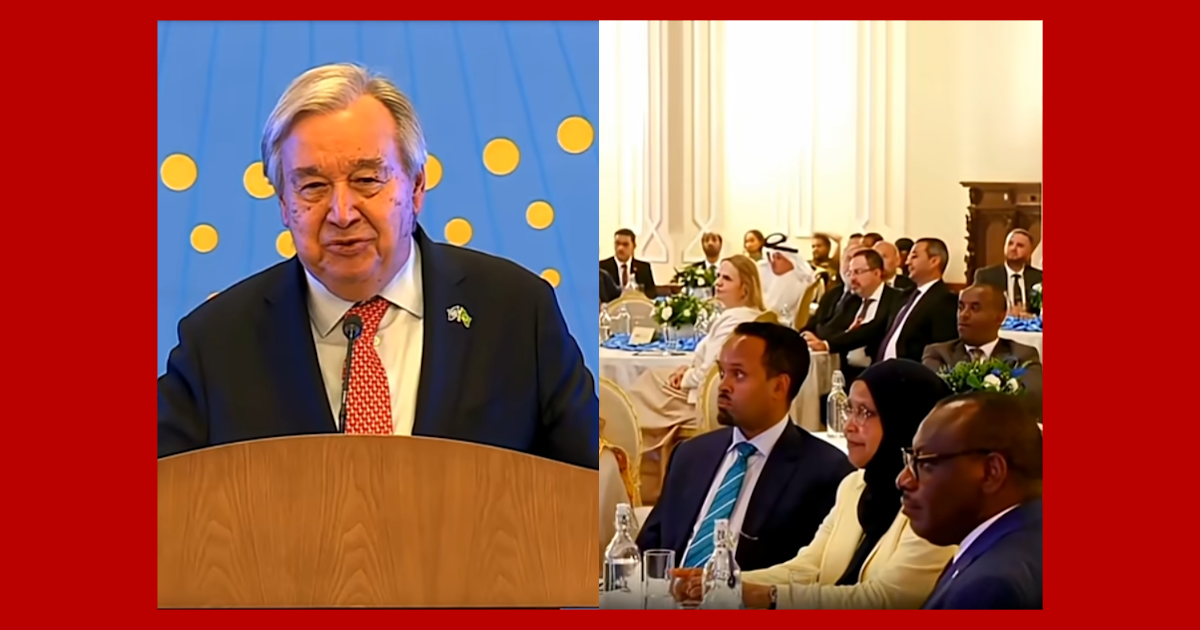
When Shimelis Abdissa addressed a gathering described as a “peace conference” [1], the most striking fact was not what he said, but what was missing. The other supposed party to the peace process was absent. A peace conference without the other side is not a peace conference. It is a rally, a narrative exercise, a political performance about peace rather than a negotiation for peace.
The speech itself, a convoluted tirade full of contradictions, revealed more about Shimelis Abdissa's political framing of the conflict than about any actual roadmap to peace.
The Language of Peace Without Politics
Throughout the speech, Shimelis Abdissa repeatedly spoke about peace, the need to end the conflict, and the regime's willingness to talk. Yet at no point did he mention any political grievances, structural issues, constitutional questions, elections, power sharing, military operations, mediation frameworks, or any of the political issues that normally lie at the heart of conflicts of this kind.
In other words, he spoke about peace while carefully avoiding politics.
This is significant because conflicts of this nature are political conflicts, not misunderstandings between family members.
When the political causes of conflict are not discussed, peace is reduced to a simple message: stop fighting and come home. That is not negotiation language. That is reintegration language.
“Children in the Forest”
Perhaps the most revealing phrase in the speech was his reference to fighters as “children walking in the forest.” This is not neutral language. It is political language. It infantilizes the opponent, delegitimizes them as political actors, and positions the regime as the responsible parent trying to bring misguided children back home.
Once the conflict is framed this way, negotiation becomes unnecessary. One does not negotiate with children; one rehabilitates them, forgives them, and reintegrates them. The conflict is no longer political; it becomes a social problem caused by misguided youth.
This framing may be rhetorically effective for a political rally, but it does not answer the fundamental question: why are those “children” in the forest in the first place?
A Multi-Generational Struggle
The “children in the forest” disinformation narrative by Shimelis Abdissa collapses the moment one sees the faces of OLA fighters themselves.
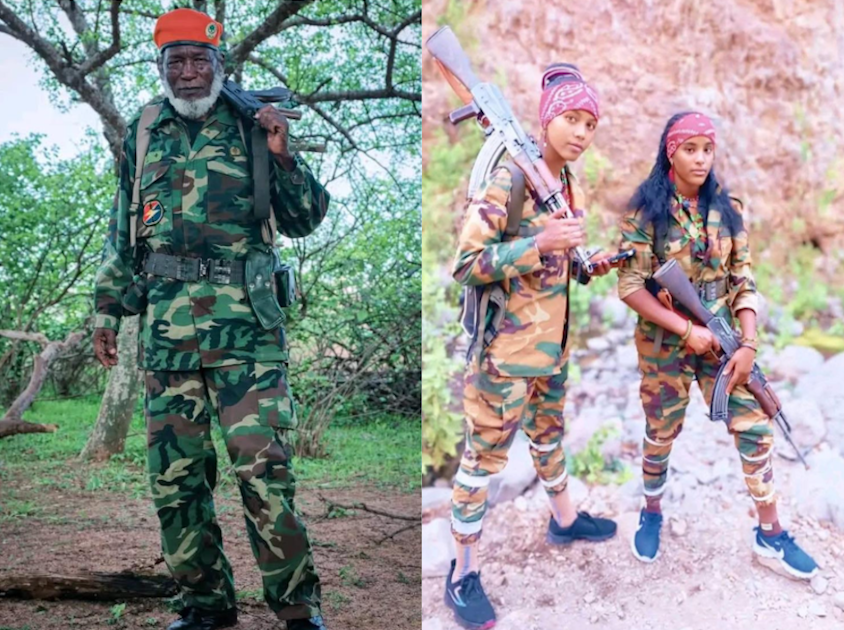
To the left: Jaal Bulchaa Sooressa.
The Oromo national struggle has always been multi-generational because it is an unresolved national Oromo Cause that passes from one generation to the next until its demands are met. Among today’s fighters are veterans who fought against the Derg, their children who resisted during the TPLF/OPDO years, and their grandchildren — the Qarree-Qeerroo generation.
This is not a movement of children. It is a movement of generations.
The Speech of Contradictions
The speech contains a series of contradictions that appear almost back-to-back. To demonstrate this, we chose the speech segment that was played on BBC News Afan Oromo [2]. See the Appendix for transcription and translation of a 90-second segment.
On the one hand, Shimelis Abdissa said his government had tried everything, compromised everything, and given everything possible. On the other hand, he said his government was ready to accept whatever the audience? [other side?] says and ready for peaceful settlement.
These two positions cannot logically coexist. If everything has already been compromised and everything already given, then there is nothing left to negotiate. But if there is still something to negotiate, then everything has not been compromised.
These contradictions are not accidental. They serve different audiences simultaneously. The public hears that Shimelis Abdissa's administration has tried everything. Supporters hear that the fighters are unreasonable. International observers hear that the Oromia administration is open to peace. The fighters hear an invitation to talk. Election audiences hear that Shimelis Abdissa is working for peace.
The speech therefore functions less as a peace proposal and more as multi-audience political messaging.
The Historical Irony of the Eight-Year Reign
But the most important issue raised indirectly by this speech is historical irony.
Those described as “children in the forest” are the same generation of youth who mobilized, protested, organized, and sustained pressure that led to the political changes which eventually brought the current leadership to power. Without that wave of youth mobilization and resistance, the political transition that reshaped the current leadership might never have occurred.
This creates one of the great ironies of political transitions: the generation that helps bring change is often later labeled as troublemakers.
In the Oromo youth—Qarree & Qeerroo— case the following became apparent:
- They became prime targets for elimination as a formidable opposition that could not be tolerated by the new regime.
- They became dissatisfied not only with the lack of promised reforms but also with what they saw as an active betrayal of what the change was supposed to represent.
History is full of such cycles. Movements bring change, elites manage the transition, power consolidates, former allies become opponents, and yesterday’s revolutionaries become today’s rebels.
From Long Arm to Power Center
Those "in the forest" brought about the change that ousted the EPRDF regime.
Those in power now — the remnants or offshoots of the EPRDF who captured the state during the transition under the banner of reform — now present themselves as the protagonists of the change, while telling the actual agents of change that they are the problem.
One of the great ironies surrounding the current political situation is not only that the so-called “children in the forest” helped create the political conditions that brought the current leadership to power, but also that many of the political actors who now dominate the Prosperity Party were not the drivers of the opposition movement that weakened and ultimately dismantled the EPRDF system.
In fact, many Oromo activists and opposition voices historically viewed OPDO not as an opposition force, but as part of the EPRDF control structure itself. For years, OPDO was the administrative arm through which TPLF's central decisions, including the killing and imprisonment of political dissidents, were implemented in Oromia. In popular political discourse, it was often portrayed as the extended arm through which security and administrative directives were executed on the ground.
This makes the political transition even more ironic:
The opposition weakened the system, but elements within the system ultimately inherited the power.
This is not an uncommon phenomenon in political transitions. When long-standing regimes weaken, it is often not the opposition that immediately takes power, but factions within the existing system that reposition themselves as reformers and take control of the transition.
The Intelligence State Irony
There is another historical irony that adds to the complexity of the current political situation. Before becoming Prime Minister, Abiy Ahmed served within the national security and intelligence structures of the state and rose to become a senior intelligence official responsible for national security apparatus operations. International media at the time of his rise to power noted the unusual transition from intelligence leadership into political leadership — essentially from spy chief to prime minister.
This adds another layer of irony to the political transition. The state security apparatus that had long been associated with surveillance, control, and repression did not collapse during the transition; rather, individuals from within that very system emerged to lead the new political order.
This reinforces the perception among many that the transition represented continuity within the state structure rather than a fundamental transformation of the system. Whether one agrees with this interpretation or not, the perception itself is politically powerful and shapes how different groups interpret the current conflict.
The larger irony remains that those who inherited power through the transition now portray themselves as the architects of change, while dismissing the very forces that made that change possible.
Two Completely Different Narratives
At the heart of the conflict are now two completely different narratives:
Regime Narrative:
- Misguided youth
- Regime wants peace
- Come home
- War harms people
- We compromised everything
Opposition Narrative:
- Betrayed political transition
- Political issues unresolved
- Address political grievances
- System never fundamentally changed
- Nothing has fundamentally changed with regard to the Oromo Questions at the heart of the conflict
When two sides operate from completely different historical narratives, speeches about peace often sound convoluted because each side is answering a different question.
Peace Cannot Be Built on Denial of History
If there is one major weakness in the speech, it is this:
- It talks about ending the conflict without discussing how the conflict began.
- It talks about peace without discussing politics.
- It talks about reconciliation without discussing grievances.
- It talks about unity without discussing power.
Peace processes do not succeed because one side repeatedly says peace is necessary.
Peace processes succeed when the causes of conflict are openly discussed, when political grievances are addressed, when negotiation frameworks are established, and when both sides recognize each other as political actors rather than misguided youths.
Calling fighters “children in the forest” may be rhetorically effective for a political rally, but it does not bring peace closer. Peace requires political courage, not rhetorical framing.
The Bottom Line
The bottom line is this:
Conflict as Political Currency: The regional and federal PP administrations do not appear politically structured around bringing peace to Oromia. Conflict has become politically functional because insecurity often consolidates power, weakens opposition, and allows governance through security structures rather than democratic legitimacy.
The structure of the old regime is intact: Those in power today were not the stewards of the protest movement that weakened the previous regime. They entered the transition as reformists but ultimately inherited and consolidated the same state structures. To many observers, the system changed faces but not structure.
The democratic force is in the forests: Those now described as anti-peace fighters "wandering in the forest" in Shimelis Abdissa's parlance are, in the eyes of their supporters, part of the same political generation that pushed for change and democracy, only to later find that the transition did not produce the political transformation they expected. Many had to escape what they saw as an attempt at annihilation by the custodians of the transition, who became determined to stay in power at any cost.
The peace conference without partner as pre-election rally: The so-called peace conference, without a partner, without political discussion, without a negotiation framework, and with politically convenient timing aligned with pre-election campaign, appears less like a peace initiative and more like political theatre designed to demonstrate that the administration is pro-peace and doing everything possible ahead of the elections.
What this does to public trust is profound: Public trust has eroded to the point where many people no longer believe official speeches about peace, and without trust, peace processes rarely succeed. The assembling of panels of loyal praise singers tasked with promoting a one-sided narrative to tarnish the OLA is one case in point [3]. Such cynical attempts cannot erase the immeasurable atrocities committed by regional and federal authorities against the Oromo people over the last eight years of Prosperity Party rule.
Conclusion
If one steps back and examines the so-called “peace conference” carefully, several facts become impossible to ignore.
A peace conference without the other party present is not a peace conference.
A peace conference that does not mention political grievances, political reforms, power arrangements, ceasefire mechanisms, mediation frameworks, or negotiation timelines is not a peace conference.
A peace conference held at a politically convenient time close to an election campaign begins to look less like a peace process and more like a political performance designed to create the appearance of peace efforts.
Peace processes are normally measured not by speeches but by actions: ceasefires, mediated negotiations, confidence-building measures, and political dialogue frameworks.
None of these appeared in the speech. Instead, the speech framed the conflict as a problem of misguided youth who should return home, rather than a political dispute that requires political negotiation.
Recent history reinforces this skepticism. The high-level negotiations held in Tanzania in April and again in November 2023 demonstrate that channels for real negotiation existed. Those talks did not collapse because dialogue was impossible; they collapsed because the positions of the parties were fundamentally incompatible, with the regime side insisting on outcomes that amounted to disarmament and complete surrender rather than a negotiated political settlement [4].
One of the most telling moments of that process was that the OLA commander Marro Dirriba reportedly had to risk his life to travel and participate in negotiations in Dar es Salaam, while at the same time, under the public narrative of peacemaking, security operations were reportedly ongoing to capture or neutralize OLA fighters on the ground. Such contradictions severely undermine public trust in peace rhetoric.
This is why many members of the public increasingly interpret official speeches about peace not as genuine attempts to resolve the conflict, but as political messaging intended to demonstrate to voters and international observers that the administration is pro-peace and doing everything possible.
The problem is that peace cannot be manufactured through speeches, conferences, and slogans while the political roots of the conflict remain unaddressed.
- Peace is not built through rhetoric.
- Peace is not built by assembling panels of loyal praise singers [3] — Faarseebulaas [5] — who paint one side as saints and the other as devils; the world already knows the truth about both sides.
- Peace is built through political courage.
- Peace is built through negotiation between real parties.
- Peace is built through addressing grievances, not denying them.
- Peace is built through trust, and trust cannot grow where words and actions move in opposite directions
Perhaps the greatest tragedy of the current situation is not simply that there is conflict, but that the conflict is now accompanied by a deep collapse of public trust.
When the public begins to believe that every speech, every announcement, and every peace initiative is merely propaganda, then even genuine peace efforts, if they ever come, will be met with suspicion. And without trust, peace processes rarely succeed.
Until political issues are addressed politically, until negotiations are conducted as negotiations rather than invitations to surrender, and until peace conferences include actual partners rather than audiences, the cycle will likely continue.
Speeches will be made, conferences will be held, statements will be issued, and the word “peace” will be repeated many times — but peace itself will remain distant.
- Peace cannot be achieved by merely calling a conference.
- Peace cannot be achieved by calling opponents "children in the forest".
- Peace cannot be achieved by the repetition of the word peace.
- Peace cannot be built on speeches alone.
- Peace cannot be built on narratives that ignore history, avoid politics, and reduce political conflicts to social misunderstandings.
- Peace conferences without the other side will remain what they appear to be: performances about peace, not processes toward peace.
Peace requires confronting history honestly, addressing political realities directly, and recognizing that conflicts of this nature are not resolved by telling people to come home, but by addressing why they left home in the first place.
Appendix: Part of Speech Made at the “Peace Conference” by Shimelis Abdissa [2]
Transcription of Speech Segment
Qeheen Oromoo nagaatti deebihuu qaba. Qehee Oromoo nagaatti deebiisuudhafi, mootumaani waan kamiifuu qophaawadha.
Karaan nuhi hin yaalle hin jiru.
Ijioollen bosona jirttu kun waan isaan bosona keessa isaan deemsisu tokko sababni tokko hin jiru. Waan Oromoo fayyadu tokko keessa hinjiru. Waan barbaachisu hundaa "compromise" goonee, waan Oromoon qabu kenninnee sadarkkaa Oromoon dandaahutti goonee filduratti tarkaanfachuudhaffi qoophaahadha.
Jarri kuni qeheen Oromoo gagahanii, diinafi karra saaqu malee, waantti biraa waan isaan fidan hinjiru. Oromoo laalaa: haadha Oromoo, jaarsa Oromoo, kana laalaa. "So" nama dhuunfaa haa tahu, gareedhaan hatahu, abbaa barbaaddan fidaa, waan isin jettan hin fudhanna nuy.
Kanaafi mootumman dubbiin karaa nagaattin xumuruudhaffi qophaawadha. Karaa nagaattin alas dubbin kuni hin xumurammu. Karaa sanii alaas karaan jiru, karaa nu fayyaduu miti. Haa cufnnu boqonna kana.
Caasaan daka jiru, caasan gandarra jiru, aannaarra jiru, godinarra jiru, magaalarra jiru, kana faanaa akka wal gitee akka hojjetu waan dandeenyu hundaan hin gageessina.
"So" qehee Oromoo nagaa godhuun "it's a priority". Ammas, Abdii hatahu, Marroo haatahu, abbaa barbaade haatahu, ana faanaa achitti dubachuu barbaadu taanan nan dhaqa bakka isaan jiran.
Translation to English
The Oromo homeland must return to peace.
To restore peace in the homes of the Oromo, the government is ready for anything.
There is no way we haven't tried. There is no one reason why these children walking in the forest are in that forest.
There is nothing in it that benefits the Oromo.
By "compromising" everything that is necessary, by giving what the Oromo have, to the level that Oromo is capable of, we are ready to step forward [applause].
These guys have brought nothing but destroying the homes of the Oromo, opening the gates for the enemy.
Look at the Oromo: the Oromo mother, the Oromo elder, look at this. "So" whether it's an individual, be that in a group, bring anybody you want, we'll accept what you say.
The government is ready to settle the matter peacefully [applause]. Outside of peaceful means, this matter will not be resolved.
Outside of that way, is not a way to benefit us.
Let’s close this chapter.
We will do our best to ensure that the structure from lower [administration], from the village, from the district, from zone, from the towns, to work in concert on this matter, we'll lead in all we can.
"So" making the homes of the Oromo being peaceful "it's a priority".
Again, whether it is Abdi, Marroo, or anybody, if they want to talk there with me, I will go where they are.
References
- Ergaa Pirezidaantiin MNO Obbo Shimallis Abdiisaa Kora Nageenyaa Irratti Dabarsa, 30 March 2026, OBN Oromiyaa YouTube Channel, YouTube.
- Obbo Shimallis Abdiisaa Marro waliin mari'achuuf qoophiidha jedhan. WBO'n maal jedha?, 3 April 2026, BBC News Afan Oromo YouTube Channel, YouTube.
- "Oromiyaa bakka sagaleen qawwee itti hindhaga'amne gochuuf hojjatamaa jira", 27 March 2026, EBC/ETV Afan Oromoo YouTube Channel, YouTube.
- Roobaa Hawaas, A Missed Opportunity for Peace in Oromia, 22 November 2023, OROMIA TODAY.
- Digital Serfdom in Ethiopia: Faarseebulaa, Propaganda, and the Politics of Praise, 2 May 2025, OROMIA TODAY.