The Ethiopian Perspective Gap: Why Some Voices Sound Like Truth—and Others Like Rebuttal
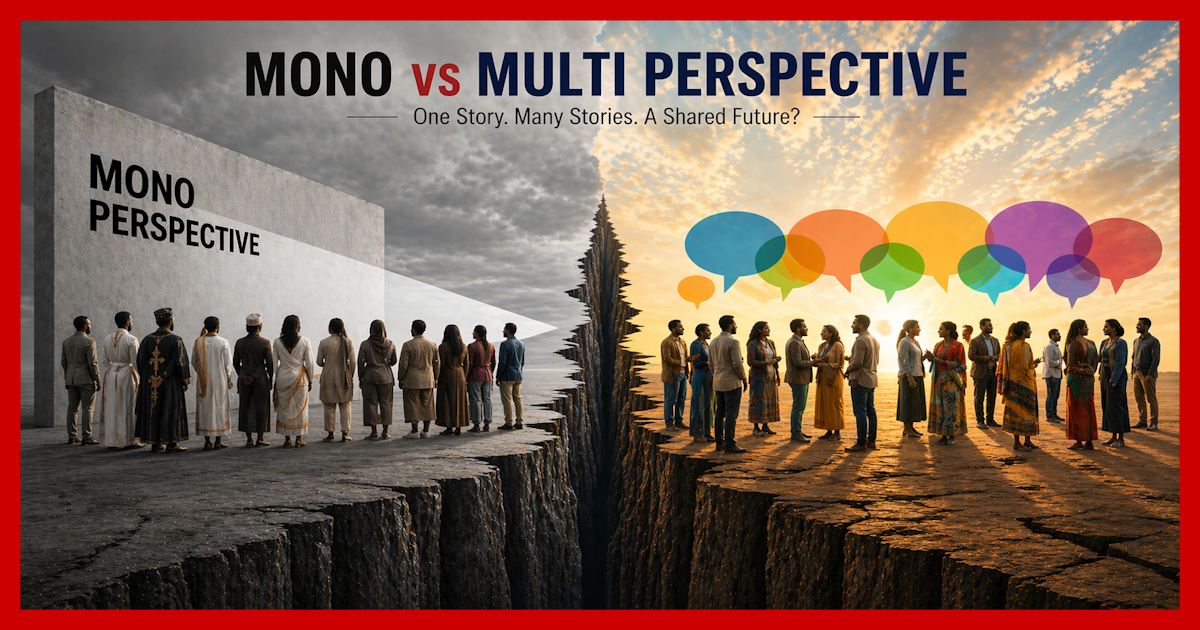
This op-ed explores how mono perspective sociopolitical views shape both art and politics, often presenting particular experiences as universal truths and thereby constraining meaningful dialogue. It argues that progress requires moving beyond such narrow vantage points—particularly among politicians, who are uniquely positioned to resolve complex sociopolitical issues. To do so, they must step outside mono perspective, engage competing realities with discipline, and adopt a genuinely multi-perspective approach capable of addressing long-standing tensions with clarity and fairness.