
Abbaa Gadaa Professor Asmerom Legesse: A Life Devoted to Oromo Gadaa and African Political Thought

Excerpt
We mourn the passing of Abbaa Gadaa Professor Asmerom Legesse, the Eritrean scholar whose rigorous work on the Oromo Gadaa system reshaped how the world understands indigenous African governance. Through seminal books including Gadaa: Three Approaches to the Study of African Society (1973) and Oromo Democracy (2000), he framed Gadaa as an Oromo constitutional democratic order with rotating leadership, codified law, and checks and balances. His legacy endures across generations.
The Intellectual Who Gave Gadaa Its Global Voice
We are deeply saddened by the passing of Abbaa Gadaa Professor Asmerom Legesse, a towering African intellectual whose scholarship stands among the most consequential contributions to Oromo history and African political thought.
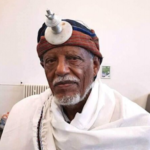
(1930–2026)
Abbaa Gadaa Professor Asmerom Legesse, an Eritrean social anthropologist trained at Harvard University and later a distinguished professor at institutions including Boston University, Northwestern University, Swarthmore College, and Yale University, devoted rare rigor and integrity to African knowledge systems. Yet his true stature was not defined by titles, but by the seriousness with which he treated the Oromo Gadaa system.
At a time when African societies were routinely dismissed as lacking political sophistication, he refused to reduce Gadaa to “custom” or folklore. Through disciplined research and cultural immersion, he framed Gadaa as an Oromo indigenous constitutional order—built on rotating generational leadership, codified laws and norms (heeraa, seera, safuu), institutional checks and balances, accountability, and collective sovereignty.
His landmark work, Gadaa: Three Approaches to the Study of African Society (1973), introduced the world to the depth and coherence of Oromo political organization. Decades later, Oromo Democracy: An Indigenous African Political System (2000) further clarified Gadaa as an egalitarian democratic system whose institutional logic long predates modern Western models. These works remain core references for understanding Oromo governance and for challenging enduring stereotypes about African political thought.
Abbaa Gadaa Professor Asmerom Legesse understood what many still refuse to acknowledge: Oromo history is not marginal, not invented, and not secondary to anyone else’s narrative. It is a complete intellectual tradition—deserving serious documentation, protection, and transmission. By recording Gadaa with scholarly precision, he did more than study Oromo society; he defended it against erasure and misrepresentation.
For this reason, Oromo communities came to hold him in special esteem, symbolically recognizing him as an “Abbaa Gadaa”—a guardian of truth and a custodian of a threatened heritage. Beyond Oromo studies, he wrote on Eritrean refugees, and wider questions of displacement, power, and justice in the Horn of Africa, embodying the responsibilities of a public intellectual.
We at OROMIA TODAY express our heartfelt condolences to his family, colleagues, students, and all communities touched by his life and work. We also offer our deep gratitude for the intellectual ground he helped secure for generations of Oromo scholars and citizens. His scholarship did not merely preserve the past; it equipped future generations with evidence and language to assert historical truth.
Rest in power, Abbaa Gadaa Professor Asmerom Legesse. Your work lives on, wherever Gadaa is studied, defended, and lived as a testament to indigenous Oromo democracy and African intellectual greatness.
Selected References
- Prof. Asmerom Legesse, Anthropologist Yale University, NetWorthAfrica.Com.
- Addis Ababa University Honoured Eritrean Professor Asmerom Legesse, 18 December 2018, raimoq.com.
- "Professor Asmerom Legesse is Officially Abba Gadaa", Facebook.


Mr Solomon Tesfaye Leffo,
“…deepen” which division?
Raba Dori
Thank you to the Oromia Today editorial team for publishing an obituary that thoughtfully recounts the immense contributions of Professor Asmarom Legesse. He was a towering scholar whose work profoundly advanced Oromo studies and challenged Eurocentric interpretations of governance in Africa. His lifelong research on the Oromo Gadaa system has left an enduring intellectual legacy.
Academic research should enlighten, not politicize or selectively frame history. While Professor Asmarom Legesse’s scholarly work on the Gadaa system is widely respected, this narrative stretches beyond academic analysis into identity construction and political interpretation that goes far beyond what empirical anthropology can legitimately claim.
No social institution “creates a nation” in isolation, nor can complex, diverse peoples be reduced to a single governance model without oversimplification. Presenting Gadaa as a fully formed, egalitarian “democracy” equivalent to modern systems risks romanticizing the past and blurring the line between scholarship and advocacy.
True research serves society by promoting balance, rigor, humility, and respect for historical complexity—not by advancing selective narratives that may deepen division rather than foster justice, mutual understanding, and a shared future.
What this criticism ultimately demands is not better scholarship, but willful blindness.
To argue that Professor Asmarom Legesse should not have researched the Gadaa system because it empowered Oromo self-recognition—and made others uncomfortable—is to say that knowledge is acceptable only when it preserves existing hierarchies. That is not an academic position; it is an ideological one.
Professor Asmerom Legesse did not invent Oromo identity, nor did Gadaa suddenly “create a nation.” The Oromo existed long before Asmerom Legesse, and Gadaa existed long before modern Ethiopia. What his work did was something far more threatening to entrenched narratives: it made an indigenous political system visible, legible, and intellectually respectable in a scholarly world that had long ignored or dismissed it.
Calling this “politicization” is disingenuous. All historical inquiry has political implications when it disrupts dominant myths. The problem here is not that Gadaa was studied, but that its study exposed the poverty of claims that centralized imperial systems were the sole carriers of civilization, order, or democracy.
The charge of “romanticization” is also telling. Western political thought routinely celebrates Athenian democracy despite its exclusions, Roman law despite its brutality, and Enlightenment ideals despite their colonial entanglements. Yet when an African system is examined on its own terms—carefully, critically, and comparatively—it is suddenly accused of advocacy. That double standard speaks volumes.
Most revealing is the anxiety beneath the argument: Oromo pride is framed as inherently divisive, while Amhara resentment is treated as a natural reaction. That inversion alone exposes the bias. Knowledge does not divide; unequal power over whose history counts does.
To suggest that scholars should avoid illuminating indigenous institutions because the truth unsettles inherited privilege is to argue against scholarship itself. It is effectively saying: do not open your eyes, because you may discover dignity where we once claimed monopoly over it.
That such thinking persists—even in the so-called Age of Knowledge—is indeed saddening. But it also explains why Asmarom Legesse’s work remains not only relevant, but indispensable.
The Editor
OROMIA TODAY