
The PP Regime Now Has the Accolade: No Other Ethiopian Regime Has Acted Against the Oromo People So Intensely in Such a Short Time

Excerpt
The inauguration of the Shebele Resort near Jijigaa under the PP regime of PM Abiy Ahmed is more than a development event; it is a political statement. Held without Oromo representation in an Oromo city, and amid ongoing violence in eastern Oromia, the ceremony signals the normalization of exclusion and the quiet ratification of a long-contested administrative arrangement. What was once presented as a temporary “loan” of Jijigaa has now hardened into permanent political appropriation, with profound consequences for constitutional order and regional stability.
Jijigaa as a Message, Not a Venue
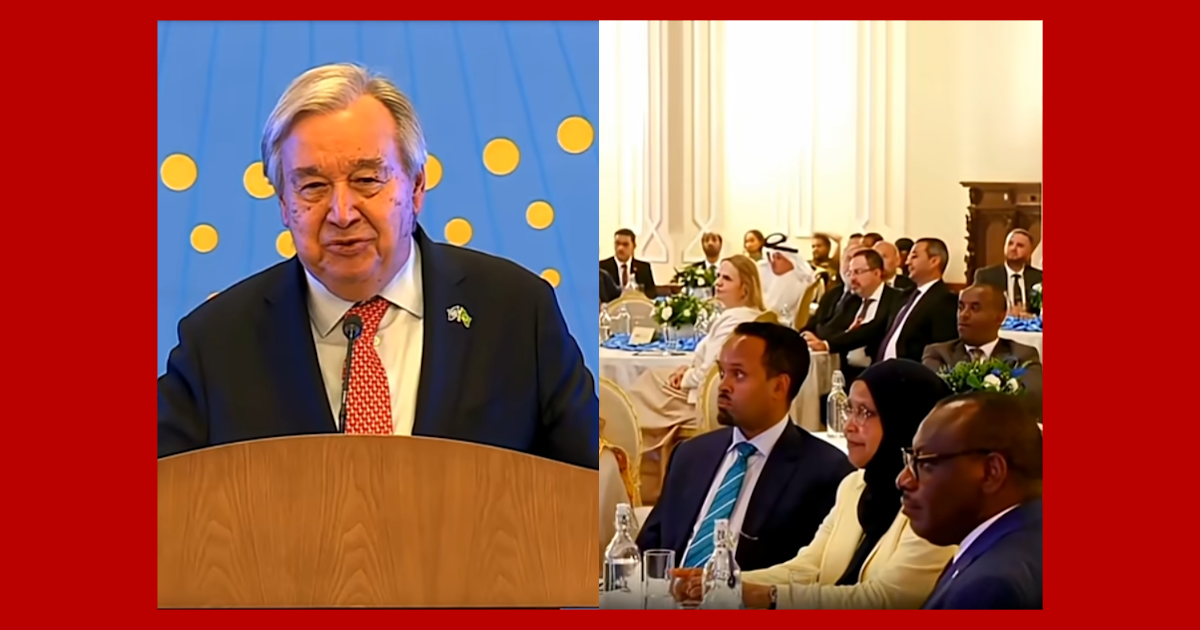
The Prime Minister of Ethiopia’s Prosperity Party (PP) regime, Abiy Ahmed, flew east to Jijigaa to inaugurate the Shebele Resort and congratulate Mustafe Mohammed Omer of Somali Region on projects presented as flagship “development”, resorts, corridor beautification, and street lights being the favored projects by the regime. Dignitaries from Djibouti, Kenya, and Somalia were proudly assembled to witness the spectacle. What was conspicuously missing were Oromia representatives and Oromo dignitaries—despite Jijigaa’s Oromo historical identity and its deep entanglement with Oromo displacement and contestation. That absence, deliberate and unmistakable, speaks volumes.
Equally revealing was the speech itself. For nine and a half minutes, the Prime Minister delivered a speech in which the words Oromo and Oromia were not merely overlooked—they were painfully, consciously avoided [1]. In politics, names matter. Not once did they surface, not even in the hollow, performative language of “brotherhood” and “unity” that seasoned politicians routinely deploy when they wish to mask hostility with rhetoric.
Under normal circumstances, such omission would be politically impossible—especially in a gathering where Oromo cultural presence, attire, and the moral authority of institutions like the Abbaa Gadaa would typically be unavoidable. When a head of government refuses to name a people in their own geography, the omission functions as a statement of power.
The Inauguration Context Cannot Be Separated From Violence in Eastern Oromia
This ceremony did not occur in a neutral environment. While Oromo civilians in eastern Oromia—areas such as Cinaaksan and Jaarsoo and their environs in East Harargee zone—in real-time remain under violent insecurity, the federal executive projected celebration as if peace were prevailing. This contrast is not merely offensive; it is informative. A state that celebrates loudly while its citizens bleed selectively is showing the public whose pain counts and whose does not.
That is why the Jijigaa event reads as more than a development inauguration. It resembles a political endorsement—whether direct or through willful blindness—of a proxy dynamic in which eastern Oromia is pressured and fragmented while the public narrative is cleansed and repackaged as “stability.”
From Symbolic Exclusion to Constitutional Subversion
At a time when eastern Oromia is under sustained and violent attack, the Prime Minister appeared relaxed, jubilant, and congratulatory, as if peace and stability were reigning across the region. He went a step further by glossing over this reality in his speech, suggesting that whereas past gatherings were for reconciliation, this one was for developmental celebration.
The contrast is not merely disturbing; it is revealing. One does not celebrate so freely while one’s citizens are bleeding—unless those citizens are no longer counted as politically relevant.
From a legal–political perspective, what happened in Jijigaa crosses from symbolism into a constructive violation of constitutional order. Ethiopia’s federal structure presumes regional integrity, political representation, and equitable recognition. Yet the federal executive’s selective recognition in Jijigaa—who was elevated, who was excluded, and who was not even named—resembles administrative nullification by ceremony: not through law, but through repeated public signals that normalize Oromo absence.
In governance, omission is not always neutral. When omission is repeated, deliberate, and staged at the highest level, it becomes policy by signal. And policy by signal, when it entrenches exclusion, creates political facts on the ground long before any formal legal change is attempted.
The “Loaned City” That Hardened Into Permanent Appropriation
The Shebele Resort inauguration also reopens a deeper, unresolved question: Jijigaa’s anomalous administrative history. Under the previous EPRDF arrangement, Jijigaa was effectively treated as a provisional compromise—spoken of by many as a kind of “loan” to the Somali Regional State until infrastructure and capacity in Godee could mature. It was a mind-bending concept then: a city handled as if it were transferable property rather than a community with history and indigenous claims.
What was framed as temporary has now congealed into permanence without referendum, restitution, or moral accounting. A flagship inauguration under the exclusive banner of the Somali Regional State functions as ratification by spectacle—an attempt to convert a disputed history into a settled reality through repetition and normalization.
It should be recalled that addressing border disputes formed part of the core Oromo Questions the current regime pledged to resolve upon assuming power in 2018—alongside issues such as contested statues in Oromo cities, the status of Afaan Oromo at the federal level, and related structural grievances [2]. These commitments were abandoned almost immediately. Instead, the PP regime’s first priority became the neutralization of potential challengers in Oromia through targeted killings, mass incarcerations, and systematic repression, signaling a decisive shift from reform to consolidation by force.
Why This Becomes an Indictment of State Conduct
When the federal executive celebrates one narrative of control while remaining silent about Oromo suffering nearby, the state forfeits any credible claim of neutrality. Silence in such a setting is not absence; it operates as consent. The refusal to even utter the name “Oromo” or “Oromia” in that moment is not a slip of the tongue; it is a political decision with consequences.
This is why the event reads, to many, as an indictment of state conduct: selective recognition, selective empathy, selective visibility, and the normalization of exclusion through public ceremony. It communicates, without writing it into law, that Oromo political presence can be bypassed and Oromo geography can be narrated without Oromo consent.
Accrued Injustice Does Not Disappear
This is a sad day in the politics of this empire. But history does not erase injustice; it accumulates it. Each act of symbolic erasure, each staged omission, and each ceremony that normalizes exclusion adds to a growing moral ledger that future rhetoric cannot simply dissolve. Irresponsible leaders do not minimize instability; they compound it by stacking grievance with interest.
Make no mistake: what is being done today will not be forgotten. It will be accrued. And when accountability finally arrives—whether through politics, history, or consequence—this moment in Jijigaa will stand as evidence of a regime that treated Oromo presence as optional in Oromo geography [3,4,5].
Why Jijigaa Becomes Evidence, Not an Exception
Pause for a moment and examine what has happened to Oromia under the PP regime.
Look at the map—Oromia is shrinking before our eyes, not only territorially but politically and symbolically. Pressure is applied from every direction: northwest, north, northeast, east, and southeast. This is not coincidence, nor the product of spontaneous local conflicts. It is a pattern—systemic, coordinated, and sustained—executed through force, administrative maneuvering, and political signaling.
The dispossession of central Oromia in the name of mega-projects, most notably airport and super-city constructions, follows the same logic. It is a modern replication of an older practice: indigenous Oromo communities erased to make way for state ambition, just as began under Menelik II.
What is presented as “national development” is experienced locally as removal without consent, compensation without justice, and progress without belonging. Development becomes the language through which erasure is normalized [3,6,7,8].
Jijigaa must therefore be understood within this wider architecture of exclusion. The omission of Oromo presence there is not an isolated lapse; it is consistent with a governing method that renders Oromia visible only when its land is needed and invisible when its people demand recognition. The PP regime governs not merely through policy, but through oblivion—by deciding who may be named, who may be celebrated, and who may be quietly written out of their own geography.
These are not separate grievances; they are layers of injustice being deliberately stacked. Territorial pressure, proxy conflict, administrative appropriation, symbolic erasure, and development-driven displacement together form a single trajectory. History records such trajectories clearly. Injustice does not dissipate with time; it compounds. Each act is remembered, each omission catalogued, each humiliation archived in collective memory.
Conclusion: Governing by Erasure Has a History—and an End
The current regime came to power, ironically, on the back of the Oromo Protest—a movement rooted in resistance to dispossession and political erasure. What followed, however, was not the fulfillment of that struggle but the gradual consolidation of two interlinked agendas: the dismantling of Oromia as a political entity and the fragmentation of the Oromo nation as a historical subject. Both agendas have now reached an advanced stage. Tragically, a significant portion of our people remains unaware of the depth and direction of this project.
What is unfolding in eastern Oromia bears an unsettling historical resonance. It is as though the unrealized ambitions of Siad Barre are being implemented by proxy—this time through the offices of Abiy Ahmed and Mustafe Mohammed Omer. Geography is being reordered, violence normalized, and political silence enforced, all while the language of development and stability is carefully rehearsed for external audiences.
The 2020s thus echo the darkest chapters of the 1870s and 1880s, when Gobana—an Oromo himself—facilitated Menelik II’s conquest, delivering vast Oromo populations into colonial subjugation. Gobana’s end was not one of honor. He died in disgrace, his name permanently etched into history as a cautionary reminder of collaboration against one’s own people.
Today’s equivalents—modern-day Gobanas operating under the Prosperity Party regime—are engaged in the systematic undoing of the hard-won gains of the Oromo struggle of the past six decades. They are not merely betraying a movement; they are attempting to dismantle its very legacy. History is unambiguous on this point: such figures do not escape judgment. Their actions may be rewarded in the present, but they are condemned in perpetuity.
Make no mistake: no amount of ceremony, no resort inauguration, and no performance of stability will neutralize what is being accrued. No regime lasts forever, and sooner or later the Prosperity Party regime will join the catalogue of infamy—from the imperial era, to the military junta, and to the EPRDF that begot it.
Determination to reverse the accumulated injustices will not be diminished; it will be sharpened. What is governed today through erasure will be remembered tomorrow with clarity—and answered with resolve.
And when accountability arrives—as history guarantees it does—the PP regime will be judged not by its slogans, but by the map it left behind and the people it chose to dispossess and forget.
Jijigaa is not an anomaly; inter-regional proxy wars are not coincidences; the dispossession of central Oromia—only under the reign of the PP regime—from around Shaggar city to Aabbuu Seeraa and beyond is not accidental—these are deliberate markers of a regime that governs through erasure [3,6,7,8]
History is unforgiving to regimes that govern by erasure: what Abiy Ahmed, Mustafe Mohammed Omer, and the Prosperity Party seek to bury today in silence and ceremony will return tomorrow as judgment.
References
- PM Abiy Ahmed's Speech at Shebele Resort Inauguration, 30 January 2026, PM Abiy Ahmed's Facebook Page, Facebook.
- OT Editorial, Decoding Prosperity Party Regime's Farcical Four-Day Meeting on Oromia, 23 February 2025, OROMIA TODAY.
- OT Editorial, The Oromia Administration: Silence, Not Governance, 28 January 2026, OROMIA TODAY.
- OT Editorial, A Time Bomb Buried in Oromia and Somali Region, 27 August 2025, OROMIA TODAY.
- Elemoo Qilxuu, Kumaa Daadhii, and Olii Boran, The Politics of Spite—How Oromia’s Foundations Expose the Empty Ambitions of a Troubled Region, 12 November 2025, OROMIA TODAY.
- OT Editorial, Aabbuu Seeraa: Building Progress on Indigenous Erasure, 30 January 2026, OROMIA TODAY.
- OROMIA TODAY, Waayee Aabbuu Seeraa Fi Misooma Ilaalchisee, Ergaa Faarseebulaa Fi, 12 January 2026, OROMIA TODAY.
- GLONA Taskforce, Save the Tuulamaas and Their Ancestral Lands, 9 January 2026, OROMIA TODAY.


Dear Mr Muste,
Do you consider report by the UN as a fascist kind of writing? No doubt, it is your own actions on the ground that is fascism.
With all due respect, I encourage you to read the following:
Based on reports from international organisations and monitoring groups, significant Oromo displacement from Eastern Oromia occurred in mid-2025 due to renewed conflict along the border with the Somali Region.
According to the UN Office for the Coordination of Humanitarian Affairs (UNOCHA), over 288,000 people were reported displaced following renewed inter-communal violence between Oromo and Somali communities, with escalations starting in July 2025.
Key Details on Displacement and Incursion:
Displacement Magnitude: As of October 2025, the violence resulted in the displacement of over 288,000 people in the border areas. In the East Borena Zone of Oromia alone, an estimated 151,972 people were displaced across the Arero, Dhas, Gumieldalo, and Wachile districts.
Incursion Reports: Reports indicate that the clashes involved armed groups from the Somali Region, with Oromia officials pointing to incursions by special police units and militia forces. The violence has included the killing of civilians and looting of livestock.
Causes of Conflict: The clashes are driven by long-standing disputes over land, resources (pasture/water), and the demarcation of the boundary, with tensions reigniting following the inclusion of certain areas into the Oromia region.
Humanitarian Crisis: The displacement has created severe humanitarian needs, with reports of destroyed infrastructure and schools being used as temporary shelters. The violence has also disrupted a relative calm that held in the region since 2018.
Note: The situation is volatile, and these reports are based on updates regarding 2025, which saw a major resurgence of the conflict following years of relative stability after mass displacements in 2017-2018.
This is a fascist kind of writing. I do not understand what benefit you would gain from the blood of the Oromo and Somali peoples. I am sure you have not visited neither jigjiga nor harars and diredaw in the past, and you have no knowledge about the people, social dynamics, or geography of eastern Ethiopia. Every community has some individuals who hold extreme fascist views, but the sober perspectives of the majority dominate public discourse. It is unfortunate when fascist views are presented as articles and given space to circulate on social media. This article amounts to hate speech and would have been indicted if it had been published in mainstream media.
You are suffering from a lack of contextual knowledge. I would gladly pay for your tickets so you could visit Dire Dawa, Jigjiga, Moyale, Babile, or Chinaksen to gain firsthand experience. It is troubling when someone from Nekemte or Dambi Dollo writes about Harar or Dire Dawa without understanding that these communities have lived together for millennia and coexisted peacefully. Why are you fanning violence that you will not feel yourself, and that will not afflict your relatives? It would be better if you came to terms with your own sense and recognized the reality of coexistence.
Dear Reader (Muste),
Could you please specify which part of this article you consider to constitute hate speech? General dismissals do not advance understanding. If you are interested in genuine discourse, we welcome you to clearly articulate the points you believe require challenge.
Let us move away from making assertions for their own sake. Engage the factual claims directly and address them one by one. OROMIA TODAY is open to scrutiny, correction, and constructive criticism. Where warranted, we will advise the authors to respond—whether to rebut or to acknowledge and correct any inaccuracies. We remain confident that truth ultimately prevails.
The Editorial Team