Can Recognizing a Moral Asymmetry Bridge Ethiopia’s Worlds-Apart Historical Narratives?
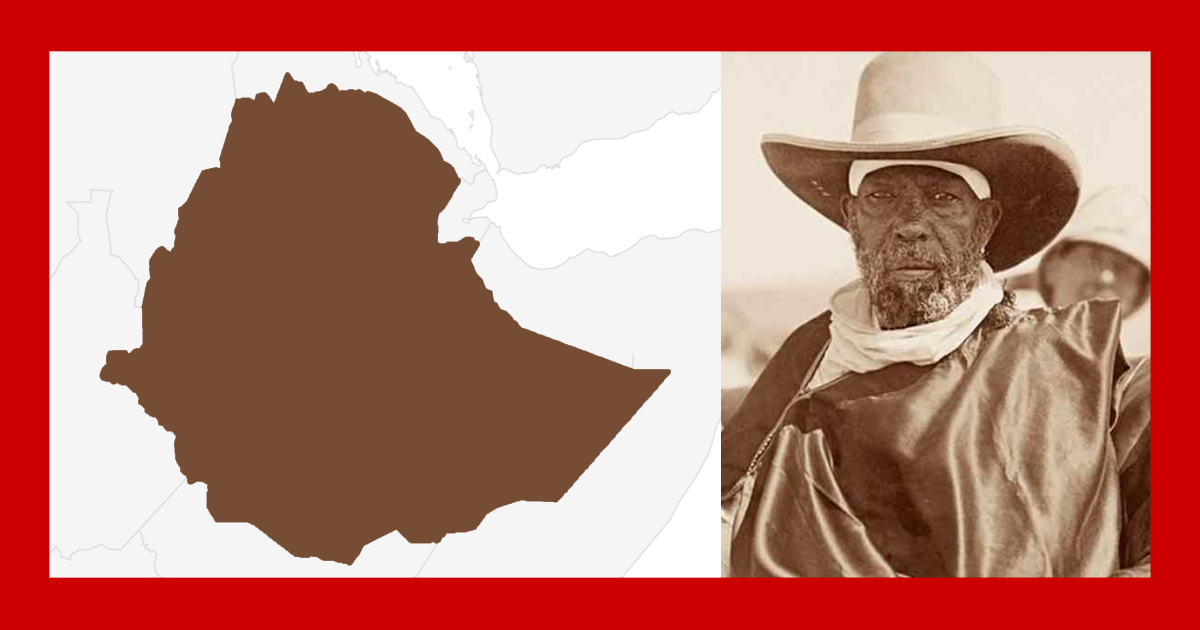
Excerpt
Ethiopia’s debate over Menelik II reflects far more than disagreement about a ruler’s legacy. It reveals two historical memories occupying the same political space yet interpreting the same events in radically different ways. This essay introduces the concept of moral asymmetry—the unequal ethical weight between disputing a leader’s greatness and denying the suffering experienced by others—and explores whether acknowledging this asymmetry can help narrow Ethiopia’s deeply divided historical narratives.
Introduction
Two comments of strikingly opposite polarity recently caught my attention. The original message appeared on X with a title above a portrait of Menelik II [1]:
“A world-class and iconic leader. Make Ethiopia Menelik Again.”
Only hours later, another comment surfaced in response by reposting the same image and referring to the same historical figure:
“The Hitler of Ethiopia. Thank God he rotted and died, crippled by leprosy and syphilis.”
The diametrically opposed views of Menelik are nothing new. Ethiopian history has long been a battlefield of competing memories. Yet these two comments, appearing within hours of each other, sharpened the contrast in a way that felt almost philosophical.
They encapsulate a puzzle worth examining.
How can people living within the same physical space—called Ethiopia—hold such radically opposite views of the same historical figure? How can political worlds so far apart coexist within the same political space?
If the first view is correct, why does the opposing view go to such lengths to tarnish the legacy of a supposedly great leader?
If the second view is correct, why does the first appear so utterly insensitive to the historical pain experienced by others?
Surely both cannot be fully right at the same time. If so, which one is?
Or perhaps the more interesting question is whether there exists a way of understanding the divide without simply declaring one side virtuous and the other morally blind.
The Politics of Opposite Historical Universes
The Ethiopian historical landscape is unique in one important respect. The formation of the modern state occurred not through overseas colonial conquest, but through imperial expansion within the same geographic territory.
For many northern Ethiopians, Menelik symbolizes national survival and historical triumph—most famously the victory against Italian colonial ambitions at the Battle of Adwa. Within that narrative, Menelik stands as a figure of anti-colonial resistance and national pride.
Yet for many communities incorporated into the empire during the same period—particularly in the south—the memory of Menelik is tied to conquest, dispossession, and forced incorporation into an imperial order not of their choosing.
What one side celebrates as state building, another remembers as subjugation.
Thus, the two comments above are not merely emotional outbursts on social media. They represent two political universes rooted in fundamentally different historical experiences.
And those universes continue to coexist uneasily within the same empire.
The Question of Insensitivity
When such opposing views collide, the debate often descends into accusations of insensitivity.
One side asks: How can you deny the greatness of a leader who defended the country and built the modern state?
The other asks: How can you celebrate a ruler whose campaigns brought suffering to our ancestors and more importantly with identity and cultural suppression still lingering on?
Both accusations contain a kernel of truth—though clearly not of equal weight. And yet they are far from morally symmetrical.
Denying that a historical figure was “great” challenges reputation. It disputes prestige and legacy.
Denying that atrocities occurred challenges something far deeper: it negates the lived suffering of communities whose historical memory is built around those experiences.
This distinction leads us to an important analytical concept: moral asymmetry.
Understanding Moral Asymmetry
Moral asymmetry refers to the unequal ethical weight carried by different kinds of historical claims.
To question a leader’s greatness is to challenge a narrative of honor.
To deny historical suffering is to erase a narrative of pain.
These are not equivalent acts.
Reputation can survive disagreement. Pain cannot survive denial.
This asymmetry explains why debates over figures like Menelik become so emotionally charged. When praise appears to ignore suffering, it feels like erasure. When condemnation ignores historical achievements, it feels like the destruction of identity.
Each side therefore comes to believe that the other is committing a profound moral offense.
Normal Political Disagreement vs Historical Trauma
In most political systems, disagreement over historical figures is relatively routine. Supporters of one political party tend to admire leaders associated with their own tradition. Republican voters in the United States praise Republican presidents; Democratic voters gravitate toward their own political lineage. Similar patterns can be observed in parliamentary systems where Labor and Conservative supporters celebrate different political icons.
These differences rarely produce deep moral rupture. Independent historians often play a moderating role, reassessing reputations and contextualizing achievements and failures. Over time, it even becomes possible for citizens to acknowledge merit across political lines.
Such disagreements belong to what might be called a normal political space.
But the Ethiopian historical landscape operates in a very different moral terrain.
Here, the divide is not merely ideological. It concerns the very conditions under which the state itself was formed.
Adwa and the Dual Historical Memory
Take the celebrated victory at the Battle of Adwa. Across Africa and the wider Black world—often emphasized in official Ethiopian narratives—Adwa is remembered as a moment of extraordinary historical significance: an African army defeating a European colonial power at a time when the continent was being carved up by imperial ambitions.
Yet the historical reality surrounding that victory contains an irony rarely acknowledged in popular narratives.
The Adwa Victory does not exist in historical isolation.
European assistance through geopolitical competition
Menelik’s military strength did not emerge in isolation. It was significantly enabled by the very European powers that were simultaneously colonizing the rest of Africa. Notably, Britain and France supplied arms, diplomatic support, and strategic tolerance that helped strengthen Menelik’s position in the regional balance of power. Their motivations were hardly altruistic.
Like most imperial powers of the time, they were engaged in geopolitical competition with one another—and with Italy.
Supporting Menelik therefore served a practical purpose: it weakened Italian ambitions in the region while allowing Britain and France to expand their own influence elsewhere on the continent. In this sense, Menelik’s consolidation of power benefited from a broader imperial chess game being played by European powers.
This historical reality complicates the simplified narrative often presented about Adwa. While the battle indeed represented a remarkable defeat of an invading European force, the military capacity that made that victory possible was partly built through relationships with other European powers pursuing their own imperial interests.
The irony of “proxy colonization”
The irony becomes even sharper when viewed from the perspective of the southern regions incorporated into the expanding Abyssinian empire during the same period. The rifles, military organization, and external diplomatic leverage that strengthened Menelik’s position against Italy also enabled the imperial expansion southward.
What defeated one form of European colonization therefore facilitated another process that many communities experienced as conquest and subjugation.
In that sense, the phenomenon might be described as a form of proxy colonization: a situation in which European imperial rivalries indirectly empowered a regional expansionist ruler whose subsequent campaigns reshaped the political landscape of neighboring societies.
Recognizing this historical complexity does not diminish the significance of Adwa as an anti-colonial victory. But it does reveal that the story is far more layered than the simplified heroic narrative often presented.
A fuller understanding requires acknowledging both the geopolitical realities that enabled the victory and the consequences that followed within the region itself.
For many in the southern regions of the empire—particularly among the Oromo and other communities incorporated during the imperial expansions of the late nineteenth century—the same military machinery that defeated the Italians also became the instrument through which their own lands were conquered and absorbed into the imperial order.
The rifles, the military organization, and the external support that helped secure victory against European colonization were also deployed in campaigns that brought subjugation to neighboring nations and nationalities within today's Ethiopian empire. Under such circumstances, the moral landscape shifts dramatically.
Where the construction of a state is inseparable from the subjugation of others, the personal reputation of its architects cannot easily stand independent of the consequences of that expansion.
The double irony created by proxy colonization
The contrast between the direct colonization of African countries by European powers and the territories incorporated into today’s Ethiopia through the proxy colonization just described reveals a striking paradox—what might be called a “double irony.”
Many African societies that were directly colonized by Europeans eventually emerged as independent states. Yet several of the peoples incorporated through proxy colonization—enabled by European arms, diplomacy, and strategic support—remain politically subordinated within the same imperial structure that arose from that era.
The irony is therefore profound: those colonized directly eventually gained independence, while those incorporated through proxy colonization continue to live under the political order that subjugated them.
To sum up the double irony:
some were colonized directly yet gained independence; others were colonized through victory and remain subjugated.
When Moral Asymmetry Becomes One-Sided
This is where moral asymmetry becomes sharply one-sided.
To celebrate the figure of Menelik II purely as the defender of Ethiopian sovereignty may appear, from one perspective, as a natural expression of national pride. But from the perspective of those whose historical memory is shaped by conquest and incorporation into the empire, such celebration can feel profoundly insensitive—because the same historical process that preserved one form of independence also produced another form of domination.
In that context, expressions of gratitude for “keeping the European colonizers at bay” do not easily resonate among communities for whom that same historical moment marks the beginning of their own loss of autonomy.
Thus the asymmetry becomes clear: the praise of greatness becomes morally entangled with the memory of subjugation. What appears to one side as recognition of historical achievement may appear to the other as the dismissal of historical suffering.
The Moral Burden of Bridging the Divide
This brings us back to the central point: honoring a historical figure such as Menelik II can withstand disagreement. Historical reputations have always been contested, revised, and debated across generations.
But trauma is different.
The historical pain experienced by communities who remember conquest, dispossession, and loss of autonomy cannot survive denial. When suffering is dismissed or minimized, the wound is not merely historical—it becomes renewed in the present.
What is at stake is no longer the reputation of a long-dead ruler but the dignity and recognition of those whose collective memory carries the consequences of that history.
This is where the principle of moral asymmetry becomes decisive.
To question a leader’s greatness may offend admirers, but it does not erase their identity. By contrast, denying the violence or subjugation associated with that same leader negates the historical experience of entire communities.
One side loses prestige; the other loses recognition of conquest, dispossession, identity, and cultural suppression—losses that continue to live within collective memory.
The ethical weight of these two losses is not the same.
Once this asymmetry is acknowledged, the moral burden within the debate becomes clearer.
The responsibility for bridging the deep historical divide cannot reasonably rest with those whose memories are rooted in conquest, dispossession, and identity and cultural suppression.
Expecting the subjugated to overlook or silence their historical trauma in order to preserve the heroic reputation of imperial figures asks them, in effect, to accept the erasure of their own past.
The heavier responsibility therefore lies with those who venerate such leaders.
If admiration is to remain intellectually and morally defensible, it must be accompanied by a willingness to confront the darker dimensions of the same historical process—namely the conquest, dispossession, and forced incorporation experienced by others during the formation of the empire.
Only by acknowledging that complexity can historical admiration avoid sliding into denial.
And only when recognition of suffering is allowed to coexist with recognition of historical achievement can a society begin to narrow the profound rift between the political universes that still inhabit the same physical space.
Concluding Commentary
Ethiopia remains, in many respects, an empire of contradictions sustained by monumental historical narratives that are rarely questioned and almost never seriously examined. Successive political regimes have shown little interest in diffusing these tensions by confronting the myths that animate them. Instead, they have often reinforced and amplified them.
Consider the persistence of the claim that Ethiopia possesses an unbroken history of three thousand years [2,3]. Such narratives are repeated with near religious certainty despite the far more recent emergence of the modern Ethiopian state. The constitutional state itself dates only to the 1931 Imperial Constitution of Haile Selassie and only 95 years young.
Even the international recognition of the name “Ethiopia,” replacing the earlier diplomatic usage of “Abyssinia,” became firmly established only after the post-World War II reconfiguration of the international order in 1948 only 78 years ago.
Yet these historical nuances rarely enter the political conversation. Instead, grand narratives of ancient continuity continue to dominate the national imagination.
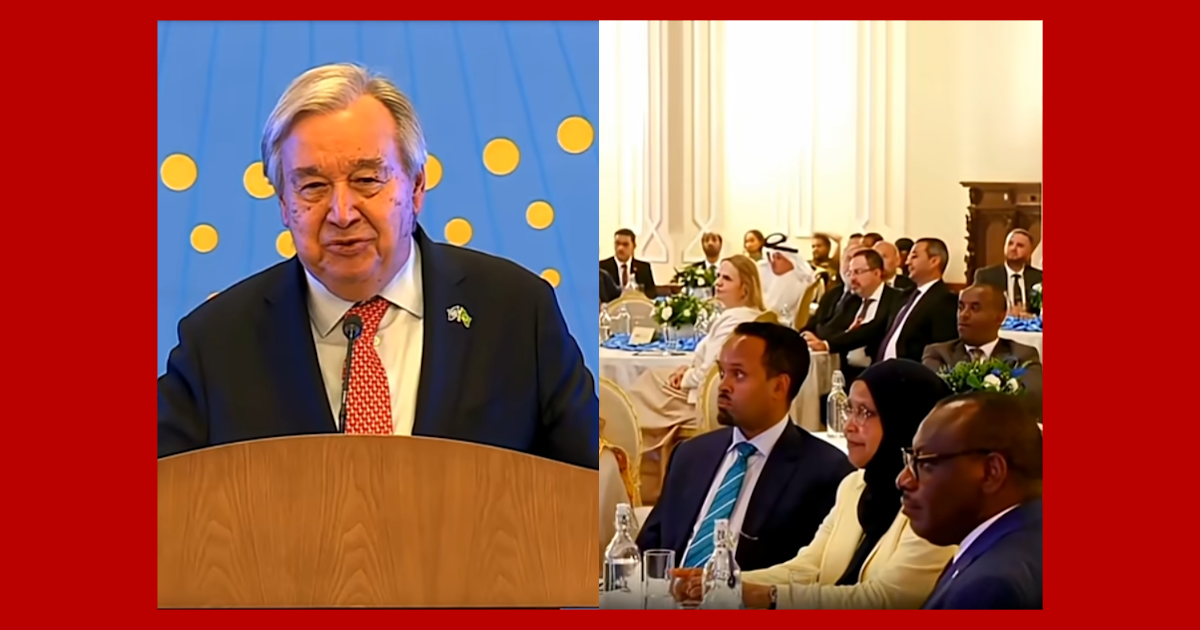
Even contemporary institutions supposedly tasked with national reconciliation appear reluctant to confront these foundational contradictions. Instead, they double down on the very false narratives that produced the divisions—paradoxically marketed as a path toward “national unity". The much-publicized Ethiopia National Dialogue Commission (ENDC) [4], for example, has shown little inclination to interrogate the historical narratives that continue to widen the political rupture within the country.
That rupture remains stark. In one historical universe, Menelik II is venerated as a heroic defender of the nation. In another, he is remembered as the architect of conquest and subjugation.
As long as these competing memories are sustained by myth rather than examined through honest historical inquiry, the divide between them will only deepen.
No meaningful healing can emerge from narratives that sanctify one historical memory while dismissing the pain of another.
If Ethiopia is ever to move beyond its cycles of historical resentment, the polarizing political demons embedded in its national story must first be confronted—and where necessary, exorcised—through the patient work of historical truth-telling and the courage to dismantle comforting but misleading myths.
That task requires intellectual honesty and political courage of a kind that Ethiopian leadership has rarely displayed. Independent historians, in particular, carry a responsibility to confront and dismantle the myths that continue to ravage the empire’s historical consciousness.
If the ENDC [4] is to take its mandate seriously, this is where the effort must begin—by confronting false narratives rather than reinforcing them. Only then can a genuine starting point emerge for bridging the political worlds that remain so profoundly apart.
Yet without such courage, the competing narratives that divide Ethiopia today will continue to reproduce themselves indefinitely—each side convinced of its moral righteousness, and each side increasingly unable to hear the other.
Acknowledging moral asymmetry may not resolve Ethiopia’s historical disagreements overnight. But it may offer a starting point: a recognition that dignity cannot grow where suffering is denied, and that reconciliation cannot take root where history itself remains imprisoned by myth.
References
- OromoRoot on X (@Sanyiikoo_Oromo), 1 March 2026, X Inc.
- Olii Boran, The Myth of Ethiopia’s Historical Continuity: A Political Invention Disguised as Legacy, 17 March 2025, OROMIA TODAY.
- Elemoo Qilxuu, ETHIOPIA'S 6 BIG LIES FUELING ITS IMPENDING COLLAPSE, 13 March 2024, OROMIA TODAY.
- OT Editorial, To the Ethiopian National Dialogue Commission: You Are Wasting Your Time and Everyone Else’s, 31 January 2025, OROMIA TODAY.