Math Meets PP Myth No. 5: When 12 Billion Birr GERD Contributions Become Insults

Excerpt
In this fifth installment of Math Meets PP Myth, the dismissal of 12 billion Birr as “insignificant” reveals more than numerical abuse. It exposes a psychology of power that cannot tolerate shared ownership. Leaders secure in legitimacy thank contributors; insecure ones belittle them. Reducing citizens to percentages is not economic analysis—it is political conditioning, preparing the public to accept exclusion, silence, and hierarchy under the guise of math.
The Psychology of Ungrateful Power
There is a moment when political rhetoric stops being argument and becomes revelation. The recent remarks by Prime Minister Abiy Ahmed regarding diaspora contributions to the Grand Ethiopian Renaissance Dam (GERD) belong squarely in that category.
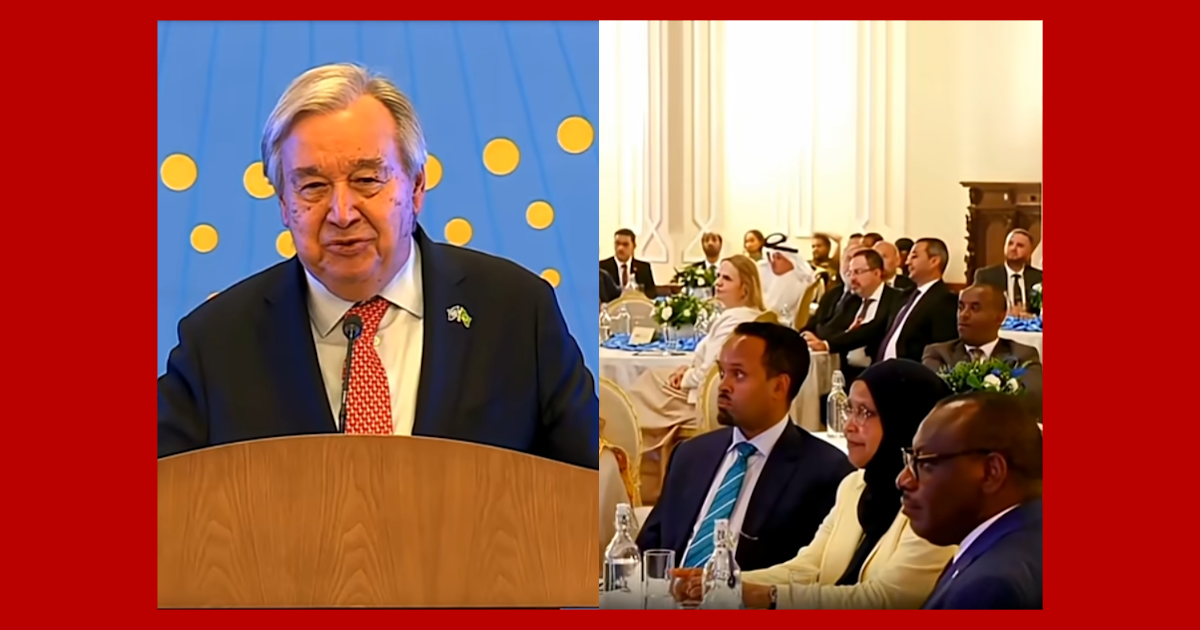
In a televised appearance in front of an audience (view clip below), the PM reduced an acknowledged 12 billion Birr raised from citizens—diaspora, teachers, workers, farmers, “and what not”—to insignificance or ኢምንት as he put it. Ten percent, he said. A drop in the ocean.
Rough translation of the speech segment:
First of, since we started the GERD, what we collected, from the diaspora, businesspeople, teachers, workers, [ከምናምን] and from what not?, from all, from farmers, the maximum was 12 billion Birr. What we poured there [at GERD] has now reached around 100 billion Birr. It means it is insignificant [ኢምንት]. Ten percent [uttered in English]. I am just saying this so that for you not to think, it's us, that it's you started the GERD and you finished it. You have made that drop [of the 10%] in the ocean.
The implication was unmistakable: those who believed they helped build the project were mistaken. Their role was marginal. Their pride misplaced.
At this point in the Math Meets PP Myth series [2,3,4,5,6], the arithmetic itself no longer needs rehearsal. We have already established—repeatedly—that early capital is catalytic, that early timing multiplies value, and that risk-bearing contributions cannot be dismissed by crude ratios. That argument is settled.
What matters now is why a leader chooses to belittle rather than acknowledge.
Ungratefulness Is Not a Slip — It Is a Signal. No functioning leader derides donors. In every political culture that values legitimacy, the language is predictable: every contribution matters. Not because it flatters, but because it sustains consent.
When a leader instead goes out of his way to minimize, mock, or trivialize civic contribution, it is not an economic statement. It is a psychological tell.
In this case, the phrasing matters. The casual Amharic filler “ከምናምን”—roughly, from whoever, whatever—carries a dismissive undertone. It collapses teachers, workers, and farmers into an afterthought. This is not accidental language. It is hierarchical language, spoken from above, not among equals.
Authoritarianism almost always announces itself first in tone.
Why Belittle the Contributors?
From a psychological standpoint, leaders who belittle others typically share three overlapping traits:
1. Insecurity About Ownership
Collective projects challenge personal narratives. A dam built by “the people” competes with the image of the leader as sole architect. Minimizing popular contribution recenters authorship back onto the regime.
Gratitude dilutes ownership. Contempt reclaims it.
2. Fear of Autonomous Actors
The diaspora, in particular, represents funding, voice, and identity outside direct state control. Mocking their credit cards—timeline 1:23 of the video clip [1]—questioning their solvency, or caricaturing their lifestyles is not humor; it is defensive projection. In doing so, the supposed message of promoting a “mobile wallet” is lost, drowned out by resentment toward the diaspora’s debit and credit cards, as though their very normalcy were an affront.
Independent contributors are threatening precisely because they cannot be coerced. A leader comfortable with legitimacy welcomes external support. One who is not, resents it.
3. Normalization of Vertical Power
Belittlement conditions the public to accept a hierarchy in which participation is tolerated only when silent. Once contributions are framed as “insignificant,” so too are opinions, objections, and demands for accountability.
Reducing citizens to percentages is preparation for reducing them to spectators.
The Real Myth Is Not Mathematical
The true fiction here is not whether 12 billion Birr constitutes ten percent. The real myth is the idea that collective action becomes irrelevant once power consolidates.
History suggests the opposite. Regimes that demean participation do so because they understand—perhaps better than anyone—that legitimacy does not come from balance sheets. It comes from shared ownership of national projects.
Ungratefulness, in politics, is never neutral. It is a form of signaling: you are no longer needed.
A Pattern, Not an Episode
Five episodes into Math Meets PP Myth [2,3,4,5,6], a consistent pattern has emerged. Numbers are not used to inform but to discipline. Ratios are not analytical tools but rhetorical weapons. And whenever citizens appear too proud of their role, arithmetic is summoned to remind them of their “insignificant place.”
Even if we accept the 12 billion Birr figure at face value—as declared by the PP regime’s leader—it only deepens the indictment. The July 2024 macroeconomic policy debacle, which devalued the Birr by an order of magnitude, means that 12 billion Birr contribution would conservatively translate to at least 35–40 billion Birr today. To mock such a contribution while presiding over currency collapse and impoverishing the citizens is not confidence; it is a monumental audacity. A monumental audacity that insults citizens and the diaspora while mistaking monetary erosion for fake prosperity that is visible only as abject poverty for the masses.
When Real Numbers Tell a Different Story
A Post-Publication Clarification Based on Newly Cited Economic Evidence
Shortly after the publication of this article, new evidence came to light with a set of figures that cast the official narrative into even sharper doubt. What emerges, once the numbers are placed side by side, is not merely inconsistency but a pattern of creative accounting designed to minimize public contribution.
For more than a decade following the launch of the GERD project in 2011, publicly available sources—including [7]—documented a broadly accepted financing structure: a total project cost of USD 5 billion, of which approximately 80% (USD 4 billion) was understood to have been raised through public contributions, with the remaining USD 1 billion attributed to a Chinese loan. This baseline was neither controversial nor hidden; it was part of the public record.
However, as the project approached inauguration—reported around August/September 2025—the numbers began to shift. The total project cost was revised upward to USD 7 billion, implying a USD 2 billion overrun. With this revision came a subtle but consequential narrative change. The revised USD 7 billion figure was converted into local currency at an exchange rate of roughly 32 Birr to the dollar, producing a strikingly neat total of 223 billion Birr.
This is where the arithmetic begins to contradict itself.
In the Prime Minister’s own framing—used to justify the claim that public contributions were a mere “ten percent”—the total project outlay is implicitly treated as 120 billion Birr, not 223 billion. The two totals cannot simultaneously describe the same project. One set of numbers is being used for currency conversion; another for political messaging.
The confusion deepens further. At completion, the officially declared “crowdfunding” figure suddenly settles at 23.6 billion Birr—a number that aligns almost perfectly with the rhetorically convenient 10% claim. This precision is difficult to view as accidental.
At the same time, a new breakdown is introduced: 91% of the project is said to have been financed through a loan from the Commercial Bank of Ethiopia (CBE), amounting to approximately 203 billion Birr. Several questions immediately arise:
- Where does the original USD 1 billion Chinese loan fit into this revised picture?
- What happened to the 20% non-public component acknowledged at the project’s launch?
- How did an 80% public contribution gradually shrink—through successive recalculations—into 10%, without transparently accounting for loans and currency effects?
- By what accounting evolution did the narrative arrive at 91% bank financing, and why was this structure absent from earlier disclosures?
- In the completion and final analysis, where is the repeatedly cited “12 billion Birr” actually accounted for when used as evidence of a supposedly minuscule public contribution?
The last question matters most because the figure is rhetorically weaponized but never consistently placed within a coherent final balance sheet. It appears prominently in speeches and soundbites, yet vanishes when the accounting is examined in full.
This is precisely the terrain explored by the Math Meets PP Myth series: not counter-propaganda, but myth-busting through arithmetic consistency. We ask questions that should have straightforward answers—yet do not. We have no where or way to ascertain that 12 billion figure.
The absence of consistent answers is itself instructive. Figures that genuinely exist, and are honestly derived, survive scrutiny across time, currency shifts, and accounting frameworks. Figures that are rhetorically convenient and created on the whim do not.
When numbers dissolve under basic questioning, the problem is not public misunderstanding. It is that the figures, as declared, were never meant to withstand logical completion.
If a system is designed to be opaque, it is usually because clarity would be inconvenient. In this case, the opacity does not appear sophisticated; it appears deliberate and crude. The numbers are not merely adjusted—they are rearranged to convey a predetermined conclusion: that public contribution was marginal.
One crucial fact, largely lost in the numerical noise, deserves emphasis. The Commercial Bank of Ethiopia (CBE) is a publicly owned financial institution. Loans issued by CBE are not private gifts from an external benefactor; they are liabilities borne, directly or indirectly, by the public itself. Reclassifying public financing as “bank loans” does not reduce public contribution—it simply disguises it.
Taken together, these shifting figures do not reflect rigorous financial reporting. They reflect an accounting choreography whose purpose is narrative, not transparency: to retroactively diminish the role of citizens and recast a collective national effort as incidental.
When numbers are repeatedly recalibrated to tell a smaller story about the public, the problem is not mathematical error. It is political intent.
And Finally...
Finally, there remains the largest unanswered question hovering over the GERD project—the one that accounting tables, percentages, and rehearsed figures cannot neutralize.
How are we meant to interpret the suspicious death of Simegnew Bekele Aynalem, the chief civil engineer and project manager of the GERD, who, in July 2018, was found shot dead inside his Toyota Land Cruiser at Meskel Square [8], the largest public square in the capital?
Why has this episode, so central to the project’s human and institutional history, been persistently excluded from any serious public reckoning, even as financial narratives are endlessly recalibrated?
According to Wikipedia [8], “conspiracy theories relating to his death circulated by some skeptics who promote anti-governmental rhetoric, whether he was killed by government agent.” That such questions persist years later is itself telling—not because they are asserted as fact, but because they have never been conclusively answered.
In a project defined by opacity, shifting figures, and retrospective minimization of public contribution, is it unreasonable to ask why transparency ends precisely where accountability would begin?
Math Meets PP Myth does not offer accusations. It asks why foundational questions—financial, institutional, and human—remain suspended without resolution. When numbers fail to add up, and silence follows tragedy, inquiry is not provocation. It is obligation.
The conclusion is no longer speculative or mathematical. The math is merely the medium. The message is exclusion (and much more we, the public, do not know). And exclusion, once normalized in language, rarely remains there.
We ask again the fundamental question that triggered this piece: why belittle contributors when gratitude is the simplest—and most human—gesture available to any leader?
References
- "የፋይናንስ እመርታ በኢትዮጵያ" - የእሳት ዳር ጨዋታ ከጠቅላይ ሚኒስትር ዐቢይ አሕመድ (ዶ/ር) ጋር, 16 January 2026, ETV|EBC|EBCDOTSTREAM.
- Math Meets PP Myth #4: The 0.2% “Appreciation” as Statistical Noise and Political Messaging, 1 January 2026, OROMIA TODAY.
- Math Meets PP Regime Myth #3: Prosperity at 18-20% or More Interest Rate, 12 October 2025, OROMIA TODAY.
- Math Meets PP Regime Myth #2: Inflation That Eats Wages Alive in Ethiopia, 1 September 2025, OROMIA TODAY.
- Math Meets PP Myth #1: 30 Million Tree Planters, 14 August 2025, OROMIA TODAY.
- Math Meets PP Myth #0: Series Launch, 11 August 2025, OROMIA TODAY.
- Grand Ethiopian Renaissance Dam, Wikipedia.
- Simegnew Bekele, Wikipedia.