Lidetu Ayalew, Finfinnee, Oromia, Federalism, and the Perils of Principle-free Politics

Excerpt
When politics loses its grammar, words stop meaning what they mean and power begins to masquerade as principle. In critiquing Lidetu Ayalew, this piece is not about personal disappointment but about a deeper political failure: the refusal to accept irreversible facts of federalism, Oromo self-rule, and historical reality. Denial is not argument. Semantic inversion is not moderation. And restoration politics, however eloquent, cannot substitute for credible, principled leadership.
When Politics Loses Its Grammar
There is a quiet threshold in politics that, once crossed, is difficult to return from. It is not the threshold of disagreement—healthy politics depends on disagreement. Nor is it the threshold of competing interests—every society has them. It is the moment when politics loses its grammar: when words stop meaning what they mean, principles stop constraining ambition, and facts become optional inconveniences.
That is the debacle now confronting Ethiopian political discourse.
For decades, Ethiopia’s debates have been animated by difficult questions—identity, power, history, justice, coexistence. These are not trivial matters, and no serious observer expects easy consensus. But there has always been an implicit assumption underpinning political engagement: that certain concepts—federation, unitarism, self-rule, indigeneity—retain stable meanings, even when fiercely contested.
Once those meanings are deliberately inverted, politics ceases to be a contest of ideas and becomes an exercise in distortion.
Oromia as a “Problem”: Where the Discourse Begins to Collapse
Nowhere is this breakdown more visible than in the emerging rhetoric that treats the very existence of Oromia as a federal state as a problem to be solved.
The claim is often presented as moderation: that insisting on a single Oromia is somehow “unitary,” that federal integrity is extremism, and that partitioning Oromia into four or five fragments would be an act of pluralism and national generosity. It sounds provocative, even clever—until one pauses to examine the logic.
Partition is condemned as existential when it concerns Ethiopia, but prescribed as virtue when imposed on Oromia.
In any federal system, constituent units are internally unitary by definition. That is not ideology; it is structure. To argue that a people are unitarists because they refuse the dismantling of their federally recognized homeland is not political reasoning—it is semantic sabotage. It turns federalism on its head and asks the audience to applaud the inversion.
Finfinnee as a Credibility Test
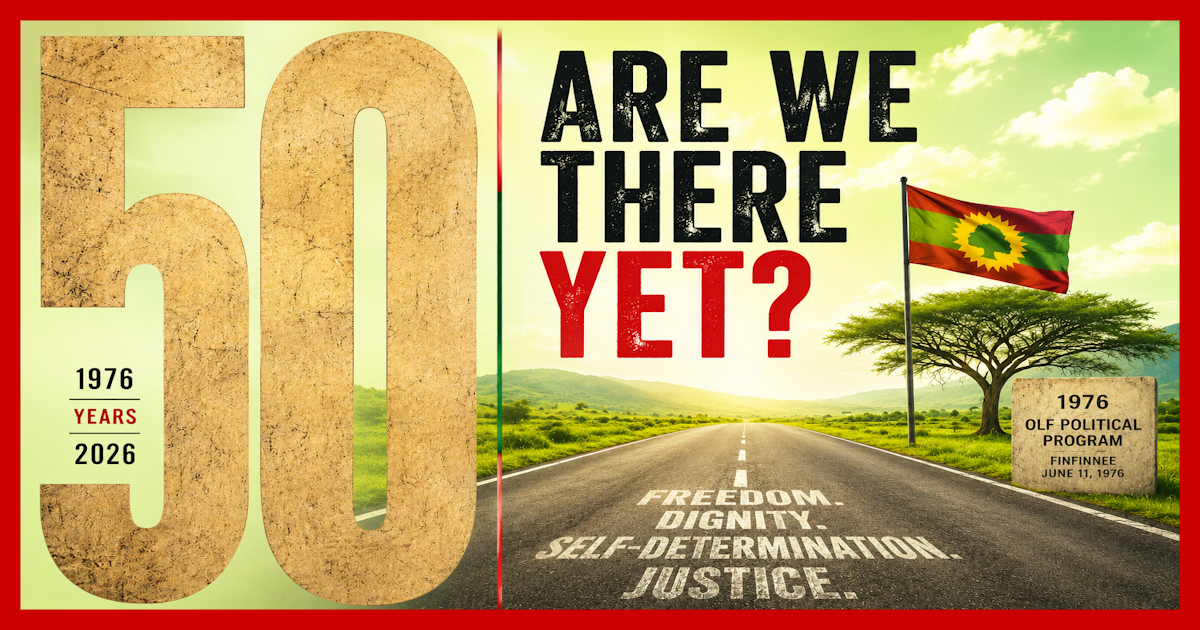
More troubling still is the persistence of denial surrounding Finfinnee / Addis Ababa [1].
One may argue future arrangements, shared governance, or federal capital frameworks. All of that belongs to legitimate political debate with a power of persuasion. But denying Oromo indigeneity to Finfinnee is not argument—it is erasure. Facts do not become negotiable simply because they are inconvenient, and liberalism does not survive the denial of historical reality.
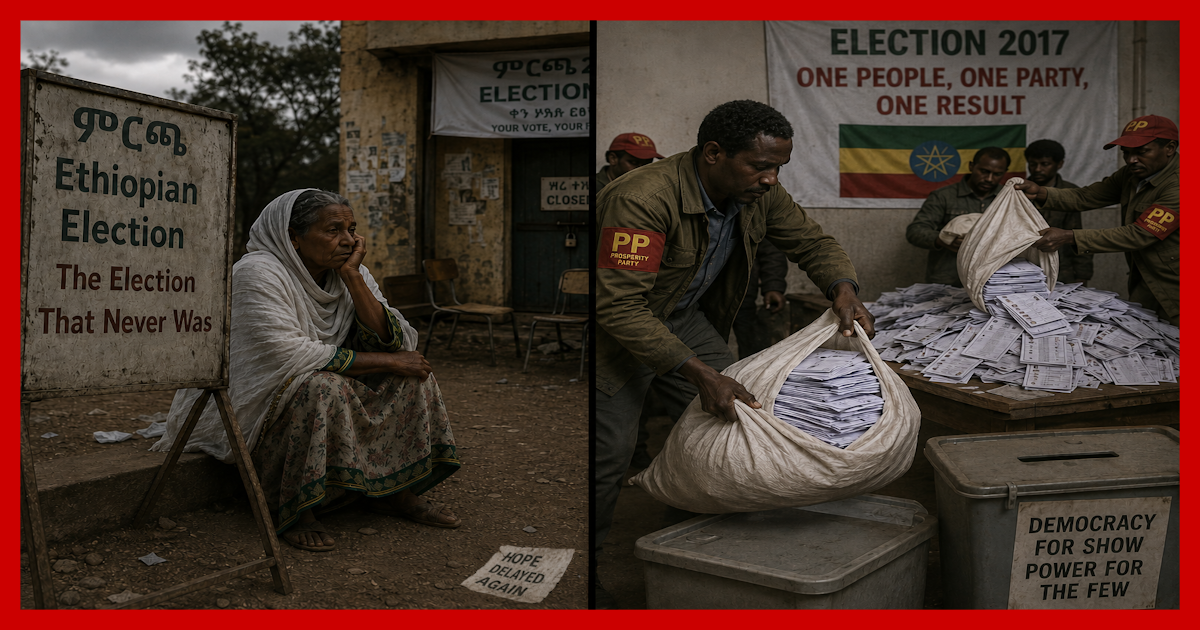
For me, Finfinnee has become a credibility filter [2]. You may argue bitter truths. You may argue unpopular positions. But once you deny facts, you are no longer arguing—you are negating reality.
The Moment Lidetu Ayalew Entered the Frame
That tragedy sharpens when a familiar name enters the frame: Lidetu Ayalew.
For years, Lidetu Ayalew occupied a rare and fragile space in Ethiopian politics. He was often described—sometimes generously, sometimes cautiously—as a liberal voice willing to confront orthodoxies within his own political environment. In a landscape crowded with slogans and certainties, he appeared, at least intermittently, to value nuance. That alone earned him patience from those far beyond his natural constituency.
Which is why his interventions on Finfinnee were not merely disappointing; they were disorienting.
To deny Oromo indigeneity to Finfinnee is not a provocative stance—it is a categorical negation of historical fact. Still, I did not immediately write him off. I told myself this might be groupthink. I assumed, perhaps naively, that a liberal politician would eventually course-correct.
He did not. In fact, he started unravelling from bad to worse.
When Lidetu Ayalew argued that Oromos are the true “unitarists” because they refuse to accept the partition of Oromia into four or five entities, the last remaining scaffolding collapsed [3]. This was no longer a slip or a poorly chosen phrase. It was a full inversion of political logic.
Lidetu Ayalew’s claim that Oromos are the true “unitarists” because they refuse Oromia's partition is a textbook case of psychological projection. What is being projected onto Oromos is, in fact, the very unitarist impulse long embedded in efforts to repackage the Ethiopian empire as a single, monolithic nation-state. That is the clearest expression of unitarist political thinking.
The contrast could not be starker: on one side stands a federally constituted national polity aspiring self-rule; on the other, a revisionist drive to dissolve that plurality into a homogenized imperial narrative. Calling the former “unitary” does not strengthen the argument—it exposes the inversion at its core.
Put plainly, the logic being advanced is this: it is desirable for Oromia to be partitioned, yet unacceptable for Ethiopia—even through the voluntary choice of its peoples—to do the same. Partition is condemned as existential when it concerns Ethiopia, but prescribed as virtue when imposed on Oromia.
Federalism does not require the perpetual fragmentation of its constituent units to prove its sincerity. On the contrary, dismantling a federal state against the will of its people is not pluralism—it is coercion. To label resistance to such dismantling as extremism is to criminalize political existence itself.
At that point, words cease to describe reality; they are repurposed to discipline it.
Why Now, Why the Delayed Assessment?
I have watched Lidetu Ayalew for at least three years now. His true colors were revealed more than two years ago through his controversial statements on Finfinnee, Oromia, and multinational federalism. Yet I continued to follow him closely in the years that followed, watching with sustained interest.
I deliberately delayed my judgment of this “liberal politician” (by others’ standards) until now. I delayed in the hope that I might be wrong—if you understand what I mean.
But Lidetu Ayalew today is a more hardened revisionist, increasingly emboldened by the free passes afforded to him by platforms such as Ethio Forum, which publish his lengthy opinion pieces unedited and without challenge, seemingly to his heart’s content. At this point, it would be redundant to catalogue what has transpired over the last two years or so, as the pattern has remained consistent throughout.
Instead, I choose to anchor my assessment on Finfinnee, Oromia, and federalism—the very subject matters where our political universes intersect, and where first principles are either honored or abandoned.
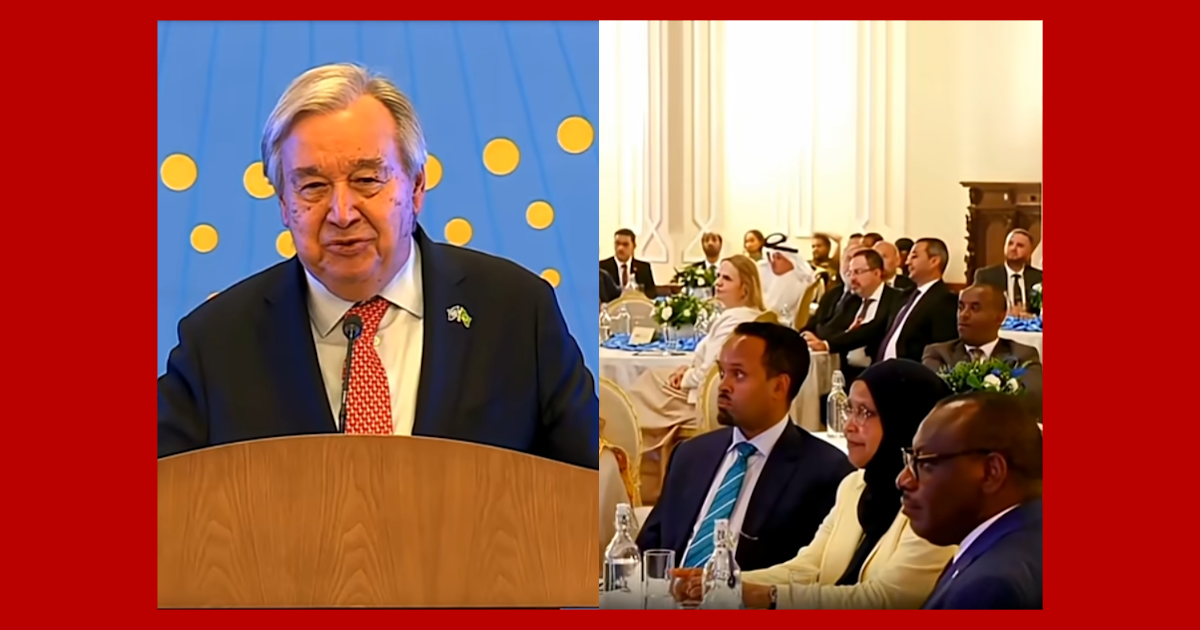
"Political actors" like Lidetu Ayalew treat foundational political concepts—federation, constitutionalism, sovereignty, autonomy, self-determination, unitarism, indigeneity, and more—not as settled meanings but as malleable rhetoric. Watching video clip [3] is adequate for illustrating this, but this pattern is almost the norm in all the interviews.
Such "politicians" do not reinterpret principles in good faith; they instrumentalize them. In such hands, terminology loses its semantic integrity. Words cease to describe reality and instead manufacture self-serving narratives. Politics conducted this way is not merely dishonest; it is corrosive.
Such pseudo-politicians must be confronted—at the very least, told to their face that what they practice is not politics, but distortion.
Alas, One Thing Only to Say to Lidetu Ayalew
Alas!, I have only one thing—and one thing only—to say to Lidetu Ayalew: for the sake of your own intellectual integrity, do pursue other interests. Politics, at least for now, is not for you. Here is why in more concise terms.
When a political elite loses a century-long monopoly over state power, one of two things usually happens.
1. Normative Adaptation
- They re-ground their politics in shared constitutional principles
- They accept irreversible facts
- They rebuild legitimacy beyond their own base
2. Restorative Revisionism
- They deny facts
- They rewrite established terminology
- They treat pluralism itself as an existential threat
What you — Lidetu Ayalew — are doing fits squarely—and unmistakably—into the second category.
That is why your discourse increasingly feels intellectually unserious. It is not driven by a forward-looking political vision; it is restoration politics of revisionism masquerading as national concern.
This Is Bigger Than One Man
This is not merely about Lidetu Ayalew. It is about a broader failure among segments of the Amhara political elite to transition from loss of hegemony to shared citizenship. Rather than reimagining politics within a federal order, they challenge the legitimacy of that order by attacking its most visible expressions: Oromia, Oromo self-rule, and Oromo historical claims.
This is why their discourse struggles to travel beyond their own region. It is not rejected because it is Amhara; it is rejected because it is restorative, not reconciliatory. It seeks to undo rather than to rebuild.
When politics speaks only in the idiom of denial and dominance (የኢትዮጵያ ፖለቲካ ቅኔ), it should not feign surprise when those subjected to it begin to imagine a future outside that conversation altogether.
The Closing Truth
Politics does not demand moral purity. But it does demand intellectual honesty.
A politician may argue for change, reform, even rollback—if argued openly and within the bounds of shared meaning. But when federalism is recast as unitarism, when partition is sold as inclusion, and when historical facts are dismissed as negotiable, politics loses its anchor.
At that point, even talent and experience cannot compensate for the absence of first principles.
The tragedy, then, is not personal. It is political.
Without acceptance of irreversible facts, without respect for constitutional grammar, and without the courage to confront history honestly, no amount of rhetorical agility will produce credible leadership.
And when politics loses its grammar, everyone who insists on speaking in it—without principles—will eventually be rendered unintelligible.
When “Liberal Pretensions” Unravel
Lidetu Ayalew has crossed from argument into exhibition, offering a picture that language itself strains to describe.
The political ignorance is staggering. The conceptual recklessness is breathtaking. The semantic abuse is indefensible.
It is as if whatever is asserted is assumed to be a canonical truth, immune to facts, history, or constitutional grammar. When someone assumed to be more liberal than other Amhara elites fails so monumentally, one is forced to question what remains of politics’ capacity to chart a credible future.
Only Failure with Compound Interest Rate
This is the road down which such Arrogance, Ignorance and Hubris burden the empire with the highest possible interest rate of political failure. This is the path by which the empire accumulates political debt at compound interest—debt that future generations will be forced to repay.
Amhara elites must reverse course. At the very least, they must pause, take stock, and relearn what credible politics demands in the twenty-first century—or merely relive a vanished past.
When Denial Becomes a Catalyst
The great irony of all this is that such corrupted political grammar—revisionist tirades wrapped in wishful yet antagonistic narratives—achieves the very opposite of what it claims to seek. Instead of binding nations together, it accelerates Oromia toward the logic of separation.
The Oromo people have no appetite for a political language emptied of justice, recognition, coexistence, dignity, accountability, and mutual respect. When politics speaks only in the idiom of denial and dominance (የኢትዮጵያ ፖለቲካ ቅኔ), it should not feign surprise when those subjected to it begin to imagine a future outside that conversation altogether.
References
- Sajid Nadeem, Lidetu Ayalew proposes dismemberment of Oromia region, 26 Mar 2023, My Views on News YouTube Channel, YouTube.
- Elemoo Qilxuu, The Unshakable Truth: Finfinnee is an Oromo City, 18 February 2025, OROMIA TODAY.
- Facebook Reels Video Clip of Lidetu Ayalew's Statement on Oromia, January 2026, Facebook.
- OT Editorial, An Empire That Refuses to Learn — When Power Is Reduced to Drawing Lines with Assab Port, 6 January 2026, OROMIA TODAY.
- Biqila Bariso, The First Principles Violated: The Simple Truth Behind a Century of Ethiopian Instability, 11 December 2025, OROMIA TODAY.
- Kumaa Daadhii, Injustice Always Produces Independence, 21 December 2025, OROMIA TODAY.
- Elemoo Qilxuu and Olii Boran, Erasing Oromia: How a Fringe Party Exposed the Complacency and Paralysis of Oppressed Nations and Nationalities of the Ethiopian Empire, 7 December 2025, OROMIA TODAY.
- Olii Borana and Ed Chapman, The Systematic Dispossession of Oromia: Language Status Denied, Lands Mythologized and Engineered, Names Rewritten, and a Mountain Nearly Claimed,1 April 2025, OROMIA TODAY.
- Turaa Jaarsoo, The Amhara Elite Racist Worldview: Collective Unconscious and Historical Hegemony, 27 June 2025, OROMIA TODAY.
- Yadessa Guma, Why Is No One Talking About the Dissolution of the Ethiopian Empire?, 20 February 2025, OROMIA TODAY.