The Day Monetary Policy Joined the Ruling Party In Ethiopia, even institutional neutrality has stopped pretending

Excerpt
When a central bank governor campaigns for a ruling political party, or any political party for that matter, Monetary Policy ceases to be an economic instrument and becomes a political one. In any democracy that still maintains a pretense of institutional order, this would be a red card—immediate, unquestionable, and final. A resignation would follow within hours. Parliamentary inquiries would begin. Constitutional lawyers would sharpen their knives. Markets would twitch. Not in Ethiopia. It barely interrupts the broadcast of a central bank governor campaigning on behalf of the ruling party.
The Unthinkable, Televised
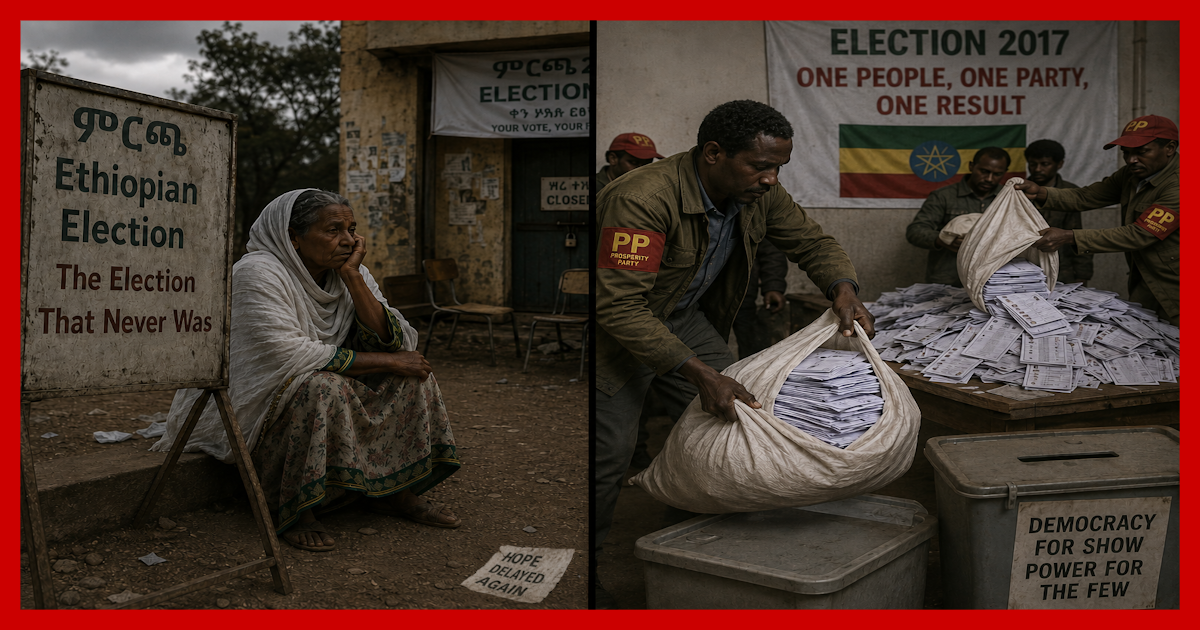
The governor of the National Bank of Ethiopia (NBE)—an office entrusted with safeguarding monetary stability and directing Monetary Policy—appeared on a nations-wide television stage, debating on behalf of the ruling Prosperity Party [1]. Unthinkable, because a supposedly independent public institution was being openly conscripted into partisan politics.
From Technocrat to Party Advocate
Not as a private citizen. Not as an academic observer. But as the sitting head of the institution [2] responsible for Ethiopia’s Monetary Policy, standing shoulder to shoulder with three other opposition party representatives debating for the upcoming election on 1st of June 2026.
This is not merely extraordinary. It is institutional heresy.
The Purpose of Monetary Policy Independence
Monetary Policy independence is not a ceremonial principle or a donor-driven slogan.
It exists to protect the currency from political temptation, to reassure investors that interest rates are not calibrated to electoral timetables, and to ensure that inflation control is guided by economics rather than party loyalty.
The Cost of Politicizing Monetary Policy
When Monetary Policy is publicly aligned with a ruling party, that firewall is not weakened—it is erased.
The cost of that erasure will not be paid in editorials alone. A partisan approach to Monetary Policy signals to markets that economic management is negotiable, that regulation can be politicized, and that credibility is conditional. Risk premiums rise. Capital looks for exits. Trust migrates to foreign currency and hard assets. Inflation, ever obedient, follows politics rather than principle.
Why This Would Be Unthinkable Elsewhere
Imagine, for a moment, the governor of the Bank of England campaigning for the Conservative Party on the BBC. Or the Chair of the US Federal Reserve publicly defending a Republican platform while still directing Monetary Policy.
Such acts would not merely end careers; they would trigger institutional and financial shockwaves. The idea sounds absurd precisely because those systems still understand that Monetary Policy independence is foundational, not optional.
The Scandal Is the Silence
In Ethiopia, the shock is not that this happened. The shock is that it happened without consequence.
More revealing still, it did not even register as odd. The television presenter treated it as routine, whereby the extraordinary moment in party political debate on television just passed as normal and unremarkable. Opposition party representatives raised no objection, where a walkout would have been the minimum signal of alarm.
There was no resignation. No distancing statement. No parliamentary outcry.
The constitutional order did not flinch. What should have been a defining scandal passed as a televised curiosity, another norm quietly discarded.
This is how pretense democracies decay—not through dramatic seizures of power, but through the casual collapse of boundaries that once separated the state from the ruling party. When Monetary Policy becomes a campaign accessory, the distinction between governance and politics dissolves.
Conclusion
What This Moment Tells Us
A central bank governor does not merely express opinions; he embodies an institution. When he takes sides, the message is unmistakable:
The economy, the currency, and Monetary Policy itself are instruments of political power.
In functioning democracies, this would be a constitutional crisis. In Ethiopia, it was just another evening on Ethiopian television.
And that, more than the appearance itself, should alarm anyone who still believes that institutions here operate independently of the ruling party—or that Monetary Policy remains a public trust rather than a partisan tool.
Even by the Lowest Measure
We have documented many oddities and outright absurdities in Ethiopia over the years at OROMIA TODAY, often hoping that exposure alone might still trigger shock, reflection, or at least embarrassment. Perhaps that hope itself is misplaced.
Perhaps we are measuring events by the wrong bar—an elevated standard undeserved by an empire long stuck in institutional decay, and now only made worse by the PP regime.
And yet, even by the lowest standard, to dispense so casually with the most basic principle of monetary policy independence is not a matter of ideology or political taste—it is a failure of elementary governance.
One is left asking, not rhetorically but seriously:
What school of economics, law, or public administration did the Prosperity Party ruling political class attend, where such a breach is neither recognized nor corrected?
That question, uncomfortable as it is, now demands an answer.
The Signals Investors Read
To the Prosperity Party regime, still searching for explanations for drying foreign direct investment (FDI), the repeated failure to sell a second Ethio Telecom license, and the monumental economic mishaps: you should have a clear answer now, for the signals have been there for years, visible to trained eyes.
What was once inferred quietly has now been stated publicly. The televised appearance merely turned a long-suspected reality into a spectacle.
Investors did not learn something new; they received confirmation.
When Monetary Policy finally stepped onto a party stage, the remaining doubt evaporated. Capital does not protest, it recalibrates—and then it leaves.
A Pattern, Not an Accident
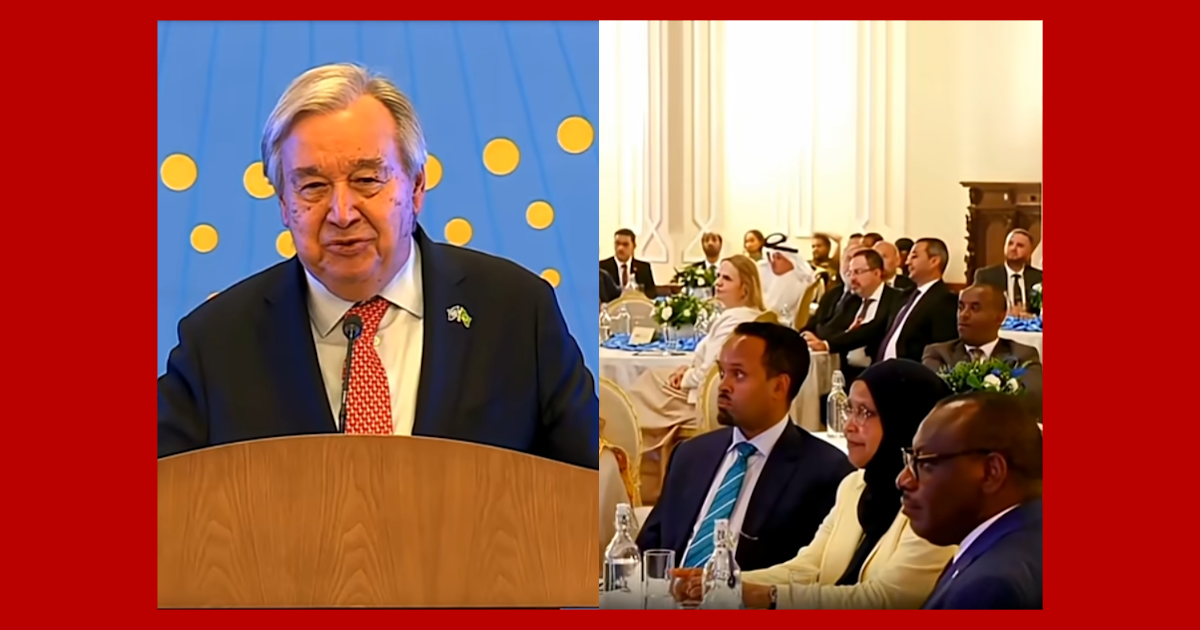
This episode bears the unmistakable imprint of Abiy Ahmed’s know-it-all governance style: a leader convinced that restraint is weakness and boundaries are inconveniences [3].
The Prosperity Party has been shaped in his image from its very inception—personalized, improvisational, and dismissive of institutional limits. It is as though one simple lesson from the party that formed his formative political instincts was deliberately unlearned: that power survives longer when it knows where not to appear.
References
- የ7ኛው ጠቅላላ ምርጫ የመጀመሪያው የክርክር መድረክ | ምርጫ 2018| EthiopianElection|, 21 February 2026, Fana TV YouTube Channel, YouTube.
- OT Editorial, Math Meets PP Myth: The 0.2% “Appreciation” as Statistical Noise and Political Messaging, 1 January 2026, OROMIA TODAY.
- Kumaa Daadhii, How Will Medemer Be Remembered?, 7 January 2026, OROMIA TODAY.