
Wallaga and the Politics of Façade Eight Years of Rhetoric, War, and Recalibration

Excerpt
Eight years after branding Wallaga as too dangerous to visit, Ethiopia’s leadership now stages high-profile tours through a region devastated by war, displacement, and militarisation. This article examines how early political rhetoric securitised Wallaga, normalised extraordinary violence, and reshaped policy under the guise of reform. By tracing the arc from fabricated fear to choreographed presence, it asks a hard question: does visibility signal stabilisation—or merely a recalibrated façade masking unresolved brutality?
Introduction
In 2018, shortly after assuming office, Prime Minister Abiy Ahmed made remarks indicating that visiting Wallaga posed serious security risks and could even trigger wider inter-communal conflict were harm to befall him there. He stated, “If I went to Wallaga they would kill me, and if I die there, there will be conflict between Jimma and Wallaga.” At the time, he was touring much of the country amid widespread optimism about reform. His unfounded claim regarding Wallaga stood out. For many—especially those with roots in western Oromia—the statement lingered as more than a passing comment. It signalled a framing. His calculated false statement certainly transformed the region into a hate figure overnight.
Following this fabricated accusation, hostility toward anyone connected to Wallaga rose. Coming from the region made people marked. University students from that region were targeted, even by fellow Oromian students, and were summarily dismissed. Young people from Wallaga were rounded up and sent to prison, especially in the city of Finfinnee.
He framed the whole population as people who were derailing his rise to power and, by extension, as standing against the “Sons of Abaa Gadaa” rising to power. How miscalculated that assumption was is now evident. As the OPDO/PP have shown their true colours, one by one each region of Oromia has risen against them. Those young men and women who were falsely targeted, and later—when Abiy Ahmed turned against the Qarree and Qeerroo from all regions—joined the Oromo Liberation Army (OLA) en masse.
Eight years later, in 2026, Abiy Ahmed and Oromia State President Shimelis Abdissa have toured Wallaga publicly, calling on residents to support federal efforts against armed “enemies” [1]. The shift from avoidance to visible presence invites scrutiny. What changed: the security landscape, the political calculus, or the narrative?
For all concerned, and for those connected to family and community on the ground, this question is not abstract. It is tied to lived consequences: displacement, loss, restricted movement, generational trauma, and uncertainty.
Securitisation and Its Consequences
Political scientists describe “securitisation” as the process by which leaders frame an issue or region as an existential threat requiring extraordinary measures [2]. Once a space is publicly associated with danger, emergency logic can become normalised. Hence, a de facto state of emergency exists.
Following 2018, violence in western Oromia escalated. Armed confrontations between federal forces and groups commonly associated with the OLA intensified. The federal government designates the OLA a terrorist organisation; the group identifies itself as resisting marginalisation and advocating for Oromo national self-determination. Independent human rights organisations, including Amnesty International [3] and Human Rights Watch [4], have documented serious allegations of abuses by multiple actors in Oromia, including unlawful killings and arbitrary detentions.
Conflict data from the Armed Conflict Location & Event Data Project (ACLED) show sustained levels of violent incidents in western Oromia between 2019 and 2025.[5] While datasets differ in coding and verification thresholds, the trend line indicates that Wallaga remained a significant theatre of confrontation long after the initial rhetoric of reform.
If a region is framed as uniquely dangerous, and if operations intensify under that framing, the burden falls on policymakers to demonstrate that extraordinary measures are both necessary and effective.
Militarisation Without Closure
During parliamentary remarks, Abiy Ahmed acknowledged the severity of the campaign in Wallaga, at one point comparing it to other major military operations in the country [5,6,7]. In fact, he stated, “The campaign we have conducted in Wallaga is much worse than that of Tigray” on 29.10.2025. This admission reinforced perceptions that western Oromia was not peripheral to Ethiopia’s security landscape but central to it.
The broader wartime posture adopted during the 2020–2022 conflict in Tigray normalised drone warfare and large-scale federal deployments. Reports of drone strikes affecting civilian areas in Oromia—including marketplaces and social gatherings—circulated widely in subsequent years [8]. Verification challenges persist, yet repeated allegations underscore a critical issue: even where targeting is directed at armed actors, civilian harm—real or perceived—deepens mistrust.
For families in conflict-affected zones, militarisation is not a policy abstraction. It shapes daily life: road closures, communication blackouts, disrupted markets, and cycles of fear.
2026: Presence as Message
The 2026 tours by Abiy Ahmed and Shimelis Abdissa represent a visual reversal of the earlier avoidance. Public appearances in previously volatile areas convey confidence—or, at minimum, controlled risk.
The following five interpretations are plausible, not in any particular order of likelihood:
- Security Consolidation – Authorities believe the immediate threat level has receded sufficiently.
- Legitimacy Rebuilding – Engagement seeks to regain trust amid prolonged conflict fatigue.
- Strategic Reframing – Political outreach aims to reset perception without fundamental change.
- Façade - Creating the illusion of being in charge.
- Distraction - Diverting attention from bigger issues.
Only time will tell.
If Wallaga is now secure enough for choreographed leadership tours, why does it remain unsafe for journalists, independent investigators, and displaced civilians to return?
Counterinsurgency scholarship suggests that military pressure often pairs with political outreach [9]. However, research also cautions that absent credible accountability and inclusive dialogue, outreach may be perceived as tactical rather than transformative.
For Wallaga and wider Oromia, transformation would likely include demonstrable reductions in civilian casualties, transparent investigations into alleged abuses, improved humanitarian access, and expanded political space for Oromo voices, including a genuine negotiation with OLF-OLA.
Be that as it may, for OLF-OLA, whatever Abiy's intentions were, his excursion - with his entourage and a plethora of advisers - creates a serious challenge in terms of public perception. It raises questions regarding how freely Abiy was able to travel. Of course, such movement is choreographed for public relations. Nevertheless, one wonders whether the OLF-OLA has sleeper cells in these localities or whether is is capable of infiltrating the state security apparatus to obtain information about the visit beforehand.
Why Now? Wallaga on the Campaign Trail?
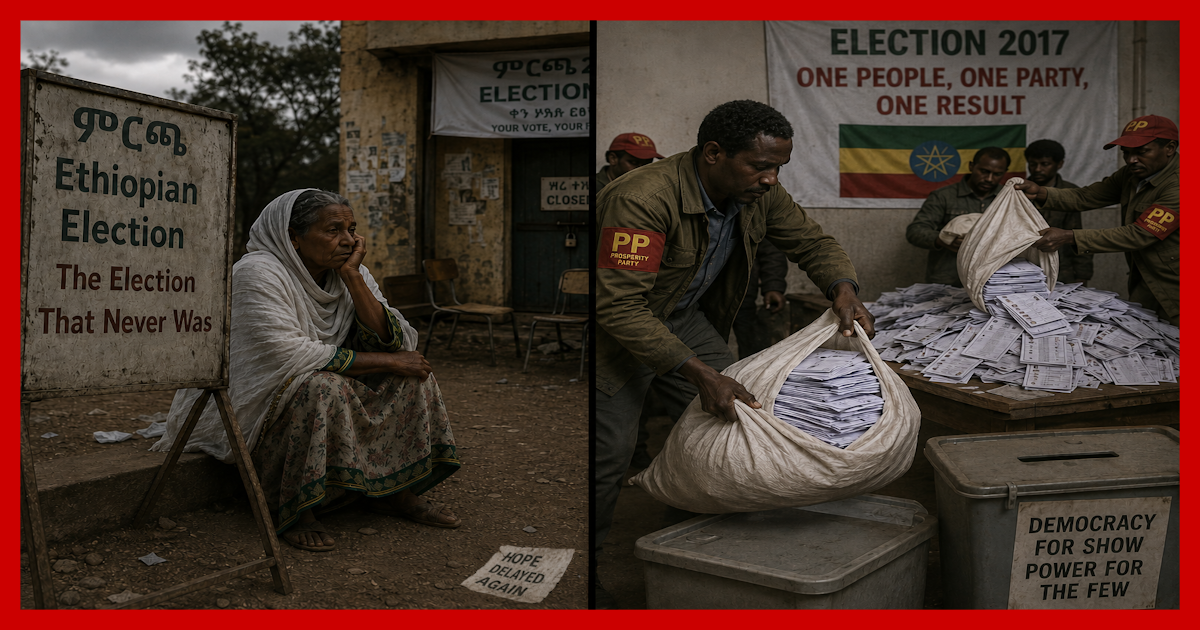
With Abiy’s political capital in Oromia visibly eroding and a June “election” approaching, his presence in Wallaga appears more performative than purposeful. Faced with declining legitimacy, Abiy has reverted to a familiar strategy: retracting prior rhetoric, suspending pride, and staging scenes of “reconciliation.” The choreography is predictable—expressions of concern, appeals to unity, and symbolic visits—designed less to address structural grievances than to halt political freefall.
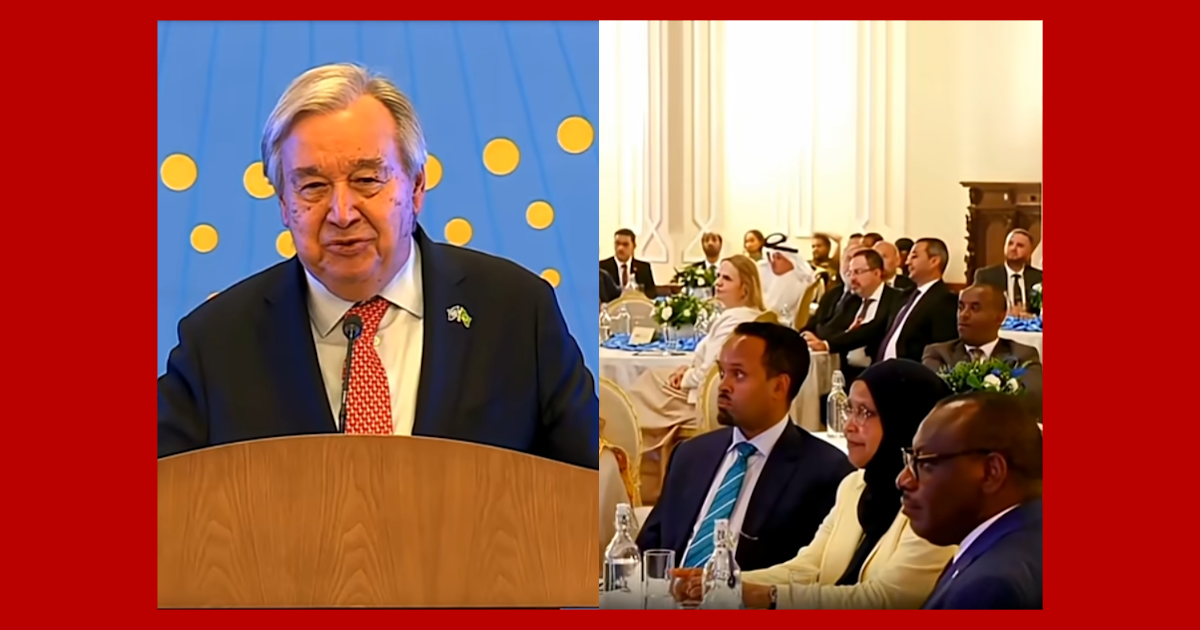
The dissonance is unmistakable. The stiff body language of carefully selected attendees—many seemingly present out of obligation rather than genuine consent—reveals the hollowness of the gesture. This is not organic outreach, but election theatre, calibrated for optics and circulation rather than trust.
Reading Trends, Not Moments
Discourse can sometimes oscillate between hope and despair based on single events—an inspiring speech, a disturbing report. Yet eight years of trajectory matter more than a single tour.
Key empirical questions remain:
- Have civilian casualty trends declined sustainably?
- Has displacement reversed in durable ways?
- Are state of emergency-style restrictions being lifted?
- Is independent media access expanding?
- Access for international Human Rights organisations?
Without clear answers grounded in verifiable data, rhetorical shifts are political repositioning rather than structural change that could stop the bloodshed and brings about a lasting peace.
Conclusion: Accountability Matters
Oromia’s story since 2018 illustrates the power of words in shaping policy—and the difficulty of reconciling tactical narratives with aspirations for a lasting peace. By and large, it has been policy of subjugation and even systematic distraction amounting to genocide.
The move from fabricated distance to high-profile presence in a region ravaged by eight long years of war, under their watch, from many corners may on the surface signal stabilisation. It may signal strategic recalibration or diversion from what is to follow. Distinguishing between the two requires disciplined attention to evidence: casualty data, displacement patterns, institutional reforms, and the everyday testimony of civilians.
When the dust settles, Abiy Ahmed and Shimelis Abdissa will be most responsible for the unimaginable cruelty and war against humanity that they have conducted in Wallaga as well as across Oromia.
Abiy and Shimelis were seen in Naqamtee, a stone’s throw away from villages that have been decimated and burned to ashes by the Fano paramilitary force, which has crossed over from neighbouring Amhara into Oromia State, displaced hundreds of thousands of Oromo people from their ancestral lands in Horo Guduru, and illegally occupied the land. The two even visited Hangar Dhidhessa Farm. Just picture that for a minute.
Hangar Dhidhessa is not a neutral development site; it is on land from which Oromo communities were forcibly expelled by Fano paramilitaries operating with impunity after crossing from the Amhara region. While villages burned and families were driven from Horo Guduru, the constitutional duty of protection fell squarely on the federal and regional executives. Yet Abiy Ahmed and Shimelis Abdissa chose spectacle over responsibility - touring expropriated farmland as a symbol of progress while averting their gaze from the violence that made such visits possible. This was not ignorance; it was abdication. And in the face of mass displacement, abdication becomes complicity.
Leadership credibility accumulates over time. It rests less on where leaders stand for a photograph than on whether conditions on the ground substantively improve. So does responsibility.
When the dust settles, Abiy Ahmed and Shimelis Abdissa will be most responsible for the unimaginable cruelty and war against humanity that they have conducted in Wallaga as well as across Oromia.
References
- Ethiopian PM Tours, Inspects Projects in Kelem Wollega, Environs, 19 February 2026, POA.
- Barry Buzan, Ole Wæver, and Jaap de Wilde, Security: A New Framework for Analysis (Boulder, CO: Lynne Rienner Publishers, 1998).
- Amnesty International, “Ethiopia: Human Rights Violations in Oromia Region,” 2020–2023 reports.
- Human Rights Watch, “Ethiopia Events of 2021–2024,” World Report series (New York: Human Rights Watch, various years).
- Armed Conflict Location & Event Data Project (ACLED), “Ethiopia: Conflict Data, 2019–2025,” accessed 2025.
- Federal Democratic Republic of Ethiopia, House of Peoples’ Representatives, Parliamentary Proceedings (Addis Ababa: Official Record, various sessions 2021–2023).
- Amnesty International, “Ethiopia: Evidence of Drone Strikes and Civilian Harm,” 2023; Human Rights Watch, “Ethiopia: Unlawful Attacks in Oromia,” 2023–2024.
- Yadessa Guma, The Forgotten War in Wallaga: Why Atrocities in Western Oromia Remain Uncounted, 3 January 2026, OROMIA TODAY
- David Kilcullen, Counterinsurgency (Oxford: Oxford University Press, 2010).


This article offers a sharp and well-evidenced examination of securitisation in Wallaga and its long-term political consequences. By situating Abiy Ahmed’s 2018 remarks within securitisation theory, the author persuasively links rhetoric to policy escalation and regional stigmatisation. The integration of conflict datasets, parliamentary statements, and reports from established human rights organisations strengthens the empirical foundation and avoids reliance on anecdote. The discussion of militarisation, civilian harm, and symbolic political theatre in the 2026 tours demonstrates analytical depth, particularly in distinguishing between narrative repositioning and structural change. The article’s emphasis on measurable indicators—casualty trends, displacement, media access, and accountability—appropriately shifts the debate from spectacle to substance. While the tone is critical, it remains grounded in documented trends and verifiable concerns, making the piece a timely and substantive contribution to scholarship on conflict governance, counterinsurgency, and political legitimacy in contemporary Ethiopia.