Building and Naming Without Consent: The Aabbuu Gosa, the New Airport Project, and Their Permanent Legacy
Abstract
This article examines a critical yet overlooked dimension of the crisis unfolding on Aabbuu Gosa ancestral land: the naming of the new airport. Beyond the careless labeling of projects built on Oromo territories—projects that dismantle communities and erase their existence—the article underscores the fundamental importance of preserving Oromo heritage and identity. That preservation begins with honoring authentic names, geographic anchors, cultural markers, and the clan structures that define Oromo belonging, especially in a time of rapid dispossession.
While the broader displacement of the Aabbuu clan is a multilayered national crisis requiring its own dedicated analysis, this piece focuses on how the naming conventions currently being promoted—such as “Bishoftu Airport” and “Aabbuu Seeraa Airport”—add cultural erasure to physical removal. By documenting the historical and geographic identity of the Aabbuu, the article argues that naming is not symbolic; it is a political act that determines who is remembered and who is erased.
I. Introduction: The Password of Identity
Preface: Why This Article Is Narrow by Design
The crisis facing the Aabbuu Gosa is too vast to address in a single article. It is not merely a clan‑level issue, nor even a Tulama‑wide concern. It is an Oromo national crisis.
The proposed airport city—along with the network of new towns, industrial parks, and settlement corridors planned across the narrow belt of East Shawa—threatens to bring seven to ten million new settlers into the heart of Oromia. Such a demographic shock risks erasing the indigenous population, redrawing cultural and political boundaries, and creating a multinational settler zone stretching from the Amhara regional border to the Southern Nations border. If implemented, this corridor would geographically sever Oromia into two disconnected regions, leaving an island of non‑Oromo settlement in between.
That broader dispossession requires its own dedicated article, which will follow. This piece focuses on one specific but deeply consequential aspect of the crisis: the naming of a vast project built on land where an entire clan is being erased, and the broader pattern of casually renaming Oromo ancestral territories—practices that risk erasing history, heritage, and identity forever. It examines how these naming choices compound the violence of physical displacement with an equally enduring form of cultural erasure.
II. The Password: “Atii Kan Eenyuuti?”
In Oromo culture, the question “Atii kan eenyuuti?” (To whom do you belong?) is the foundational mechanism of Oromo social bookkeeping. Through layers of Warra (family), Balbala (lineage), Gosa (clan), and Saba (nation), the Oromo have historically accounted for every individual. This system protected the nation from “bad pedigrees” gaining influence and ensured cohesion across the broader region. Identity was not an abstract concept—it was a living archive.
III. Disappearing Clans and Living Archive of Identity
IV. A Position of Principle: No Development Without Consent
Any development that does not center the Oromo people and obtain their full consent is rejected. True development is not something done to a people; it must be something that emerges from them. To uproot a clan as important as the Aabbuu from its ancestral land without its blessing is not modernization—it is erasure.
V. Insult to Injury: The Naming Crisis
If the state insists on advancing the airport project, it is doing so in a way that mocks the very people it displaces. The proposed airport name—along with the naming of other major projects—and the casual throwing of random labels onto indigenous Oromo places function as a cultural funeral for clans like the Aabbuu. These practices do not merely misname the land; they bury the identities of the people who have lived on it for generations.
A. The “Aabbuu Seeraa” Irony
Why is the Aabbuu clan—one of the six Gaalan brothers (Ja’an Gaalan)—being referred to as “Aabbuu Seeraa,” leading some to casually label the airport project that is erasing the Aabbuu Gosa as “Aabbuu Seeraa Airport”?
“Seeraa”—or Beeroo, as the Aabbuu have long called it—comes from the Amharic word biro, meaning “office.” It refers to a small administrative village established during the Haile Selassie era to house an imperial court. This site became a Nafxanyaa outpost, where Aabbuu communities were governed under an imposed hierarchy.
During the imperial period and well into the Derg era, the relationship between the town of Aabbuu Seeraa and the wider Aabbuu clan reflected the deep tension between the state and the indigenous community. At its establishment, most residents of Aabbuu Seeraa were not Oromo by birth and were not farmers. They were sub‑district officials, judges, priests, shopkeepers, and newly settled families. Some were integrated into the Aabbuu through harma‑hodha (taking a godfather from a prominent Aabbuu family) or through moggaasa (adoption into the clan). This community was largely Amharic‑speaking—the language of the court and administration—and its small population was frequently used by successive regimes as interpreters, translators, and trusted armed law‑enforcement personnel.
The Aabbuu oral tradition preserves this tension vividly. During the Derg era, a man named Yirga—one of the most notorious Aabbuu Seeraa residents, who spoke no Afaan Oromo but was empowered by government officials as an armed revolutionary security agent—became the subject of a bitter Aabbuu folk verse:
Dhisa whanuma Irgaa dhisa
Saxiniin qolofamee
Shummon gadisa garbii jala ciisa
Translation:
“Do not worry about Yirga; he is a dead man walking. His coffin is sealed, and his sorrow‑meal already lies beneath the garbii tree.”
But beyond that history, the central point of this article is that “Aabbuu Seeraa” simply does not represent the Aabbuu Gosa as a whole. It is only one gaandaa among more than a dozen Aabbuu gaandas, each holding equal cultural and genealogical status. In fact, at this very moment, Aabbuu Seeraa is not even among the six gaandas currently being uprooted by the airport project: Aabbuu Aciroo, Aabbuu Garbii, Aabbuu Kombolchaa, Aabbuu Looyyaa, Aabbuu Lugnaa, and Aabbuu Saarkamaa.
Even though what Aabbuu Seeraa once represented is long gone, and the town has since become an Oromo town—expanded and inhabited by Afaan‑Oromo‑speaking Aabbuu families—using this name today to represent the entire Aabbuu Gosa still carries a painful historical weight and diminishes the identity of the broader Aabbuu community.
B. The “Bishoftu” Misplacement
What does the city name “Bishoftu,” rooted in the heart of Ada’aa ancestral land, mean to the Aabbuu—the brother clan of the Ada’aa? And why has “Bishoftu” now become the imposed name of the Aabbuu homeland through the branding of the new airport as “Bishoftu Airport”?
The Aabbuu and Ada’aa are brothers within the Ja’an Gaalan family, yet they have always maintained distinct territories. Bishoftu is the historic headland of the Ada’aa clan, even though the Ada’aa themselves have now been largely eradicated from the city and replaced by a majority non–Afan Oromo–speaking settler population. To label Aabbuu land as “Bishoftu,” or to refer to the Ada’aa clan itself simply as “Bishoftu,” permanently erases both peoples from the map. It hands their legacy to casually selected names at the very moment when the Aabbuu—and the Ada’aa before them—are at their greatest vulnerability.
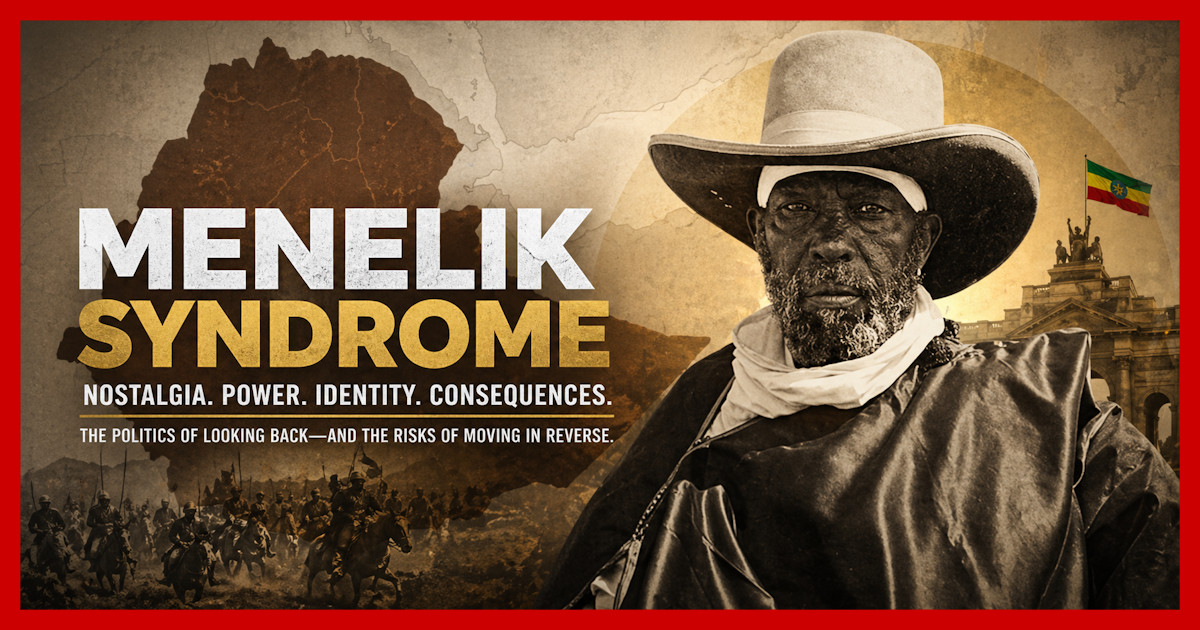
Historical precedent makes this even more troubling and clear. When Emperor Menelik forcibly removed the Eekkaa and Gullallee clans from their native land, Finfinnee, he—or his successors—nonetheless preserved their names in the city’s administrative map. To this day, two districts in Finfinnee (Addis Ababa) still carry the names Eekkaa and Gullallee, reminding succeeding generations that these clans were the indigenous custodians of the land. Likewise, when Haile Selassie removed the Bole clan to build the existing airport, he retained the name Bole, preserving at least the memory of the people whose land was taken.
By contrast, naming the new airport “Aabbuu Seeraa” or “Bishoftu” shrinks—and in some cases erases—the identity of the Aabbuu. Even if the Aabbuu cannot be saved from losing their land, their name must remain on it so future generations understand who lived there, what happened to them, and where they were pushed. The Aabbuu deserve to exist in name on their own homeland, just as their cousins the Gullallee, Eekkaa, and Bole clans remain remembered on the lands from which they were displaced.
VI. The Sacred Geography of the Aabbuu
The Aabbuu territory is a precisely defined cradle of life, bounded by natural land deeds:
- Laga Dukkam (East): Border with Warra Jarsaa and Ada’aa
- Laga Aqaqqii (West): Border with Geejjaa Akkalee
- Laga Awash (South): The heart of Aabbuu territory, where the people live on both sides of the river across four gaandas
VII. A Wake‑Up Call for Oromo Scholarship
It is essential to preserve every dimension of Oromo identity and pass it to the next generations. Before the era of written history, Oromo traditional historians—the haayyuus—safeguarded our heritage through oral storytelling, transmitting memory, law, genealogy, and geography from one generation to the next. That oral tradition was our library.
Now, in an age of written languages and modern scholarship, Oromo historians and social scientists should be leading the work of documenting our past—tracking the whereabouts of Oromo families, clans, and lineages, and tying them to their ancestral lands. Yet, except for a few prominent Oromo scholars, very little is emerging from the large number of Oromo anthropologists, historians, and sociologists who should be excavating our history, traditions, and identity markers to educate this generation and those to come.
It is a painful irony that some of the most detailed documentation of Oromo history, culture, and religion—including the structural and legal foundations of the Gadaa system, preserved for centuries by illiterate but brilliant Oromo storytellers around the fire—was not taken up by modern, educated Oromo elites. Instead, Eritrean scholars such as Asmerom Legesse and the late Tesfaye Gebreab made a notable contribution.
Meanwhile, much of the Oromo social‑science elite remains consumed by political discourse and the pursuit of office, crowded at the gates of any door that looks like power, leaving the foundational work of cultural preservation neglected.
If we do not document our own balbalas, rivers, boundaries, and clan structures, we lose the password to our survival.
And if the Aabbuu Gosa is to be displaced by the forces of modernity, the nation must at least demand that the name and legacy of the Aabbuu remain—not as a colonial sub‑district or a casually thrown label, but as the indigenous people who have held the heart of the Awash since time immemorial.