Dreaming Out of Sequence: Abiy Ahmed, AI University, and Ethiopia’s Education Crisis

Excerpt
The announcement of an AI University at Addis Ababa University’s 75th Anniversary was framed as visionary, yet it exposed a deeper contradiction in Ethiopia’s education crisis. While graduates remain unemployed, schools are closed by insecurity, and academic standards decline, grand AI ambitions risk becoming spectacle rather than substance. This article examines how misplaced sequencing, political psychology, and institutional fragility turn the promise of an AI University into a symbol of imbalance rather than progress.
From Celebration to Spectacle
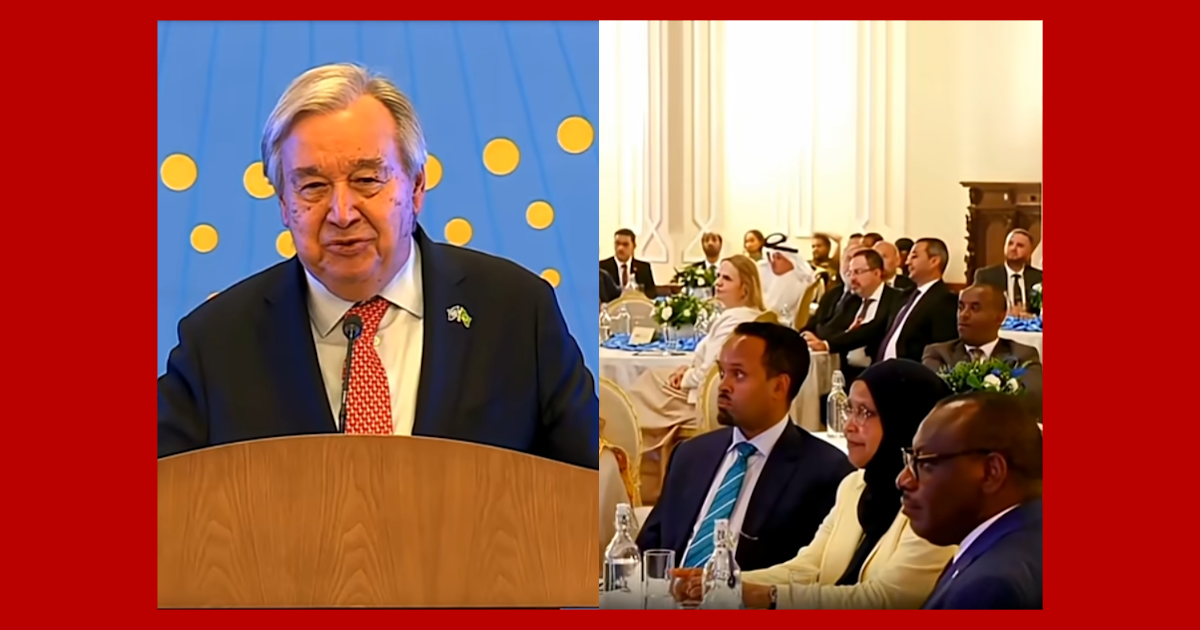
The occasion was solemn and symbolic: the 75th Anniversary of Addis Ababa University, aka Finfinnee University, Ethiopia’s oldest and most prestigious institution of higher learning [1]. Founded as a space for scholarship, inquiry, and intellectual independence, the university’s anniversary should have been a moment of reflection—on academic freedom, institutional resilience, and the role of education in a nation under strain.
Instead, the event became a stage.
Appearing not as a guest honoring the institution but as a lecturer addressing an audience, Prime Minister Abiy Ahmed delivered yet another monologue—this time announcing the imminent creation of an “AI-only university,” implying it would propel Ethiopia toward a top global position. The applause was loud. The substance was thin. The irony was unmistakable.
This was not merely an awkward mismatch of venue and message. It was a window into a governing psychology.
Knowledge as Performance, Not Process
Abiy Ahmed’s leadership style is best understood not through ideology or policy coherence, but through self-construction. His public conduct reflects a persistent need to occupy every epistemic role simultaneously: expert in anything including AI, medical doctor, military strategist, cybersecurity analyst, teacher, visionary, moral guide, and ultimate authority. This is not rhetorical flourish; it is structural.
Parliament, universities, and public forums are not treated as sites of exchange but as auditoriums of lectures. Questions become prompts for sermons. Dialogue gives way to instruction. The public is positioned not as citizens in deliberation, but as students in perpetual need of lecturing and correction [2,3,4].
At the core lies a familiar authoritarian tendency: epistemic narcissism—the belief that knowledge does not need to be debated, tested, or co-produced, but rather emanates from the leader. In this worldview, institutions exist to amplify authority, not to challenge it.
Addis Ababa University, with its tradition of independent scholarship, was thus reduced to a backdrop. It has long been a regular pattern for the parliament with its scheduled Q&A slot running for hours as an extended lecture.
Education as Ornament, Not Discipline
Education, within this mindset, is valued less as a discipline grounded in rigor and humility and more as symbolic capital. Degrees, titles, universities, and advanced terminology function as ornaments—markers of status—rather than as outcomes of sustained scholarly process.
Real education demands peer scrutiny, intellectual humility, tolerance of disagreement, and the possibility of being wrong. These are precisely the conditions this style of leadership struggles to accommodate.
The University Reversal: A Psychological Pivot, Not a Policy One
The contradiction is striking. Since coming to power, Abiy Ahmed has at times expressed public disdain for expanding higher education, even boasting about not building universities. Leaving aside the policy implications, the posture itself hints at something deeper: discomfort with institutions that diffuse authority and cultivate independent minds.
Yet at the AAU anniversary celebration, he announced an “AI-only university,” accompanied by bold claims of urgency, competitiveness, and global ranking—without credible benchmarks, transparent planning, or institutional groundwork.
This is not a genuine policy evolution. It is a psychological pivot.
Traditional universities represent pluralism: autonomous faculty, peer competition, institutional memory, and dissent. An AI university, rhetorically invented and personally unveiled, allows education to be recast as a leader-authored artifact. In psychological terms, this resembles narcissistic reappropriation: rejecting institutions one cannot dominate, while embracing new ones that can be branded as extensions of the self.
Seen this way, the contradiction dissolves. Education is acceptable only when it functions as a monument, not a marketplace of ideas.
The Inferiority–Grandiosity Compensation Loop
A fragile or contested educational biography, when combined with unchecked political power, often produces a predictable pattern: exaggerated claims of expertise, compulsive lecturing, impatience with questions, and dismissal of specialists. This is not confidence. It is defensive overperformance—a continuous assertion of mastery designed to silence doubt, both external and internal.
The leader must always appear ahead of experts, never alongside them.
The PhD as a Power Ritual
Controversy surrounding Abiy Ahmed’s doctoral credentials has long carried more than personal significance; it illustrates how power can overwhelm academic norms. A degree, in this framing, is not a confirmation of scholarly discipline but a symbolic trophy—proof of “arrival” into the class of the credentialed.
Alex de Waal, a prominent scholar on African conflicts, publicly criticized Abiy Ahmed’s PhD thesis and alleged extensive plagiarism, urging Addis Ababa University to investigate and consider revoking the degree: World Peace Foundation: “Plagiarism in Abiy Ahmed’s PhD thesis: how will Addis Ababa University handle this?” [5].
Regardless of where one lands politically, the deeper issue is psychological and institutional: when serious academic questions arise, a healthy system responds with transparency, scrutiny, and accountability. When it responds with silence, it teaches a dangerous lesson: institutional validation can be acquired without institutional submission.
Once that lesson is absorbed, institutions cease to command respect. They become props.
AI as Spectacle, Not System
The AI-only university announcement followed a familiar script: grand claims, a compressed six-month setup timeline, arbitrary figures—1,000 graduates, minimum 100 African scholarships, a maximum 2% from competitive domestic cohort—competitive bravado, and carefully timed applause cues. This, notably, comes from a leader who had previously and publicly vowed not to build a single university, expressing open disdain for higher education expansion. What was missing was more revealing than what was said: any discussion of faculty pipelines, research culture, data infrastructure, academic governance, academic freedom, or sustainable funding models. The ease with which such numbers were conjured underscores the absence of serious institutional planning.
AI is not conjured by proclamation. It rests on decades of disciplined investment in mathematics, statistics, computing, stable institutions, and open inquiry. Without those foundations, “AI” becomes a buzzword—less a program than a performance of modernity.
This is technological narcissism: futurism used as branding.
The Bigger Picture: When Aspiration Detaches from Reality
No one objects to education. No one objects to ambition. Not even to the idea of an AI-only institution, in principle. Aspirations are not the issue. Sequencing and balance are.
Education does not float above society; it is anchored in it. And today, Ethiopia’s anchor points are strained or failing. The country is already producing graduates it cannot absorb—educated youth with credentials in hand but futures suspended. Meanwhile, dire economic pressure and a soaring cost of living have pushed millions into survival mode, where even basic stability is uncertain.
At the base of the system, the education pipeline itself is fractured. Standards have declined. In large parts of Oromia and Amhara, vast numbers of children have been kept out of school due to insecurity and closures. Teachers are displaced, classrooms abandoned, and entire cohorts risk being lost to interruption and instability. This is not a minor setback; it is a generational rupture.
Overlay this with unresolved security crises, social fragmentation, institutional erosion, and infrastructure deficits. Universities cannot thrive where safety is uncertain. Advanced research cannot flourish where electricity is unreliable, data ecosystems are weak, academic freedom is constrained, and trust in institutions is thin.
Against this reality, proclaiming a leap to a “no. 2 AI-only university” is not visionary—it is dislocated and delusional. It elevates spectacle over structure and symbolism over system. It gestures toward a future while the present is unraveling beneath it.
Bottom Line
The problem is not dreaming big. The problem is dreaming out of sequence.
Until the economic, security, social, and educational fabric of Ethiopia is repaired, proclamations of AI supremacy will ring hollow—not because AI is unimportant, but because reality has not yet caught up with the rhetoric.
Addis Ababa University deserved a reflection on knowledge. It received a performance instead.
References
- ጠቅላይ ሚኒስትር ዐቢይ አሕመድ (ዶ/ር) በአዲስ አበባ ዩኒቨርሲቲ 75ኛ ዓመት ምስረታ በዓል ላይ ያቀረቡት ገለጻ ክፍል አንድ, 4 January 2026, ETV. (forward to timeline 1:28:30 for the speech segment on AI-only university).
- OT Editorial, When Hundreds of Thousands Equal Zero, 9 February 2025, OROMIA TODAY.
- Olii Boran, Leading by Chaos, Not Competence, 4 December 2024, OROMIA TODAY.
- Elemo Qilxuu, On PM Abiy Ahmed's Mockery of the OLF’s Fifty-Year Struggle, 18 November 2024, OROMIA TODAY.
- Alex de Waal, “Plagiarism in Abiy Ahmed’s PhD thesis: how will Addis Ababa University handle this?”, 13 April 2023, World Peace Foundation.