History Comes to the UN and Asks for a Vote
Excerpt
A United Nations resolution spearheaded by Ghana to condemn the trans-Atlantic slave trade should have been morally straightforward. Instead, the voting pattern revealed something deeper about the modern world: the past is never just the past. It lives in politics, memory, and responsibility, and sometimes history returns and asks the present to respond.
When the Past Returns
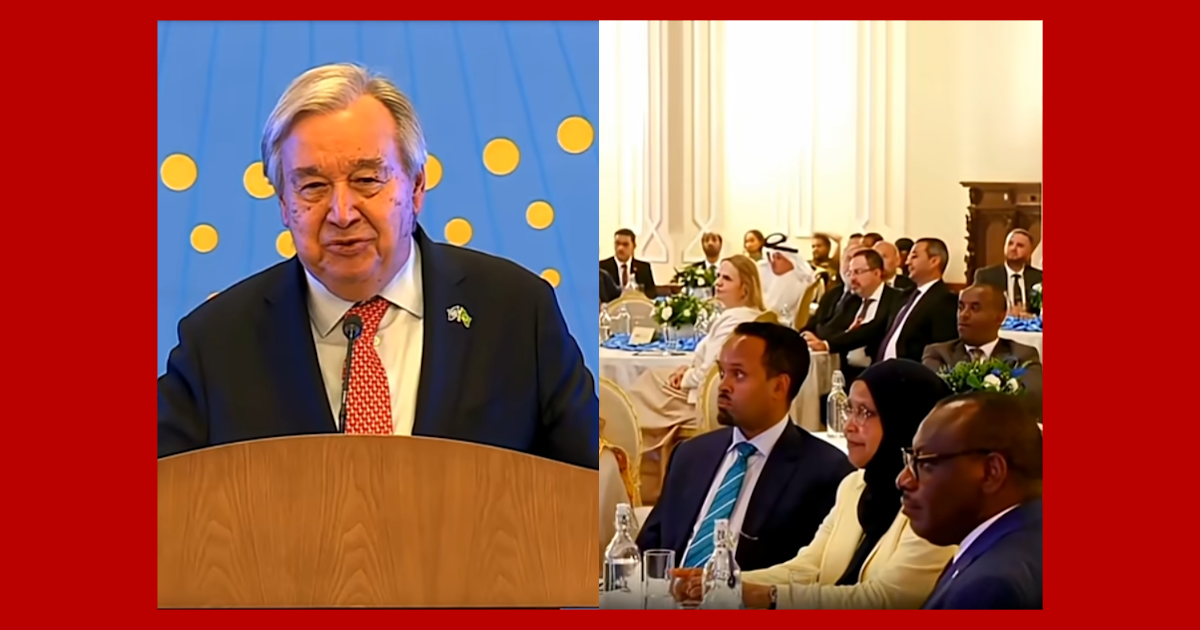
There are moments in history that quietly reveal more about the world than wars, elections, or revolutions. Yesterday's vote at the United Nations may be one of those moments [1,2].
"For more than 400 years, millions of people were stolen from Africa, put in shackles and shipped to the New World to toil in cotton fields and sugar and coffee plantations under scorching heat and the crack of the whip."
— President John Dramani Mahama of Ghana
A resolution was introduced to condemn the trans-Atlantic slave trade — one of the greatest crimes in human history. The vote itself was revealing. The resolution passed by a margin of 123–3 in favor, with Argentina, Israel, and the United States voting against. Out of the 193 member states, 67 abstained — many of them European countries. The resolution passed comfortably, but the pattern of abstentions spoke almost as loudly as the votes themselves.
We often like to believe that humanity progresses morally in a straight line — that we learn, we improve, we agree on basic human values, and we move forward. But history does not move in a straight line. It moves through memory, power, law, guilt, and politics. And sometimes, history comes back — not in textbooks, but in votes.
Slavery is not a complicated moral issue. It does not sit in a gray area. There is no philosophical debate about whether enslaving millions of human beings, transporting them across oceans in chains, and building entire economies on forced labor was wrong. Humanity settled that moral question long ago. Or so we thought.
But when governments vote on resolutions like this, they are not only voting on morality. They are voting on history, responsibility, legal implications, reparations, national narratives, and political consequences. In international politics, even the past is negotiated.
The Ledger of History
Discussions about slavery often remain in the realm of morality, memory, and politics. But history is also written in numbers. Behind every moral debate are millions of lives, journeys, and human beings who were counted not as people, but as cargo.
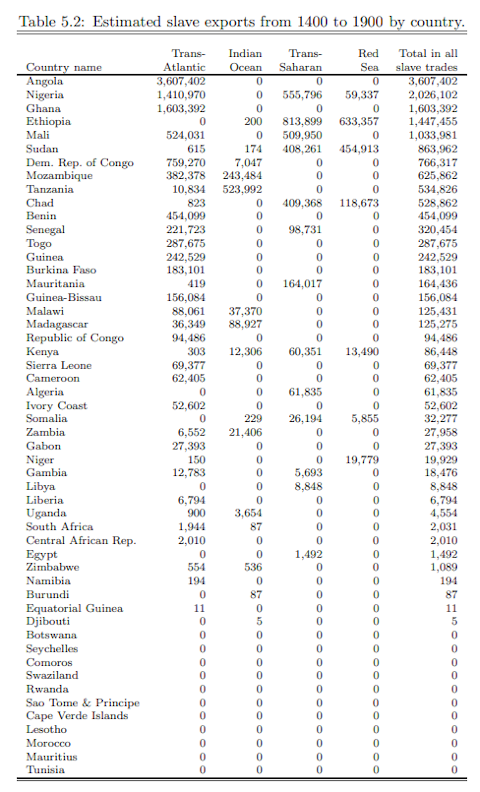
Economist Nathan Nunn, in his study of Africa’s slave trades, provides estimates of slave exports from different regions of Africa between 1400 and 1900 [3]. The numbers are staggering and help us understand the scale of what is often discussed only in abstract historical terms.
Table 5.2 below, from Nunn’s work [3], provides estimated slave exports by country over five centuries — a stark reminder that history is not only written in words, but also in numbers. Tap here to access a direct PDF version of the same table.
The Politics of Abstention
The most interesting part of such votes is often not who votes for or against, but who abstains. Abstention is one of diplomacy’s most sophisticated inventions. It allows a country to say: We do not oppose this morally, but we do not want to support it politically. It is the diplomatic version of silence. And silence, in matters of history, is rarely neutral. Silence often means the past is still uncomfortable.
What this vote reveals is something deeper than diplomacy. It reveals that humanity has not yet finished arguing with its past.
We like to think slavery is history.
But history is not just about the past; it is about the present distribution of wealth, power, borders, languages, and global inequalities. The modern world was shaped during the same centuries that slavery, colonialism, and empire expanded across continents. The past is not dead. It is built into the present.
When History Becomes Responsibility
That is why votes about history are never just about history. They are about responsibility. They are about apology. They are about whether moral condemnation could one day lead to legal claims, reparations, or demands for accountability.
Nations do not fear history books. Nations fear legal language.
There is also something deeply human in all this. Individuals find it hard to apologize for something they did yesterday. Nations find it even harder to apologize for something their ancestors did two hundred years ago. Yet history does not disappear simply because generations pass. Memory travels across time much more easily than responsibility does.
Perhaps the most important lesson from such a vote is this:
Humanity agrees on morality in principle, but disagrees on responsibility in practice.
Everyone agrees slavery was evil. But when the question becomes who must officially say so, who must acknowledge it, who must apologize, who must compensate, and who must carry the moral weight of history — suddenly the agreement becomes complicated.
This tells us something profound about the world we live in. Progress is not just about technology, economic growth, or scientific discovery.
Moral progress is much slower, much more complicated, and often entangled with power and law.
We live in a world with artificial intelligence, space exploration, global communication, and medical technologies that would look like miracles to people two centuries ago. Yet we are still politically negotiating crimes that everyone agrees were morally wrong. This is the strange paradox of human civilization: technologically advanced, morally cautious, historically uneasy.
History Is Not a Closed Chapter
In the end, the most important lesson from such moments is not about which country voted which way. The deeper lesson is that history is not over. The past is not finished. Humanity is still negotiating with its own memory.
History, it turns out, does not just sit quietly in books.
Sometimes, history comes to the United Nations and asks for a vote.
Not Only Across the Atlantic
While much of the world debates the trans-Atlantic slave trade and the responsibilities of global powers, there are histories closer to home that remain far less discussed. Ethiopia, often celebrated as a symbol of Black independence and African pride for resisting European colonization, also has a darker and far less examined history — one that includes internal slave trade, imperial expansion, internal colonization, and deeply complex race and social relations. This history is rarely examined on the global stage [4,5].
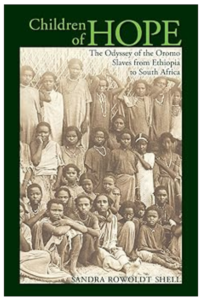
Ethiopia is often presented to the world as a symbol of African freedom and resistance to colonial rule. Yet the world also needs to understand and examine what created the modern Ethiopian empire — an empire that, even today, often appears not fully at peace with itself. Like many nations, its history is not a simple story of heroes and resistance, but a complex story of conquest, uniquely of internal colonization, slave trade, hierarchy, and unresolved historical memory.
History is not only across the Atlantic. Sometimes the most uncomfortable histories are the ones closest to home.
References
- UN resolution urges reparations for slavery’s ‘historical wrongs’, 25 March 2026, UN News, United Nations.
- Wedaeli Chibelushi and Thomas Naadi, UN votes to recognise enslavement of Africans as 'gravest crime against humanity', 25 March 2026, BBC.
- Nathan Nunn, Chapter 5 – Shackled to the Past: The Causes and Consequences of Africa’s Slave Trades, August 2008, original direct PDF source here. This is a book chapter as Chapter 5 in Natural Experiments of History (edited by Jared Diamond and James A. Robinson), Harvard University Press, 2010.
- Elemoo Qilxuu, ETHIOPIA'S 6 BIG LIES FUELING ITS IMPENDING COLLAPSE, 13 March 2024, OROMIA TODAY.
- Olii Boran, The Myth of Ethiopia’s Historical Continuity: A Political Invention Disguised as Legacy, 17 March 2025, OROMIA TODAY.
- Sandra Rowoldt Shell (Dr), Children of Hope: The Odyssey of the Oromo Slaves from Ethiopia to South Africa, 20 Aug. 2018, Ohio University Press (available on Amazon as ASIN B07G462N3X)