Skip to content
OROMIA TODAY

OROMIA TODAY

Oromia is a Country

BAKKALCHA OROMIYAA
  • Home
  • Articles
  • Editorial
  • News
  • Opinions
  • About
  • Contact
OROMIA TODAY
OROMIA TODAY
Oromia is a Country
BAKKALCHA OROMIYAA
  • Wallaga
    Op-Ed | Politics | ⏭

    The Forgotten War in Wallaga: Why Atrocities in Western Oromia Remain Uncounted

    By Yadessa Guma (PhD, Anthropology) Posted on2026-01-032026-01-02
    1 Comment

    While the world associates Ethiopia’s mass violence with the Tigray war, a longer and largely uncounted war has devastated western Oromia—especially Wallaga—since 2018. Displacement, repeated massacres, school closures, and the collapse of health services have become a grim norm, yet the true civilian death toll remains unknown. This article explains what we know, what we still do not know, why the suffering has been under-reported, and why an independent investigation by credible human rights bodies is now urgent.

    Read More The Forgotten War in Wallaga: Why Atrocities in Western Oromia Remain UncountedContinue

  • Yonas Biru
    Op-Ed | Politics

    Gadaa on Trial: How Yonas Biru Turns Selective Ethnography into Political Prosecution

    By Kumaa Daadhii (PhD, Political History) Posted on2025-12-242025-12-24
    1 Comment

    Yonas Biru’s “Gadaa is part apartheid” is not scholarship but a political prosecution dressed in citations. It announces a verdict (“Oromummaa is a lie”), then cherry-picks evidence to delegitimize Oromo identity claims, smear Oromo scholarship as extremism, and insinuate guilt-by-association with violence. The apartheid analogy is a sensational moral grenade, not a serious comparison. UNESCO’s recognition of Gadaa underscores its governance value, not Yonas Biru caricature.

    Read More Gadaa on Trial: How Yonas Biru Turns Selective Ethnography into Political ProsecutionContinue

  • Asafa Jalata
    Editorial | Oromummaa Scholarship

    Asafa Jalata: They Tried to Erase His Scholarship. Instead, They Enshrined It

    By OT Editorial Posted on2025-12-232025-12-23
    1 Comment

    The attempt to erase Professor Asafa Jalata’s scholarship has achieved the opposite. By attacking decades of rigorous research on Oromummaa, Amhara extremist elites have elevated Asafa Jalata into a historical league of scholars once vilified for naming injustice. Suppression has not weakened the Oromo claim; it has validated it. When scholarship is silenced rather than debated, it is not the scholar who is exposed—but the fear of those who cannot tolerate truth.

    Read More Asafa Jalata: They Tried to Erase His Scholarship. Instead, They Enshrined ItContinue

  • Modi
    Editorial | ⏭

    When “Democracy” Applauds an Empire: Why Prime Minister Modi’s Speech Is Deeply Disappointing to Ethiopia’s Oppressed Nations

    By OT Editorial Posted on2025-12-172025-12-17

    Prime Minister Narendra Modi’s address to Ethiopia’s Parliament was wrapped in warmth and symbolism, but it also echoed a familiar Ethiopianist storyline: a seamless, timeless national narrative that quietly sidesteps conquest, forced assimilation, and the lived realities of Oromo and other oppressed peoples. When the leader of the world’s largest democracy lends prestige to that framing—amid today’s grave human-rights and displacement crises—disappointment is not only understandable, but inevitable.

    Read More When “Democracy” Applauds an Empire: Why Prime Minister Modi’s Speech Is Deeply Disappointing to Ethiopia’s Oppressed NationsContinue

  • EZEMA
    Op-Ed | Politics | ⏭

    EZEMA’s Four “Core Problems of Ethiopia”: A Diagnosis Without Literacy of Ethiopian History

    By Biqila Bariso (PhD, Physics; MSc, Cognitive Sci.) Posted on2025-12-132025-12-10
    1 Comment

    EZEMA claims Ethiopia faces four fundamental problems, but its diagnosis reveals profound political illiteracy. By blaming the EPRDF for an “ethnic problem” and proposing the absurd abolition of ethnic politics, EZEMA misreads Ethiopia’s history, structure, and lived realities. This article exposes why EZEMA’s worldview collapses under scrutiny — from sovereignty and rights to poverty and national narrative — and why Ethiopia’s future cannot be grounded in such conceptual blindness.

    Read More EZEMA’s Four “Core Problems of Ethiopia”: A Diagnosis Without Literacy of Ethiopian HistoryContinue

  • First Principles
    Op-Ed | Politics | ⏭

    The First Principles Violated: The Simple Truth Behind a Century of Ethiopian Instability

    By Biqila Bariso (PhD, Physics; MSc, Cognitive Sci.) Posted on2025-12-112025-12-11

    Politics remains the only profession where immense power requires no mastery of first principles, and nowhere is this more destructive than in Ethiopia. Identity is reshaped, consent bypassed, and self-determination denied—violations that predictably produce rebellion, collapse, and endless conflict. This article distills the political laws of stability Ethiopia keeps defying, and shows why stability, peace, and development will remain elusive until its leaders embrace these foundational truths. It ends with a postscript message to the Ethiopian National Dialogue Commission (ENDC), warning it against repeating the foundational violations at the root of Ethiopia’s instability.

    Read More The First Principles Violated: The Simple Truth Behind a Century of Ethiopian InstabilityContinue

  • Politics of Spite
    Article | Opinion | Politics | ⏭

    The Politics of Spite—How Oromia’s Foundations Expose the Empty Ambitions of a Troubled Region

    By Elemoo Qilxuu (MA, Political Science), Kumaa Daadhii (PhD, Political History) and Olii Boran (PhD, Sociology) Posted on2025-11-122025-11-09

    Oromia now faces a widening expansionist push—driven by local opportunists, reinforced by external actors, and carried along by a region long caught up in the politics of spite that has defined the Horn. These forces promote territorial fantasies that collapse under scrutiny. The article argues that only a free, self-determined Oromia can break this cycle, restoring stability to the Horn and creating the conditions for a genuine synergy of prosperity with its neighbors.

    Read More The Politics of Spite—How Oromia’s Foundations Expose the Empty Ambitions of a Troubled RegionContinue

  • Half-Blind
    Op-Ed | Politics | ⏭

    When Power Fears Light: The Parable of an Empire Half-Blind

    By Olii Boran (PhD, Sociology) Posted on2025-11-062025-11-03

    Ethiopia’s empire survived not through shared prosperity but through a half-blind fear of equality. Like the parable of rulers who preferred to lose one eye just to blind their people twice over, it clung to domination instead of development, coercion instead of consent. A century of brilliance was wasted on internal siege rather than nation-building. Yet a different future is possible — one built on voluntary partnership, equal dignity, and the courage to imagine freedom beyond imperial habit.

    Read More When Power Fears Light: The Parable of an Empire Half-BlindContinue

  • divorce
    Op-Ed | Politics | ⏭

    Peaceful Divorce, Shared FutureHow voluntary sovereignty + economic interdependence could turn Ethiopia’s zero-sum politics into shared prosperity.

    By Yadessa Guma (PhD, Anthropology) Posted on2025-11-042025-11-03
    1 Comment

    Ethiopia’s century-long attempt to centralize diverse nations has produced recurring conflict, mistrust, and economic stagnation. A peaceful, lawful divorce — followed by a rules-based common economic area — offers a path to turn zero-sum politics into shared prosperity. Article 39 provides the consent mechanism; AfCFTA/IGAD/COMESA/EAC offer ready economic scaffolding. If one flag cannot deliver peace and dignity, multiple flags cooperating through open markets and guaranteed corridors may finally do

    Read More Peaceful Divorce, Shared FutureHow voluntary sovereignty + economic interdependence could turn Ethiopia’s zero-sum politics into shared prosperity.Continue

  • Foreign Scholar
    Op-Ed | ⏭

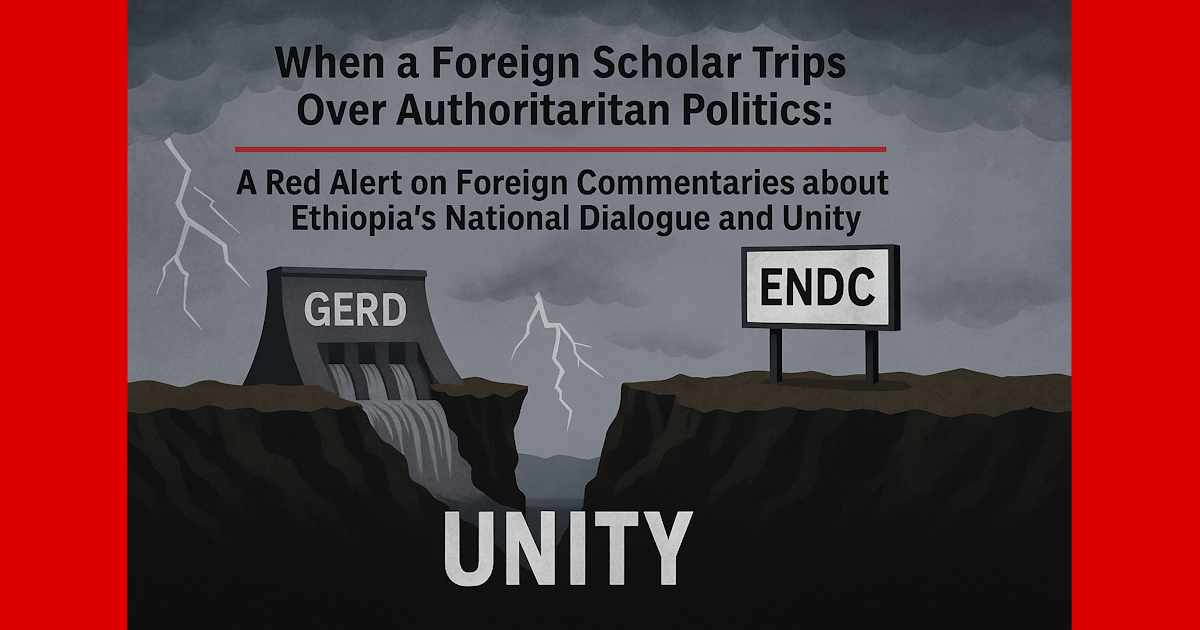
    When A Foreign Scholar Trips Over Authoritarian PoliticsA Red Alert on Foreign Commentaries about Ethiopia’s National Dialogue and Unity

    By Roobaa Hawaas (MA, Psychology) Posted on2025-10-102025-10-10

    A recent 'The Conversation' article by a foreign scholar lauds Ethiopia’s new dam and National Dialogue as signs of national unity. Yet beneath its polished tone lies a troubling detachment from Ethiopia’s lived realities. When foreign scholars echo autocratic narratives, they lend legitimacy to repression. Academic distance must not become moral distance — especially in a land scarred by stormy landscapes and rifted terrains of conflict, exclusion, and historical injustice.

    Read More When A Foreign Scholar Trips Over Authoritarian PoliticsA Red Alert on Foreign Commentaries about Ethiopia’s National Dialogue and UnityContinue

  • Ignorance
    Op-Ed | ⏭

    The Compendium of Ignorance: Anatomy of Amhara Pseudo-Elite Stereotypes Against the Oromo

    By Elemoo Qilxuu Posted on2025-10-092025-10-09

    Ignorance, when disguised as intellect, has long shaped Ethiopia’s moral decay. This compendium exposes how Amhara pseudo-elites turned mockery of Oromo language, names, and heritage into a badge of honour. Through evidence, reflection, and irony, it reveals that ignorance is not mere absence of knowledge — it is the arrogance that resists enlightenment.

    Read More The Compendium of Ignorance: Anatomy of Amhara Pseudo-Elite Stereotypes Against the OromoContinue

Page navigation

Previous PagePrevious 1 2

Archives

Recent Posts

  • The Ethiopian Perspective Gap: Why Some Voices Sound Like Truth—and Others Like Rebuttal
  • One Song, Five Messages
  • Cui Bono? The Political Economy of Conflict and the Oromo Question
  • Ambo: Cruelty in Plain Sight — Violence, Impunity, and the Political Crisis in Oromia
  • Remembering Guyyaa Gootota Oromoo
  • Oromo Martyrs Day—April 15, 2026: Memory, Sacrifice, and the Unfinished Future of Oromia
  • The Peace Conference Without the Other Side
  • 7 Reasons Why There Can Be No Credible Electoral Process in an Empire Disintegrating Before Our Eyes
  • History Comes to the UN and Asks for a Vote
  • Much Ado About Nothing—The Illusion of Elections in Oromia and Ethiopia

Authors

Categories

Recent Comments

  • webmaster on Remembering Guyyaa Gootota Oromoo
  • ejigu etana on Remembering Guyyaa Gootota Oromoo
  • ejigu etana on Remembering Guyyaa Gootota Oromoo
  • Raba Dori on Between Water at the Margins and SurvivalEnvironmental Precarity and the Political Economy of Inequality in Oromia
  • Dereje Hawas on Between Water at the Margins and SurvivalEnvironmental Precarity and the Political Economy of Inequality in Oromia
Facebook X YouTube TikTok Telegram

© 2026 OROMIA TODAY

Report an Incident

Tags Cloud

3000-Year Myth Aabbuu Seeraa Aabbuu Seeraa Airport Abiy Ahmed Amhara Elite Amhara Fano Caffee Oromia Calii Tuulamaa ENDC Eritrea Ethiopian Empire EZEMA Faarseebulaa Fact-checking FearlessTayeDanda'a Finfinnee Gadaa Supercity GERD History & Memory IMF Indigenous Oromo Indigenous Rights Irreechaa July 2024 Macroeconomic Policy Math Meets PP Myth MMPPM Moyale Multinational Federalism OLA OLF OLF-OLA OPDO/PP Oromia Oromo Questions Oromo Struggle Oromummaa PP Regime PP Regime Brutality Remembrance Safuu Shimelis Abdissa Somali Region Taye Danda'a TPLF Tribute
Scroll to top
  • Home
  • Articles
  • Editorial
  • News
  • Opinions
  • About
  • Contact
Search