Aabbuu Seeraa: Building Progress on Indigenous Erasure

Excerpt
In Aabbuu Seeraa, thousands of indigenous Oromo families are being displaced to build a flagship airport. Model houses are showcased to project “modernization,” while most households remain without shelter, land, or livelihood—and those who protest face detention. This is not opposition to development; it is a demand for development as a social contract. Minimum conditions are proposed for legitimacy, including housing, livelihood restoration, heritage and environmental protection, demographic sensitivity, perpetual stakeholding, and independent international assessment.
Introduction
Development is not a favor granted by the state. It is a social contract. When that contract is broken—when progress is constructed through dispossession—the issue ceases to be technical or economic. It becomes moral.
In central Oromia, the indigenous Oromo communities of Aabbuu Seeraa are being cleared from their ancestral lands to make way for what is promoted as Africa’s largest airport [1,2]. Approximately 3,000 households—some 15,000 people—have been displaced [3,4,5,6]. The overwhelming majority have received neither adequate housing nor viable means of livelihood. Protests that sought to expose this reality have been met not with remedy, but with incarceration [7].
These are not allegations. They are observable outcomes.
The Illusion of “Modernization”
A familiar narrative has been deployed. A small number of newly constructed houses for the evictees of Aabbuu Seeraa are showcased to suggest collective uplift and transformation. These selective images are circulated to create the impression that displacement has been resolved—that agrarian lives have been seamlessly converted into “modern living.”
The truth is far more sobering. Roughly 95 percent of those dispossessed remain without permanent shelter, land, or income. What is presented as development is, for most, displacement without destination.
This is not a failure of execution. It is a strategy of visibility management: solving optics rather than reality.
Why This Is Not a Neutral Infrastructure Project
Large infrastructure projects are often defended as politically neutral engines of growth. That claim may hold, imperfectly, in mono-national contexts. In multi-ethnic societies shaped by conquest, hierarchy, and unresolved historical injustice, it does not.
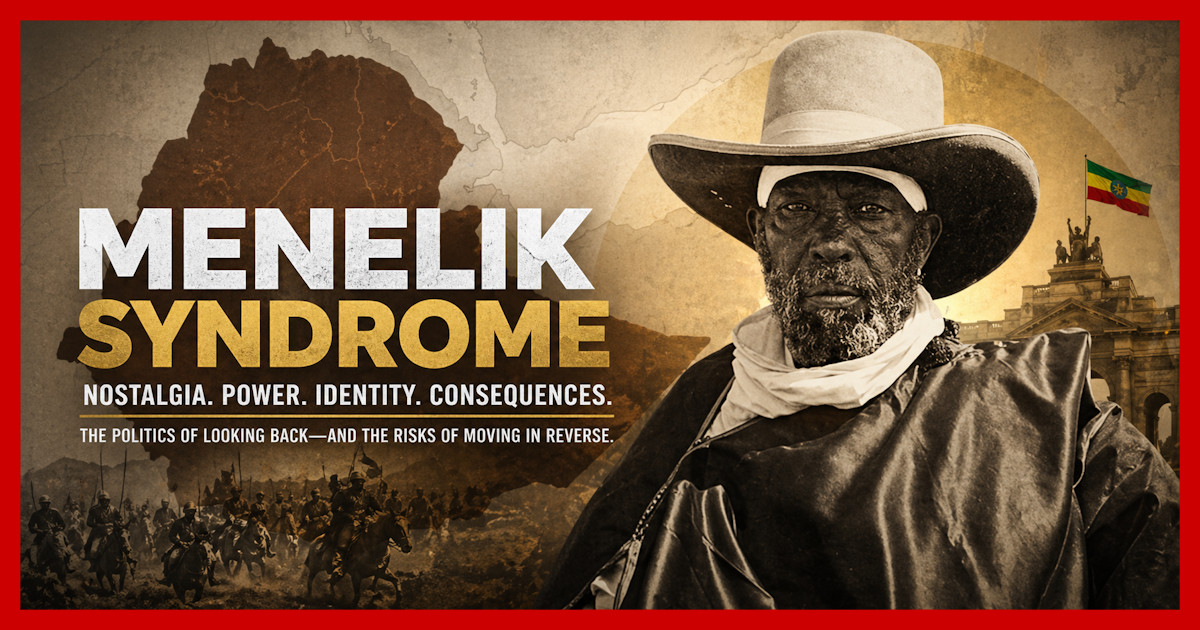
In Ethiopia, development has long carried a double function. Alongside townships, industrial zones, dry-ports, roads, railways, and airports has traveled something else: demographic reengineering, cultural erasure, and territorial expansionism. What was initiated during the era of Menelik II has not disappeared; it has merely changed form.
From one generation to the next, Oromo land has repeatedly been redefined as empty, underutilized, or strategic. The language evolves. The outcome does not.
Erasure rarely announces itself. It adapts.
The Long Arc of Tuulamaa Dispossession
The displacement unfolding in Aabbuu Seeraa cannot be understood in isolation. It forms part of a longer historical continuum: the gradual erasure of the Tuulamaa Oromo, beginning at the epicenter of Finfinnee/Addis Ababa and steadily advancing southward across generations.
What appears today as an airport project is, in fact, the latest phase of a century-and-a-half process in which indigenous presence is repeatedly subordinated to state expansion, urbanization, and political consolidation. Each phase presents itself as modern, necessary, and inevitable. Each leaves the same communities smaller, poorer, and closer to disappearance.
When displacement is cumulative, justice cannot be assessed in hectares or compensation figures alone. It must be assessed in history, spanning all the way from Finfinnee to Aabbuu Seeraa.
What Is Lost When a Community Is Removed
The cost of this project cannot be measured solely in land valuation or infrastructure output. It includes:
- the severing of communities from ancestral land held across generations;
- the destruction of ecosystems shaped by long coexistence;
- the rupture of cultural continuity—rituals, memory, and social structure;
- demographic distortion introduced under the banner of national development.
Infrastructure can be rebuilt. A community once dissolved cannot.
Criminalizing Exposure
Perhaps the most revealing aspect of this episode is not the displacement itself, but the response to those who documented it. When dispossessed communities used social media to reveal the gap between official narratives and lived reality, the response was not correction—but punishment.
Their offense was not violence or sabotage. It was visibility.
In systems that claim legitimacy, exposure prompts reform. In regimes sliding toward authoritarianism, exposure becomes a crime.
Development Without Indigenous Presence in the Narrative
Of the nearly dozen media reports covering the airport mega project, virtually none mention— even in passing—the indigenous lives, livelihoods, and ecosystems being disrupted at multiple levels. The absence is striking, but not surprising [8,9,10,11,12,13,14,15,16,17].
Most coverage remains narrowly focused on financing structures, construction milestones, passenger capacity, and projected economic returns. In some cases, reporting is openly celebratory; in others, it is passive and descriptive. In neither case is there sustained attention to the social, cultural, and ecological costs borne by the indigenous Oromo communities whose land makes the project possible.
We do not presume malice in this omission. Media institutions often mirror the priorities set by states, financiers, and corporate actors, and development reporting has long privileged capital flows over human continuity. Yet omission does not render harm neutral. When indigenous presence disappears from the narrative, dispossession is normalized.
In Ethiopia, this pattern has deep roots. For more than a century, “development” has repeatedly been framed as progress precisely when it has involved the removal of indigenous Oromo communities from their land. The present silence in coverage is therefore not an anomaly, but a continuation.
It is in this context that awareness campaigns become essential—not as acts of opposition, but as acts of correction. Where reporting fails to account for indigenous cost, it becomes necessary to reintroduce what has been excluded: people, history, and consequence.
A Necessary Clarification
Let there be no misunderstanding: we are not opposed to development. On the contrary, we affirm development that is ethical, inclusive, and sustainable—development that respects indigenous heritage, safeguards ecosystems, and treats displaced communities with dignity through just, transparent, and commensurate compensation. This position aligns with internationally recognized development norms that emphasize human-centered growth, environmental stewardship, and social equity, as articulated in the United Nations Sustainable Development Goals (SDGs [18].
What we reject is a distorted model of development that advances infrastructure and urban expansion through systematic dispossession, cultural erasure, and environmental degradation. In the Oromo case, “development” has too often functioned as a euphemism for the removal of indigenous people from their ancestral lands—an approach that has persisted since the founding of Finfinnee and intensified through successive state-led projects. Under this paradigm, progress has been measured not by shared prosperity or human well-being, but by the extent to which indigenous presence is erased from the landscape, the economy, and historical memory—an outcome explicitly warned against in international indigenous rights instruments such as the UN Declaration on the Rights of Indigenous Peoples (UNDRIP) [19,20,21].
This is not development; it is extraction without consent, modernization without humanity, and growth without justice.
Globally, there exist well-established best practices demonstrating that modern development can—and must—coexist with indigenous rights and ecological integrity. Central among these is the principle of Free, Prior, and Informed Consent (FPIC) [22], which affirms the right of indigenous peoples to meaningfully participate in decisions affecting their lands, resources, and ways of life. FPIC is not an obstacle to development; it is a safeguard against conflict, social harm, and long-term instability, and has been widely adopted across international development finance, environmental governance, and indigenous protection frameworks, as outlined by the United Nations and FAO [22].
Likewise, contemporary sustainability models recognize that indigenous knowledge systems are not relics of the past but essential assets for resilient development. Land-use planning that integrates indigenous stewardship practices, ecosystem-based development approaches, and culturally grounded livelihoods has repeatedly proven more durable and socially beneficial than top-down, extractive models, a principle reflected across UN environmental and governance standards. Heritage conservation, environmental protection, and urban growth are not mutually exclusive; they are mutually reinforcing when guided by principled governance and genuine participation.
In Oromia, the same standard must apply. Development must no longer be imposed on indigenous Oromos, but undertaken with them—recognizing land not merely as a transferable asset, but as a living foundation of identity, livelihood, and continuity. Compensation must extend beyond symbolic payments or forced relocation schemes and instead reflect the full social, economic, cultural, and intergenerational cost of displacement, as articulated in international norms on indigenous rights and responsible development [19,20,21,22].
To redefine development in Oromia is not to resist the future—it is to reclaim it. A future where progress does not demand erasure, where cities rise without burying indigenous histories, and where modernization strengthens rather than destroys the social and ecological fabric of the land. This is the development we stand for. Anything else—no matter how grandly labeled—fails both the people and the principles it claims to serve.
Opposition to this project is not opposition to development. It is opposition to development that treats indigenous existence as expendable.
Progress that requires silence from the displaced is not progress. It is domination and erasure wearing modern clothes.
Toward Accountability: Minimum Conditions for Legitimacy
This article marks the beginning of a broader campaign aimed not at obstruction, but at accountability.
Until minimum ethical standards are met, continued funding, operation, and international participation in this project remain morally and reputationally indefensible.
At a minimum, the following conditions must be satisfied:
1. Housing and Livelihood Before Displacement
Adequate housing and sustainable livelihood mechanisms must be completed prior to any relocation.
2. Financial Transparency of Compensatory Funds
In order to prevent misunderstanding, mistrust, and avoidable conflict around an issue of such profound social consequence, all compensatory funds must be managed with full transparency and public accountability. This includes clear, auditable records of housing provided, monetary compensation disbursed, land, livelihood substitutes or other assets allocated, and any stakeholdings or equity arrangements issued.
Transparency must operate at both the family-unit and individual levels, ensuring that entitlements are neither obscured nor aggregated in ways that conceal inequity. Independent auditing mechanisms, with publicly accessible reporting, are essential to guarantee that compensation reaches its intended recipients in full and without diversion.
In the absence of transparent financial governance, compensation schemes risk becoming instruments of grievance rather than restitution. Openness is therefore not a technical detail, but a prerequisite for social trust, legitimacy, and lasting stability.
We expect independent third-party audits with publicly accessible reporting shall be mandatory. Failure to meet transparency standards shall constitute non-compliance with ethical financing requirements and grounds for suspension of funding or support forming part of the campaign.
3. Cultural and Environmental Protection
Binding safeguards must protect heritage sites, sacred spaces, and fragile ecosystems through independent assessment.
4. Demographic Sensitivity and Community Integrity
Indigenous community continuity must be treated as a planning constraint, not collateral damage.
5. Perpetual Stakeholding for the Dispossessed
Those permanently severed from ancestral land must receive enduring equity or trust-based ownership—not one-off compensation.
6. Recognition Through Naming
If a village is erased physically, its name must not also be erased symbolically. History offers a telling precedent: Bole retained its village name through the airport that came to define it. Yet beneath that continuity lies a sobering truth—the Eekkaa Bole clan, displaced to make way for Bole International Airport, is today nowhere to be found as a living community. The village name survived; the people did not.
Aabbuu Seeraa must not suffer this double erasure—of both land and name—where displacement is followed by historical oblivion.
And, naming the airport after Aabbuu Seeraa is not a statement against the adjoining town of Bishoftu, nor an attempt to diminish its standing.
Rather, it is a rejection of the notion that the erasure of Aabbuu Seeraa should be repackaged as symbolic promotion for Bishoftu. Naming carries memory, recognition, and moral acknowledgment. It is therefore both appropriate and just that the airport be named Aabbuu Seeraa International Airport, ensuring that the name of the displaced community endures, even as its land is taken.
7. International Indigenous Rights Assessment
An independent assessment shall be conducted by the UN Permanent Forum on Indigenous Issues [23,24], in coordination with relevant UN Special Rapporteurs [25], to evaluate compliance with international standards on indigenous rights.
This assessment must examine not only present-day displacement, but the cumulative historical erasure of the Tuulamaa Oromo spanning more than a century. Findings must be public and incorporated into binding corrective measures prior to continued funding or operation.
These are not radical demands. They are standard safeguards in development that respects human dignity.
In the Meantime
In the meantime, documentation continues.
The moral obscenity of the present moment is already on open display: people dispossessed of their homes are not being provided shelter or redress; they are instead being herded into detention for exercising their legitimate right to protest. Few acts expose the inversion of justice more starkly than this—when homelessness is answered with imprisonment.
We are acutely aware that those exposing these realities through social media, independent reporting, and community testimony are taking personal risks. They operate in an environment where dissent is systematically suppressed and where lethal force has repeatedly been used to silence voices deemed inconvenient, including through shoot-to-kill practices. Caution is therefore urged—not as retreat, but as a measure of survival.
Nevertheless, the work continues.
At the same time, we call upon community leaders across wider Oromia—most notably the Abbaa Gadaa leadership, including the eleven senior Abbaa Gadaas—to intervene as far as practicable by making representations, speaking publicly, and standing with those dispossessed. The moral authority of the Gadaa system has historically rested on its duty to protect community, land, and justice in moments of grave imbalance. This is such a moment.
We also call upon Oromo businesspeople—Abbaa Qabeenyas—to recalibrate their involvement with this project. We recognize the constraints of operating within an authoritarian system and do not underestimate the difficulty of outright refusal. Yet participation need not be silent or unconditional. Even within restrictive environments, it remains possible—directly or indirectly—to make known that development derives legitimacy only when it honors its social contract with the people whose lives, land, and futures it reshapes.
Development that destroys community cannot ultimately succeed. Profit divorced from dignity carries long-term moral and reputational cost.
We further call upon embassies and diplomatic missions based in Finfinnee/Addis Ababa to monitor the situation closely. This matter will not recede; it will grow more visible, more documented, and more consequential. States that have confronted and sought to remedy the historical grievances of indigenous peoples within their own borders will readily recognize the significance of witnessing such dispossession unfold in 21st-century Ethiopia. Diplomatic attentiveness at this stage may yet help avert deeper harm and lasting instability.
Finally, every verified account, visual record, testimony, and traceable incident of brutality continues to be compiled with care. This documentation is not gathered for outrage, but for evidence. It will form part of an evidentiary record underpinning the forthcoming campaign—ensuring that what is unfolding cannot later be denied, minimized, or erased.
Silence has been demanded.
The record will answer instead.
What Comes Next
This article is a line drawn—not a conclusion reached.
A comprehensive campaign document for Aabbuu Seeraa is currently in preparation in consultation with legal experts, environmental and heritage specialists, community representatives, and the GLONA Taskforce. That document will articulate concrete actions, timelines, and accountability mechanisms for investors, airlines, and international partners.
This interval is deliberate.
It allows space to observe responses at institutional, diplomatic, and public levels—and to assess whether acknowledgment precedes accountability.
Conclusion
Some may ask why this intervention comes now, or why development should be subjected to what is framed as political scrutiny. These questions misunderstand both the timing and the substance of the issue.
The moment to speak is dictated not by novelty, but by irreversibility. Once land is cleared, livelihoods dismantled, and communities dispersed, silence ceases to be neutrality and becomes complicity. To wait for completion is to accept outcome as inevitability.
Likewise, development is not rendered political by those who question it. Decisions that reallocate land, displace populations, and reshape demographic realities are inherently political, whether acknowledged or not. The choice is not between politics and neutrality, but between transparent accountability and unexamined harm.
This intervention is therefore neither sudden nor ideological. It responds to a pattern long documented and now accelerating, in which indigenous presence is repeatedly treated as expendable in the name of progress. To raise these questions now is not to resist the future, but to insist that the future be built without erasure.
What follows will not be reactive. It will be deliberate, evidence-based, and principled. The world has been informed. What follows will be deliberate and principled—and Aabbuu Seeraa deserves more than silence.
Appendix: Project Facts of the Aabbuu Seeraa Airport
The figures below present key facts relating to project scale, financing, and indigenous displacement, followed by derived ratios and comparative benchmarks for contextual reference.
| Indigenous displacement | 3,000 households; approximately 15,000 people |
| Land acquired for airport and facilities | 39.75 square kilometers (3,975 hectares) |
| Budgeted airport project cost | USD 12.5 billion |
| Budgeted allocation for indigenous compensation | USD 350 million |
| Internal financing | 30% (Ethiopian Airlines) |
| External financing | Minimum 65% via African Development Bank (AfDB) |
| Financial advisor | KPMG |
| Airport design (lead consultant) | Sirada Group |
| Architectural design partners | Zaha Hadid Architects; Pascal+Watson |
| Civil construction contractor | To be confirmed (expected by August 2026) |
| Scheduled opening | 2030 |
| Total terminal floor space | 1.1 million square meters |
| Runway configuration | Four parallel Code 4E runways |
| Initial passenger capacity | 60 million passengers annually (from 2030) |
| Full phased-in passenger capacity | 110 million passengers annually |
| Cargo handling capacity | 3.73 million tons annually |
Derived Ratios and Contextual Metrics
| Total project cost vs. total compensation | USD 12.5 billion vs. USD 350 million (approximately 36:1) |
| Average compensation per displaced household | Approximately USD 116,700 per household |
| Average compensation per displaced person | Approximately USD 23,300 per person |
| Compensation as percentage of total project cost | Approximately 2.8% of total project budget |
These ratios are provided for contextual understanding of project scale relative to indigenous displacement and compensation. They do not account for long-term livelihood loss, cultural erasure, environmental degradation, or intergenerational impacts.
Comparative Benchmarks: FPIC-Compliant Infrastructure Practice
| International benchmark (FPIC-aligned projects) | Major infrastructure projects financed or co-financed under standards applied by institutions such that international FPIC-aligned standards routinely applied by the World Bank Group, the IFC, and the African Development Bank in large-scale infrastructure projects affecting indigenous communities. |
| Compensation and resettlement standards | Replacement-cost housing, livelihood restoration, and community benefit frameworks implemented prior to displacement, with compensation frequently exceeding direct asset value to account for income loss and social disruption |
| Indigenous participation | Free, Prior, and Informed Consent (FPIC) obtained through documented consultation, consent processes, and negotiated community agreements |
| Governance and oversight | Independent social and environmental impact assessments, third-party monitoring, grievance redress mechanisms, and publicly disclosed compliance reporting |
| Budgetary allocation trend | In FPIC-compliant large-scale projects, combined resettlement, livelihood, and community benefit costs commonly represent a materially higher proportion of total project expenditure than observed in the present case |
These benchmarks are illustrative rather than exhaustive. They reflect established international norms demonstrating that large-scale infrastructure development can proceed while respecting indigenous rights, safeguarding livelihoods, and maintaining social legitimacy.
References
- "ጠቅላይ ሚኒስትር ዐቢይ አሕመድ (ዶ/ር) በቢሾፍቱ ዓለም አቀፍ አየር ማርፊያ ግንባታ ማስጀመሪያ መርሀ-ግብር ላይ ያደረጉት ንግግር", 10 January 2026, EBC YouTube Channel, YouTube.
- "ግንባታው የተጀመረው የቢሾፍቱ ዓለም አቀፍ አውሮፕላን ማረፊያ ሲጠናቀቅ ይህን ይመስላል", 10 January 2026, EBC YouTube Channel, YouTube.
- The GLONA Taskforce, Building and Naming Without Consent: The Aabbuu Gosa, the New Airport Project, and Their Permanent Legacy, 9 January 2026, OROMIA TODAY.
- OT Editorial, Waayee Aabbuu Seeraa Fi Misooma Ilaalchisee, Ergaa Faarseebulaa Fi, 12 January 2026, OROMIA TODAY.
- OT Editorial, The Oromo People Demand a Prerequisite for the Aabbuu Seeraa Airport Project, 27 April 2025, OROMIA TODAY.
- OT Editorial, Development Draped in Dispossession: The Tragedy Behind the Abuu Seeraa Airport Deal, 23 April 2025, OROMIA TODAY.
- Facebook Reels of Aabbuu Seeraa Eviction Complainants (Dajane Gutama Facebook Page), Facebook.
- Ethiopian Airlines Marks the Groundbreaking of Bishoftu International Airport Construction, 10 January 2026, Ethiopian Airlines.
- Ethiopian Airlines’ Bishoftu mega airport project to transform Africa’s connectivity, trade, and growth – CEO, 16 September 2025, Fana Media Corporation.
- Siraj Mustefa, Ethiopia Design and Construction Launch of $12.5 Billion Airport City Project, 5 August 2025, International Trade Administration, U.S. Department of Commerce.
- Ethiopian Airlines, AfDB Sign $10bn Bishoftu Mega-Airport Deal to Boost Africa’s Aviation Hub Ambitions, 11 August 2025, DNE Africa.
- The $10 Billion Mega-Airport Financing Partnership Between Ethiopian Airlines and African Development Bank Takes Off: New Bishoftu international airport will be a game changer for air transport in Africa and globally — Adesina, 13 August 2025, African Development Bank Group.
- The $10 Billion Mega-Airport Financing Partnership Between Ethiopian Airlines and African Development Bank Takes Off, 15 August 2025, African Pilot.
- Karan Bhatta, Bishoftu International Airport Explained: Ethiopia’s $12.5 Billion, 110-Million-Passenger Mega Hub, 10 January 2026, AVIOSPACE (aviospace.com).
- Jangoulun Singsit, Construction begins on $12.5bn Bishoftu International Airport in Ethiopia, 12 January 2026, World Construction Network.
- Dawit Endeshaw, Ethiopia begins $12.5 billion construction of 'Africa's biggest airport', 13 January 2026, Reuters.
- Florian Siebeck, "Can building Africa’s largest airport turn Ethiopia’s fortunes around?", 28 January 2026, Monocle.
- United Nations Sustainable Development Goals (SDGs, United Nations.
- United Nations Declaration on the Rights of Indigenous Peoples (UNDRIP), United Nations.
- The Parliament of Australia: Introduction and UNDRIP Background, Australia.
- Julia Nowicki, Overcoming Challenges to Implementing UNDRIP in Canada, David Asper Centre for Constitutional Rights, University of Toronto, Canada.
- Free Prior and Informed Consent (FPIC) – An Indigenous Peoples’ right and a good practice for local communities, United Nations and FAO.
- Office of the UN High Commissioner for Human Rights (OHCHR), the main UN body responsible for promoting and protecting human rights worldwide as set out in the UN Charter and the Universal Declaration of Human Rights.
- United Nations Declaration on the Rights of Indigenous Peoples". United Nations Permanent Forum on Indigenous Issues (UNPFII), 1 November, 2015.
- UN Special Rapporteur on the rights of Indigenous Peoples - an independent human rights expert appointed by the UN Human Rights Council to monitor, report on, and advise on the situation of Indigenous Peoples’ rights worldwide.