Ethiopia, Empire, and the Architecture of Perpetual Violence
Excerpt
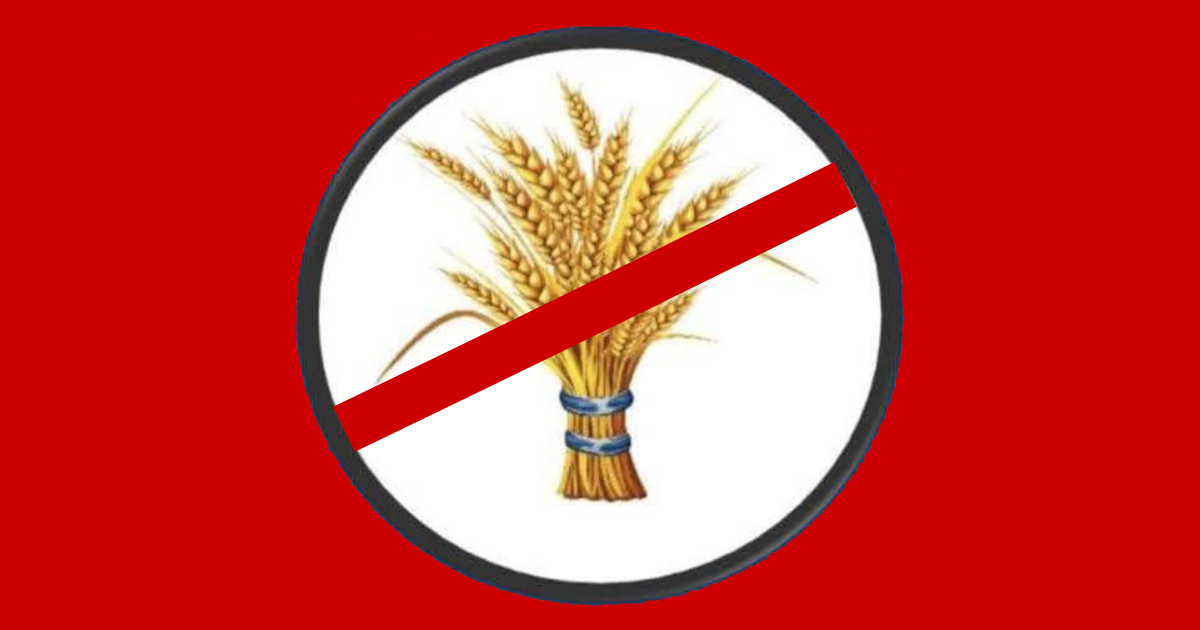
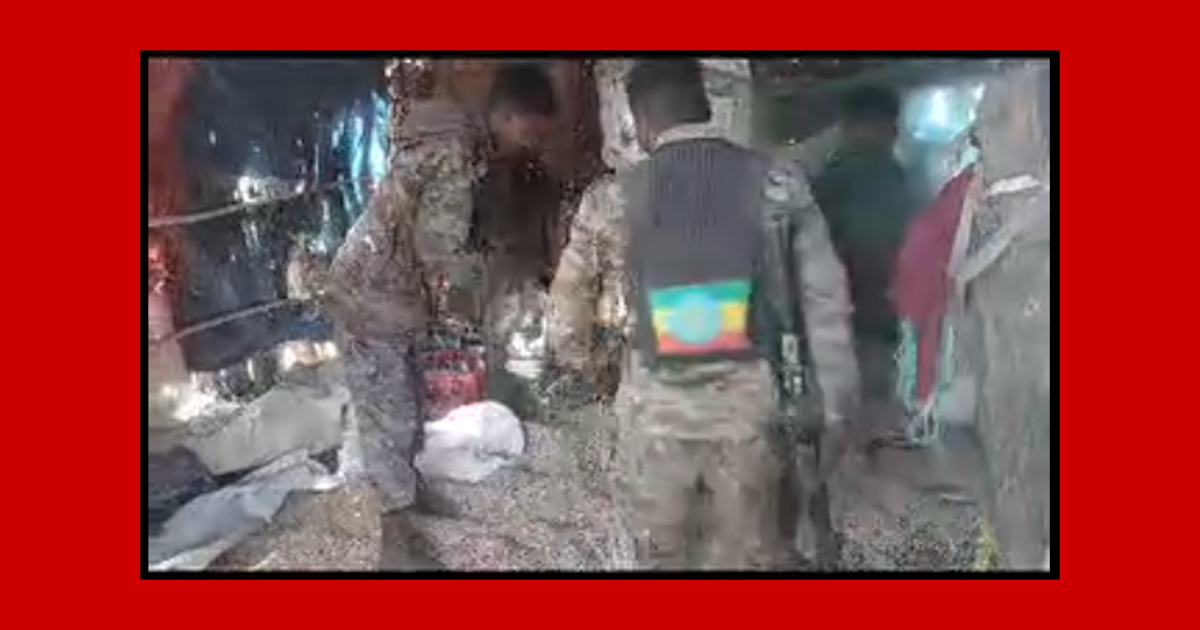
Video footage circulating on social media showing ENDF forces deliberately destroying grain stored in Amhara farmers’ warehouses [1] stopped me cold. If you were challenged to write an essay on this sadistic act, what would your take be? How would you title it—The Banality of Cruelty in a Militarized State? When the State Trains Young Men to Laugh at Hunger?
For me, this footage reveals far more than a single atrocity. It exposes something deeply rotten—structural, inherited, and unresolved—at the core of an empire called Ethiopia.
Please bear with me. Stay with me for a brief but unflinching analysis of what lies beneath the surface.
PART I – What the Video Footage Tells Us
1. From Violence to Vandalism of Life
The destruction of grain is not an act against property; it is an act against future life. In a world where millions go hungry every day, grain is deferred survival. It is winter stored in advance. It is children who will eat months and weeks from now, if not today. It is continuity made tangible amid global scarcity. To deliberately contaminate it is to send a chilling message: your right to today and tomorrow is revoked.
Psychologically, this represents a decisive shift. The population is no longer seen as an adversary to be subdued, nor even as collateral damage in a broader conflict, but as biological surplus—people whose suffering is not merely acceptable but irrelevant. Their survival ceases to carry moral weight.
Such a shift does not arise spontaneously. It is not the product of a bad day, a moment of rage, or battlefield confusion. It is cultivated, slowly and deliberately, by systems that normalize the erasure of civilian futures.
2. Moral Disengagement: When Atrocity Feels Like a Task
Albert Bandura’s concept of moral disengagement [2,3] provides a precise psychological lens for what the footage reveals. Several mechanisms operate simultaneously.
Dehumanization reduces farmers to “the other side,” “the problem,” or an abstract threat category. Diffusion of responsibility ensures no individual soldier feels accountable—orders were followed, everyone was involved. Euphemistic framing recodes the act as a “search” or “security operation,” stripping it of its true meaning: starvation by proxy.
Group validation is critical. Laughter functions as collective authorization. It signals shared permission, mutual reinforcement, and the collapse of internal moral resistance. Cruelty becomes a bonding ritual.
3. Youth, Power, and the First Taste of Absolute Impunity
The youthfulness of the soldiers is not accidental. Late teens to early twenties is a formative stage of identity, where moral frameworks are malleable and authority approval carries disproportionate weight.
Give young men weapons, uniforms, insulation from consequence, and a narrative that frames destruction as duty or patriotism, and sadism is unnecessary. The system will manufacture cruelty on demand.
Most perpetrators of such acts were not born cruel. They were retrained.
4. State Violence as Pedagogy
This footage is not merely about punishing a particular community. It is about teaching society a lesson.
The lesson is blunt: your labor can be erased; your foresight will not save you; there is no protected civilian space. This is violence deployed as instruction. It is how states attempt to discipline populations when legitimacy has collapsed and consent can no longer be secured.
5. This Is Not a Curse. It Is a System Failure.
Calling this a curse may feel emotionally accurate, but it is analytically empty. Curses explain nothing and absolve everyone.
What we are witnessing is not metaphysical evil. It is institutionalized moral numbness, rewarded brutality, and a political order that treats cruelty as a legitimate instrument of governance. When domination is taught as strength and mercy as weakness, soldiers internalize that lesson faster than any ideology.
6. Why Ethiopia Keeps Reproducing This Pattern
Because the Ethiopian empire—now operating under different "administrative" tag names—has never dismantled its core architecture of impunity. Regimes change. Rhetoric changes. One rule persists: power is never held accountable for what it does to civilians.
When violence is never processed through truth, justice, or restitution, it does not disappear. It accumulates. It mutates. It is inherited. This is the living embodiment of the Principle of Accrued Injustice.
PART II – The Empire That Outlived Its Rulers
1. What “Architecture of Impunity” Actually Means
Impunity in Ethiopia is not episodic. It is structural.
The empire was built through conquest, forced assimilation, land dispossession, and cultural erasure, yet this foundational violence was never acknowledged or bounded. It became constitutive rather than exceptional.
Power was sacralized across regimes—imperial, revolutionary, federal, reformist—producing a dangerous invariant: the state is always morally right by definition. When power is sacred, accountability becomes heresy.
Each regime promised rupture while preserving the same coercive machinery:
- security forces above civilian law,
- emergency powers as routine governance,
- collective punishment normalized, and
- a center-over-periphery logic intact.
Personnel rotated. Manuals remained.
Crimes were never closed. There were no truth commissions with teeth, no institutional memory of wrongdoing, no internalized prohibitions. Unresolved violence does not fade. It waits.
2. Why Every New Regime “Becomes the Beast”
Every new regime arrives condemning its predecessor. Every one inherits an empire designed to rule through fear rather than consent. Legitimacy is always partial. Crisis inevitably emerges.
The empire then offers its oldest solution: coercion. Rulers face a choice—dismantle the coercive logic and risk losing control, or ride the beast and believe they can steer it. They always choose the second.
The beast does what beasts do. It feeds.
3. Why “Good Intentions” Collapse Fast
The assumption that the right people in power will make the system behave differently fails because systems train behavior faster than ideology.
The empire teaches that dissent is existential threat, mercy signals weakness, civilians are leverage, and punishment restores order. Even reformers are re-socialized by the machinery of power.
This is why revolutionaries become autocrats, reformers become enforcers, and victims become perpetrators—not because they are uniquely immoral, but because the empire has no alternative operating system.
4. The Army as the Empire’s Memory
The army does not merely enforce the empire; it remembers it.
- Doctrine is inherited.
- Impunity is learned early.
- Civilians are framed as terrain rather than citizens.
- Collective punishment is normalized as stability.
Young soldiers need only permission and precedent. The empire supplies both.
5. Why the Empire Cannot Be Reformed—Only Transcended
You cannot govern an empire built on impunity into moral legitimacy. You can only dismantle it, radically re-found it, or continue administering cruelty in cycles.
Federalism without accountability failed. Reform without justice failed. Unity without consent keeps failing. The empire is not mismanaged. It is morally obsolete.
6. The Deeper Tragedy
Each generation is told, “This time we will control it.” Each time, the empire teaches them otherwise.
When young soldiers laugh while destroying grain, they are not laughing at farmers. They are laughing because the empire has taught them this is power—and power has no consequences.
PART III – Why the Ethiopian Empire Is Structurally Flawed to Bring Peace
The empire’s most devastating feature is not brutality alone, but its ability to outsource violence across regions, dissolving accountability at the center. This is not accidental. It is structurally convenient.
Who the soldiers are matters. When forces are deployed outside their home regions—Tigrayan soldiers in Amhara, Amhara forces in Oromia, Oromia or Southern forces elsewhere—violence becomes psychologically easier and morally cheaper. Local restraint disappears. What would be unthinkable at home becomes routine elsewhere.
Regions exist administratively, but coercive power is never regionalized. Security remains centralized, mobile, and deliberately detached from local accountability. When atrocities occur, responsibility fractures horizontally into ethnic blame and communal resentment, while the center remains abstract, untouched, and unanswerable.
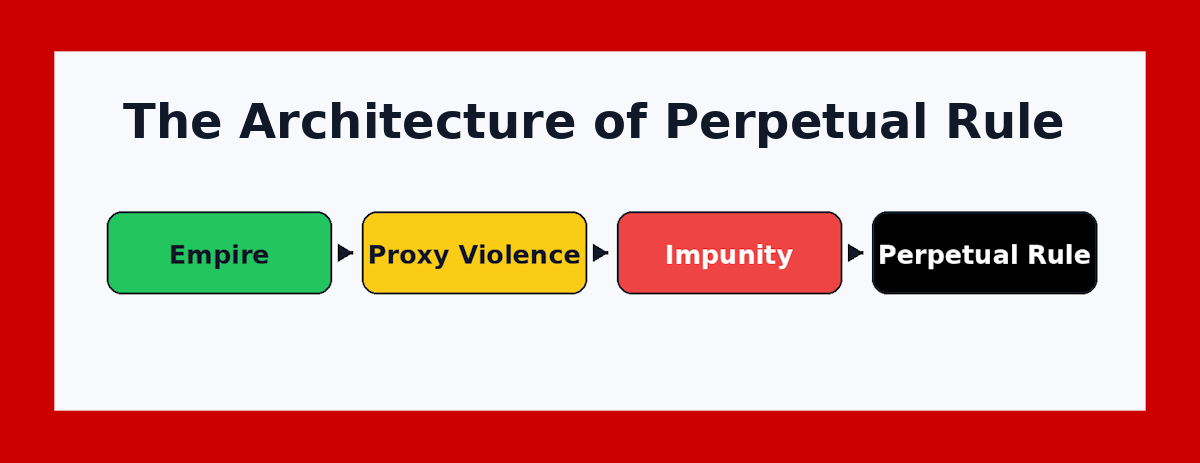
What emerges is not a single civil war but a rotating proxy war system. One region is framed as the threat. Another is mobilized against it. Grievances deepen laterally. Solidarity collapses. The center then presents itself as the only arbiter of order in a chaos it quietly engineers.
This system serves perpetual rule perfectly. A population fighting laterally cannot organize vertically. Every crime is reframed as inter-communal. Every atrocity dissolves into ethnic recrimination. The architect remains invisible.
This is why the empire endures—not because it is strong, but because guilt is dispersed and violence is recycled.
A genuine federation, confederation, even independence grounded in self-determination would break this system instantly. It would prohibit the use of one region’s forces against another’s civilians, localize security accountability, and tether coercive power to community consequence. In doing so, it would outlaw empire behavior itself.
That is precisely why real federalism cannot be tolerated under the current order. Perpetual war is not a failure of governance. It is the method. And proxy violence is its insurance policy.
To the Ethiopian people: please open your eyes. Peace that is built on denial, coercion, or perpetual war is not peace at all. If lasting peace requires Ethiopia to loosen, reconfigure, or even disintegrate into self-determined parts, then so be it. Humanity must override our pretenses, our fears, and our inherited myths. Only free peoples can choose unity meaningfully. And if, after genuine self-determination, we decide to come together again—even under a name some dread today—that choice will finally be moral, voluntary, and real. If this sounds unsettling, think again.
The alternative is far worse. The status quo will go on ad infinitum.
References
- የብልጽግና ሰራዊት በህዝቡ ላይ እያደርሰ ያለዉ ግፍ (A Facebook Reel Video Post), Facebook.
- Albert Bandura - Wikipedia.
- Moral disengagement - Wikipedia.
- Elemoo Qilxuu and Roobaa Hawaas, The Policy of Lying: How Power Is Sustained by Fabrication, 6 February 2026, OROMIA TODAY.
- OT Editorial, An Empire That Refuses to Learn — When Power Is Reduced to Drawing Lines with Assab Port, 6 January 2026, OROMIA TODAY.
- Kumaa Daadhii, Injustice Always Produces Independence, 21 December 2025, OROMIA TODAY.
- Biqila Bariso, The First Principles Violated: The Simple Truth Behind a Century of Ethiopian Instability, 11 December 2025, OROMIA TODAY.
- Yadessa Guma, Why Oromia’s Future Demands Clarity: Independence vs. “Democritizing Ethiopia”, 24 November 2025, OROMIA TODAY.
- Elemoo Qilxuu, Kumaa Daadhii and Olii Boran, The Politics of Spite—How Oromia’s Foundations Expose the Empty Ambitions of a Troubled Region, 12 November 2025, OROMIA TODAY.
- Olii Boran, When Power Fears Light: The Parable of an Empire Half-Blind, 6 November 2025, OROMIA TODAY.
- Yadessa Guma, Peaceful Divorce, Shared Future, 4 November 2025, OROMIA TODAY.
- OT Editorial, A Time Bomb Buried in Oromia and Somali Region, 27 August 2025, OROMIA TODAY.
- OT Editorial, The Sinister Dirty Game of the PP Regime with Moyale, 5August 2025, OROMIA TODAY.
- Editorial Team, 10 Questions That Demand Silent Self-Honesty,23 July 2025, OROMIA TODAY.
- Yadessa Guma, The Idea of Oromia Shall Never Be Extinguished, 12 July 2025, OROMIA TODAY.
- OT Editorial, Sleepwalking into the Tyranny of Geography, 13 June 2025, OROMIA TODAY.
- OT Editorial, The Death of Federalism by Agenda, 6June 2025, OROMIA TODAY.
- Olii Boran, The Myth of Ethiopia’s Historical Continuity: A Political Invention Disguised as Legacy , 17 March 2025, OROMIA TODAY.
- Olii Boran, Leading by Chaos, Not Competence, 4 December 2024, OROMIA TODAY.
- Elemoo Qilxuu, ETHIOPIA WILL NEVER BE AT PEACE WITHOUT RESOLVING THE OROMO QUESTIONS, 2 December 2024, OROMIA TODAY.
- Elemoo Qilxuu, ETHIOPIA'S 6 BIG LIES FUELING ITS IMPENDING COLLAPSE, 13 March 2024, OROMIA TODAY.
- Roobaa Hawaas, A Missed Opportunity for Peace in Oromia, 22 November 2023, OROMIA TODAY.