
Finfinnee: Decolonisation or Colonisation by Another Name?

The Historical Question That Administrative Relabelling Cannot Erase
Much is currently being said about the future of Finfinnee.
Yet beneath the proposals of administrative terminology, conference procedures and competing proposals lies a much older and more fundamental question:
Can the historical dispossession of a people be resolved by asking others what administrative label should be placed upon the land from which they were dispossessed?
That is the question Ethiopia's latest political exercise appears determined not to confront.
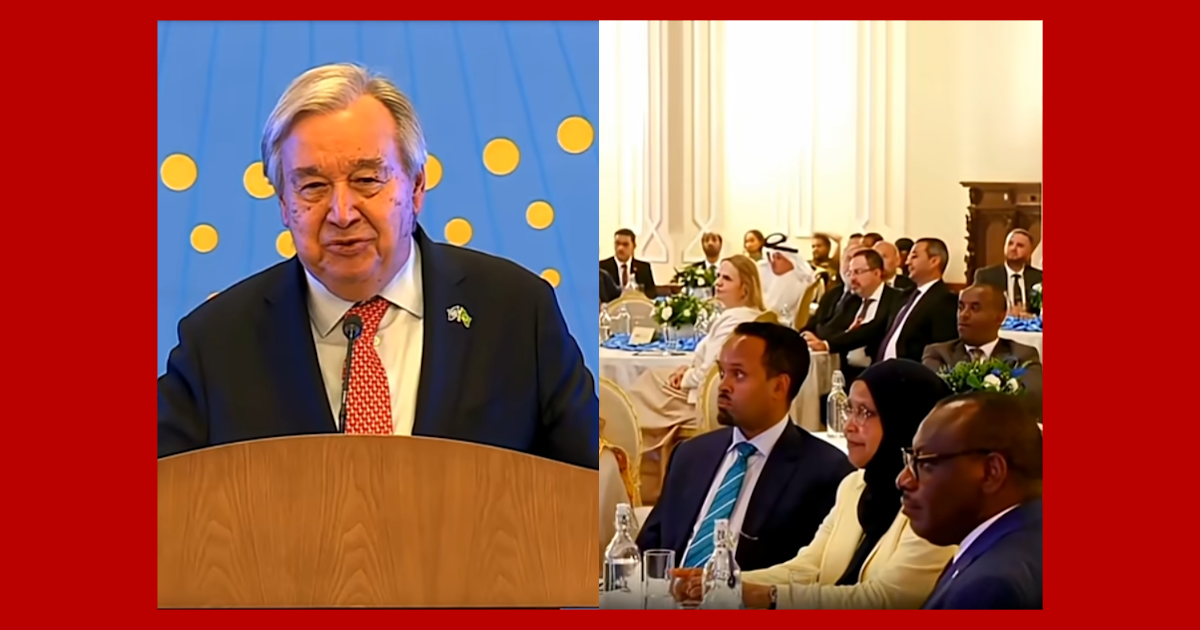
Four thousand participants have been assembled under the Ethiopian National Dialogue Commission (ENDC) to deliberate upon some of the most consequential questions facing the Ethiopian state.
Numbers, however, do not manufacture legitimacy. Four thousand people assembled in a conference hall do not become a constituent assembly merely by being numerous.
When questions concern constitutional rights, territorial relationships, historical dispossession and the future of nations, representation matters.
- Mandate matters.
- Expertise matters.
- Consent matters.
- Above all, the participation of the people whose rights are directly at stake matters.
This becomes particularly serious when the discussion reaches the foundations of Ethiopia's multinational federal settlement — including the principles embodied in Article 39 and the constitutional relationship between Finfinnee and Oromia under Article 49.
The irony is difficult to miss.
At a moment when Ethiopia desperately needs reconciliation, recognition and historical repair, the political conversation appears instead to be drifting towards dismantling some of the constitutional accommodations created precisely because the old unitary state had failed.
The Wrong Question Is Being Asked
And nowhere is that contradiction more visible than in the debate over Finfinnee.
The Question Begins Before Article 49. Article 49 Did Not Create the Finfinnee Question.
The political status of Finfinnee cannot seriously be discussed as though history began with the 1995 Constitution.
Article 49 did not create the Finfinnee question. It inherited it.
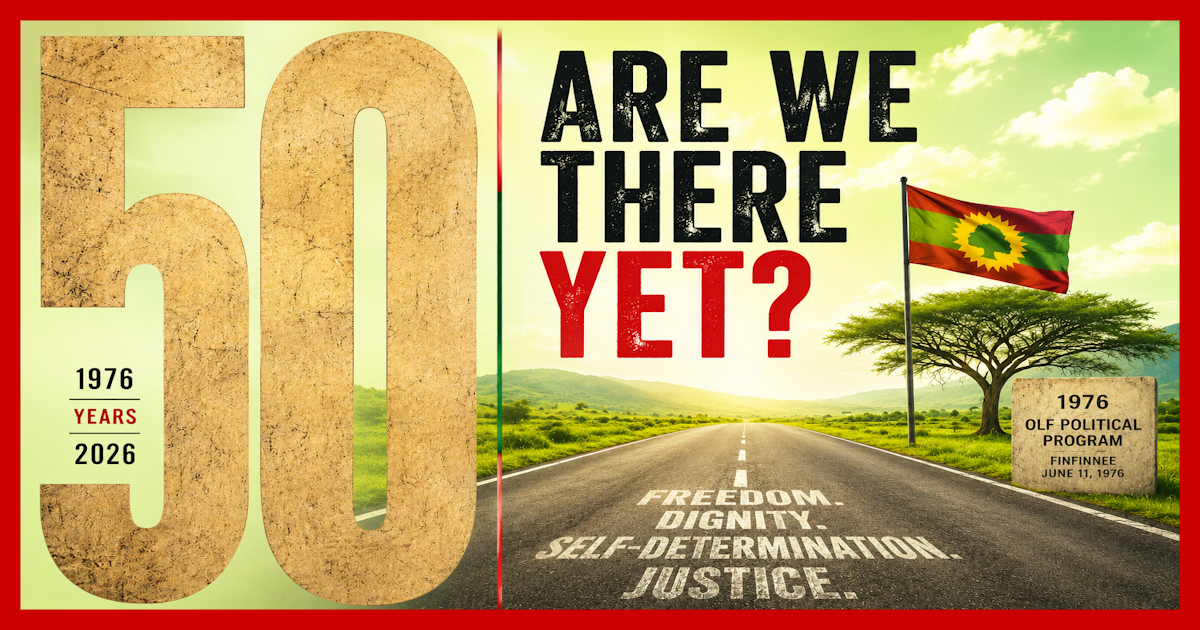
Long before constitutional lawyers began debating federal territories, chartered cities and regional jurisdictions, Finfinnee stood in the heartland of the Tulamaa Oromo [1].
The transformation of that Oromo landscape into the imperial capital called Addis Ababa accompanied Menelik II's southward imperial expansion. Oromo communities were exterminated or displaced and their land progressively appropriated as the imperial political and military centre expanded.
What began as an imperial centre grew into the administrative, commercial and political capital of the Ethiopian imperial state.
But urban growth did not extinguish the original injustice. It accumulated upon it.
As the city expanded, the indigenous Oromo population was increasingly pushed towards its margins. Oromo language, culture, place names and political presence were subordinated within a capital constructed in Oromia yet historically detached from Oromo political authority.
This is not ancient history buried beneath archaeological layers. It is measured in generations as recent as three to four generations.
Families retain memories of land, villages and communities absorbed by the expanding capital. And the process did not simply stop at some convenient historical date.
Expansion around Finfinnee continues to generate disputes over displacement, compensation, development, identity and the fate of Oromo farming communities surrounding the metropolis.
Indeed, the dispossession did not end with the imperial era; it continues in contemporary forms until today. Under the banner of development, Oromo communities continue to face the loss of ancestral lands through projects such as the Aabbuu Seeraa International Airport and the Adama–Mojo Supercity [2,3,4,5,6] raising profound questions about whether development is being pursued at the expense of the indigenous population.
That continuity matters enormously.
Because once the historical question is restored to the discussion, the present debate looks very different.
Imagine the Same History Somewhere Else
Sometimes an injustice becomes easier to recognise when stripped of the names and political loyalties that surround it.
Imagine a neighbouring power, equipped with superior modern weaponry obtained from abroad, advancing into another people's territory.
It occupies a strategically valuable location and establishes a military and administrative garrison from which further expansion can be organised.
The indigenous inhabitants are killed and displaced from the land surrounding that garrison.
The settlement grows.
Officials arrive. Soldiers arrive. Traders arrive. Labourers and service providers arrive. Roads converge upon it.
Government institutions concentrate there. Capital follows political power, and commerce follows capital.
Within generations, the former garrison becomes the country's largest economic centre.
The original inhabitants, meanwhile, find themselves increasingly marginalised from the city built upon their ancestral territory.
Then comes the extraordinary final act.
Because the settlement has grown large, because people have subsequently migrated there from across the country, and because it has acquired national economic importance, the descendants of the people originally dispossessed are told that their historical relationship with the city has somehow become negotiable.
The success of the settlement created through dispossession is presented as evidence that the dispossession must now be made permanent.
Colonisation, in other words, is invited to legitimise itself through the demographic and economic consequences of colonisation.
More troubling still, the settler political and military administrators, together with the settler population and labour force attracted by the garrison city, are expected to dictate what Finfinnee should become. This amounts to allowing the beneficiaries of colonisation to adjudicate the legitimacy of the colonial enterprise itself—a proposition that would be difficult to defend in any serious decolonisation discourse.
That is the conceptual trap at the centre of the Finfinnee debate.
Four Options, One Underlying Assumption
The emerging discussion over Finfinnee has reportedly entertained several possible constitutional arrangements: an independent regional status, a self-governing city, a federal city, or recognition of Finfinnee as a city within Oromia.
At first glance, this appears admirably pluralistic.
Look again.
Four Options — or One Idea Wearing Three Costumes, with the Legitimate Option Pushed to the Last as a Last Resort?
From the standpoint of the historical relationship between Finfinnee and Oromia, the first three formulations share essentially the same premise: Finfinnee must remain constitutionally detached from the Oromo territory in whose heart it stands.
The terminology changes.
The underlying proposition does not.
- Call it an independent region.
- Call it a self-governing city.
- Call it a federal territory.
The constitutional wrapping may differ, but if the substantive outcome is the permanent severance of Finfinnee from Oromia, the historical relationship remains denied.
Only the fourth proposition begins from a fundamentally different premise: that Finfinnee is a city of Oromia and that Ethiopia's federal institutions may operate from that city through an arrangement negotiated with Oromia.
Curiously, what ought to be the historical starting point appears instead as merely one option among several.
It is rather like dispossessing someone of a house and, generations later, convening a conference to decide whether the house should become a condominium, a federal residence or an autonomous dwelling — while treating restoration to its dispossessed owner as the radical fourth last resort option.
The absurdity lies not merely in the possible answers. It lies in who has assumed the authority to frame the question.
The PPDC Problem: Dialogue Without the Necessary Mandate
Can a Dialogue Without Representation Decide History?
The "Ethiopian National Dialogue Commission" calls the process a national dialogue.
Its critics are entitled to ask a harder question: dialogue between whom, authorised by whom, and empowered to decide what?
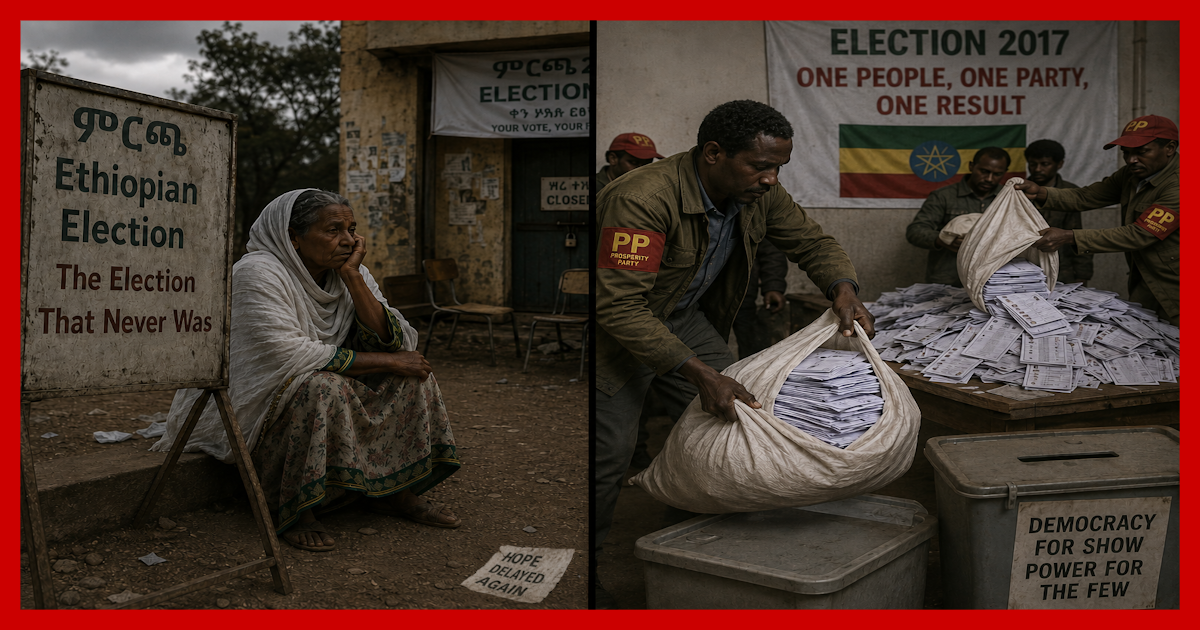
For that reason, we have increasingly found ENDC [7] a misnomer and PPDC — Prosperity Party Dialogue Commission — a more politically revealing description of what the process has become.
A national dialogue worthy of that name should help adversaries confront historical grievances that ordinary politics has failed to resolve. If it has to live up to its badge as a dialogue commission [7], it should broaden political participation, establish trust and create space in which conflicting historical narratives can finally be examined.
It should not provide procedural theatre through which predetermined political projects acquire the appearance of popular consent.
Nor can thousands of selected discussants substitute for constitutionally legitimate representation when questions involving the rights of nations, territorial relationships and fundamental constitutional bargains are at stake.
This distinction is especially important because the debate reaches beyond Finfinnee.
Did Recognition Cause the Crisis—or Reveal It?
Article 39 — including the constitutional recognition of nations, nationalities and peoples and their right to self-determination — has long been blamed by Ethiopian centralists for the country's political fractures.
The argument is peculiar.
It effectively proposes that recognising suppressed languages, cultures and national identities caused the conflict rather than asking whether generations of suppressing them created the conflict in the first place.
By that reasoning, recognising an injury causes the wound.
The diagnosis is backwards.
Ethiopia did not become multinational because the 1995 Constitution declared it so. The Constitution attempted — however imperfectly — to accommodate a multinational reality that long predated it.
Erasing the constitutional recognition does not erase the nations.
It merely erases their constitutional protection.
Finfinnee’s Residents Are Not the Accused and Decolonisation Is Not Eviction
There is an equally important distinction that must be made.
Historical justice cannot mean transferring collective guilt to today's residents of Finfinnee.
Millions of people now call the city home. Many were born there. They include Ethiopians from virtually every background, as well as generations of Oromo residents. Ordinary people living in Finfinnee today did not personally conduct Menelik's conquests, and they cannot sensibly be held individually responsible for nineteenth-century imperial expansion.
Decolonisation is not eviction.
Nor should it mean replacing one form of domination with another.
The question is institutional and political: whether the constitutional status of the city should continue to embody the historical separation of Finfinnee from Oromia, or whether a new settlement can acknowledge Oromo ownership and jurisdiction while protecting the civil, cultural, property and political rights of every resident.
Indeed, recognition of Finfinnee as a city of Oromia should require precisely such guarantees.
Historical justice worthy of the name does not manufacture tomorrow's victims in order to compensate yesterday's.
It repairs the political structure that produced the injustice.
Why Is Oromia Always Asked to Surrender?
There is another question almost entirely absent from the discussion:
Why Oromia?
Why is the constitutional imagination of the Ethiopian state repeatedly exercised upon Oromo territory?
The pattern did not end with the imperial era. Although the federal constitution of 1995 represented a historic attempt to recognise Ethiopia's multinational reality, its implementation was marked by a series of territorial arrangements that remained deeply contentious among many Oromo communities. Rather than closing the chapter on historical dispossession, these decisions introduced a further layer of disputes over boundaries and administrative control, the details of which lie beyond the scope of this discussion but are nevertheless important in illustrating how territorial questions affecting Oromia continued to accumulate.
The consequence was that the question repeatedly resurfaced: why did territorial accommodation so often appear to come at Oromia's expense?
So we ask again in the context of the current debate:
- Why must Finfinnee be detached from Oromia to serve Ethiopia?
- Why should Dire Dawa — another city historically and geographically bound to Oromia — similarly become an object of federal experimentation?
Why does accommodating the Ethiopian state so often require Oromia to surrender territory, jurisdiction or historical claims?
One could reverse the proposition.
If Ethiopia requires a federal capital independent of every constituent state, why must that territory necessarily be carved out of Oromia?
If the principle is genuinely constitutional rather than historical convenience, then the federation could identify another location and construct a purpose-built federal capital.
Many countries have created capitals deliberately.
There is no natural law requiring Ethiopia's federal institutions to remain permanently headquartered in Finfinnee.
But there is an obvious reason the question sounds almost unthinkable.
Finfinnee contains enormous accumulated political, institutional and economic capital.
And therein lies the paradox.
The very wealth and strategic importance accumulated after the establishment and expansion of the imperial capital are now invoked, implicitly or explicitly, to justify permanently separating the city from the people upon whose territory that capital was accumulated.
The historical consequence becomes the justification for preserving its historical cause.
Decolonisation Requires More Than a New Label.
Constitutional Relabelling Cannot Deliver Historical Justice
A genuine national dialogue would therefore ask a different set of questions.
What happened to the Tulamaa Oromo communities upon whose lands the imperial capital expanded?
How should that history be formally acknowledged?
What land was appropriated, under what circumstances, and with what consequences?
How have subsequent expansions of Finfinnee affected surrounding Oromo communities?
What institutional mechanisms could provide historical recognition, cultural restoration, equitable economic participation and protection against further dispossession?
And, ultimately, what constitutional arrangement reconciles Finfinnee's contemporary metropolitan reality with the historical and territorial rights of Oromia?
Those are difficult questions.
But difficult questions are precisely what a genuine national dialogue exists to confront.
Changing constitutional terminology while leaving the foundational injustice untouched is easier.
It is also why it will fail.
A federal city, autonomous city or independent city-region may sound modern and administratively sophisticated. But constitutional vocabulary cannot perform historical magic.
A colony does not cease to be a colony merely because lawyers discover a more elegant name for it.
The Cost of Compound Historical Injustice
Unlike an ordinary debt, historical injustice accrues compound interest. Each generation that declines to remedy the original wrong adds new layers of political, economic and demographic advantage upon the old injustice.
Time does not erase the debt; it enlarges it.
Recognition, Restitution and Reconciliation
The way forward need not be vindictive.
On the contrary, the Oromo case for Finfinnee can be framed around three principles: recognition, restitution and reconciliation.
Recognition means acknowledging honestly how the imperial capital came into existence and what happened to the Oromo communities affected by its establishment and expansion.
Restitution means restoring the constitutional relationship between Finfinnee and Oromia and addressing continuing patterns of dispossession and marginalisation.
Reconciliation means constructing guarantees under which Finfinnee remains the cosmopolitan home of all its residents, irrespective of ethnicity, language, religion or origin.
These principles are not mutually exclusive.
They reinforce one another.
The Time for Historical Honesty
Finfinnee can be an Oromo city and a cosmopolitan African metropolis.
It can belong constitutionally to Oromia while hosting federal and international institutions.
It can recognise Afaan Oromo and Oromo history without suppressing the languages or cultures of anybody else.
It can correct an historical injustice without committing a new one.
What it cannot sustainably do is build reconciliation upon permanent denial.
The Choice Is Decolonisation or Postponement
Ethiopia has spent generations attempting to manage unresolved historical questions without resolving them.
- The names of institutions change.
- Constitutions change.
- Governments change.
- Political slogans change.
But an injustice that is repeatedly renamed rather than remedied eventually returns to the political agenda.
Finfinnee is one such question.
The current debate therefore presents Ethiopia with an opportunity much larger than the administrative status of one city.
It can once again seek a constitutional formula ingenious enough to preserve the consequences of conquest while avoiding the vocabulary of conquest.
Or it can finally confront the history. That begins with a simple recognition:
- Finfinnee is an Oromo city. Finfinnee is a city of Oromia.
- Its contemporary diversity does not invalidate its history.
- Its economic importance does not extinguish Oromo rights.
- Its role as the seat of federal institutions does not transform it into territory without an indigenous homeland.
The task of statesmanship is therefore not to invent another constitutional label under which the old relationship survives.
It is to devise a democratic arrangement through which historical justice and contemporary coexistence can survive together.
That requires decolonisation — not expulsion; restoration — not revenge; reconciliation — not denial.
And perhaps, after generations of accumulated injustice, something else is overdue too: an acknowledgement and an apology.
The sooner Ethiopia recognises that reality, the sooner Finfinnee can cease being a monument to an unresolved past and become something far more valuable: a foundation for a just peace.
References
- Elemoo Qilxuu, The Unshakeable Truth: Finfinnee is an Oromo City, 18 February 2025.
- Aabbuu Seeraa: Building Progress on Indigenous Erasure, 30 January 2026, OROMIA TODAY.
- Building and Naming Without Consent: The Aabbuu Gosa, the New Airport Project, and Their Permanent Legacy, 14 January 2026, OROMIA TODAY.
- Waayee Aabbuu Seeraa Fi Misooma Ilaalchisee, Ergaa Faarseebulaa Fi, 12 January 2026, OROMIA TODAY.
- Save the Tuulamaas and Their Ancestral Lands, 9 January 2026, OROMIA TODAY.
- The Oromo People Demand a Prerequisite for the Abbuu Seeraa Airport Project, 27 April 2025, OROMIA TODAY.
- OT Editorial, To the Ethiopian National Dialogue Commission: You Are Wasting Your Time and Everyone Else’s, 31 January 2025, OROMIA TODAY.
- OT Editorial, Intellectual Capital Deficiency in Governance, 8 August 2925, OROMIA TODAY.


This is a powerful piece, and it names something too often obscured by procedural language: what’s at stake in this “national dialogue” is not administrative tidiness but the single constitutional thread — Article 39’s recognition of nations’ self-determination and Article 49’s framing of Finfinnee’s relationship to Oromia — that has held Ethiopia’s diverse nations and nationalities together within one state. Cut that thread, and what’s offered as reconciliation becomes its opposite.
The article’s reframing is essential: this isn’t a debate about federal cities versus autonomous regions. It’s a question of whether historical dispossession can be quietly ratified by relabelling it. The “imagine it happened elsewhere” thought experiment makes this vivid — success built on conquest doesn’t make the conquest legitimate; it just makes it harder to see.
Equally important is what the piece refuses to do: it doesn’t ask today’s Finfinnee residents to answer for Menelik’s conquests, and it doesn’t treat decolonisation as eviction. Recognition, restitution, and reconciliation — the article’s own framework — leaves room for a cosmopolitan Finfinnee that is also, honestly, an Oromo city.
The greater danger is procedural, not just territorial: a dialogue commission assembled without the mandate to touch Article 39 and 49 in the first place is positioning itself to unravel the very accommodation that makes a multinational Ethiopia possible — under the banner of dialogue rather than through it.