Skip to content
OROMIA TODAY

OROMIA TODAY

Oromia is a Country

BAKKALCHA OROMIYAA
  • Home
  • Articles
  • Editorial
  • News
  • Opinions
  • About
  • Contact
OROMIA TODAY
OROMIA TODAY
Oromia is a Country
BAKKALCHA OROMIYAA
  • Amharic
    Article | Language | Research | ⏭

    Amharic Language Shift Among Agaw, Qimant and Oromo CommunitiesAnd Why These Amount to Ethnocide and Must be Reversed

    By Yadessa Guma (PhD, Anthropology) Posted on2026-01-042026-01-02

    This article synthesizes sociolinguistic research on language shift among Agaw, Qimant, and Oromo communities in northern Ethiopia to explain why Amharic replacement is best understood as a long-term institutional process rather than a sudden loss. Drawing on comparative evidence, it argues that “Amhara” functions historically as a linguistic–social formation shaped by schooling, administration, and mobility incentives, while showing how minority languages can persist, decline, or revive depending on intergenerational transmission and institutional support.

    Read More Amharic Language Shift Among Agaw, Qimant and Oromo CommunitiesAnd Why These Amount to Ethnocide and Must be ReversedContinue

  • fringe party
    Article | Op-Ed | Politics | ⏭

    Erasing Oromia: How a Fringe Party Exposed the Complacency and Paralysis of Oppressed Nations and Nationalities of the Ethiopian Empire

    By Elemoo Qilxuu (MA, Political Science) and Olii Boran (PhD, Sociology) Posted on2025-12-072025-12-06

    A fringe party’s audacious proposal to erase Oromia and other regions of the oppressed nations and nationalities has exposed a deeper crisis: the entrenched complacency and political paralysis of the majority. This is not merely the aggression of a fringe party attempting to erase Oromia and other regions; it is the predictable outcome of a majority conditioned to tolerate the intolerable. Ethiopia’s tragedy persists because boldness from the few meets silence from the many.

    Read More Erasing Oromia: How a Fringe Party Exposed the Complacency and Paralysis of Oppressed Nations and Nationalities of the Ethiopian EmpireContinue

  • Politics of Spite
    Article | Opinion | Politics | ⏭

    The Politics of Spite—How Oromia’s Foundations Expose the Empty Ambitions of a Troubled Region

    By Elemoo Qilxuu (MA, Political Science), Kumaa Daadhii (PhD, Political History) and Olii Boran (PhD, Sociology) Posted on2025-11-122025-11-09

    Oromia now faces a widening expansionist push—driven by local opportunists, reinforced by external actors, and carried along by a region long caught up in the politics of spite that has defined the Horn. These forces promote territorial fantasies that collapse under scrutiny. The article argues that only a free, self-determined Oromia can break this cycle, restoring stability to the Horn and creating the conditions for a genuine synergy of prosperity with its neighbors.

    Read More The Politics of Spite—How Oromia’s Foundations Expose the Empty Ambitions of a Troubled RegionContinue

  • nuclear
    Article | Op-Ed

    A Reactor in a Tinderbox: Why Ethiopia’s Nuclear Ambition Demands Global Scrutiny

    By Biqila Bariso (PhD, Physics; MSc, Cognitive Sci.) Posted on2025-09-282025-09-28
    1 Comment

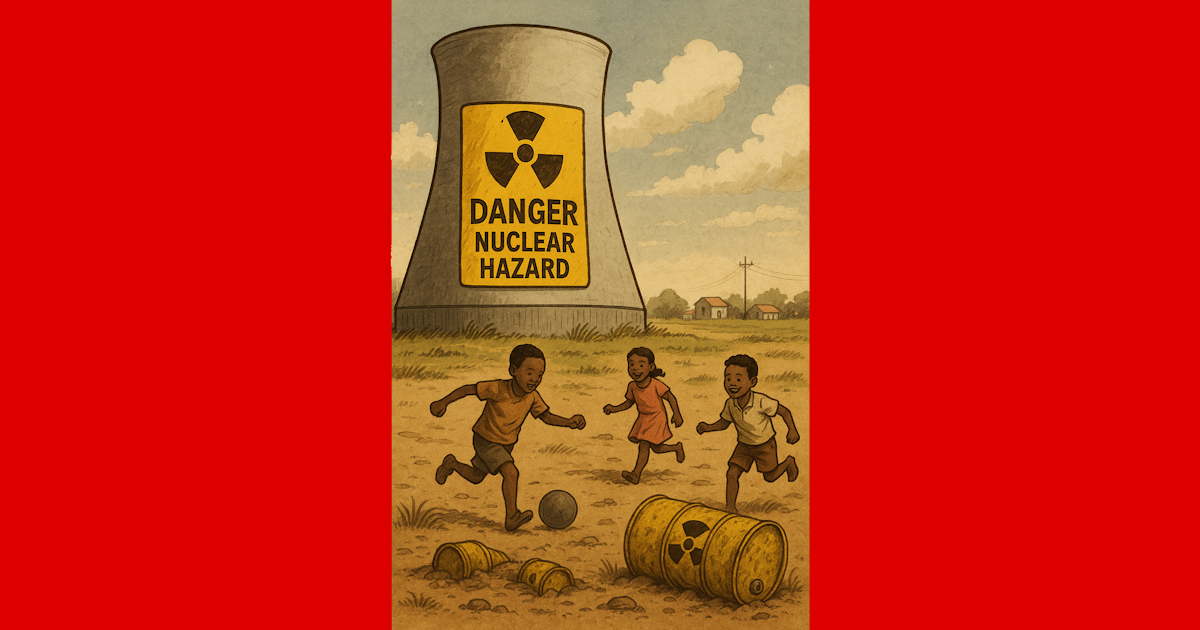
    Ethiopia’s push for nuclear power station is less about energy need than regime vanity, pursued by a leader who weaponize conflict, neglect citizens, and disregard safety. With a record of atrocities, proxy wars, and environmental neglect, entrusting such a volatile state with nuclear materials risks catastrophe not just for Ethiopia, but for the entire region.

    Read More A Reactor in a Tinderbox: Why Ethiopia’s Nuclear Ambition Demands Global ScrutinyContinue

  • dead language
    Article | Op-Ed

    The Amhara Elites’ Monumental Failure in Insisting on a Dead Language for Primary Education

    By Olii Boran (PhD, Sociology) Posted on2025-09-182025-09-18

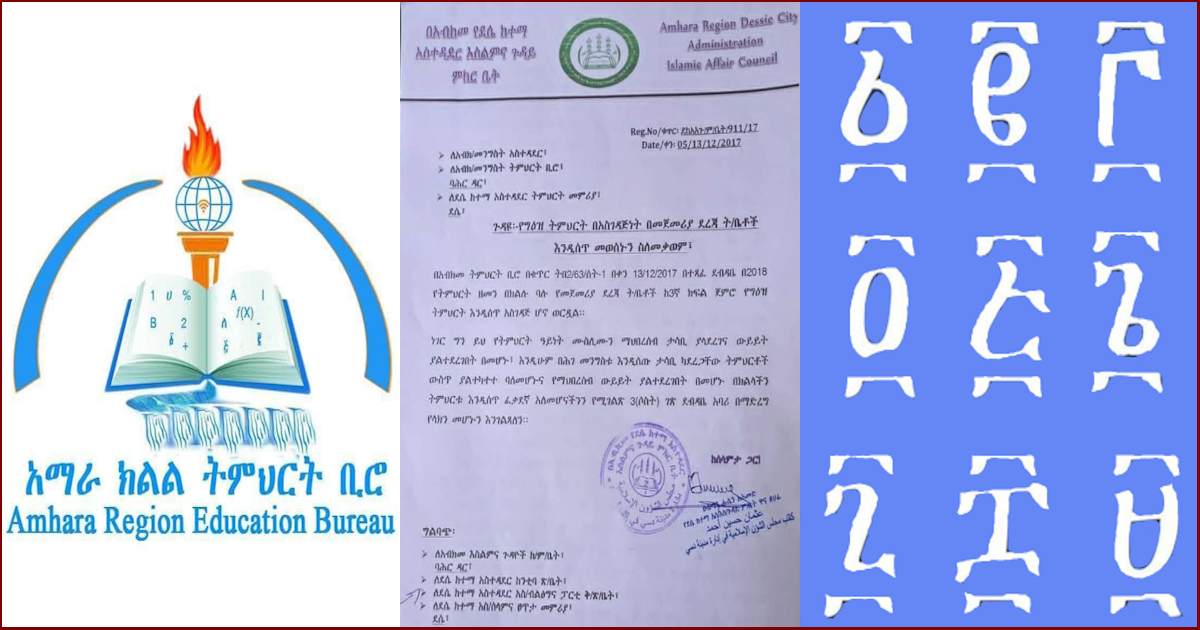
    The push to impose Ge'ez as a subject in Ethiopian primary schools in the Amhara region has reignited debate on the futility of elevating a dead language. Across history, such languages remain confined to liturgy or scholarship, never revived as mediums of modern schooling. Insisting otherwise is political miscalculation that risks alienation instead of cohesion.

    Read More The Amhara Elites’ Monumental Failure in Insisting on a Dead Language for Primary EducationContinue

  • Intellectual Capital
    Article | Essay | Op-Ed | Politics | ⏭

    Intellectual Capital Deficiency in GovernancePart One — Why the Horn of Africa Is a Global Case Study

    By Malkkaa Beenyaa (MA, Social Psychologist) Posted on2025-08-082025-08-08
    1 Comment

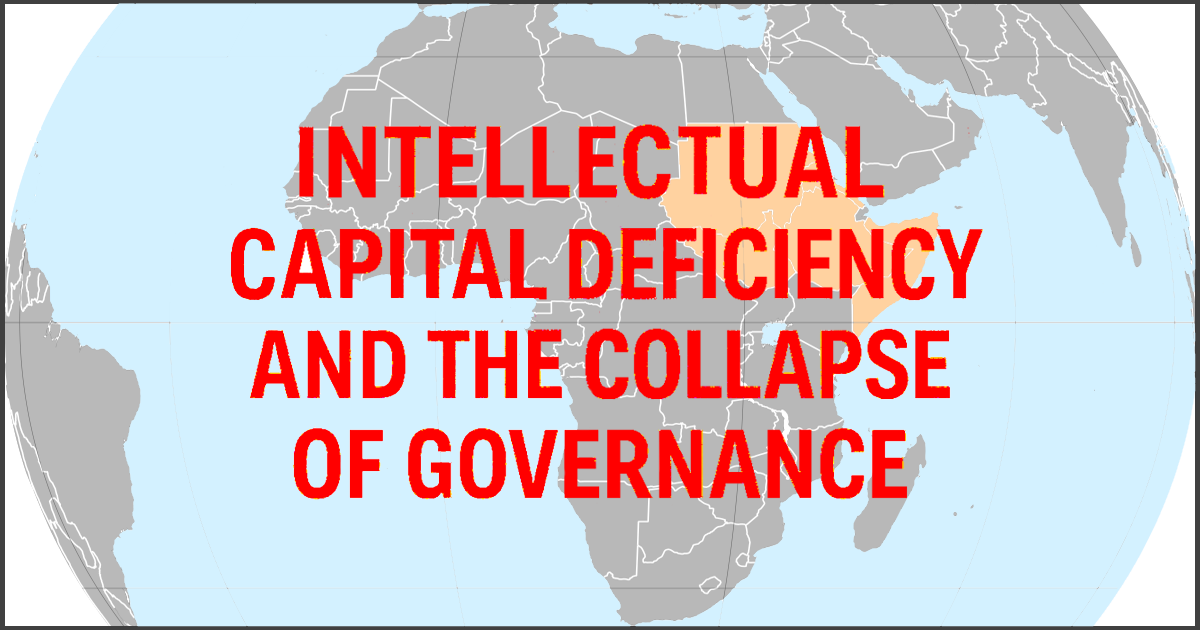
    This article applies the Intellectual Capital framework—widely used in business and development—to the sphere of governance. Using the Horn of Africa as a case study, it explores how deficiencies in Intellectual Capital weaken state resilience, fuel instability, and block long-term solutions, while offering insights relevant to governance challenges worldwide.

    Read More Intellectual Capital Deficiency in GovernancePart One — Why the Horn of Africa Is a Global Case StudyContinue

  • Shimelis Abdissa
    Article | Opinion | Politics | ⏭

    10 Compelling Reasons Shimelis Abdissa Is Not Effectively Governing Oromia

    By Editorial Team Posted on2025-07-302025-07-29
    1 Comment

    Shimelis Abdissa, nominally President of Oromia, has become emblematic of absentee leadership and quiet complicity in the face of tragedy, dispossession, and systemic betrayal. From his silence during national mourning to his role in dismantling Oromia’s autonomy and impoverishing its people, Shimelis serves not the Oromo nation but the pro unitary Ethiopia Prosperity Party (PP) regime. While we could come up with scores of reasons, for brevity and to get this to print, we chose 10 items that speak volumes.

    Read More 10 Compelling Reasons Shimelis Abdissa Is Not Effectively Governing OromiaContinue

  • Eritrea and Ethiopia
    Article | Commentary | Op-Ed | Politics | ⏭

    Eritrea and Ethiopia: Regret, Rivalry, and the Search for a Permanent Settlement

    By Itansaa Barii Posted on2025-07-242025-07-24

    The troubled relationship between Eritrea and Ethiopia has remained unresolved since independence in 1993. This essay explores whether Eritrea secretly regrets its separation, how President Afwerki's fixation on Ethiopian politics reflects deeper insecurities, and what the future holds. Is this a conflict frozen in time—or a struggle over imperial legacy and regional power?

    Read More Eritrea and Ethiopia: Regret, Rivalry, and the Search for a Permanent SettlementContinue

  • Faarseebulaa
    Article | Commentary | ⏭

    Digital Serfdom in Ethiopia: Faarseebulaa, Propaganda, and the Politics of Praise

    By Olii Boran (PhD, Sociology) and Ed Chapman (Digital Forensics Researcher) Posted on2025-05-222025-05-22

    Faarseebulaa refers to Ethiopia’s emerging class of Digital Serfs—individuals who voluntarily serve authoritarian systems through online propaganda. Unlike historical peasants or proletariats who resisted oppression, the Faarseebulaa defend it for personal gain, low self-worth, and limited awareness. They are not rulers, yet they passionately safeguard the system that exploits the majority.

    Read More Digital Serfdom in Ethiopia: Faarseebulaa, Propaganda, and the Politics of PraiseContinue

  • A Chilling Assimilation Blueprint of 1933 for the Oromo
    Article | Editorial | Politics | Verifiable History

    Haile Selassie’s Chilling Assimilation Blueprint of 1933 for the Oromo: When ‘Unity’ Meant Erasure

    By OT Editorial Posted on2025-05-072025-05-07

    Excerpt This article unveils the Chilling Assimilation Blueprint of 1933 for the Oromo people, a calculatedly policy framework of Haile Selassie's regime. Drawing from historical documents and translated accounts, it exposes how forced identity erasure was justified in the name of "national unity". Far from being a relic of the past, the blueprint reveals patterns...

    Read More Haile Selassie’s Chilling Assimilation Blueprint of 1933 for the Oromo: When ‘Unity’ Meant ErasureContinue

  • Dr Sisay Mengiste
    Article | Commentary | Opinion | ⏭

    When Lawmakers Fan Dangerous Flames: The Case of Dr Sisay Mengiste

    By Olii Boran Posted on2025-04-182025-04-18

    Questions for Troubling Rhetoric Where does freedom of speech end, and the incitement of dangerous, ethnically charged propaganda begin? At what point does public discourse shift from a right to speak one’s mind into a reckless abuse of influence—especially when the speaker holds public office in a fragile, multi-ethnic society? These are not abstract questions....

    Read More When Lawmakers Fan Dangerous Flames: The Case of Dr Sisay MengisteContinue

  • When Falsehoods Wear Fancy Fonts
    Article | Commentary | History | ⏭

    When Falsehoods Wear Fancy Fonts: The Absurdity of Manufactured Maps

    By Elemoo Qilxuu Posted on2025-04-172025-04-17

    There’s something truly ironic about attempts to rewrite history—how they often stumble on the very tools they try to wield. A case in point: a laughable “13th-century map of Abyssinia” now making the rounds. A single glance at its slick, pixel-perfect typography and digitally crisp outlines is enough to raise eyebrows. We are expected to...

    Read More When Falsehoods Wear Fancy Fonts: The Absurdity of Manufactured MapsContinue

  • when-language-colonizes
    Article | Language | Opinion | ⏭

    When Language Colonizes: The Amharic Illusion of Progress

    By Kumaa Daadhii Posted on2025-04-132025-04-13

    When Language Colonizes In the landscape of African colonization, one recurring justification for conquest and domination has been the civilizing mission—carried out not just through force, but through language. From the French mission civilisatrice to the British insistence on "English education," colonizers offered language as a "gift"—while using it as a tool of control. In...

    Read More When Language Colonizes: The Amharic Illusion of ProgressContinue

  • assimilation decree
    Article | Commentary | Verifiable History | ⏭

    How a False Unity of Mythical Ethiopia Was Manufactured Through Annexation and Assimilation

    By Olii Boran Posted on2025-04-092025-04-09

    Introduction Emperor Haile Selassie ascended to the throne on April 2, 1930. Just over a year later, on July 16, 1931, he promulgated the country’s first modern Constitution. In that founding document, the name “Ethiopia” was formally constitutionalized for the first time—replacing the historical name “Abyssinia.” This name change, however, did not gain international recognition...

    Read More How a False Unity of Mythical Ethiopia Was Manufactured Through Annexation and AssimilationContinue

  • "Systematic Dispossession of Oromia"
    Article | Commentary | Politics | ⏭

    The Systematic Dispossession of Oromia: Language Status Denied, Lands Mythologized and Engineered, Names Rewritten, and a Mountain Nearly Claimed

    By Olii Boran (PhD, Sociology) and Ed Chapman (Digital Forensics Researcher) Posted on2025-04-012025-03-31

     An Article by Invitation Introduction In the age of satellites, algorithms, and global awareness, one might assume that cultural denial has no place left to hide. And yet, Ethiopia—a multinational entity whose sociopolitical structure still bears the hallmarks of an unreconciled empire—continues to find creative ways to deny the Oromo people what is clearly, obviously,...

    Read More The Systematic Dispossession of Oromia: Language Status Denied, Lands Mythologized and Engineered, Names Rewritten, and a Mountain Nearly ClaimedContinue

  • Oromia
    Article | Opinion | Politics | ⏭

    A New Abyssinian Alliance in the Making and What it Means for Oromia

    By Olii Boran Posted on2025-03-192025-03-19

    Excerpt The crisis of Oromia can be summed up in a single, stark sentence: Oromia’s greatest hazard is its own wealth. The sheer abundance of its resources has drawn in competing forces, each vying for control. This relentless scramble has made the realization of Oromia’s self-determination—a cause championed for decades—an even more daunting challenge. Today,...

    Read More A New Abyssinian Alliance in the Making and What it Means for OromiaContinue

Page navigation

Previous PagePrevious 1 2 3 4 Next PageNext

Archives

Recent Posts

  • One Song, Five Messages
  • Cui Bono? The Political Economy of Conflict and the Oromo Question
  • Ambo: Cruelty in Plain Sight — Violence, Impunity, and the Political Crisis in Oromia
  • Remembering Guyyaa Gootota Oromoo
  • Oromo Martyrs Day—April 15, 2026: Memory, Sacrifice, and the Unfinished Future of Oromia
  • The Peace Conference Without the Other Side
  • 7 Reasons Why There Can Be No Credible Electoral Process in an Empire Disintegrating Before Our Eyes
  • History Comes to the UN and Asks for a Vote
  • Much Ado About Nothing—The Illusion of Elections in Oromia and Ethiopia
  • Elite Integration Without Institutional ConsolidationThe Gobana Pattern and the Structural Logic of External Alignment

Authors

Categories

Recent Comments

  • webmaster on Remembering Guyyaa Gootota Oromoo
  • ejigu etana on Remembering Guyyaa Gootota Oromoo
  • ejigu etana on Remembering Guyyaa Gootota Oromoo
  • Raba Dori on Between Water at the Margins and SurvivalEnvironmental Precarity and the Political Economy of Inequality in Oromia
  • Dereje Hawas on Between Water at the Margins and SurvivalEnvironmental Precarity and the Political Economy of Inequality in Oromia
Facebook X YouTube TikTok Telegram

© 2026 OROMIA TODAY

Report an Incident

Tags Cloud

Aabbuu Seeraa Aabbuu Seeraa Airport Abiy Ahmed Afan Oromo Amhara Elite Amhara Fano Caffee Oromia Calii Tuulamaa ENDC Eritrea Ethiopian Empire EZEMA Faarseebulaa Fact-checking FearlessTayeDanda'a Finfinnee Gadaa Supercity GERD History & Memory IMF Indigenous Oromo Indigenous Rights Irreechaa July 2024 Macroeconomic Policy Math Meets PP Myth MMPPM Moyale Multinational Federalism OLA OLF OLF-OLA OPDO/PP Oromia Oromo Questions Oromo Struggle Oromummaa PP Regime PP Regime Brutality Remembrance Safuu Shimelis Abdissa Somali Region Taye Danda'a TPLF Tribute
Scroll to top
  • Home
  • Articles
  • Editorial
  • News
  • Opinions
  • About
  • Contact
Search