Skip to content
OROMIA TODAY

OROMIA TODAY

Oromia is a Country

BAKKALCHA OROMIYAA
  • Home
  • Articles
  • Editorial
  • News
  • Opinions
  • About
  • Contact
OROMIA TODAY
OROMIA TODAY
Oromia is a Country
BAKKALCHA OROMIYAA
  • Politics Lessons
    Article | Opinion | Politics | ⏭

    OROMIA TODAY – Basic Politics Lessons 101For members of political parties in general and the Prosperity Party in particular

    By Malkkaa Beenyaa (MA, Social Psychologist) Posted on2026-01-092026-01-09

    It has become increasingly clear that many party members lack even a basic understanding of the norms, limits, and responsibilities of political life. A dangerous assumption has taken root: that once a party forms a government, it automatically owns the state. This false belief is where criminality begins, now an everyday occurrence under the Prosperity Party. Written as Politics Lessons for reflection rather than insult, this article helps members identify where political participation ends and personal liability begins, concluding with Safuu as a moral anchor in public life.

    Read More OROMIA TODAY – Basic Politics Lessons 101For members of political parties in general and the Prosperity Party in particularContinue

  • Medemer
    Op-Ed | Politics | ⏭

    How Will Medemer Be Remembered?

    By Kumaa Daadhii (PhD, Political History) Posted on2026-01-072026-01-07

    Medemer will not be remembered by its promises but by its consequences. Branded as a "doctrine" of unity, Medemer instead presided over spectacle development confined to the capital, permanent war governance, economic unraveling, normalized brutality, and systematic evictions of central Oromia. The glitter of street lights masked structural collapse, while fear became an instrument of rule. History is likely to record Medemer not as "addition", but as "subtraction"—of lives, trust, justice, and peoples' unrealized potential.

    Read More How Will Medemer Be Remembered?Continue

  • Assab
    Editorial | Politics | ⏭

    An Empire That Refuses to Learn — When Power Is Reduced to Drawing Lines with Assab Port

    By OT Editorial Posted on2026-01-062026-01-06

    The delusional redrawing of maps to suggest the annexation of Assab Port is not a harmless provocation but a dangerous rehearsal for an unnecessary war—one that diplomacy can and must avert. History shows who pays when empires test fantasies with force: coerced Oromo youth sent to fight wars they did not choose. The Oromo people have learned from loss, and they reject yet another imperial gamble with their sons and daughters.

    Read More An Empire That Refuses to Learn — When Power Is Reduced to Drawing Lines with Assab PortContinue

  • Wallaga
    Op-Ed | Politics | ⏭

    The Forgotten War in Wallaga: Why Atrocities in Western Oromia Remain Uncounted

    By Yadessa Guma (PhD, Anthropology) Posted on2026-01-032026-01-02
    1 Comment

    While the world associates Ethiopia’s mass violence with the Tigray war, a longer and largely uncounted war has devastated western Oromia—especially Wallaga—since 2018. Displacement, repeated massacres, school closures, and the collapse of health services have become a grim norm, yet the true civilian death toll remains unknown. This article explains what we know, what we still do not know, why the suffering has been under-reported, and why an independent investigation by credible human rights bodies is now urgent.

    Read More The Forgotten War in Wallaga: Why Atrocities in Western Oromia Remain UncountedContinue

  • Yonas Biru
    Op-Ed | Politics

    Gadaa on Trial: How Yonas Biru Turns Selective Ethnography into Political Prosecution

    By Kumaa Daadhii (PhD, Political History) Posted on2025-12-242025-12-24
    1 Comment

    Yonas Biru’s “Gadaa is part apartheid” is not scholarship but a political prosecution dressed in citations. It announces a verdict (“Oromummaa is a lie”), then cherry-picks evidence to delegitimize Oromo identity claims, smear Oromo scholarship as extremism, and insinuate guilt-by-association with violence. The apartheid analogy is a sensational moral grenade, not a serious comparison. UNESCO’s recognition of Gadaa underscores its governance value, not Yonas Biru caricature.

    Read More Gadaa on Trial: How Yonas Biru Turns Selective Ethnography into Political ProsecutionContinue

  • Injustice
    Op-Ed | Politics | ⏭

    Injustice Always Produces Independence

    By Kumaa Daadhii (PhD, Political History) Posted on2025-12-212025-12-20
    1 Comment

    Injustice is not a permanent condition; it is an unstable one. Where dignity, consent, and autonomy are denied, resistance does not fade—it evolves. Between those who fight injustice with clarity and those who preserve it through denial or opportunism lies a spectrum of hesitation that slows justice but cannot stop it. History is clear: stability is not imposed by force, but reached through courage, accountability, and self-determination.

    Read More Injustice Always Produces IndependenceContinue

  • EZEMA
    Op-Ed | Politics | ⏭

    EZEMA’s Four “Core Problems of Ethiopia”: A Diagnosis Without Literacy of Ethiopian History

    By Biqila Bariso (PhD, Physics; MSc, Cognitive Sci.) Posted on2025-12-132025-12-10
    1 Comment

    EZEMA claims Ethiopia faces four fundamental problems, but its diagnosis reveals profound political illiteracy. By blaming the EPRDF for an “ethnic problem” and proposing the absurd abolition of ethnic politics, EZEMA misreads Ethiopia’s history, structure, and lived realities. This article exposes why EZEMA’s worldview collapses under scrutiny — from sovereignty and rights to poverty and national narrative — and why Ethiopia’s future cannot be grounded in such conceptual blindness.

    Read More EZEMA’s Four “Core Problems of Ethiopia”: A Diagnosis Without Literacy of Ethiopian HistoryContinue

  • First Principles
    Op-Ed | Politics | ⏭

    The First Principles Violated: The Simple Truth Behind a Century of Ethiopian Instability

    By Biqila Bariso (PhD, Physics; MSc, Cognitive Sci.) Posted on2025-12-112025-12-11

    Politics remains the only profession where immense power requires no mastery of first principles, and nowhere is this more destructive than in Ethiopia. Identity is reshaped, consent bypassed, and self-determination denied—violations that predictably produce rebellion, collapse, and endless conflict. This article distills the political laws of stability Ethiopia keeps defying, and shows why stability, peace, and development will remain elusive until its leaders embrace these foundational truths. It ends with a postscript message to the Ethiopian National Dialogue Commission (ENDC), warning it against repeating the foundational violations at the root of Ethiopia’s instability.

    Read More The First Principles Violated: The Simple Truth Behind a Century of Ethiopian InstabilityContinue

  • fringe party
    Article | Op-Ed | Politics | ⏭

    Erasing Oromia: How a Fringe Party Exposed the Complacency and Paralysis of Oppressed Nations and Nationalities of the Ethiopian Empire

    By Elemoo Qilxuu (MA, Political Science) and Olii Boran (PhD, Sociology) Posted on2025-12-072025-12-06

    A fringe party’s audacious proposal to erase Oromia and other regions of the oppressed nations and nationalities has exposed a deeper crisis: the entrenched complacency and political paralysis of the majority. This is not merely the aggression of a fringe party attempting to erase Oromia and other regions; it is the predictable outcome of a majority conditioned to tolerate the intolerable. Ethiopia’s tragedy persists because boldness from the few meets silence from the many.

    Read More Erasing Oromia: How a Fringe Party Exposed the Complacency and Paralysis of Oppressed Nations and Nationalities of the Ethiopian EmpireContinue

  • Getachew Reda
    Editorial | Opinion | Politics | ⏭

    Getachew Reda and the Corrosive Politics of Ethiopia

    By OT Editorial Posted on2025-11-262025-11-25

    Getachew Reda’s dramatic shift—from accusing Abiy Ahmed of genocide in Tigray to serving within his administration and now failing to acknowledge his own words—exposes the moral decay embedded in Ethiopian politics. His reversal is not subtle; it is documented and undeniable. It reflects a system where truth is punished, dishonesty is rewarded, and individuals reshape their convictions to survive. Yet agency remains: integrity is never impossible, only costly. History will remember not the titles he held, but the truths he abandoned.

    Read More Getachew Reda and the Corrosive Politics of EthiopiaContinue

  • Politics of Spite
    Article | Opinion | Politics | ⏭

    The Politics of Spite—How Oromia’s Foundations Expose the Empty Ambitions of a Troubled Region

    By Elemoo Qilxuu (MA, Political Science), Kumaa Daadhii (PhD, Political History) and Olii Boran (PhD, Sociology) Posted on2025-11-122025-11-09

    Oromia now faces a widening expansionist push—driven by local opportunists, reinforced by external actors, and carried along by a region long caught up in the politics of spite that has defined the Horn. These forces promote territorial fantasies that collapse under scrutiny. The article argues that only a free, self-determined Oromia can break this cycle, restoring stability to the Horn and creating the conditions for a genuine synergy of prosperity with its neighbors.

    Read More The Politics of Spite—How Oromia’s Foundations Expose the Empty Ambitions of a Troubled RegionContinue

  • Half-Blind
    Op-Ed | Politics | ⏭

    When Power Fears Light: The Parable of an Empire Half-Blind

    By Olii Boran (PhD, Sociology) Posted on2025-11-062025-11-03

    Ethiopia’s empire survived not through shared prosperity but through a half-blind fear of equality. Like the parable of rulers who preferred to lose one eye just to blind their people twice over, it clung to domination instead of development, coercion instead of consent. A century of brilliance was wasted on internal siege rather than nation-building. Yet a different future is possible — one built on voluntary partnership, equal dignity, and the courage to imagine freedom beyond imperial habit.

    Read More When Power Fears Light: The Parable of an Empire Half-BlindContinue

  • divorce
    Op-Ed | Politics | ⏭

    Peaceful Divorce, Shared FutureHow voluntary sovereignty + economic interdependence could turn Ethiopia’s zero-sum politics into shared prosperity.

    By Yadessa Guma (PhD, Anthropology) Posted on2025-11-042025-11-03
    1 Comment

    Ethiopia’s century-long attempt to centralize diverse nations has produced recurring conflict, mistrust, and economic stagnation. A peaceful, lawful divorce — followed by a rules-based common economic area — offers a path to turn zero-sum politics into shared prosperity. Article 39 provides the consent mechanism; AfCFTA/IGAD/COMESA/EAC offer ready economic scaffolding. If one flag cannot deliver peace and dignity, multiple flags cooperating through open markets and guaranteed corridors may finally do

    Read More Peaceful Divorce, Shared FutureHow voluntary sovereignty + economic interdependence could turn Ethiopia’s zero-sum politics into shared prosperity.Continue

  • Dire Dhawa
    Op-Ed | Politics | ⏭

    When Dirre Dhawa Becomes a Claim — And Truth Becomes a Weapon

    By Elemoo Qilxuu (MA, Political Science) Posted on2025-11-042025-11-04

    A recent viral clip shows a young Somali man boldly claiming Dirre Dhawa as Somali land — a moment that might seem laughable if it didn’t reflect a deeper anxiety and the politics of manufactured bravado. His claim coincides with PM Abiy Ahmed’s sudden “truth-telling” about Dirre Dhawa’s constitutional limbo — a convenient revelation used to frame Ethiopia’s port hunger and revive irredentist narratives disguised as historical correction.

    Read More When Dirre Dhawa Becomes a Claim — And Truth Becomes a WeaponContinue

  • Amhara Fano
    Editorial | Politics | ⏭

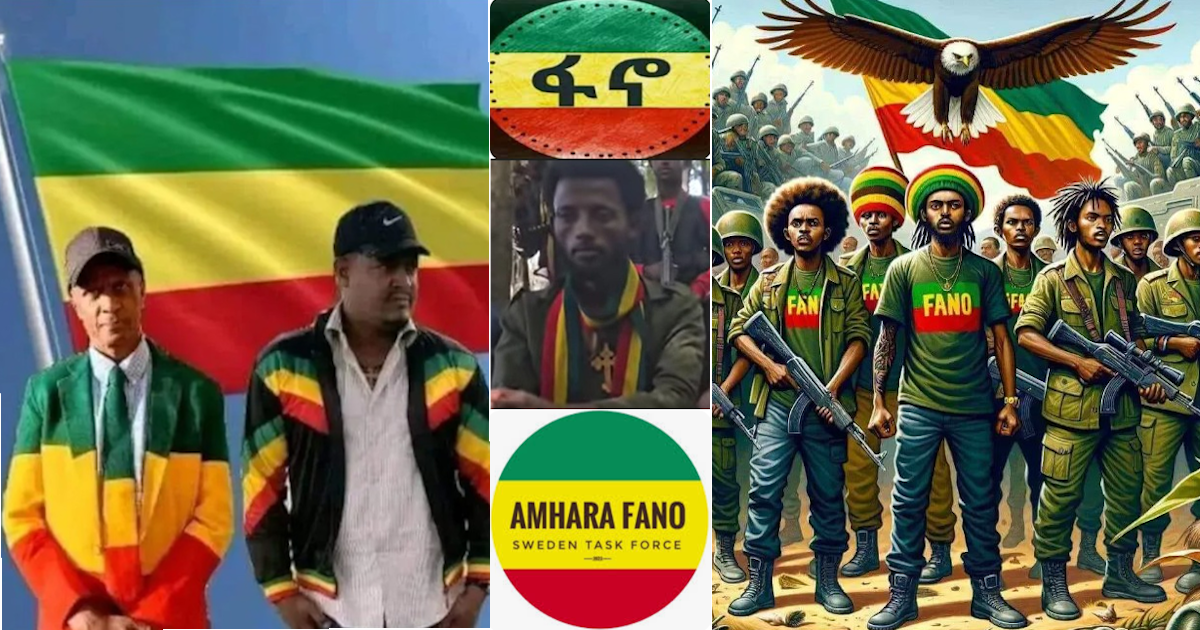
    Why Abiy Ahmed and the Ethiopian Federal Regime Still Reluctant to Declare Amhara Fano a Terrorist Organization?

    By OT Editorial Posted on2025-10-242025-10-24

    Why has Abiy Ahmed’s regime never declared Amhara Fano a terrorist organization while branding the Oromo Liberation Army (OLA) without sufficient evidence? This is not hypocrisy—it is moral perversion. Amhara Fano’s massacres across Oromia are met with silence, exposing a regime that outsources genocide by proxy and hides behind the camouflage of selective justice and political convenience.

    Read More Why Abiy Ahmed and the Ethiopian Federal Regime Still Reluctant to Declare Amhara Fano a Terrorist Organization?Continue

  • prosperity
    Editorial | Politics | ⏭

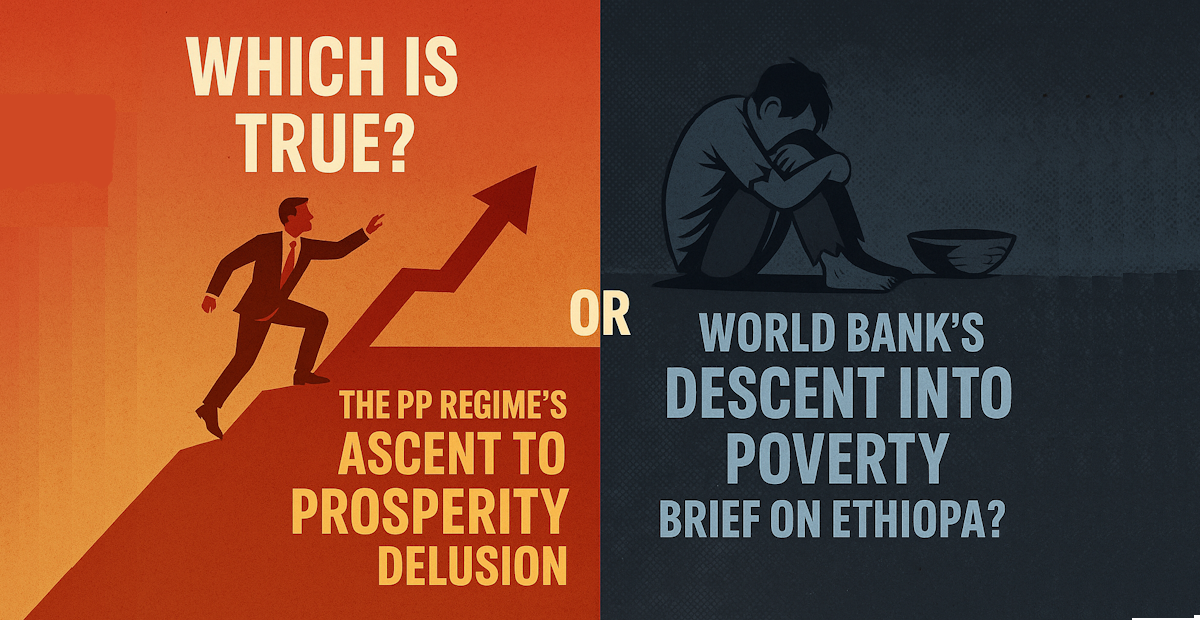
    Which Is True? The PP Regime’s “Ascent to Prosperity” — or the World Bank’s “Descent into Poverty”?

    By OT Editorial Posted on2025-10-162025-10-16

    The Prosperity Party’s “ascent to prosperity” slogan collapses under the weight of World Bank data showing Ethiopia’s poverty rate rising from 33% in 2016 to 39% in 2021 — and projected to hit 43% by 2025. Far from climbing, the country is sinking deeper into deprivation, with over 67% of citizens multidimensionally poor. The regime’s recent “credit cap” gimmick and nuclear-energy fantasies expose its confusion — a delusion of progress masking a painful descent into poverty.

    Read More Which Is True? The PP Regime’s “Ascent to Prosperity” — or the World Bank’s “Descent into Poverty”?Continue

Page navigation

Previous PagePrevious 1 2 3 4 5 … 7 Next PageNext

Archives

Recent Posts

  • Haacaaluu Hundeessaa: Six Years On, the Music Remains, the Questions Endure
  • The 1976 OLF Political Program at Fifty: Are We Nearly There Yet?History, Liberation, and the Unfinished Oromo National Question
  • The 2026 Ethiopian Election That Never Was
  • The Election of the Wheat SheafAn Election Already Decided Before the Ballots Are Cast?
  • When Diplomatic Language Meets Contested Histories: A Gentle Note to the UN Secretary-General
  • W. Hundee Hurrisoo (1944–2026)Teacher, Prisoner of Conscience, Elder of Reconciliation, Keeper of Collective Memory
  • Regression Preference Syndrome: Debunking the Regressive Tendency in Ethiopian Politics
  • What Does the Demand “Remove Article 39” Really Mean?
  • In Memory of a Dear Friend, Obbo Zegeye Asfaw Abdii
  • ZEGEYE ASFAW ABDII (1941–2026): The End of an Era

Authors

Categories

Recent Comments

  • Girma on ETHIOPIA WILL NEVER BE AT PEACE WITHOUT RESOLVING THE OROMO QUESTIONS
  • Jonny Micky on The Amhara Elite Racist Worldview: Collective Unconscious and Historical Hegemony
  • webmaster on Remembering Guyyaa Gootota Oromoo
  • ejigu etana on Remembering Guyyaa Gootota Oromoo
  • ejigu etana on Remembering Guyyaa Gootota Oromoo
Facebook X YouTube TikTok Telegram

© 2026 OROMIA TODAY

Report an Incident

Tags Cloud

3000-Year Myth Aabbuu Seeraa Aabbuu Seeraa Airport Abiy Ahmed Afan Oromo Amhara Elite Amhara Fano Caffee Oromia Calii Tuulamaa ENDC Eritrea Ethiopian Empire EZEMA Faarseebulaa Fact-checking FearlessTayeDanda'a Finfinnee Gadaa Supercity Geographic Federalism GERD IMF Indigenous Rights Irreechaa Math Meets PP Myth MMPPM Moyale Multinational Federalism OLA OLF OLF-OLA OPDO/PP Oromia Oromo Questions Oromo Struggle Oromummaa PP Regime PP Regime Brutality Prosperity Party Remembrance Self-Determination Shimelis Abdissa Somali Region Tigray War TPLF Tribute
OROMIA TODAY
Manage Consent
To provide the best experiences, we use technologies like cookies to store and/or access device information. Consenting to these technologies will allow us to process data such as browsing behavior or unique IDs on this site. Not consenting or withdrawing consent, may adversely affect certain features and functions.
Functional Always active
The technical storage or access is strictly necessary for the legitimate purpose of enabling the use of a specific service explicitly requested by the subscriber or user, or for the sole purpose of carrying out the transmission of a communication over an electronic communications network.
Preferences
The technical storage or access is necessary for the legitimate purpose of storing preferences that are not requested by the subscriber or user.
Statistics
The technical storage or access that is used exclusively for statistical purposes. The technical storage or access that is used exclusively for anonymous statistical purposes. Without a subpoena, voluntary compliance on the part of your Internet Service Provider, or additional records from a third party, information stored or retrieved for this purpose alone cannot usually be used to identify you.
Marketing
The technical storage or access is required to create user profiles to send advertising, or to track the user on a website or across several websites for similar marketing purposes.
  • Manage options
  • Manage services
  • Manage {vendor_count} vendors
  • Read more about these purposes
View preferences
  • {title}
  • {title}
  • {title}
OROMIA TODAY
Manage Consent
To provide the best experiences, we use technologies like cookies to store and/or access device information. Consenting to these technologies will allow us to process data such as browsing behavior or unique IDs on this site. Not consenting or withdrawing consent, may adversely affect certain features and functions.
Functional Always active
The technical storage or access is strictly necessary for the legitimate purpose of enabling the use of a specific service explicitly requested by the subscriber or user, or for the sole purpose of carrying out the transmission of a communication over an electronic communications network.
Preferences
The technical storage or access is necessary for the legitimate purpose of storing preferences that are not requested by the subscriber or user.
Statistics
The technical storage or access that is used exclusively for statistical purposes. The technical storage or access that is used exclusively for anonymous statistical purposes. Without a subpoena, voluntary compliance on the part of your Internet Service Provider, or additional records from a third party, information stored or retrieved for this purpose alone cannot usually be used to identify you.
Marketing
The technical storage or access is required to create user profiles to send advertising, or to track the user on a website or across several websites for similar marketing purposes.
  • Manage options
  • Manage services
  • Manage {vendor_count} vendors
  • Read more about these purposes
View preferences
  • {title}
  • {title}
  • {title}
Scroll to top
  • Home
  • Articles
  • Editorial
  • News
  • Opinions
  • About
  • Contact
Search